Advanced
Climate Change and Biodiversity Synergy –Bridging Science and Policy for a Resilient Asia-Pacific
Introduction: Embracing the Climate-Biodiversity Synergy
Climate change and biodiversity loss are no longer separate crises. They are interconnected challenges driving one another, threatening the very foundations of societies and economies. Yet, this interdependence offers a powerful opportunity: actions to protect nature can boost climate resilience, and climate action, when implemented correctly, can restore ecosystems.
This page provides policymakers and practitioners in the Asia-Pacific region with a comprehensive guide to understanding and implementing this critical synergy, moving from scientific evidence and global policy frameworks to concrete, nature-positive solutions.
for Resilient Asia-Pacific
What You Will Gain from This Page:
- Understand the Scientific Foundations: Explore the “inseparable relationship” between climate change and biodiversity loss, as elucidated by the landmark joint report from the IPCC and IPBES. Understand how failing to address either crisis significantly increases the risk of a simultaneous failure.
- Navigate Global Policy Alignment: Gain an overview of how international frameworks, the Paris Agreement (Climate) and the Kunming-Montreal Global Biodiversity Framework (KM-GBF) (Biodiversity), are increasingly aligning their efforts toward shared 2030 global targets. This section helps you stay informed on the direction of global discourse.
- Implement Integrated Solutions through National Plans: Explore practical methods for implementing Ecosystem-based Adaptation (EbA) and Nature-based Solutions (NbS). Furthermore, this page provides a roadmap for integrating these actions into your NDCs (Nationally Determined Contributions), NAPs (National Adaptation Plans), and NBSAPs (National Biodiversity Strategies and Action Plans) to ensure high-impact results.
The following sections delve into the various layers of this synergy. It begins with the Scientific Foundations, examining the rigorous evidence that has reshaped the understanding of the Earth’s interconnected systems. This is followed by an analysis of the Global Policy landscape, illustrating how scientific insights are being translated into international mandates. Finally, the page provides Pathways to Implementation, offering the essential tools, case studies, and financial insights required to turn high-level synergies into tangible resilience across the Asia-Pacific.
Scientific Foundations: Learning from the Landmark 2021 Report and Beyond
The Landmark IPBES-IPCC Joint Workshop (2021)
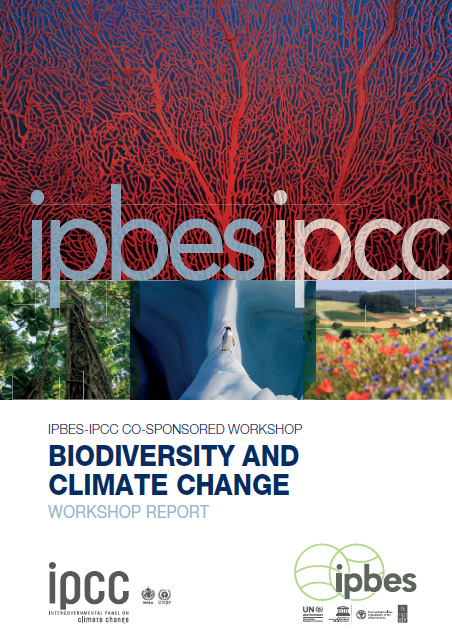
The historical separation between climate and biodiversity science has created a significant “implementation gap” in international and national policy. While traditionally addressed as separate issues, the scientific community has reached a critical consensus: neither will be successfully resolved unless both are tackled together.
In December 2020, for the first time in their histories, the Intergovernmental Panel on Climate Change (IPCC) and the Intergovernmental Science-Policy Platform on Biodiversity and Ecosystem Services (IPBES) co-sponsored a joint workshop. This landmark event brought together 50 of the world’s leading experts to explore the complex interconnections between climate and biodiversity.
Key Findings: The Interdependence of Climate, Nature, and Society
The resulting Workshop Report highlights that climate, biodiversity, and human society form a coupled system. Key takeaways for policymakers include:
- Mutual Reinforcement: Climate change exacerbates biodiversity loss, while the degradation of ecosystems further drives climate change by releasing stored carbon.
- The Synergy Approach: Protecting and restoring biodiversity is essential for climate mitigation and adaptation. For instance, ecosystems currently absorb approximately 50% of anthropogenic CO2 emissions naturally.
- Avoiding Trade-offs: Some climate mitigation measures can inadvertently harm biodiversity. For example, large-scale monoculture tree planting or certain bioenergy crops can lead to the loss of native species and essential ecosystem services.
- Integrated Solutions: Only by treating these as parts of the same complex problem can we develop solutions that maximize benefits for people and nature while avoiding “maladaptation”.
This scientific foundation serves as the basis for a new paradigm in policy-making, one that moves beyond siloed approaches toward integrated strategies for a sustainable future.
Scientific Evidence: Quantifying the Feedback Loops
While the Workshop Report establishes the high-level interdependence of the twin crises, the accompanying Scientific Outcome provides a deeper substantiation of the specific feedback loops and thresholds that govern our planet. By moving beyond conceptual alignment, this detailed assessment quantifies the risks and opportunities within the climate-biodiversity nexus.
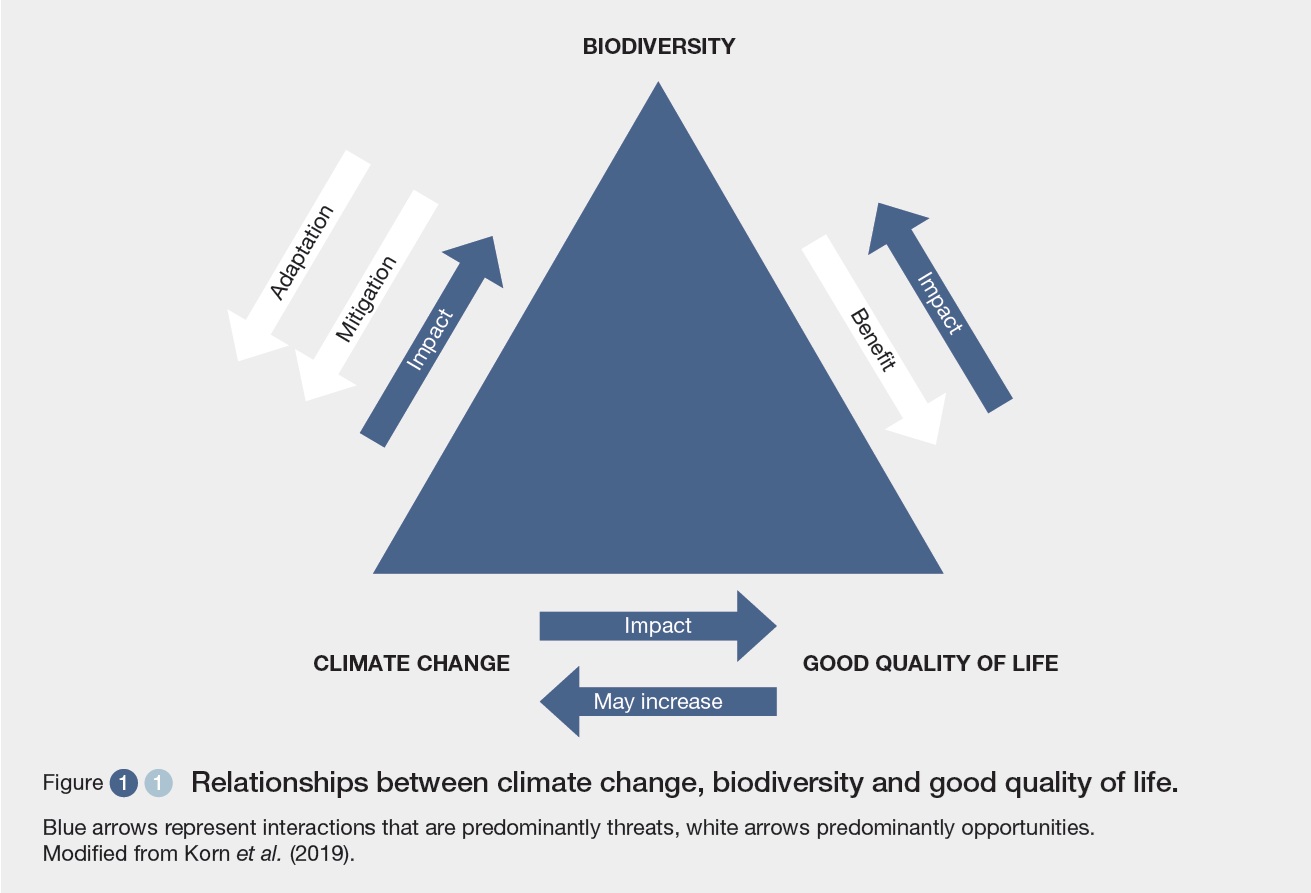
- The Climate-Biodiversity-Society Feedback Loop: As illustrated in Figure 1.1, the Earth system operates through a continuous exchange between the climate, the biosphere, and human society. Climate change acts as a primary driver of biodiversity loss, while the loss of ecosystem integrity, such as the degradation of peatlands or tropical forests, triggers the release of stored carbon, creating a dangerous self-reinforcing warming cycle.
- Thresholds and Thermal Traits: Scientific data highlights that many species are already reaching their physiological “thermal limits.” Even a minor increase in global average temperature can lead to disproportionate impacts on sensitive ecosystems like coral reefs and mountain biomes, which cannot easily migrate to cooler areas.
- The Carbon Sink Capacity: Currently, terrestrial and marine ecosystems act as a critical safety net, sequestering substantial portions of anthropogenic CO2. However, the Scientific Outcome warns that this “sink capacity” is at risk of weakening due to increased wildfires, ocean acidification, and land-use change, necessitating immediate protection of carbon-rich primary ecosystems.
- The Dual Role of Human Society: Human activities are both the driver of these crises and the source of potential solutions. The scientific evidence underscores that societal shifts toward sustainable land management and “Nature-based Solutions (NbS)” are not merely ecological ideals but are statistically essential for staying within the Paris Agreement's temperature targets.
Updating the Narrative with IPCC AR6 (2022-23)
The IPCC Sixth Assessment Report (AR6), particularly the Working Group II contribution, further solidified the scientific understanding of the synergy between climate and biodiversity. It moved the conversation from interdependence to an urgent call for “Climate Resilient Development (CRD)”, a framework that integrates adaptation and mitigation measures with ecosystem conservation to secure a sustainable future for all.
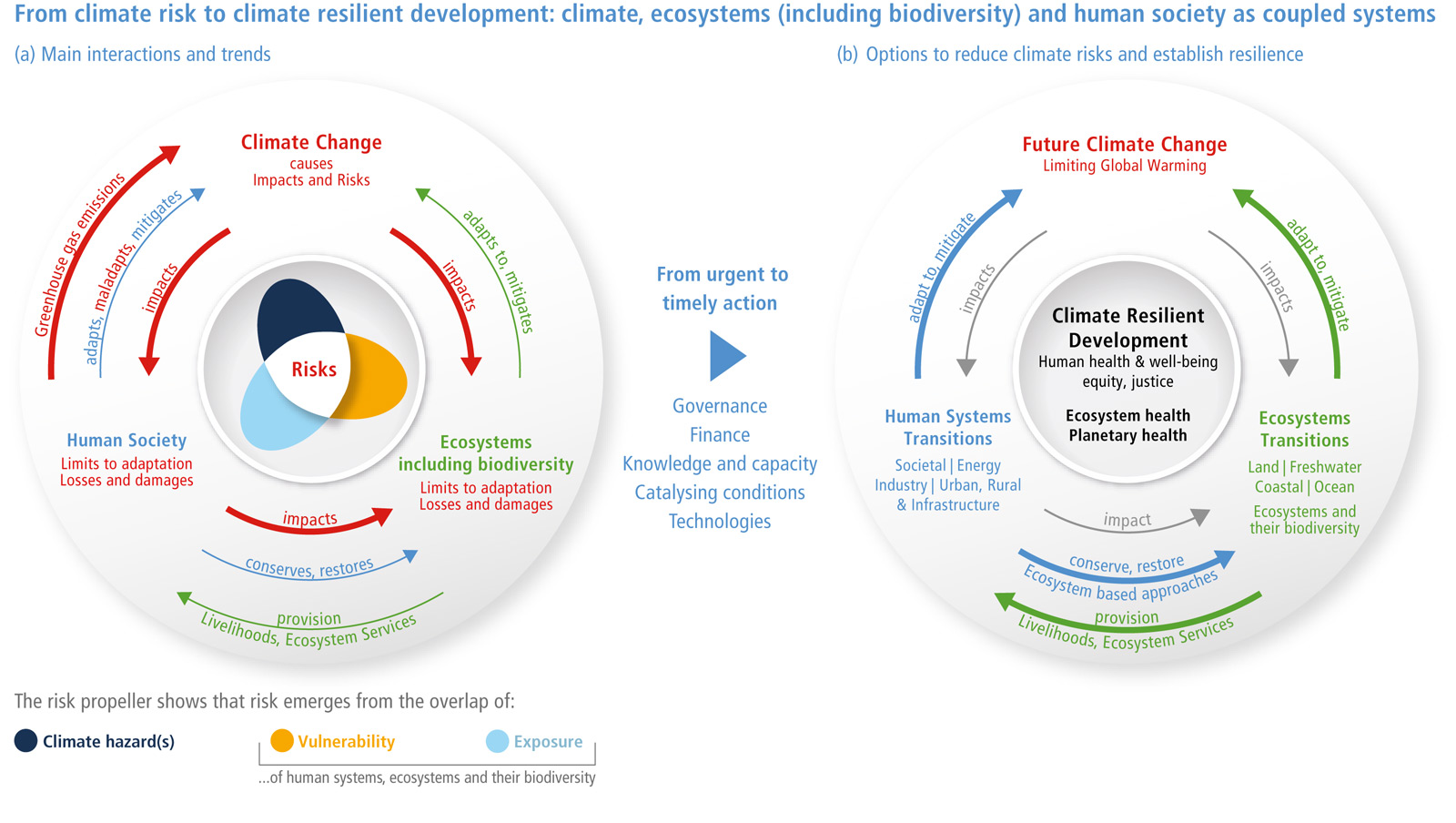
The latest evidence underscores three critical dimensions of the climate-biodiversity nexus:
- The Limits of Adaptation: AR6 warns that many ecosystems are already reaching their “hard limits” to adaptation. For example, even if global warming is limited to 1.5 °C, some unique and threatened ecosystems, such as warm-water coral reefs and certain mountain glaciers, face irreversible losses. Protecting biodiversity is no longer just a choice; it is a prerequisite for maintaining the planet's adaptive capacity.
- Ecosystems as Critical Carbon Sinks: The report highlights that the global conservation of approximately 30% to 50% of Earth’s land, freshwater, and ocean areas is essential. Maintaining the integrity of these ecosystems is vital not only for biodiversity but also for their role as carbon sinks, which absorb significantly more CO2 than degraded lands.
- Climate Resilient Development (CRD): One of the most significant takeaways from AR6 is that climate change risks can only be managed through a holistic approach. CRD is achieved when governments, civil society, and the private sector prioritize “inclusive” decision-making that combines ecosystem restoration with social equity and economic resilience.
The evidence demonstrates that man-made climate change is increasingly threatening nature and its contributions to people, including nature’s inherent ability to help mitigate climate change. The more the world warms, the fewer key contributions nature can provide to human lives, such as food security, drinking water, and flood protection. From the AR6 Synthesis Report on 2023, we know that the atmosphere, ocean, and biosphere have undergone rapid and widespread changes, with human activities unequivocally causing global surface temperatures to reach 1.1 °C above pre-industrial levels in the 2011-2020 period. In the Asia-Pacific, these impacts are felt through intensified weather extremes, including heavy precipitation, droughts, and tropical cyclones, which have already caused substantial and increasingly irreversible losses in terrestrial, freshwater, and marine ecosystems. Table below summarizes the impact mechanisms, ecosystem consequences, and the human implications of man-made climate change.
| Impact Mechanism | Ecosystem Consequences | Human Implications |
|---|---|---|
| Thermal Performance Curve Surpassing | Specialized species heat limits surpassed in the tropics, leading to mass mortality. | Loss of local species used for food, medicine, and cultural practices. |
| Hydrological Shifting | Retreat of glaciers and changes in mountain ecosystems. | Reduced water security for approximately half of the global population. |
| Ocean Acidification | Mass coral bleaching and mortality events. | Collapse of fisheries and loss of coastal protection for island states. |
| Permafrost Thawing | Release of CH4 and CO2, creating positive feedback loops. | Acceleration of global warming beyond human mitigation capacity. |
For the Asia-Pacific region, these findings mean that biodiversity conservation is a cornerstone of national security and economic stability. As climate risks escalate, the window of opportunity to enable Climate Resilient Development is rapidly closing, making immediate, integrated action more critical than ever.
Global Policy Synergies: From Paris to Montreal
The synergy between climate and biodiversity is no longer just a scientific consensus; it is now a central pillar of international policy. While the Paris Agreement (adopted in 2015) and the Kunming-Montreal Global Biodiversity Framework (KM-GBF) (adopted in 2022) remain distinct international frameworks, aligning their implementation is essential for achieving a resilient and sustainable future. A research in 2023 identified that the Paris Agreement and the KM-GBF is synergistic and complementary in nature. This means that the integration of climate and biodiversity agendas is now recognized as essential for the success of both frameworks.
The Convergence of Two Global Frameworks
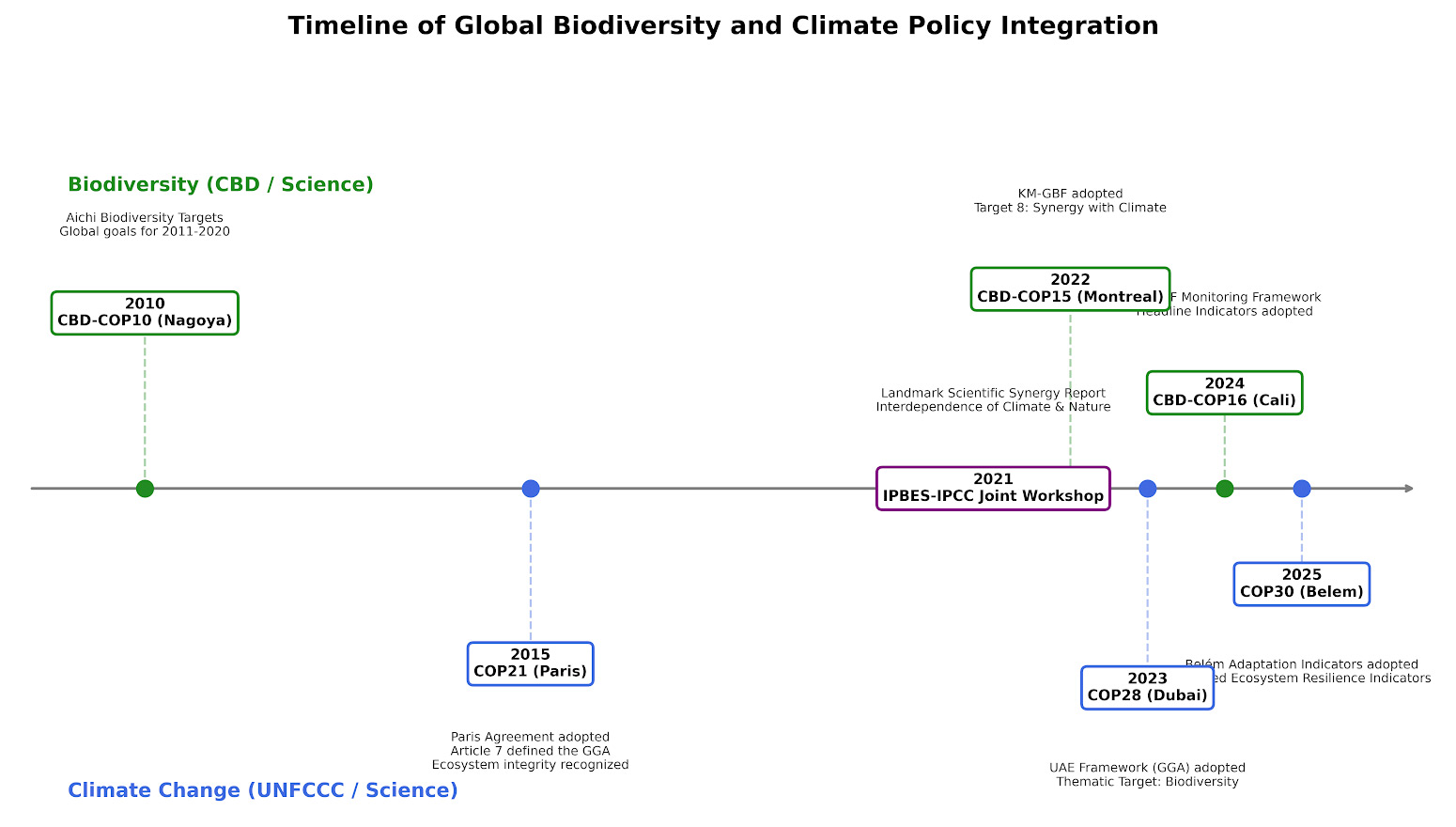
For years, climate and biodiversity policies were developed in silos. The international community initially addressed biodiversity through the Aichi Biodiversity Targets (2011-2020), adopted in 2010. However, the landmark Paris Agreement (2015) marked a historic shift. While the formal articles of the Agreement focus on climate, its Preamble explicitly recognizes the importance of ensuring the integrity of all ecosystems and the protection of biodiversity. Building on the importance of ecosystem integrity, the Agreement further includes Article 7, which established the Global Goal on Adaptation (GGA), aiming to enhance adaptive capacity and reduce vulnerability.
The lessons learned from the Aichi Targets underscored that biodiversity loss could not be halted without tackling climate change, and vice versa. A critical turning point occurred in 2021 with the IPBES-IPCC Joint Workshop, providing the scientific foundation for policy synergy. This momentum led to the adoption of the KM-GBF in 2022, which sets urgent targets to be achieved by 2030 to halt and reverse biodiversity loss, aligning its ambition with the mid-century goals of the Paris Agreement.
Institutionalizing Synergy: From Dubai to Belém
These two agendas are now being operationalized within their respective processes through concrete global targets and indicators, with a shared focus on the 2030 horizon. Under the UNFCCC, the UAE Framework for Global Climate Resilience, adopted at COP28 (Dubai) in 2023, further institutionalized this nexus. Decision 2/CMA.5, paragraph 9(d), explicitly sets a thematic target to be achieved by 2030: “Reducing climate impacts on ecosystems and biodiversity, and accelerating the use of ecosystem-based adaptation and nature-based solutions, including through their management, enhancement, restoration and conservation and the protection of terrestrial, inland water, mountain, marine and coastal ecosystems.”
To monitor progress toward this 2030 target, the Belém Adaptation Indicators were adopted at COP30 (Belém) in 2025. This introduced a set of six specific indicators (Decision -/CMA.7 Annex, para 6(a)-(f)) designed to measure ecosystem resilience. These indicators provide a comprehensive assessment of national adaptation efforts, including the extent of ecosystem protection, the integration of biodiversity into national adaptation planning, and the effectiveness of ecosystem-based approaches in reducing human vulnerability.
Correspondingly, under the CBD, the KM-GBF includes Target 8, which explicitly links biodiversity to climate action toward 2030. To ensure accountability, the CBD-COP16 (Cali) in 2024 adopted the KM-GBF Monitoring Framework, featuring Headline Indicator 8.1, defined as: “Thresholds for climate change impacts on biodiversity and the contribution of biodiversity to climate change mitigation, adaptation and disaster risk reduction.” By utilizing these distinct yet complementary metrics, the international community can now track how national actions fulfil the goals of both global frameworks simultaneously.
Advancing “Nature-Positive” Climate Action
A new global ambition, Nature-Positive has emerged to guide integrated action. This means not only halting nature loss but actively reversing it by 2030. For adaptation practitioners, a Nature-Positive approach ensures that climate strategies prioritize the health of local ecosystems to strengthen long-term human resilience.
In the Asia-Pacific, concrete examples of Nature-Positive adaptation can be found in the INAS (Inspired by Nature-based Actions and Solutions) Good Practices collection on AP-PLAT. Notable examples from INAS and others include:
- Coastal Protection through Mangrove Restoration: Instead of relying solely on concrete sea walls, restoring mangrove forests provides a natural buffer against storm surges and sea-level rise while providing nurseries for marine life. A prime example is seen in India and Bangladesh, where community-based mangrove rehabilitation has significantly enhanced coastal resilience and local livelihoods. This aligns with coastal disaster risk reduction projects in Pacific Island nations, where healthy reefs and mangroves form a first line of defence.
- Urban Green Infrastructure: In China, implementing “Sponge City” concepts that use wetlands and green spaces to manage urban flooding while reducing the heat island effect and providing habitats for urban biodiversity. Similarly, in Thailand, the Chulalongkorn University Centenary Park in Bangkok serves as a landmark “urban forest” designed to absorb and store millions of gallons of water during heavy rains, mitigating flood risks while restoring urban biodiversity and providing essential cooling for the city.
Navigating Trade-offs and Maximizing Co-benefits
Integrated policy-making requires careful management of potential trade-offs to avoid “maladaptation”, which is the actions that may provide short-term climate relief but cause long-term ecological damage.
- Managing Trade-offs: A key policy example is the caution against large-scale monoculture afforestation. While planting a single species can sequester carbon, it can lead to the loss of native biodiversity, reduced water availability, and increased vulnerability to pests (IPBES-IPCC Synergy Report, 2021).
- Maximizing Co-benefits: Prioritizing Ecosystem-based Adaptation (EbA) in national plans yields high returns. For instance, the protection of primary forests and peatlands prevents massive CO2 emissions while regulating local water cycles and protecting communities from landslides and floods (IPCC AR6 WG2, 2022).
One idea to bring synergy on international coordination is through the synergy of National Biodiversity Strategies and Action Plans (NBSAPs), Nationally Determined Contributions (NDCs), and National Adaptation Plans (NAPs). By aligning those national instruments, countries can unlock integrated funding and achieve durable outcomes for both people and the planet.
Pathways to Implementation: From Science to Action
Conceptual Framework and Operational Definitions
The operationalization of the climate-biodiversity nexus relies heavily on the concepts of Nature-based Solutions (NbS) and Ecosystem-based Adaptation (EbA). The IUCN Global Standard for Nature-based Solutions defined NbS as “actions to protect, sustainably manage, and restore natural or modified ecosystems, which address societal challenges effectively and adaptively, simultaneously providing human well-being and biodiversity benefits”. These societal challenges include climate change, natural disasters, food security, water security, human health, and social and economic development.
EbA, a specific subset of NbS, uses of biodiversity and ecosystem services as part of an overall adaptation strategy to help people to adapt to the adverse effects of climate change. While both terms are related, NbS serves as an “umbrella term” that also encompasses ecosystem-based mitigation (EbM) and ecosystem-based disaster risk reduction (Eco-DRR). Table below summarizes the core objectives and key activities of NbS, EbA, EbM, and Eco-DRR.
| Framework | Core Objective | Key Activities |
|---|---|---|
| NbS | Address multiple societal challenges through nature. | Protection, management, and restoration of natural/modified systems. |
| EbA | Enhance human resilience and reduce vulnerability to climate change. | Sustainable management, conservation, and restoration of ecosystems. |
| EbM | Leverage carbon sequestration and storage services. | Peatland rewetting, avoided deforestation, and mangrove conservation. |
| Eco-DRR | Reduce disaster risk and achieve resilient development. | Mangrove barriers for storm surges, wetland basins for flood control. |
The IUCN Global Standard for Nature-based Solutions can be used to ensure that NbS and EbA interventions are credible, robust, and effective. The standard was developed through public consultation with over 800 practitioners from 100 countries to prevent the “greenwashing” or misuse of the concept, such as monoculture tree planting that provides carbon benefits but erodes soil health and biodiversity.
Integrating NbS and EbA into National Planning Instruments
A recent review from NAP Global Network in 2024 indicated that 49 out of 57 multi-sector NAP documents mention ecosystems, biodiversity, and the environment as priority sectors. The majority of EbA and NbS actions in these plans focus on the sustainable management of ecosystems and natural resources, followed by restoration and conservation efforts. Below are the suggested strategies for integration, along with the benefit and potential implementation mechanisms from the review.
| Strategy for Integration | Benefit/Opportunity | Implementation Mechanism |
|---|---|---|
| NDC-NAP Linkage | Reduces reporting burden and ensures a holistic high-level vision. | Referencing the NAP in the NDC to link high-level actions to evidence-based justification. |
| Sectoral Mainstreaming | Maximizes co-benefits in non-AFOLU sectors (e.g., energy, health, infrastructure). | Integrating NbS targets into the 2025 economy-wide GHG reduction pathways. |
| Ecosystem Lens | Identifies the specific ecosystem services (e.g., coastal barriers) that protect vulnerable communities. | Conducting climate change risk assessments as a primary entry point for EbA into sector budgets. |
| MEL Integration | Allows NAPs to become “living documents” that respond to changing conditions. | Establishing national data and monitoring systems for biodiversity loss and recovery. |
Barriers and Enablers for Upscaling
Despite the documented benefits, the Adaptation Gap Reports 2024, 2025, IPBES-IPCC workshop and research identified several root causes hinder the regional uptake of EbA and NbS. There are potential systemic barriers such as funding imbalances, lack of evidence to support NbS investments and interventions, and institutional fragmentation. These barriers can be unlocked through key enablers through scaling the EbA through innovative community-led adaptation, supported by funding mechanisms such as the Global EbA Fund or World Bank’s Global Program for Nature-Based Solutions for Climate Resilience.
Future Horizons: Toward a Multi-Sectoral Nexus
The KM-GBF explicitly recognizes the biophysical and policy nexus between climate and biodiversity, with several targets such as Target 8, Target 11, Target 14, Target 18, and Target 19 are potentially impacting climate adaptation. For the Asia-Pacific region, the KM-GBF provides a singular opportunity to link national biodiversity strategies and national climate strategies and aligning the NBSAP submissions with the NDC update cycle.
Bridging Implementation and Financial Gap through Climate Funds, Blended and Private Finance
Linking and aligning national biodiversity and climate the strategic national targets require ambitious goals. In conjunction, achieving the ambitious goals of the KM-GBF and the Paris Agreement requires a massive scaling of financial resources. The UNEP State of Finance for Nature 2026 report stated that to meet global commitments under the Rio Conventions, NbS investments must increase to US$571 billion by 2030 and US$771 billion by 2050. The below are some of the large funds pledging investments that are related to the synergy of adaptation and biodiversity.
| Fund | Strategic Synergy Focus | Pledges/Resources (2024-2025) |
|---|---|---|
| GCF (Green Climate Fund) | 50/50 mandate for mitigation/adaptation; 1/3 of projects provide biodiversity co-benefits. | US$13.6 billion pledged for GCF-2 (70% confirmed as of Jan 2025).1 |
| GEF (Global Environment Facility) | 11 Integrated Programs targeting drivers of environmental degradation (e.g., food systems, forests). | US$ 5.33 billion pledged for GEF-8 cycle.2 |
| GBFF (Global Biodiversity Framework Fund) | Specifically for KM-GBF implementation; strategic focus on national planning and IPLCs. | Over US$ 288 million approved since 2024; US$ 386 million pledged by 12 contributors.3 |
| LDCF (Least Developed Countries Fund) | Only global fund dedicated to LDC adaptation across agriculture, water, and health. | Managed by GEF; delivered more than US$ 2.39 billion in grants to date.4 |
Sources:
- 1Climate Finance Fundamental GCF 2025 – ODI Global
- 2Global Environment Facility (2025) GEF-8: Pledges and approved projects. Washington, DC: Global Environment Facility.
- 3Global Biodiversity Framework Fund (2025) Global Biodiversity Framework Fund: Pledges and approved projects. Washington, DC: Global Biodiversity Framework Fund.
- 4Least Developed Countries Fund (2025) Least Developed Countries Fund: Pledges and approved projects. Washington, DC: Least Developed Countries Fund.
In achieving the ambitious goals, blended finance and private finance can also provide some answers. The World Bank noted that the climate blended finance market saw its highest ever annual financing total in 2023, with private sector investment increasing by almost 200%. The ADB highlighted that public and private finance must work together to support systemic transformation, where public finance to mitigate the early-stage risks through concessional tools. One of the example of such tool for Asia-Pacific is the GCF-ADB ASEAN Catalytic Green Finance Facility (ACGF). ACGF aims to accelerate green infrastructure investments in Southeast Asia and covers the upfront capital investment costs to “de-risks” green infrastructure.
Regional Resilience through Diverse Knowledge Systems
The future of regional resilience is inextricably linked to the empowerment of Indigenous and Local Communities (IPLC). Indigenous territories overlap with much of the world's most intact biodiversity, and traditional knowledge offers critical insights for sustainable land management that modern knowledge often overlooks. Below are some of the principle and approaches from the IUCN Global Standard for Nature-based Solutions Guidance Document that can be leveraged to empower IPLCs.
| Principle | Narrative Context |
|---|---|
| FPIC | Free Prior and Informed Consent is designed as a tool for project practitioners of a broad range of projects and programmes of any development organization. A thorough and well carried FPIC process helps guarantee everyone’s right to self-determination, allowing them to participate in decisions that affect their lives. |
| The Nagoya Protocol on Access and Benefit-sharing | The Nagoya Protocol on Access and Benefit Sharing from their Utilization to the Convention on Biological Diversity is an international agreement which aims at sharing the benefits arising from the utilization of genetic resources in a fair and equitable way. |
| Participatory Learning and Action | Participatory Learning and Action is a family of approaches, methods, attitudes, behaviours and relationships, which enable and empower people to share, analyse and enhance their knowledge of their life and conditions, and to plan, act, monitor, evaluate and reflect. |
Toward a Resilient Asia-Pacific
The planetary crises we face are overwhelming, but society has shown it can work together to solve major global threats. Successful navigation through the Anthropocene depends on rapid, far-reaching action of a type never attempted, based on ambitious emission reductions and the restoration of a resilient biosphere.
For Asia and the Pacific, the way ahead is moving towards a synergistic national targets and plans (NDCs, NAPs, and NBSAPs), while utilizing catalytic funding mechanisms to develop compelling evidence for large-scale replication while maintaining the rights of IPLCs and ensuring that conservation is a driver of social and gender equity rather than a cause of displacement.
The Role of AP-PLAT in Capacity Building
The AP-PLAT serves as a vital knowledge repository and training hub for practitioners in the region. The platform provides access to essential climate projection tools, such as ClimoCast and FloodS, which are designed to help decision-makers generate climate-related change scenarios even in resource-limited countries.
AP-PLAT’s adaptation literacy resources include specialized e-learning courses for local officers in vulnerable countries. The NbS e-learning module is designed to help local officers in vulnerable countries to learn how to integrate NbS into policy/financing processes addressing various challenges, including climate change adaptation and disaster risk management. Other specialized modules include “Integrating Gender and Indigenous Factors into Locally-Led Adaptation“ and “Increasing Coherence in Climate Change Adaptation and Disaster Risk Reduction“. These resources are critical for overcoming the technical capacity constraints that currently hinder the uptake of EbA in the Asia-Pacific.
Additional Key Policy and Scientific Frameworks
These are several global assessments and strategic policy frameworks that can be used to help in creating innovative projects.
- Core Scientific Assessments:
- The IPBES regional assessment report on biodiversity and ecosystem services for Asia and the Pacific (2018)
- IPCC AR6 Synthesis Report (Summary for Policy Maker)
Provides the physical science basis, highlighting the unequivocal human influence on the climate and the interdependence of ecosystems and human societies. - IPBES-IPCC Co-Sponsored Workshop Report
A Landmark collaborative analysis of the interactions between biodiversity and climate change, identifying synergies and trade-offs. - Scientific Outcome of the IPBES-IPCC Workshop
A detailed substantiation of workshop conclusions, including specific data on thermal traits and resource availability.
- Strategic Policy Frameworks:
- Kunming-Montreal Global Biodiversity Framework (KM-GBF)
Sets the global goals and targets for 2030 and 2050, emphasizing climate-biodiversity targets. - IUCN Global Standard for Nature-based Solutions
Provides the definitive operational framework and benchmarks for NbS implementation.
- Kunming-Montreal Global Biodiversity Framework (KM-GBF)
- National Alignment Guidance:
- Nature4Climate NDC Guide
Assistance for national policymakers to integrate NbS into the third five-year update cycle (NDCs 3.0).
- Nature4Climate NDC Guide