How future climate is projected
This section explains what climate models and socioeconomic scenarios are and takes a more in-depth look at the climate models and socioeconomic scenarios used in future climate projections.
Methods for projecting future climate
Future climate is projected using climate models, which are computer programs that use mathematical equations to simulate processes in the Earth’s atmosphere and oceans. There are global climate models (GCMs) used for worldwide projections, and regional climate models (RCMs) that focus on specific regions.
A great many climate models have been developed by research institutes around the world. In Japan, for example, models include MIROC (Model for Interdisciplinary Research on Climate), which was developed jointly by the University of Tokyo, the National Institute for Environmental Studies, and the Japan Agency for Marine-Earth Science and Technology, and the Meteorological Research Institute’s MRI-CGCM (Meteorological Research Institute-Coupled General Circulation Model).
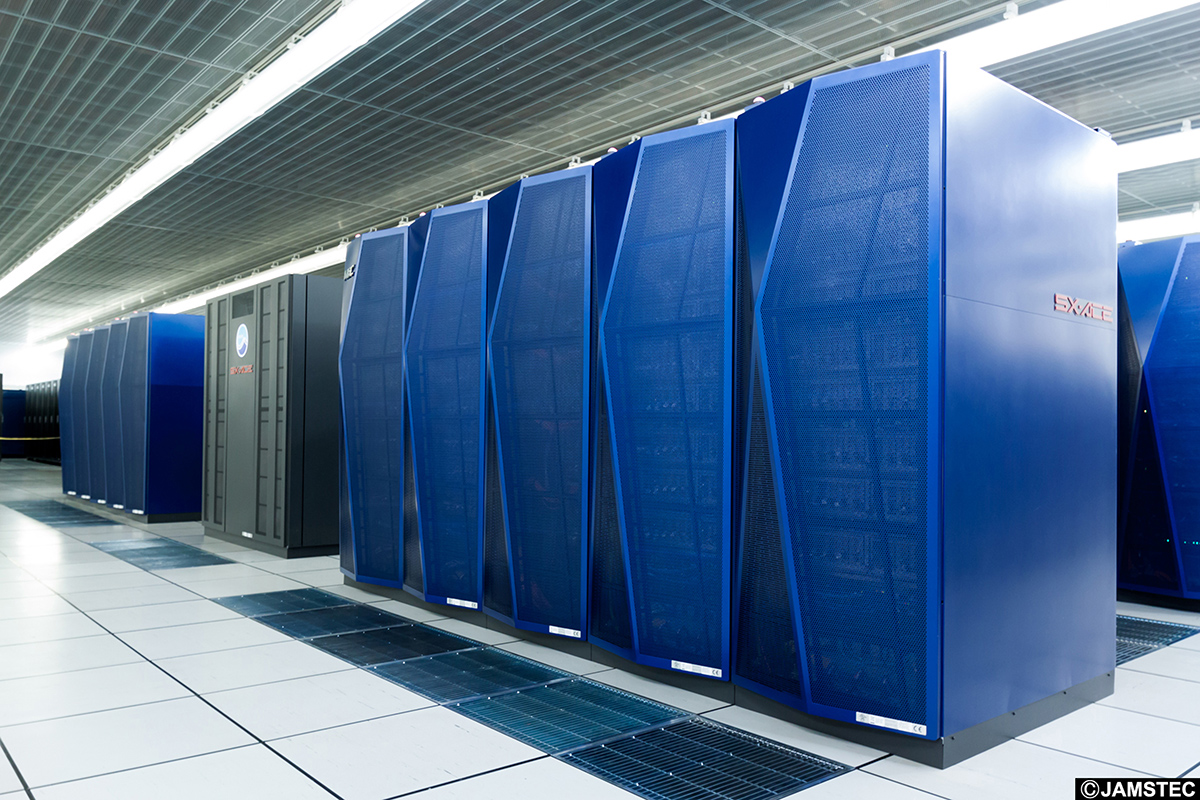
However, owing to the impossibility of any computer model perfectly replicating all real-world processes, climate models simplify these processes, each doing so in its own way. Consequently, even for the same emission scenario, different models produce differing projections of temperature rise, creating a range of uncertainty.
To understand this uncertainty, the World Climate Research Programme runs the Coupled Model Intercomparison Project (CMIP) to compare results from these different models. CMIP findings, which are also used in IPCC assessment reports, show that different models often project the same broad trends even if their results differ in detail.
In addition to differences in projections caused by differences between models, the assumptions used for the projections are also likely to differ. For example, future socioeconomic conditions that are set when making future climate projections will tend to differ significantly depending on national policies. Such policies will affect energy use and, consequently, greenhouse gas emissions. As such, future projections are run using multiple socioeconomic scenarios, such as one for a sustainable world with strong mitigation measures and another for a fossil-fuel-dependent world.
Creating multiple projections enables policymakers at national and global levels to refer to the scenario most closely aligned with the future they are considering for their discussions and decision-making.
SSP scenarios—socioeconomic scenarios for future projections
The future of our society could follow many paths, depending on whether we prioritize economic growth or aim to build a sustainable society that protects the natural environment, and so forth. To cover a broad range of outcomes, climate projections are based on several plausible societal pathways.
The IPCC Sixth Assessment Report (AR6) uses the Shared Socioeconomic Pathways (SSPs) developed by researchers worldwide. As shown in the schematic, these scenarios outline five possible future trajectories for the world, respectively titled: Sustainability, Middle of the Road, Regional Rivalry, Inequality, and Fossil-fueled Development.
In the IPCC’s Sixth Assessment Report, these socioeconomic scenarios are combined with levels of radiative forcing* linked to greenhouse gas concentrations (Representative Concentration Pathways (RCPs)) to create the five scenarios shown in the table below that are used for climate projections. The numbers 1 to 5 after SSP correspond to the five socioeconomic pathways in the schematic, and the numbers to their right (e.g., 1.9, 8.5) indicate the level of radiative forcing.
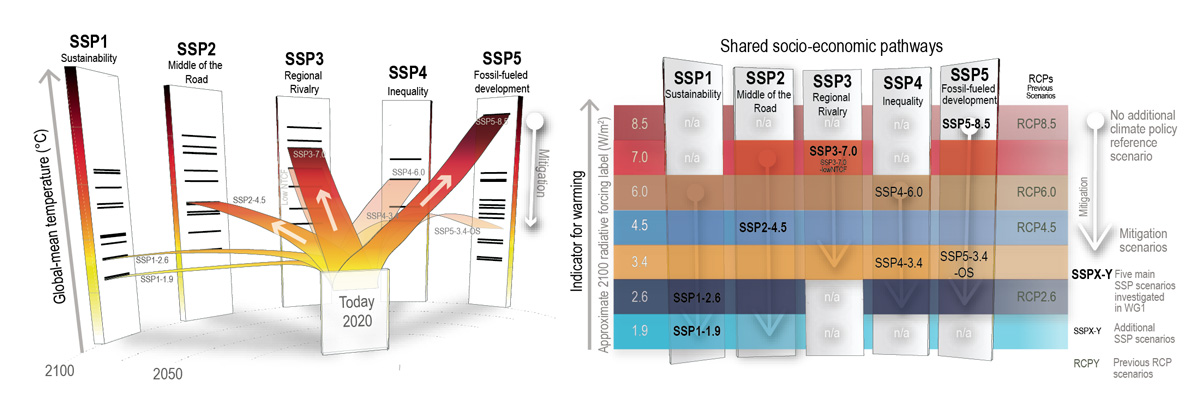
IPCC AR6 WGI, The Physical Science Basis1.6.1 Scenarios, Cross-Chapter Box 1.4; IPCC, 2021
Accessing climate projection and impact data
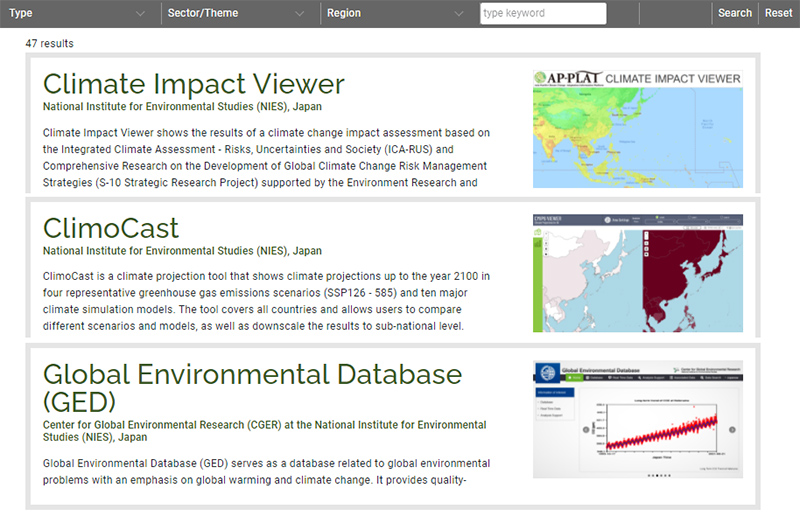
ClimoCast is a tool that allows users to check future regional climate projections and compare major emission scenarios and climate models.
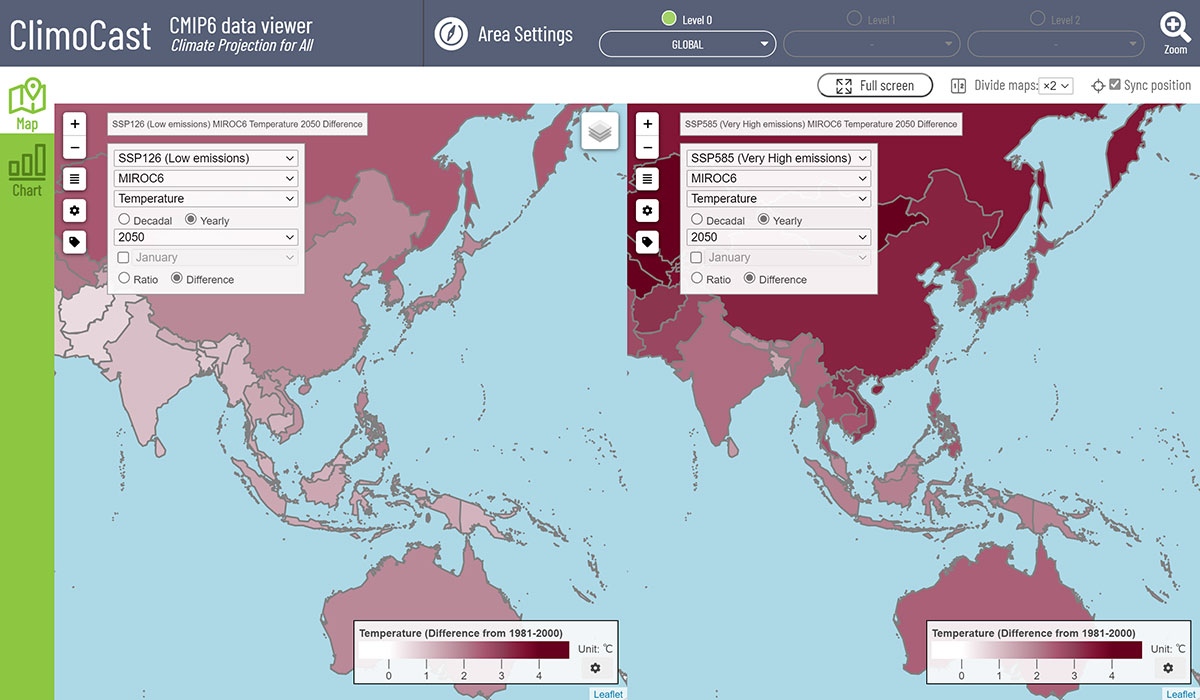
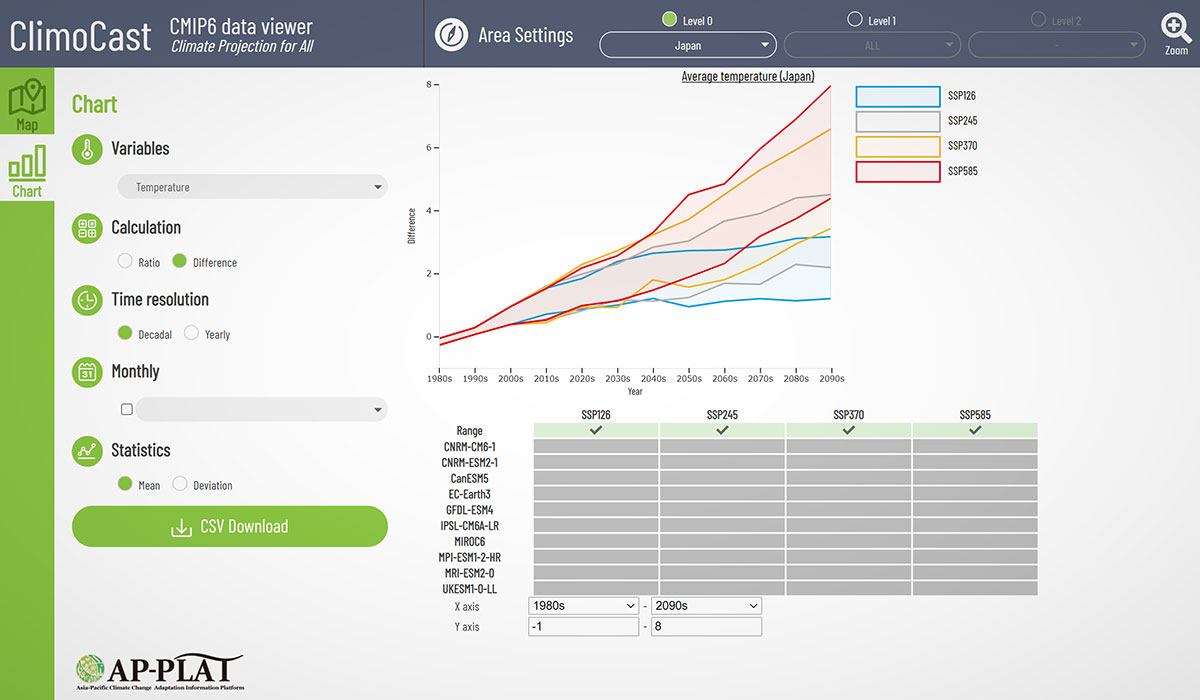
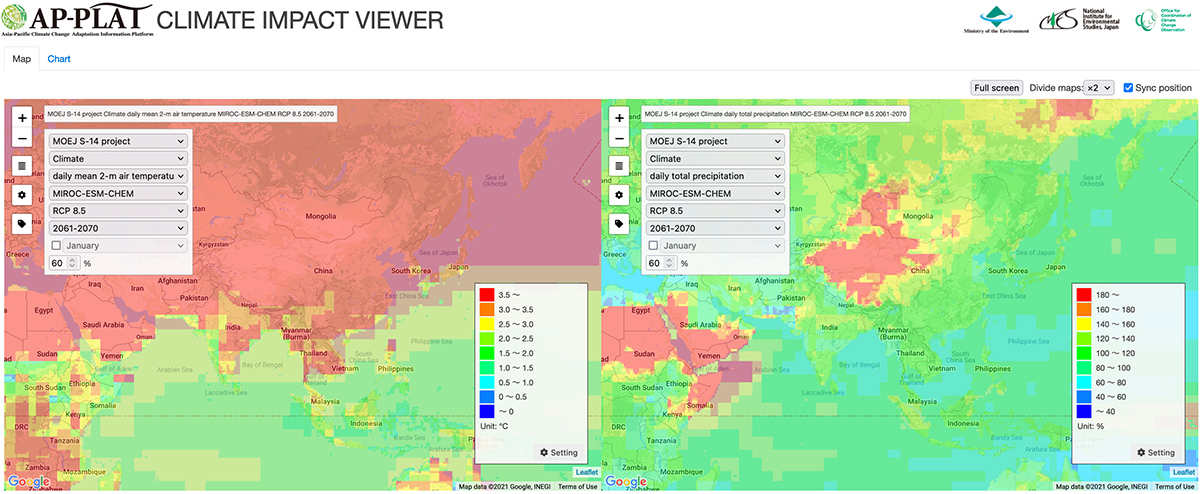
AP-PLAT provides information on climate change impacts in Climate Impact Viewer.
More tools for acquiring information on climate change impacts can be found in ClimoKit, a database of scientific data and tools.
LINK : ClimoKit