Life of the citizenry and urban life
Climate change is expected to affect various aspects of daily life. What specific impacts will it have?
This section describes the effects on Japan's national and urban life that have already occurred and those that may arise in the future.
Impacts on National and Urban Life due to Increased Natural Disasters
Infrastructure and lifelines affected by climate change
Recent heavy rain, typhoons, and droughts have significantly impacted the infrastructure and essential services across Japan. For example, regarding the Shinkansen, Japan's main transportation artery, Typhoon Hagibis (2019) caused flooding of 10 Shinkansen train sets at the JR East Nagano Shinkansen Vehicle Center, highlighting the vulnerabilities in Japan's main transportation system. In December of the same year, the Ministry of Land, Infrastructure, Transport, and Tourism considered flood control measures for Shinkansen vehicles and critical facilities because flooding damage remains a concern in many areas.
During the July 2017 Northern Kyushu heavy rain, river flooding and landslides led to road collapses, railway bridge washouts, mudslides, and flooding, which disrupted transportation and isolated numerous communities. In some areas, telephone and mobile services were disrupted, and landslides and debris flows carried large amounts of driftwood downstream, further hindering transportation. Essential services such as electricity, gas, and water were also interrupted, with power outages affecting up to 6,400 households. In areas where road access was impossible, power restoration took up to two months.
In the future, increases in the frequency of short-term heavy rainfall, droughts, and stronger typhoons due to climate change are expected to further affect infrastructure and essential services.
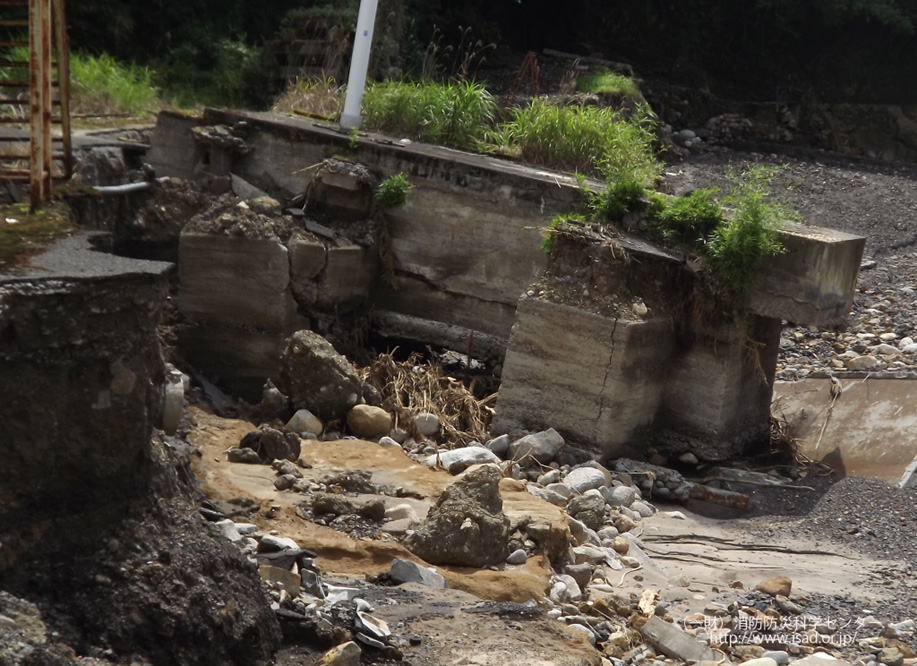
Road Collapse Caused by the Northern Kyushu Heavy Rain in July 2017
Source: Disaster Photo Database, Institute of Scientific Approaches for Fire and Disaster, Japan. Translated from Japanese by CCCA
Loss of seasonal cues in daily life due to climate change
Shifts in the biological timing of familiar plants and animals, such as cherry blossoms, ginkgo trees, cicadas, and wild birds, have been observed. For example, cherry blossom blooming dates have been advancing across Japan year by year. This trend is attributed to rising temperatures, with an estimated rate of 1.1 days per decade.
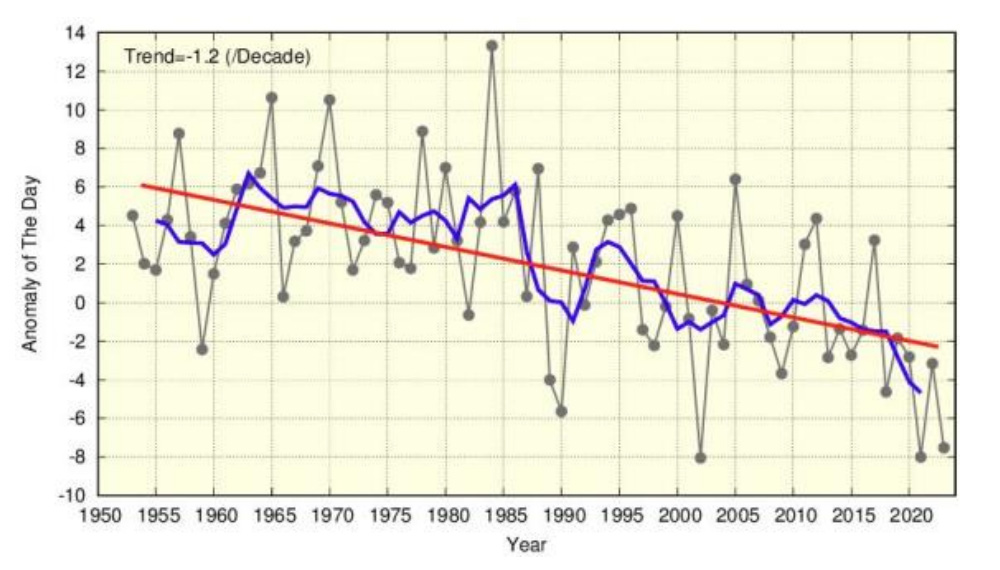
First reported dates of cherry blossom flowering
Climate Change monitoring report 2023, Figure 2.7-1., June 2024, Japan Meteorological Agency, Japan)
Furthermore, the effect is expected to vary geographically, with earlier blooming in northern Japan, later blooming in southwestern Japan, and a likely reduction in the number of days from blooming to full bloom.
Earlier cherry blossoms are also impacting local traditional events. For instance, the Takayama Festival (Sanno Festival) in Hida Takayama is held annually on April 14 and 15; however, if warming of 2.5 °C or more occurs in the future, cherry blossoms will likely have already fallen by the time of the festival, reducing its value as a tourist attraction.
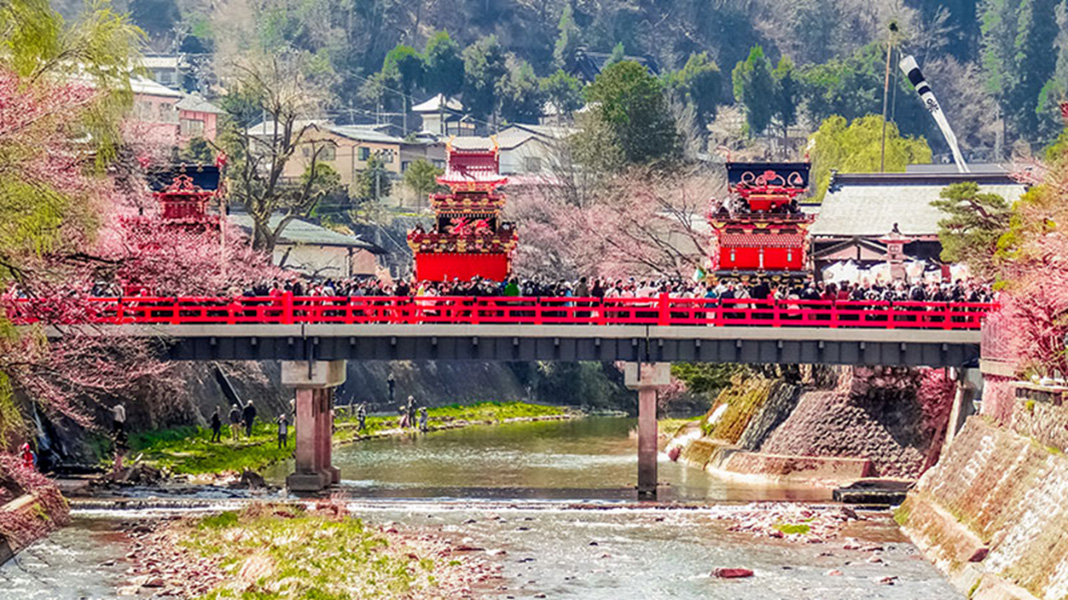
Scenes from the Takayama Festival (Sanno Festival)
Heat island effect further intensifies heat issues in urban areas
In urban areas, the combination of climate change and the urban heat island phenomenon, where temperatures in urban areas are higher than those of surrounding areas due to land-use changes and artificial heat emissions, is affecting urban comfort by causing sleep disturbances and heat-related discomfort.
Average increases in annual temperature over 100 years in 11 major cities are approximately 0.4 to 1.7 °C higher than those of 15 less-urbanized locations, thereby revealing the correlation between increases in temperature and the degree of surrounding urbanization.
Heat stress is also increasing. In addition to higher heatstroke risks, more people are being transported to hospitals for fever, vomiting, and weakness. Moreover, sleep disorders have become more prevalent due to reduced sleep quality.
Since major changes to urban characteristics such as building height are unlikely in the future, the heat island effect is expected to progress only slightly. However, combined with climate change, urban temperatures are projected to continue rising.
Difficulty in holding summer sports events
Large-scale sports events, including the Summer Olympics and Paralympics, world championships in sports such as soccer and track and field, and the National High School Baseball Championship (Summer Koshien), are held during the summer. However, worsening heat due to climate change raises concerns about the health of athletes and participants in these summer sports events.
For example, the Tokyo Olympics and Paralympics in 2021 were the hottest games on record, and even elite athletes experienced health issues or expressed concern about the heat. The marathon course was moved from Tokyo to Sapporo, where temperatures were expected to be less severe.
In the women's marathon at the 2019 World Athletics Championships in Doha, Qatar, although the race was held late at night, 40 of 68 runners dropped out due to the heat and humidity, which reached 33 °C and 73%.
In the future, the current candidate host cities for the Summer Olympics will experience dangerously hot conditions as climate change progresses.
This section describes the impacts of climate change on Japan's national and urban life, including the mechanisms, observed effects, and potential future consequences.
Mechanisms Underlying the Impact of Climate Change on National and Urban Life
The mechanisms by which climate change affects the national and urban life sector are illustrated in the figure below.
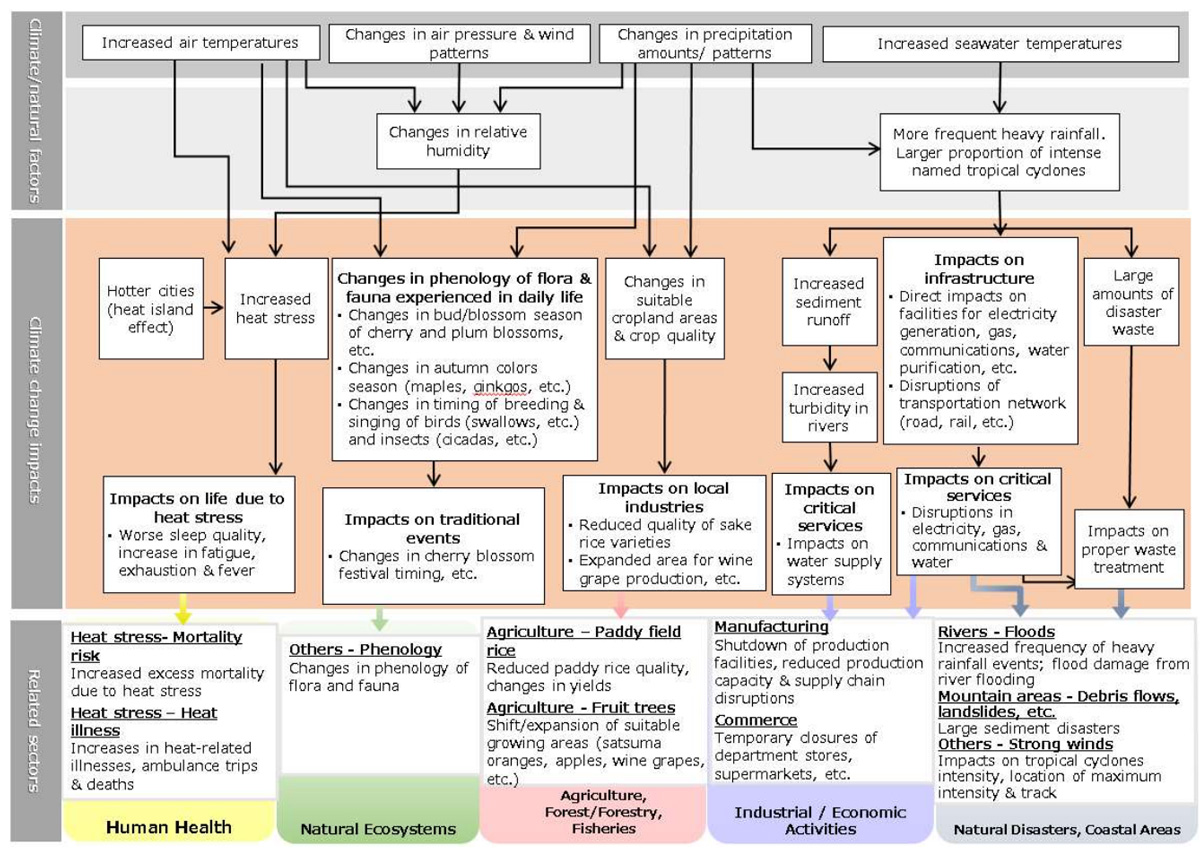
Schematic of projected impacts of climate change
Assessment Report on Climate Change Impacts in Japan, Figure 3-11., December 2020, Ministry of the Environment, Japan
Climate change, through increased short-term heavy rainfall, droughts, and stronger typhoons, can damage infrastructure and services essential to daily life, such as transportation, electricity, communication, water supply, and waste management, as well as local traditional events, tourist activities, and local industries. In addition, changes in the biological timing of plants and animals due to rising temperatures may alter people's seasonal cues and affect traditional events and tourism at famous cherry blossom and autumn foliage viewing locations. In urban areas, the combination of rising temperatures and the urban heat island effect increases heat stress and reduces urban comfort by causing sleep disturbances, lethargy, and fatigue.
Current Impacts and Future Predictions for National and Urban Life
Infrastructure and essential services affected by climate change
The increased frequency of short-term heavy rainfall, droughts, and stronger typhoons due to climate change is likely to damage infrastructure and essential services, including transportation, electricity, communication, water supply, and waste management. Disruptions to transportation networks from heavy rain, which leads to isolated communities, and interruptions to electricity, gas, and water services have already been observed.
Analysis of weather-related disasters affecting railway operators shows that damage caused by embankment and cutting failures within railway land exhibits stable or decreasing trends due to changes in the spatiotemporal distribution of precipitation, whereas damage from sediment inflow, debris flows, and rockfalls outside railway land, which require more extensive and time-consuming restoration, exhibits increasing trends.
In the future, if the frequency of short-term heavy rainfall, droughts, and stronger typhoons continues to rise due to climate change, further impacts on infrastructure and essential services are anticipated.
Railway line closures due to weather-related disasters have also been reported, with the vast majority caused by wind and flood damage rather than earthquakes. Since 1970, all such incidents have been attributed to wind and flood damage. In the future, railway operations will continue to face risks from wind and flood damage, and these risks are expected to increase as climate change progresses.
Loss of seasonal cues in daily life due to climate change
Rising temperatures linked to climate change are altering the timing of plant events, such as germination, flowering, and autumn foliage, as well as the onset of singing by birds and insects, with these changes potentially reducing seasonal cues in daily life.
Data published by the Japan Meteorological Agency on "Changes in Cherry Blossom Flowering Dates" compares areas where cherry blossoms bloom by April 1 using average values from 1956 to 1985 and normal values from 1991 to 2020. From 1956 to 1985, cherry blossoms bloomed by April 1 along the Pacific coast of Honshu from the Miura Peninsula to Kii Peninsula as well as in Shikoku and the Chugoku region. From 1991 to 2020, this area shifted northward to the northern Kanto region and western Hokuriku region, indicating earlier flowering. This trend has been particularly notable in recent years, and in 2021, Tokyo recorded its earliest flowering declaration on March 14 for the second consecutive year. Moreover, flowering dates in 2021 were the earliest on record (including ties) at 28 of the 48 nationwide observation locations.
In the future, cherry blossom flowering is predicted to occur earlier in northern Japan but later in southwestern Japan. Later flowering in southwestern Japan is likely caused by insufficient winter cold temperatures due to global warming, leading to incomplete dormancy. Furthermore, the number of days from flowering to full bloom is expected to decrease with rising temperatures, and other impacts are anticipated to spread.
Heat island effect exacerbates heat stress in urban areas
The combination of the rise in temperatures from climate change and warming from the urban heat island effect intensifies heat stress in urban areas. This increases the risk of heatstroke and negatively affects urban comfort, causing sleep disturbances and discomfort from heat and impacting outdoor activities. Regarding sleep disturbances, research based on surveys in Tokyo's 23 wards shows a clear correlation between the percentage of people reporting sleep disturbances due to heat and increases in the minimum nighttime outdoor temperatures, with significant increases in the prevalence during tropical night conditions when temperatures remain above 25 °C.
Compared with less-urbanized locations, the rate of annual average temperature increase in large cities is higher. Depending on location, the annual average temperature increase in major cities is approximately 0.4 to 1.7 °C higher than that of less-urbanized locations (based on observation data from 1927 to 2022, representing the rate of change per 100 years). Thus, a positive correlation exists between the rate of temperature increase and the degree of surrounding urbanization.
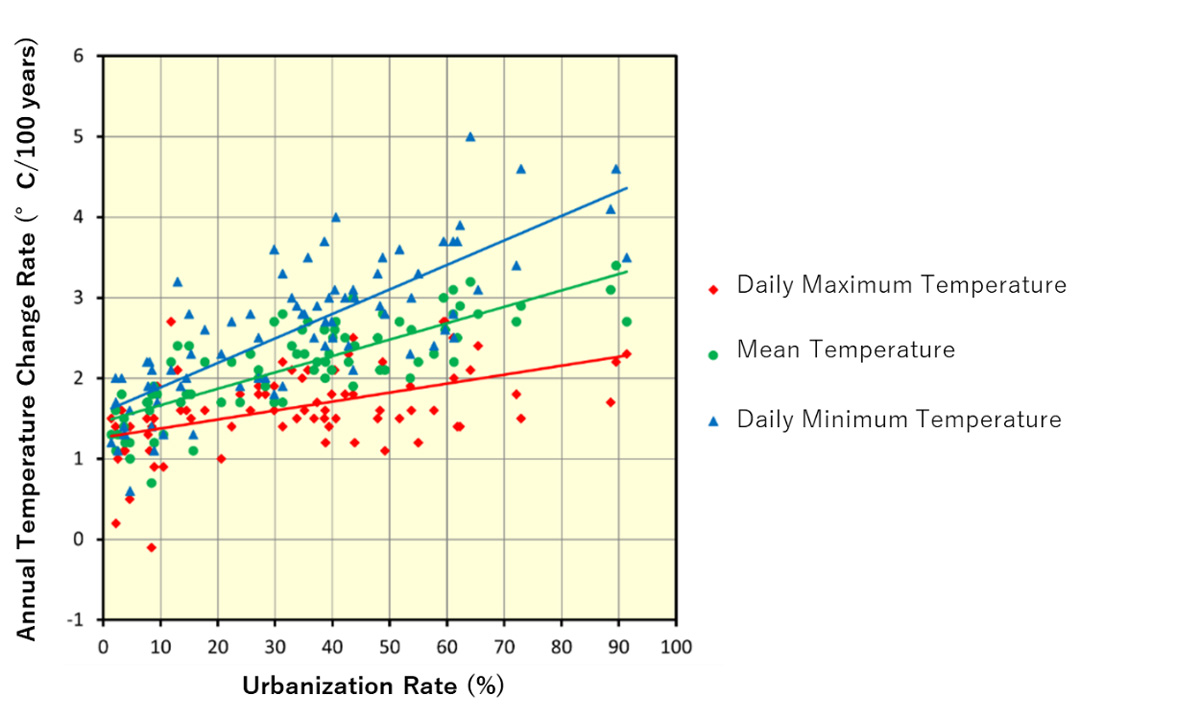
Correlation Between Annual Temperature Trends and Urbanization Rate at 81 Sites in Japan
Understanding the Urban Heat Island Phenomenon(English translation), Japan Meteorological Agency, Japan. Translated from Japanese by CCCA
Looking ahead, the urban heat island effect in Japan is expected to increase only slightly because of limited urban development, including the construction of taller buildings. Nevertheless, future temperatures are projected to rise further due to the added influence of climate change.
A case study examining the health impacts of heat stress estimated the willingness to pay to prevent environmental degradation in Tokyo, Nagoya, and Osaka during the 2070s based on projections from multiple climate models under the SRES A1B scenario. The study indicates that the willingness to pay per person to avoid heatstroke and sleep disturbances is expected to rise annually, reaching approximately 1.5 times the level of the 2000s.
Increased health risks in summer sporting events
Large-scale summer sporting events, such as the Summer Olympics and Paralympics, world championships in sports, including soccer and track and field, and the National High School Baseball Championship (Summer Koshien), have traditionally been held in summer. However, rising heat stress raises concerns about the negative impacts to the health of athletes and other participants.
In Japan, many sports activities, including school clubs, refer to the "Heatstroke Prevention Exercise Guidelines" issued by the Japan Sport Association. However, the number of cities and periods reaching heat levels defined as "extreme caution" or "exercise should be canceled" in these guidelines is expected to grow in the future.
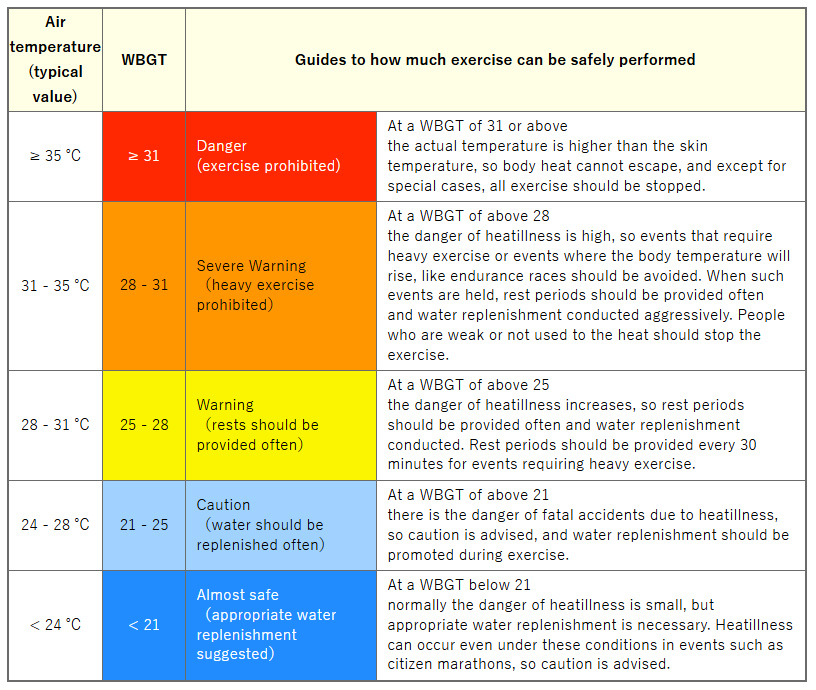
WBGT Guideline
Heat illness prevention information, Ministry of the Environment, Japan, based on materials from the Japan Sport Association
For the Summer Olympics, one of the largest sporting events worldwide, assessments of current host city candidates indicate that while most cities could manage under past climate conditions, the number of feasible host cities is projected to decline by up to 40% by the late 21st century, particularly in Asia and North America.