Climate change adaptation initiatives by businesses
Climate change impacts pose various risks to business activities, but businesses should also be aware that the same impacts may also present opportunities. This section outlines initiatives by businesses based on the two concepts of climate risk management and adaptation business.
Climate risk as a management issue for businesses
Climate change is already significantly impacting the activities of many businesses. These impacts range from sudden events like damage to facilities and employee injury or commuting disruptions caused by natural disasters, to more gradual impacts such as decreasing availability of water resources, agricultural produce, seafood, and other ecosystem services due to changing climate patterns. The scope of such impacts may extend beyond individual businesses to affect entire supply chains.
Given the likelihood of increasing climate change impacts, businesses need to assess the risks posed by such impacts over the long term and implement adaptation measures to avoid or mitigate them.
Adaptation to climate change required of businesses
For businesses, adaptation can be divided broadly into two areas: climate risk management aimed at mitigating impacts on their own operations, and adaptation business directed at developing products and services that facilitate adaptation by consumers and other businesses.
Climate risk management
Climate change affects all businesses regardless of region or industry, making climate risk management an imperative common to all of them. Businesses need to assess the impacts and risks of climate change, take steps to address them, and manage the risks over the long term. Conversely, forward-looking companies that proactively engage in strategic climate change adaptation stand to benefit in various ways.
Adaptation measures include, for example, establishing business continuity management frameworks and formulating business continuity plans to better withstand disasters caused by extreme weather events. Managing climate risks through such efforts enables businesses to not only mitigate losses from disasters caused by extreme weather events but also turn adversity into opportunities to boost customer trust by facilitating speedier recovery.
Adaptation business: reaping opportunities from climate change
While climate change impacts pose risks, they also present business opportunities stemming from growing demand for new products and services tailored to adaptation to the impacts of climate change on society and industry, thereby fueling the growth of a new adaptation business market.
Adaptation businesses encompass a wide range of products and services, including monitoring systems to avoid or mitigate damage from disasters caused by extreme weather events, materials for countering wind and flood damage, and beverages and functional materials for preventing heat illness. Many businesses already engaged in adaptation business have achieved success by re-purposing their existing products or services for this market.
By assessing their business not only from the risk perspective, but also with a view to utilizing existing products, services, or core strengths to launch into adaptation business, companies can unearth new business opportunities.
| Sector | Examples (titles) |
|---|---|
| Agriculture, Forest / Forestry, Fisheries |
|
| Water environment, Water Resources |
|
| Natural Ecosystems |
|
| Natural Disasters, Coastal areas |
|
| Human Health |
|
| Industrial / Economic Activities |
|
| Life of Citizenry / Urban life |
|
Initiatives by businesses, in more detail
This section looks into adaptation by businesses in greater depth, including global trends and how businesses are expected to implement adaptation.
Climate change impacts and corporate sustainability
Growing awareness of climate change risks
There is broad consensus in the international community that taking action on climate change is an urgent issue.
For example, the World Economic Forum (commonly known as the Davos Forum) surveys and publishes outlooks on global risks (defined as "the possibility of the occurrence of an event or condition that, if it occurs, would negatively impact a significant proportion of global GDP, population or natural resources"), and risks related to climate change consistently rank among the top threats. Particularly where long-term (10-year period) risks are concerned, the top four risks are all related to climate change: Failure to mitigate climate change, Failure of climate change adaptation, Natural disasters and extreme weather events, and Biodiversity loss and ecosystem collapse.
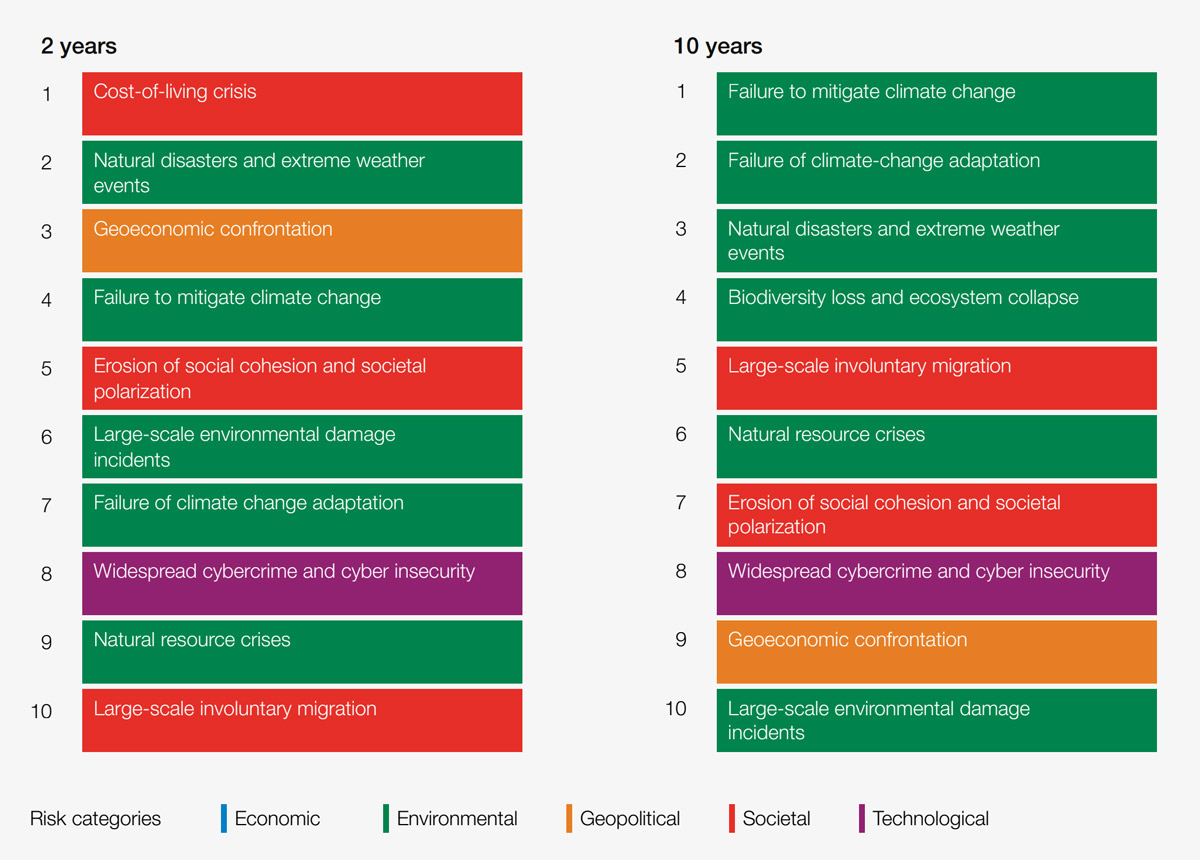
World Economic Forum, The Global Risks Report 2023: 18th Edition, 2023
Global trends in climate-related risk disclosure
Reflecting this increased awareness of climate risks, financial institutions concerned about risks spreading throughout their financial systems are increasingly demanding strategic action from businesses they invest in or lend to.
A notable example is the publication of the Task Force on Climate-related Financial Disclosures (TCFD) recommendations by the Financial Stability Board in June 2017. The TCFD recommendations encourage financial institutions and the companies in which they invest to disclose information about their climate change-related risks and opportunities.
Globally, 4872 financial institutions and other organizations have voiced their support for the TCFD recommendations, including 1470 in Japan (as of October 2023), the highest number worldwide.
The TCFD broadly divides climate-related risks into two categories: "transition risks" that are inherent in the transition to a low-carbon economy, including risks caused by changes in government policies and regulations, advances in decarbonization technologies, and changes in demand for specific products; and "physical risks" stemming from extreme weather events and other physical impacts of climate change.
ESG investment (investment that prioritizes environment, social issues, and governance) is a growing priority in the investment decisions of financial institutions, and among such considerations, response to climate change is considered to be of greatest importance.
Identifying climate change risks and opportunities
To integrate climate change adaptation in their management strategy, businesses must first develop an accurate picture of how climate change affects their finances, business strategies, and stakeholder relationships. This includes identifying risks and opportunities that could critically affect their corporate sustainability and value.
Examples of industry-specific climate risks and risk management
The risks posed by climate change vary by industry. In manufacturing, for example, extreme weather events can disrupt supply chains and hamper the procurement of raw materials. In the real estate industry, they may cause construction delays, while the energy sector may see changes in demand for heating and air conditioning, and so forth.
Many examples of TCFD-related initiatives are available on A-PLAT.
| Industry category | Acute impacts | Chronic impacts |
|---|---|---|
| Manufacturing | Heavy rainfall and typhoons lead to flooding, facility damage, and supply chain interruptions | Shifts in average temperature and rainfall patterns hinder the ability to secure consistent supplies of raw materials and water resources |
| Energy | Storm surge flooding interferes with the operation of power generation facilities located in coastal regions | Variations in average temperatures influence energy demand, including the need for winter heating |
| Real estate | Extreme weather events and negative climate conditions result in delays in commercial building construction | Impacts of climate change, such as flooding and storm surges, cause declines in property values in vulnerable areas |
| Shipping | Weather-related disasters cause shipping schedule delays and inflict damage to transported cargo | Rising sea levels affect the performance and usability of port facilities and related infrastructure |
| Tourism | Weather disasters cause interruptions to transportation networks and negatively affect tourism activities | Alterations in natural conditions result in the loss or contraction of tourism resources, as exemplified by the negative effect of reduced snowfall on ski resorts |
| Commerce | Approaching large typhoons cause temporary closures of department stores and supermarkets | Climate-related changes influence the demand patterns for seasonal goods, including beverages and apparel |
Examples of climate change opportunities and adaptation business
In addition to risks, climate change presents opportunities stemming from those risks in such areas as products and services, markets, and resilience. This could include, for example, increased demand for certain products and services in existing markets, increased opportunities to enter new markets, or increased competitive edge through enhancing adaptive capacity.
Many examples of adaptation business are available on A-PLAT.
| Category | Representative examples |
|---|---|
| Products and Services |
Climate change drives higher demand for the products and services of specific companies within existing markets
|
| Market |
Climate change creates opportunities for entry into new markets, with new avenues for growth expected to emerge
|
| Resilience |
Enhancing business adaptability creates opportunities to strengthen competitive advantages, including operational improvements and trust building
|
How businesses should pursue climate change adaptation
Given the risks and opportunities outlined above, businesses need to proactively drive their adaptation to climate change. The adaptation required of a business will vary greatly depending on location and type of business, so businesses need to tailor their strategies to their particular circumstances, but the following may provide some useful hints as a basic approach.
- Initial steps
- Clarify objectives.
- Decide scope.
- Set time frame.
- Establish implementation structure.
- Ensure proactive involvement of senior management.
- Selection and implementation of adaptation measures
- Select adaptation measures.
- Decide timing of implementation.
- Identification of relevant climate change impacts
- Review past impacts etc.
- Compile projection information.
- List expected impacts.
- Assess existing actions.
- Identification of priorities
Identify priorities based on impact likelihood and severity, and the strategic benefits of early response. - Checking progress and reviewing plans
- Conduct regular reviews.
- Update plans as required.