Natural ecosystems
As climate change advances, a wide range of impacts is expected to occur in terrestrial and marine ecosystems. Although multiple factors are thought to contribute to ecosystem changes, this section considers the specific role that climate change plays in driving these impacts. This section describes the impacts to natural ecosystems that have already been observed and potential impacts that may occur in the future.
Impacts on Natural Ecosystems Caused by Changes in Weather Conditions and Sea Surface Temperatures
Climate change is expected to exert a wide range of influences on natural ecosystems. Several examples are outlined below.
Changes in terrestrial vegetation and wildlife distribution associated with altered weather conditions
Shifts in temperature and precipitation patterns are changing the geographic distribution of terrestrial plants and animals.
For instance, in alpine areas, higher summer temperatures have expanded the range of Japanese stone pine, while soil drying caused by earlier snowmelt has expanded the distribution of the bamboo species Sasa kurilensis.
In addition, the encroachment of Sika deer and wild boars into alpine zones is increasing. Reduced snowfall and shorter snow cover durations are expanding the suitable habitats for Sika deer and wild boars across Japan, and further expansion is anticipated.
In fact, in the 40-year period between fiscal year 1978 and fiscal year 2018 , the distribution area of Sika deer increased by a factor of approximately 2.7, while that of wild boars expanded by a factor of approximately 1.9. These trends were likely driven not only by climate change but also by land-use changes, such as the rise in abandoned farmland and residential development in mountainous regions. As a result, concerns about crop damage caused by Sika deer and wild boars have increased in recent years, with fears of further escalation.
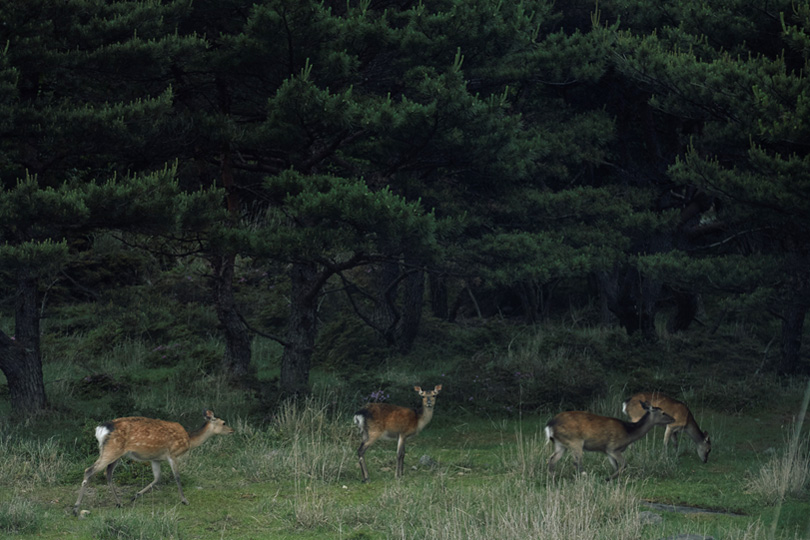
Sika deer
Source: NIES CCCA
Coral bleaching associated with rising sea surface temperatures
Increasing sea surface temperatures are having major effects on the distribution and species composition of marine plants and animals. For example, in the Okinawa region, bleaching events in subtropical corals have become more frequent as sea surface temperatures rise. In 2016, a large-scale bleaching event thought to be triggered by high summer temperatures occurred in Sekisei Lagoon, which is located between Ishigaki Island and Iriomote Island and represents the largest coral reef area in Japan. In the shallow waters of Sekisei Lagoon, up to 90% of reef-building corals experienced bleaching.
Assuming a future global temperature increase of 4 °C, suitable habitats for coral growth will likely disappear from the waters around Japan because of rising seawater temperatures and ocean acidification.
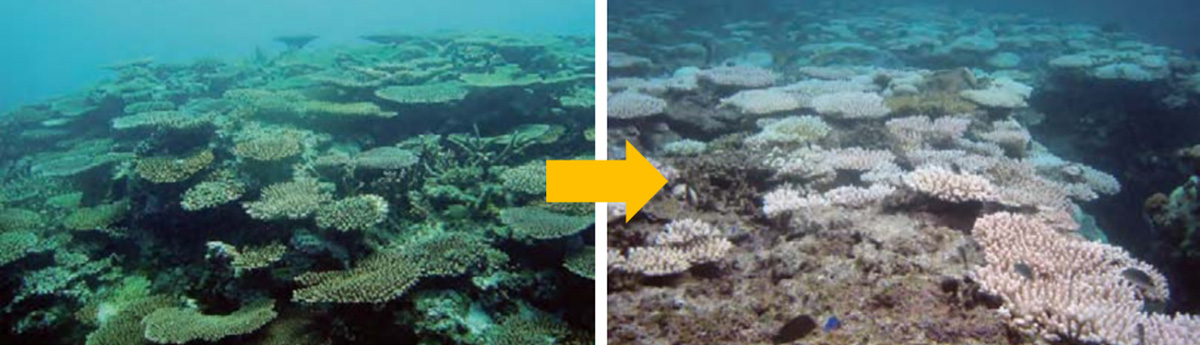
Coral bleaching
Left: Before bleaching / Right: After bleaching
STOP Global Warming 2017 (in Japanese: STOP THE 温暖化 2017), Ministry of the Environment, Japan. Translated from Japanese by CCCA
Decline of seaweed beds caused by rising seawater temperatures
Along coastlines such as those of Nagasaki Prefecture, rising seawater temperatures have led to previously unobserved declines in large brown algae and the expansion of so-called "isoyake," or seaweed-barren areas, which have become a serious issue.
This phenomenon is thought to result largely from climate change–related factors, including the loss of kelp species belonging to Eisenia and Ecklonia due to high water temperatures, grazing damage induced by shifts in the range of herbivorous organisms such as sea urchins, snails, and fish, and the destruction of seaweed beds by typhoons.
Further degradation of seaweed bed ecosystems is also anticipated in the future as seawater temperatures continue to rise and herbivorous fish shift northward and become more active.
This section provides an explanation of the impacts of climate change on Japan's natural ecosystems, covering the underlying mechanisms, impacts observed to date, and possible future developments.
Mechanisms Underlying the Impact of Climate Change on Natural Ecosystems
The mechanisms through which climate change affects natural ecosystems are assumed to follow the pattern shown in the figure below.
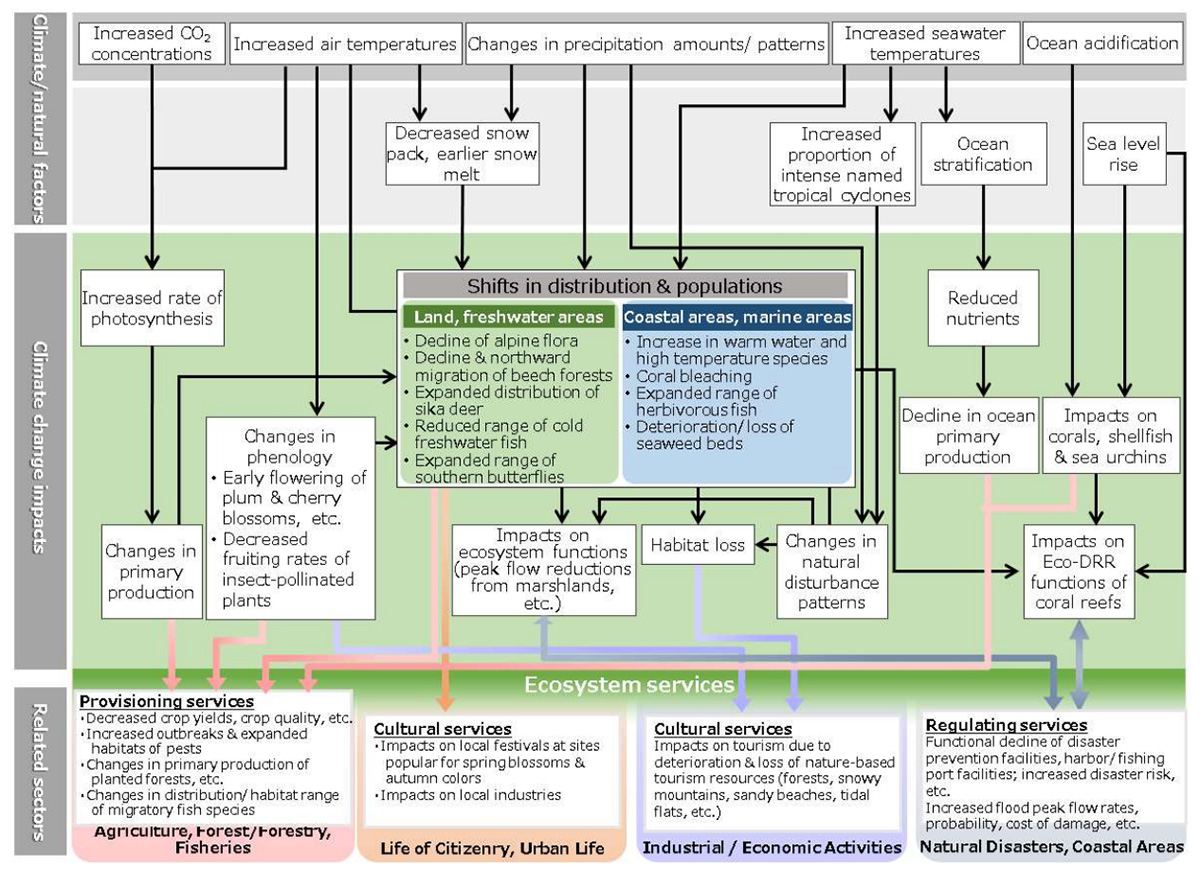
Schematic of projected impacts of climate change
Assessment Report on Climate Change Impacts in Japan, Figure 3-6., December 2020, Ministry of the Environment, Japan
Climate change alters ecosystem structures and functions through shifts in species distribution ranges, changes in biological timing, and modifications in the interactions among these elements. A distinctive feature of these impacts is that they extend beyond natural ecosystems and influence the agriculture, forestry, and fisheries sector, national life, and industrial and economic sector by altering the ecosystem services provided to humans. Human societies depend on a wide variety of ecosystem services, including the provision of food and raw materials, reduction of damage from extreme weather events, improvement of water and air quality, and provision of cultural and aesthetic benefits. If ecosystems that supply these services are impaired by climate change and can no longer function effectively, then the availability and quality of ecosystem services may decline or be lost altogether.
Current Impacts and Future Projections for Natural Ecosystems
Changes in terrestrial vegetation and wildlife distribution driven by climate change
Terrestrial vegetation is changing under the influence of climate change, along with factors related to human society and lifestyles.
For example, rising summer temperatures are promoting the growth of Japanese stone pine. Studies that have assessed annual shoot growth data collected from 1990 to 2017 at eight survey sites across Hokkaido and Honshu have indicated a significant long-term increase in growth at all locations. Moreover, continued summer warming is projected to further enhance annual shoot growth of Japanese stone pine, leading to an expansion of its distribution range.
In addition, earlier snowmelt and soil drying are contributing to the spread of species such as bamboo (Sasa kurilensis), while dry conditions are shrinking alpine wetlands, which are poorly adapted to such conditions.
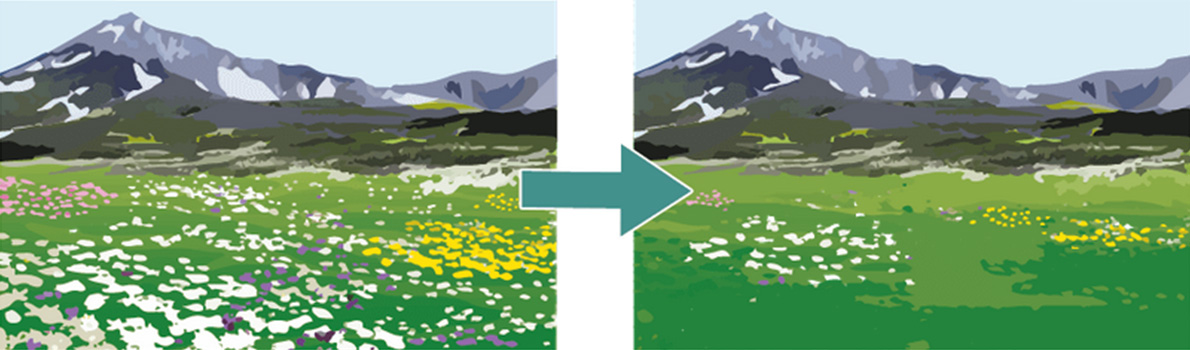
Decline of alpine wetland plant communities
Source: NIES CCCA
The geographic distribution of terrestrial wildlife is also shifting because of changes in climate as well as the influence of human society and changing lifestyles. In particular, reductions in snowfall and snow depth are contributing to the expansion of suitable habitats for certain species.
In recent years, concern over crop damage caused by Sika deer and wild boars has intensified. Studies indicate that between fiscal year 1978 and fiscal year 2018, the distribution area of Sika deer increased by a factor of approximately 2.7, while that of wild boars expanded by a factor of approximately 1.9, demonstrating a nationwide expansion in the ranges of both species. Although land-use changes, such as increases in abandoned farmland and residential development in mountainous regions, are factors driving the expansion of Sika deer and wild boar populations, climate change is also considered a contributing factor. With respect to the increase in suitable habitats for Sika deer, studies have suggested that climate change has played a larger role than land-use change in unfolding newly suitable areas. Expanding wildlife distributions are damaging the agriculture and forestry sectors, accelerating the decline in motivation for agricultural management, and raising concerns about a vicious cycle in which these impacts lead to further wildlife damage.
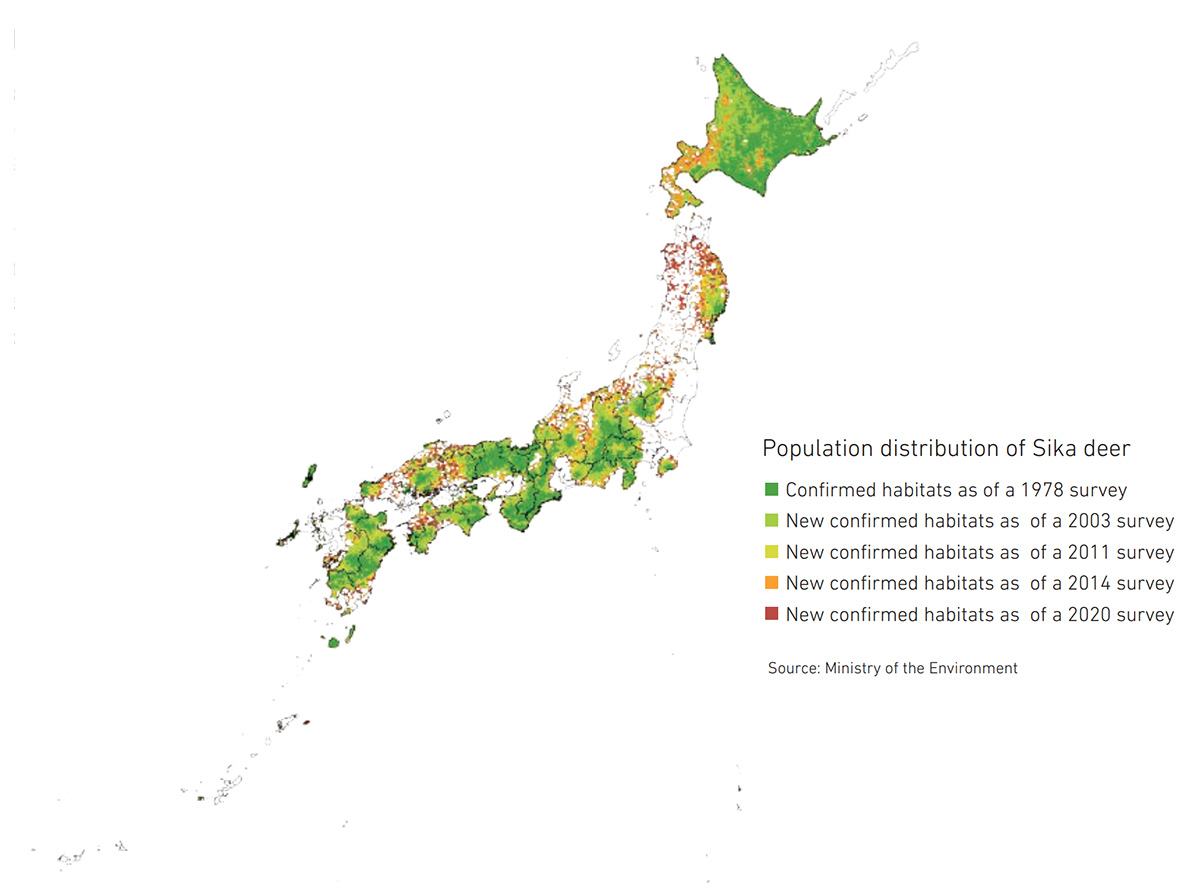
Expanding Distribution of Sika Deer
Annual Report on the environment in Japan 2021, Ministry of the Environment, Japan
Looking ahead, these shifts in the distribution of terrestrial vegetation and wildlife are expected to become even more substantial. Even under a status quo scenario, in which climate conditions and land-use remain at current levels over the next century, Sika deer habitat is projected to expand to more than 80% of the national land area by 2103. Moreover, under a scenario that combines global warming with population decline, such as shorter snow cover periods accompanying shrinking human settlement areas, deer are expected to begin inhabiting regions where they are currently rare, including sparsely populated and heavy snowfall areas, resulting in habitat expansion to over 90% of the country by 2103.
Coral bleaching associated with rising sea temperatures
Increasing sea temperature is among the factors exerting substantial effects on the distribution and structure of marine plants and animals.
Among these impacts, damage to coral reefs is of particular concern. When seawater temperatures remain above normal for extended periods, the symbiotic algae living within corals are unable to photosynthesize effectively, reducing their abundance within coral tissues and causing corals to appear white or pale, a phenomenon known as coral bleaching. If such conditions persist, corals become deprived of sufficient nutrients and may ultimately die.
Coral reef monitoring conducted in 2016 confirmed that large-scale bleaching events were occurring across Japan. This was attributed to the abnormal weather phenomenon known as El Niño, which persisted from 2015 to 2016, during which unusually high sea surface temperatures were maintained for extended periods in the eastern tropical Pacific, leading to elevated temperatures in many regions worldwide. At monitoring sites around Miyako Island and Iriomote Island, sea surface temperatures exceeded 30 °C for several days during the summer, resulting in the bleaching of approximately 80% of corals. In the vicinity of Miyako Island, the damage was particularly severe, with nearly half of the corals dying.
In the future, coral bleaching events of this kind are expected to become even more severe. Projections based on a high CO2 emissions scenario (SRES A2) suggest that suitable habitats for reef-building corals in tropical and subtropical regions will disappear from the waters around Japan due to rising seawater temperatures and ocean acidification. In contrast, projections assuming low CO2 emissions (SRES B1) indicate that some suitable habitats may remain by the end of this century. Outside these suitable areas, increased stress, including more frequent bleaching and reduced calcification, is anticipated.
Decline of seaweed beds caused by rising seawater temperatures
In Japan's temperate regions, changes in the distribution of seaweed, herbivorous fish, and reef-building corals from the 1950s through the 2010s have been documented, including contractions at the southern limits of the seaweed distribution and northward expansion of the coral and herbivorous fish distribution. These findings suggest that the expansion of reef-building coral communities and decline of seaweed beds in temperate zones are driven not only by the direct effects of temperature on corals and seaweed but also by the rapid spread of fish such as rabbitfish, which intensifies grazing pressure on seaweed and promotes the replacement of seaweed by corals.
According to the IPCC Special Report on the Ocean and Cryosphere, continued warming in temperate regions is projected to cause further declines in kelp forests, thereby increasing the risk of local extinctions, particularly in areas where marine heatwaves are expected to intensify under the RCP8.5 scenario.
In Japan's temperate zones, several studies also project the degradation of kelp forest ecosystems and their transition toward tropical coral reef ecosystems as seawater temperatures rise and herbivorous fish migrate northward. A modeling study examining changes in the distribution of seaweed and reef-building corals confirmed that rising sea surface temperatures and changing ocean currents are the mechanisms underlying the transition from seaweed beds to coral communities in temperate regions. This study used MIROC4h prediction data under the RCP4.5 scenario to show that increased grazing pressure from northward-migrating herbivorous fish and competition from expanding coral distributions increase the likelihood that large seaweed beds will shift to coral communities in the near future (2009-2035) compared with present conditions.