Understanding Climate Change
This section explains what exactly climate change refers to and how it differs from global warming, extreme weather, and other related terms. It also examines the relationship between climate change and human activity.
What Is Climate Change?
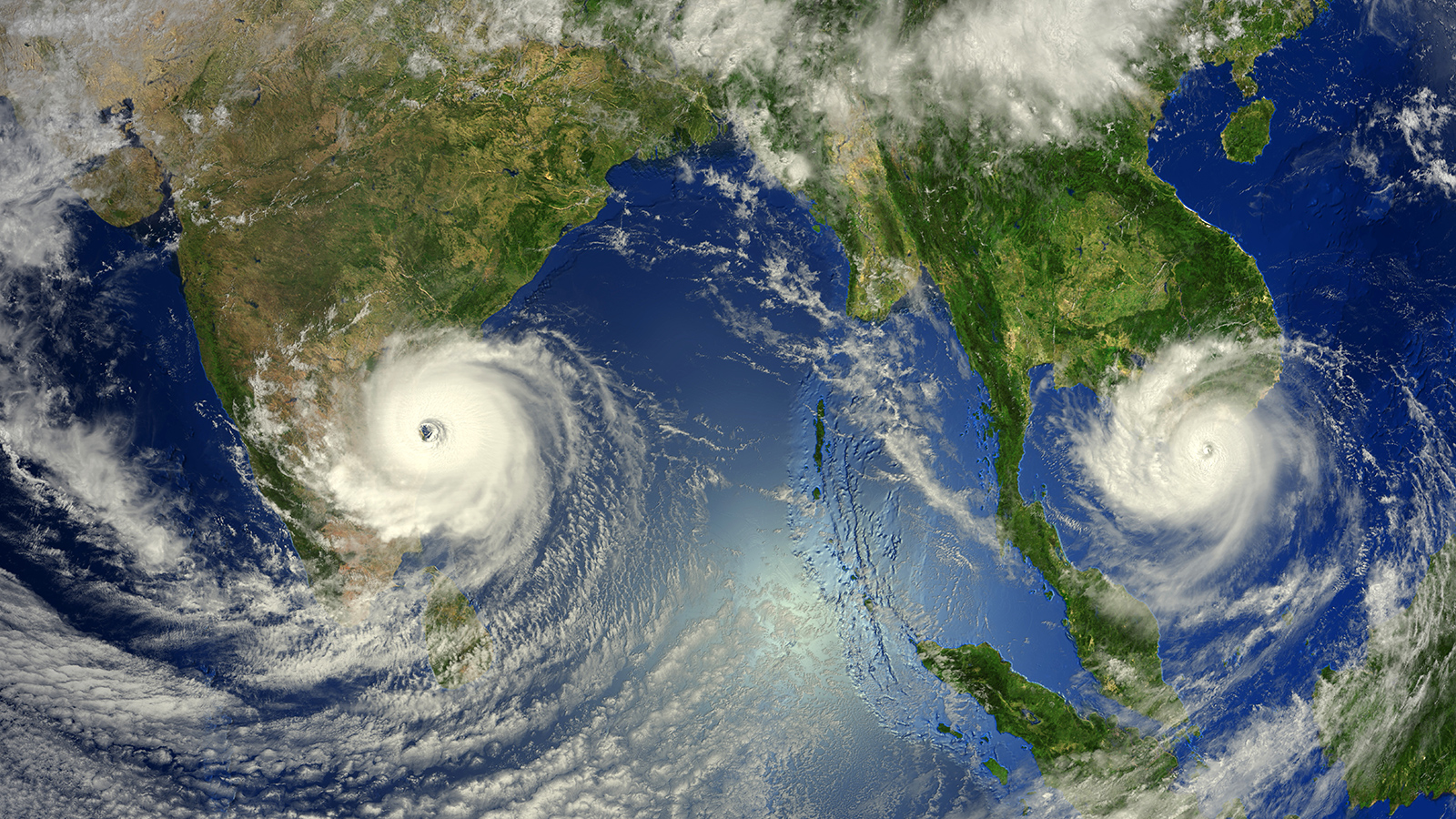
The recent rise in extremely hot days and frequency of extreme weather events such as heavy rainfall has come to impact our lives in various ways. Such decades-long changes in temperature, rainfall patterns, and other aspects of climate are what we call “climate change.”
The United Nations Framework Convention on Climate Change (UNFCCC), the first global agreement to combat climate change, defines climate change as “a change of climate which is attributed directly or indirectly to human activity that alters the composition of the global atmosphere and which is in addition to natural climate variability observed over comparable time periods.”
Source: United Nations Framework Convention on Climate Change (1992), Article 1: Definitions.
Throughout its long history, humanity has experienced multiple periods of warming and cooling, but these shifts were caused by natural factors such as solar activity, changes in the Earth’s axial tilt, and volcanic eruptions. These naturally occurring changes in the climate are also sometimes referred to as “climate change.”
Whether driven by natural factors or human activity, both are undeniably climate change. The problem is that the impacts of climate change driven by human activity (anthropogenic climate change) that we are currently facing are rapidly increasing in their severity. For example, the Earth’s axial tilt changes in a cycle of about 40,000 years, causing changes in climate as it progresses. This natural cycle has gradually elevated temperatures since around 20,000 years ago, but the global warming being driven by today’s anthropogenic climate change is occurring ten times faster.
(For details on the causes of climate change, see Causes of climate change.)
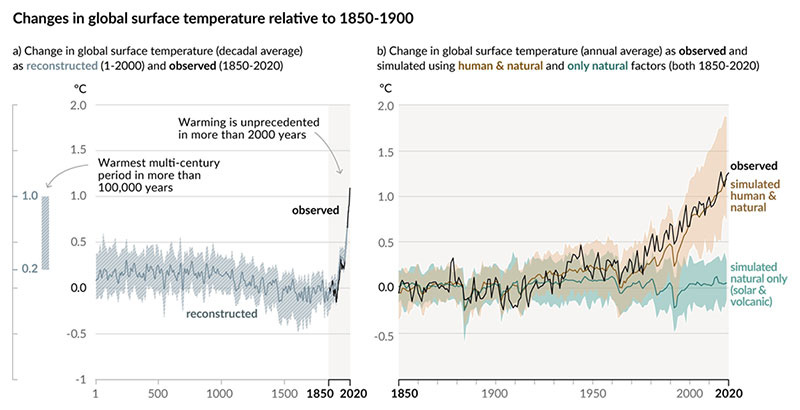
IPCC AR6 WGI-Figure SPM.1; IPCC, 2021
The Difference Between Global Warming, Extreme Weather, and Climate Change
News reports about climate change are often peppered with terms like “extreme weather” and “global warming” that seem vaguely similar but mean different things. Before we look at what they mean, we should perhaps first explain the difference between the words “climate” as in climate change and “weather” as in extreme weather.
“Climate” refers to a region’s weather conditions, including temperature and precipitation, over a long period.
Source: National Oceanic and Atmospheric Administration website
“Weather” on the other hand, describes short-term atmospheric conditions such as temperature, pressure, and humidity, and phenomena such as rain, snow, or wind that are caused by those atmospheric conditions.
The following section explains extreme weather and global warming.
“Extreme weather” is an event that is rare at a particular place and time of year. Definitions of rare vary, but an extreme weather event would normally be as rare as or rarer than the 10th or 90th percentile of a probability density function estimated from observations.
Source: IPCC Glossary
“Global warming” is defined as the estimated increase in global mean surface temperature, averaged over a 30-year period, or over a 30-year period centered on a specific year or decade, relative to pre-industrial levels, unless otherwise specified.
Source: IPCC Glossary
To sum up the differences between these two terms and climate change, extreme weather refers to abnormally high temperatures or heavy rains that occur at a certain time on a certain day, while climate change refers to changes in weather conditions over a long time span. Also, while global warming refers to the phenomenon of rising air and sea temperatures, climate change encompasses changes in rainfall patterns and other aspects of climate in addition to air and sea temperatures.
Climate Change and Human Activity
We humans have consumed vast amounts of fossil fuels since the Industrial Revolution, releasing huge volumes of carbon dioxide (CO2) into the atmosphere as a result. Intensive large-scale rearing of cattle, sheep, and other livestock that belch methane (CH4) has further exacerbated climate change, since methane is also a greenhouse gas. (For further details on the causes of climate change, see Causes of climate change.)
Researchers around the world have long been analyzing the causal relationship between human activity and climate change, and based on the results of these studies, the Intergovernmental Panel on Climate Change (IPCC) concluded in its Sixth Assessment Report (AR6) that “It is unequivocal that human influence has warmed the atmosphere, ocean and land.”
Source: IPCC Sixth Assessment Report
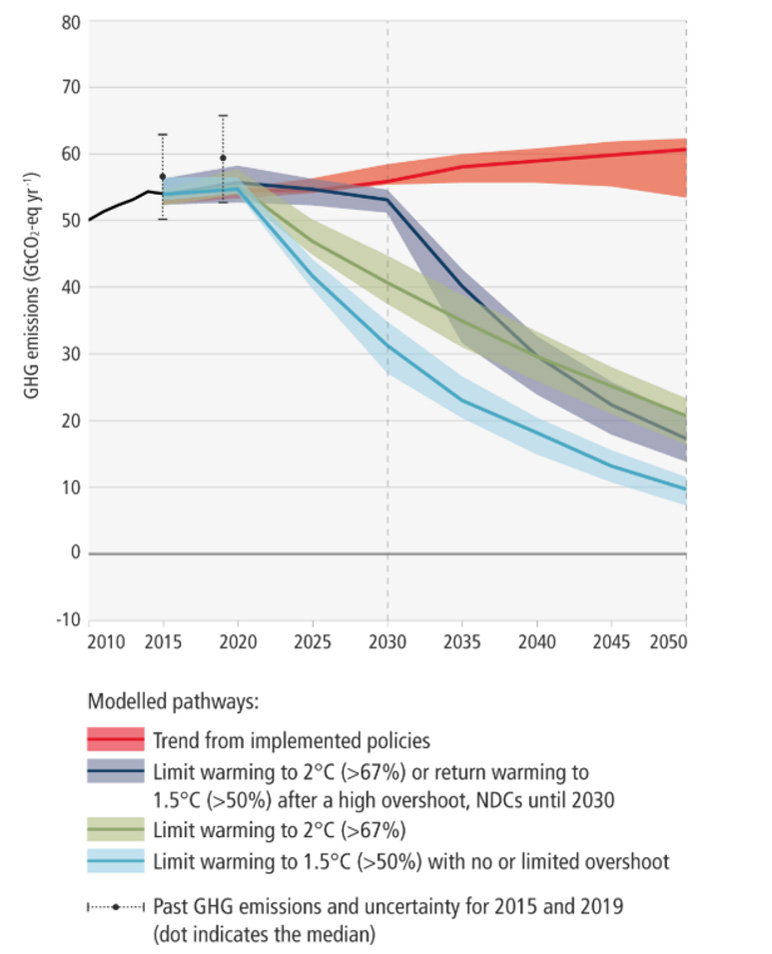
To minimize the impacts of climate change, the Paris Agreement in December 2015, a global framework on climate change, set the goal to hold “the increase in the global average temperature to well below 2 °C above pre-industrial levels” and to pursue efforts “to limit the temperature increase to 1.5 °C,” and required countries to submit a nationally determined contribution (NDC) regarding their plans to reduce greenhouse gas emissions.
Countries have begun to lay out clearer stepping-stones toward net zero in their NDC 3.0 submissions (as of September 2025), although acceleration of action is still needed.
Source: UNFCC,2025 NDC Synthesis Report. For further information on the Paris Agreement, see Paris Agreement.