Agriculture, forestry, and fisheries
Agriculture, forestry, and fisheries support Japan's food supply and are highly dependent on climate conditions. However, climate change has caused declines in the quality of agricultural products and reductions in fish catches in Japan in recent years. This section describes the historical impacts of climate change on Japan's agriculture, forestry, and fisheries sector, as well as potential future climate impacts.
Increasingly Serious Impacts of Climate Change on Agriculture, Forestry, and Fisheries
Climate effects have already been observed across a wide range of products, including rice, fruits, livestock, and marine products.
Fluctuating rice yields and declining quality
A nationwide decline in rice quality associated with rising temperatures has been confirmed. For instance, as illustrated in the photograph below, high temperatures during the growth period of rice plants cause starch shortages, which lead to an increase in white immature grains and cause brown rice to appear cloudy white, while high temperatures during the heading stage result in cracked grains with fissures in the endosperm.
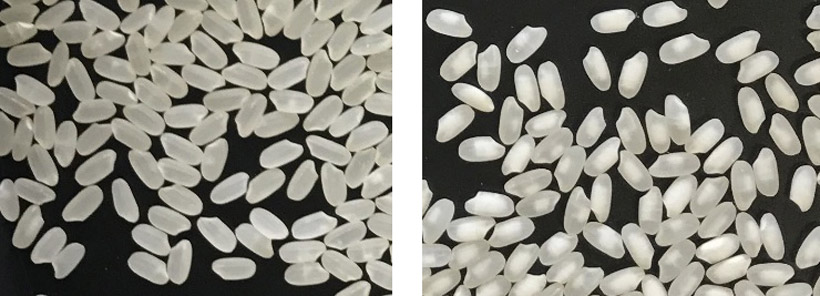
Normal grain (left) and white immature grains (right)
Source: NIES CCCA

cracked grains
Source: NIES CCCA
Decline in fruit quality and changes in shipping periods
Temperature increases have reduced the quality of various fruits and shifted their shipping seasons. For grapes, elevated temperatures during the harvest period can cause poor or delayed coloration. For apples, high temperatures combined with low rainfall during harvest not only delay or worsen coloration but also lead to issues such as sunburn. Additional impacts include peel disorders and physiological fruit drop in citrus fruits as well as poor bud formation in Japanese pears.
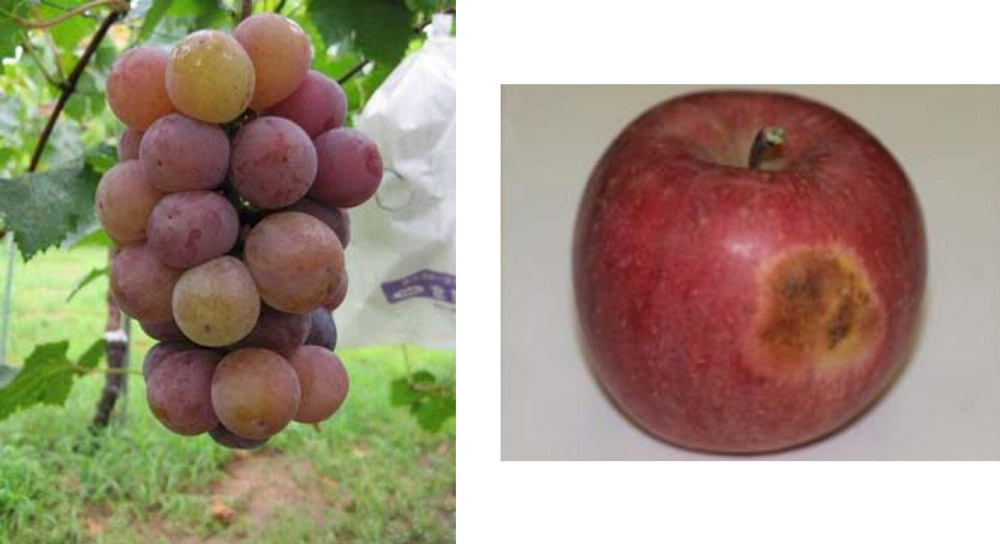
Poor coloring in grapes and sunburned apples
Report on Climate Change Impact Assessment (FY 2015) (in Japanese: 平成27年地球温暖化影響調査レポート), Ministry of Agriculture, Forestry and Fisheries, Japan. Translated from Japanese by CCCA
Negative impacts on livestock caused by rising temperatures
Although the temperature thresholds at which livestock experience heat stress vary by species, rising temperatures cause problems such as reduced feed intake and diminished digestion and absorption capacity, leading to impaired growth.
Specifically, beef cattle, pigs, and poultry have shown declines in both meat quantity and quality and reductions in reproductive performance; dairy cows have experienced decreases in milk yield and milk components; and egg-laying hens have exhibited lower egg production and reduced egg quality.
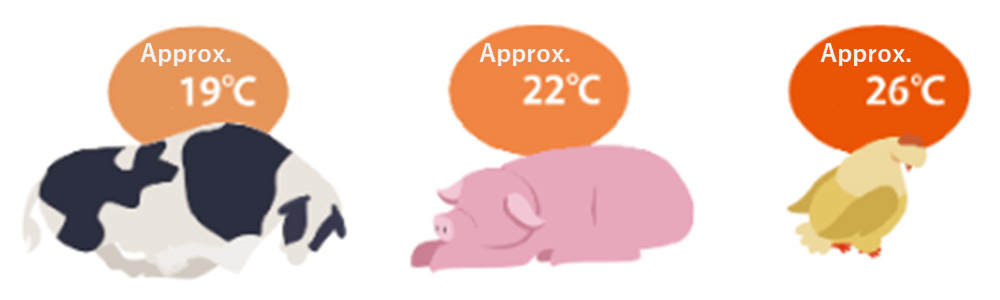
Temperatures at which livestock and poultry feel heat stress
Source: NIES CCCA
Negative impacts on marine products due to increasing water temperatures
Rising seawater temperatures are considered a key factor underlying the global decline in total catches, and shifts in the distribution of key marine animals such as fish and shellfish have already been observed in the waters surrounding Japan.
Aquaculture operations have also been affected, with elevated water temperatures causing mortality in scallops and oysters, inhibiting growth in seaweed, and shortening harvest periods due to delays in seasonal seawater cooling.
Potential for further expansion of negative climate impacts in the future
Although the current climate conditions affecting rice, fruits, livestock, and marine products have been described, negative climate impacts may continue to expand in the future.
With respect to rice yields, projections indicate that with rising temperatures, the overall national yields will continue to increase until approximately 2061–2080, followed by a decline toward the end of the 21st century, with these changes coinciding with a higher proportion of low-quality rice. In addition, more frequent heavy rainfall may increase the incidence of paddy field flooding, particularly around the heading stage, while earlier snowmelt could reduce available meltwater before planting, leading to shortages of agricultural water. Together, these factors may reduce rice yields.
For fruits, climate change is expected to intensify previously observed declines in quality and shifts in shipping periods and cause contractions in the cultivation areas for certain fruits, such as apples and oranges.
For livestock, continued temperature increases are expected to expand low-growth regions, and by the 2060s, most areas are projected to experience growth reductions, excluding parts of Hokkaido and high-altitude mountainous regions.
For marine products, rising water temperatures are projected to significantly reduce the summer distribution ranges of salmon and trout. Moreover, although the habitat range of yellowtail is expected to shift northward, current production areas may experience declines in quality.
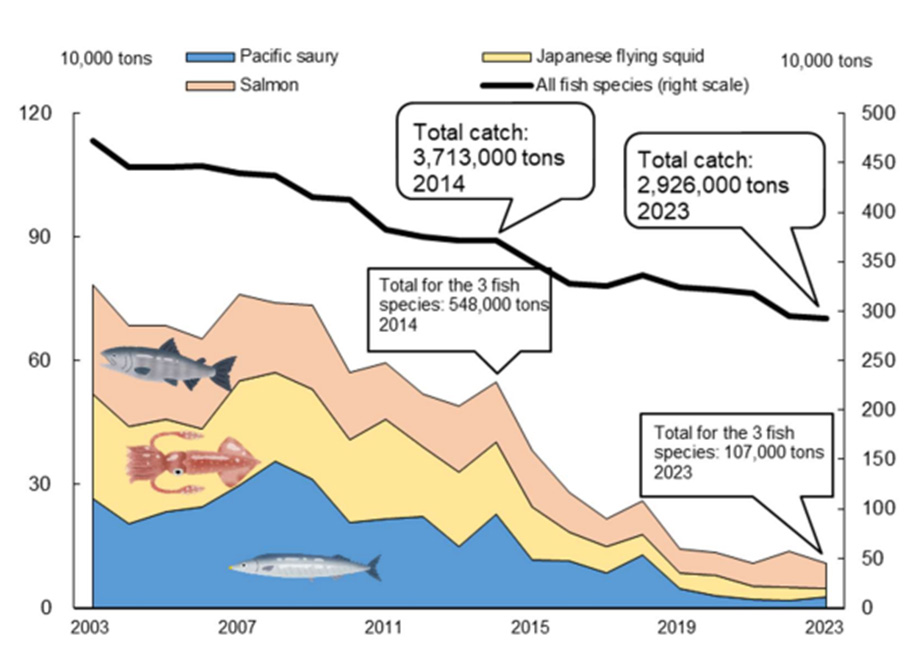
Trends in Catches of Pacific Saury, Japanese Flying Squid, and Salmon
FY2024 White Paper on Fisheries Summary, June 2025, Ministry of Agriculture, Forestry and Fisheries, Japan
This section outlines the mechanisms by which climate change affects Japan’s agriculture, forestry, and fisheries, along with the impacts observed to date and those anticipated in the future.
Mechanisms Underlying the Impact of Climate on the Agriculture, Forestry, and Fisheries Sector
The mechanisms through which climate change affects the agriculture, forestry, and fisheries sector follow the pattern illustrated in the figure below.
Climate change influences the growth and suitable cultivation zones of crops, alters the abundance and distribution of pests and weeds, affects the growth and reproduction of livestock, and changes the distribution and survival of marine resources. These effects ultimately influence the food supply and negatively impact the income levels and production practices of individuals engaged in agriculture, forestry, and fisheries. Such impacts arise from both direct climate factors, including rising air and water temperatures, and indirect climate factors, such as climate-induced changes in water resources and natural ecosystems. Moreover, climate change impacts in the agriculture, forestry, and fisheries sector extend to commerce, distribution, and international trade and thus have substantial effects on economic activity.
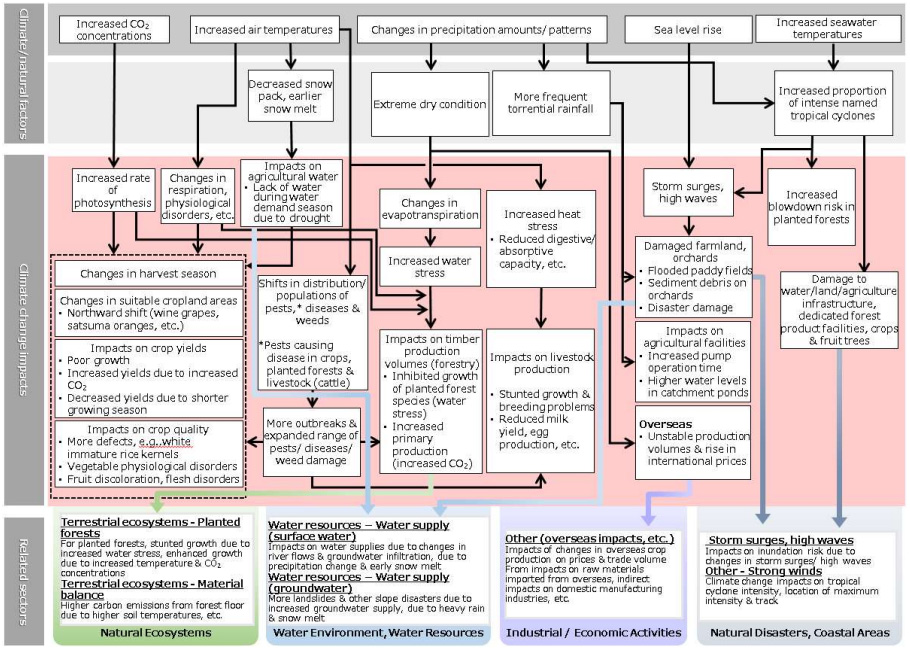
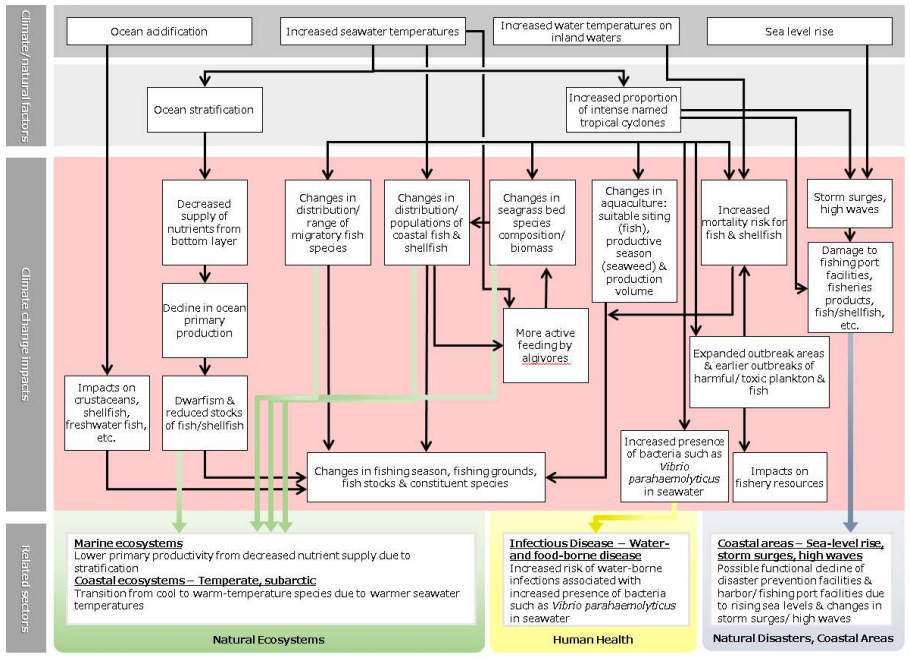
Schematic of projected impacts of climate change
Assessment Report on Climate Change Impacts in Japan, Figure 3-4., December 2020, Ministry of the Environment, Japan
Current Impacts and Future Projections for the Agriculture, Forestry, and Fisheries Sector
Varying rice yields and declining quality
Across Japan, rising temperatures have already been confirmed to reduce rice quality through the increased occurrence of white immature grains and cracked grains and decreased proportions of first-grade rice. Decreases in yield have also been observed in certain regions and in years marked by extreme heat. In addition, the distribution of pests such as the southern green stink bug and apple snail, which were once limited to specific areas such as southern Kyushu, has expanded with rising temperatures to encompass much of western Japan and parts of the Kanto region. Moreover, in years when temperatures were high at the heading stage, the incidence of rice sheath blight disease increased.
Among the various observed impacts, the most frequently reported effects in FY 2021 (April 2021–March 2022 in Japan) were the occurrence of white immature grains, insect damage, and cracked grains.
Looking ahead, continued temperature increases are projected to cause rice yields to rise overall nationwide until approximately 2061–2080 due to the carbon dioxide fertilization effect1, after which yields are expected to decline toward the end of the 21st century. Concurrently, the proportion of rice exposed to high-temperature risks is projected to increase. The proportion of milky white rice is also expected to rise in the 2040s, resulting in a substantial increase in economic losses because of reductions in the area producing first-grade rice. Moreover, heavier rainfall, particularly around the heading stage, is expected to increase the frequency of paddy field flooding, while earlier snowmelt is likely to reduce the availability of meltwater before the planting season, leading to agricultural water shortages and potentially lowering rice yields.
With respect to pests and diseases, further temperature increases are projected to lead to larger populations of southern green stink bugs and higher incidence rates of rice sheath blight disease.
1The carbon dioxide fertilization effect refers to the phenomenon in which higher atmospheric carbon dioxide concentrations exert fertilizer-like functions to increase plant growth and yield and stimulate plant photosynthesis.
Decline in fruit quality and changes in shipping periods
Fruit trees are typically cultivated for 30 to 40 years after planting, which increases the difficulty of changing varieties or cultivation practices and results in very low adaptability to climate change. Moreover, the effects of climate change are already evident in many types of fruit. For example, according to reports from FY 2021, grapes frequently exhibit poor or delayed coloration, sunburn, and fruit cracking, while apples commonly show poor or delayed coloration, sunburn, and frost damage.
In addition, issues linked to recent warming trends are affecting numerous species and regions, such as peel separation and physiological fruit drop in citrus fruits, poor germination in Japanese pears, watercore (where portions of the flesh become waterlogged) in peaches, and fruit softening in persimmons.
These impacts are expected to intensify further as temperatures continue to rise in the future. For grapes, growth disorders caused by high temperatures are anticipated to occur in existing production areas, and the coloration of open-field Kyoho grapes is projected to decline considerably after 2040. For apples, temperatures are projected to exceed the optimal range for cultivation by the end of the 21st century in the plains of major production areas in the Tohoku region and Nagano Prefecture.
Conversely, certain tree species are experiencing an expansion of suitable cultivation areas in colder regions where fruit production was previously difficult, and further expansion of these suitable cultivation areas is expected in the future. For instance, the suitable cultivation area for wine grapes may expand further into low-altitude areas of Hokkaido.
Negative impacts on livestock caused by rising temperatures
Increasing temperatures are negatively affecting a wide range of livestock raised for meat, milk, and egg production. For example, in beef cattle, pigs, and broiler chickens, higher temperatures reduce feed intake and digestive and absorptive capacity, resulting in poor growth and lower meat quality. In dairy cows, rising body temperatures increase metabolic rates and reduce feed intake, which lead to impaired growth as well as declines in milk yield and milk components. Similarly, in laying hens, reduced feed intake causes decreases in both egg production and egg quality. Moreover, elevated temperatures can impair reproductive functions in livestock such as beef cattle and pigs and may also influence the domestic spread of arthropod-borne viruses and expansion of vector species, potentially increasing the occurrence of abnormal births and livestock diseases.
Among these various effects, those reported frequently in fiscal year 2021 for dairy cows included decreased milk yield and milk components, increased mortality, and reduced reproductive performance.
As temperatures continue to rise in the future, the magnitude and extent of the impacts are expected to differ by livestock type and production system. However, the effects on the growth of dairy cows and broiler chickens are projected to be particularly pronounced, with both the affected areas and severity of growth reductions expected to increase. Additionally, for dairy cows, the combination of high temperatures and high humidity is expected to further intensify the negative impacts on production.
Negative impacts on the fisheries industry caused by rising water temperatures
Increases in seawater temperatures have contributed to the global decline in total catches and shifts in the distribution of major fishery resources such as fish and shellfish in the waters surrounding Japan.
For example, the fishing grounds for saury in eastern Hokkaido may be contracting as the Oyashio Current shifts from coastal to offshore routes and seawater temperatures rise. Similarly, changes in the migration routes of Japanese flying squid have shortened fishing seasons and altered the volume of landings in different regions, while high water temperatures during the early marine life stages of salmon are associated with lower return rates and declining catch trends. In contrast, some species have increased in abundance in the waters around Japan, including Spanish mackerel, which has seen higher catches in the Sea of Japan and along the Pacific coast of the Tohoku region, and yellowtail, which has experienced a marked increase in catches, particularly in Hokkaido and the Tohoku region. These shifts are also having secondary effects on the processing and distribution industries in certain regions.
In the aquaculture sector, reports have documented mass mortalities of scallops caused by elevated water temperatures and oysters during years characterized by high temperatures and low rainfall. Moreover, in nori seaweed farming, high autumn water temperatures have delayed the initiation of seeding, thereby shortening the cultivation period and resulting in reduced annual crop yields across multiple regions. Similarly, in wakame seaweed farming, rising water temperatures have delayed the placement of seedlings into the sea, thereby negatively affecting growth and quality during the peak harvest season.
Looking ahead, rising water temperatures are expected to reduce the distribution ranges of salmon and trout and expand the habitat range of yellowtail northward. There is also concern that some marine areas may become unsuitable for the cultivation of farmed fish, shellfish, and seaweed as summer water temperatures continue to rise.