Water environment and water resources
As climate change advances, increases in water temperature, decreases in water quality, and prolonged periods of low rainfall are anticipated, which may lead to water shortages in various regions of Japan. What specific impacts might these changes produce?
This section outlines the impacts that have already occurred in Japan's water environment and water resources sector and details further changes expected to emerge in the future.
Impacts on the Water Environment and Water Resources Caused by Rising Water Temperatures and Water Shortages
Water temperature increases and water shortages intensified by climate change are expected to exert a range of influences on river and lake water environments and water resources. Examples are described below.
Changes caused by rising water temperatures
When Lake Suwa freezes completely, the ice splits from the southern shore toward the northern shore, forming ridges of ice approximately 30 cm to 1.8 m in height. This phenomenon is known as "Omiwatari," and it is traditionally believed to represent the path taken by the male deity of the upper shrine of Suwa Shrine to visit the female deity of the lower shrine.
However, in recent years, rising water temperatures have reduced the frequency of complete freezing, resulting in what is referred to as an "Akenoumi (open sea)." Since the late 1980s, Omiwatari has only been observed approximately once every four years, with the most recent occurrence recorded in 2018. In 2024, an open sea was declared on February 4, the first day of spring, marking the sixth consecutive year of Akenoumi.
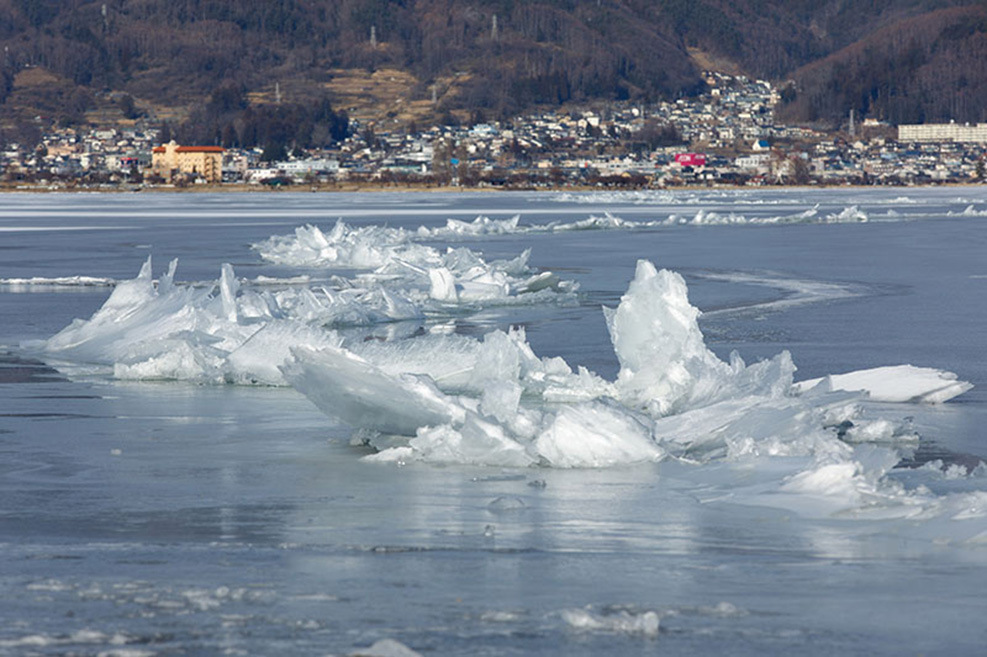
The God's Crossing of Lake Suwa
Rivers and lakes experiencing water quality decline due to rising temperatures
In recent years, algal blooms, in which the water surface becomes covered by a green, paint-like layer due to the rapid proliferation of phytoplankton, have emerged as a serious issue. When algal blooms occur, the algae eventually die and decompose, and in dams, this process can generate strong odors, sometimes causing an unpleasant smell in drinking water supplied from such sources. It has been confirmed that rising temperatures significantly promote the growth of phytoplankton species responsible for algal blooms.
Thus, climate change-induced increases in water temperatures in rivers and lakes can lead to declining water quality through enhanced phytoplankton growth and related processes. By the end of the 21st century, the period during which the algae associated with algal blooms are dominant (i.e., more abundant than other species) is projected to be approximately two months longer than at present, which will potentially extend the duration of algal bloom problems.
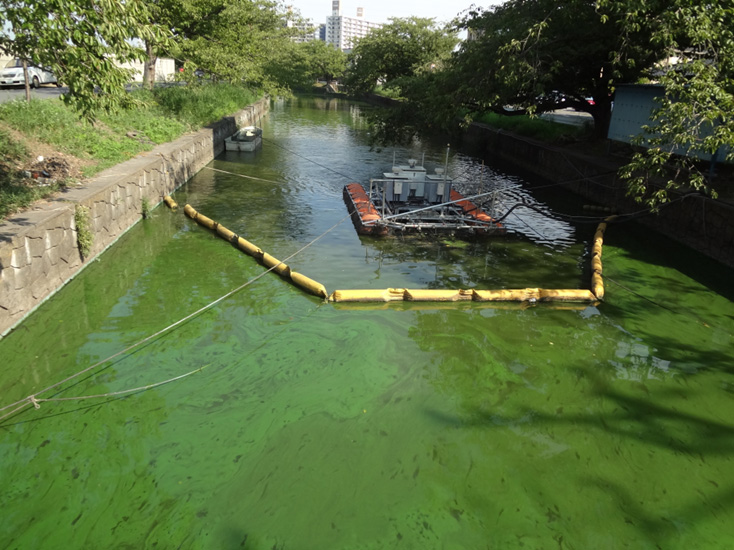
Algal bloom
Source: NIES CCCA
Water shortages and water usage restrictions caused by prolonged low rainfall
Climate change is amplifying temporal and spatial variability in precipitation, increasing the contrast between heavy and light rainfall periods and between regions receiving abundant or scarce rainfall. When rainfall is absent or extremely limited for extended periods, water levels in dam reservoirs and other sources of drinking water may decline to insufficient levels. In recent years, water shortages have occurred in multiple areas of Japan, leading to the implementation of water-use restrictions.
For example, a nationwide water shortage occurred in 2016 because of exceptionally low winter snowfall in Gunma and Tochigi Prefectures in the Kanto region and unusually low summer rainfall in the Chugoku and Shikoku regions. Rapid declines in dam water levels within the Tone River system in Kanto and Yoshino River system in Shikoku heightened concerns about water shortages, particularly in those areas. Although the degree to which climate change contributed to this shortage remains unclear, the likelihood of similar situations is expected to increase if water shortages become more frequent and severe in the future.
Shortages of irrigation water due to reduced snowfall and earlier snowmelt
As illustrated in the graph below, snowfall on the Sea of Japan side of eastern Japan shows a downward trend. Rising temperatures are reducing both the frequency of snowfall and volume of accumulated snow during winter and causing snowmelt to occur earlier in spring.
These changes contribute to insufficient water availability during early spring, when river water is heavily relied upon for agricultural use. For example, in the Agano River basin of Niigata Prefecture, reports indicate that the volume of snow that should have accumulated by April has declined because increased snowmelt during winter.
In the future, if winter temperatures continue to rise and snowfall decreases further, irrigation water shortages are expected to intensify, particularly in early spring, which will negatively impact the Tedori River basin of Ishikawa Prefecture. Moreover, if snowmelt advances even earlier and river discharge declines during critical periods, impacts could extend beyond agricultural water to affect drinking water supplies, industrial water use, and other sectors.
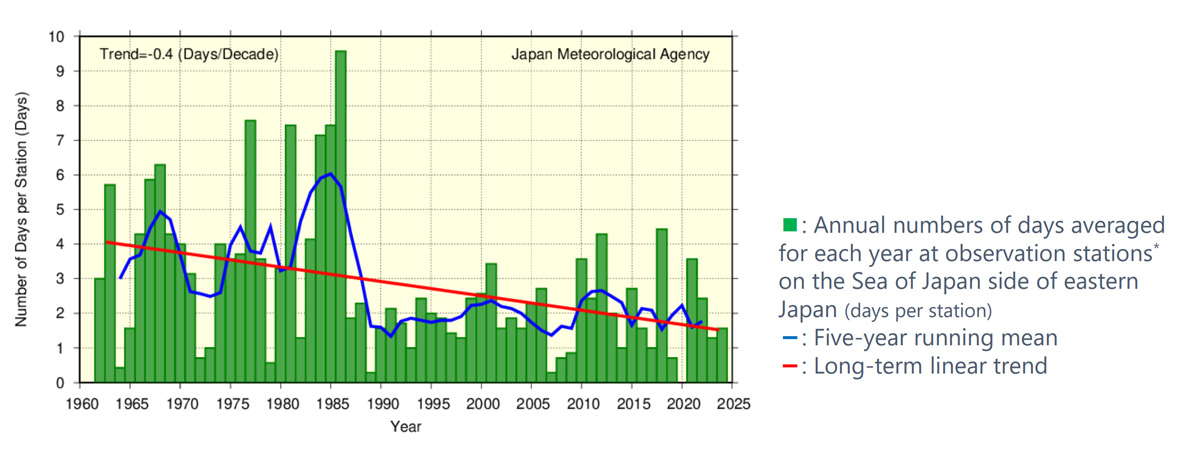
[The Sea of Japan side of eastern Japan]
Annual number of days with snowfall ≥ 20 cm (1962 – 2024)
Climate Change in Japan 2025, Japan Meteorological Agency, Japan
This section describes the mechanisms through which climate change affects Japan's water environment and water resources and details the impacts observed to date and anticipated in the future.
Mechanisms Underlying the Impacts of Climate Change on the Water Environment and Water Resources Sector
The mechanisms through which climate change influences the water environment and water resources sector follow the pattern illustrated in the figure below.
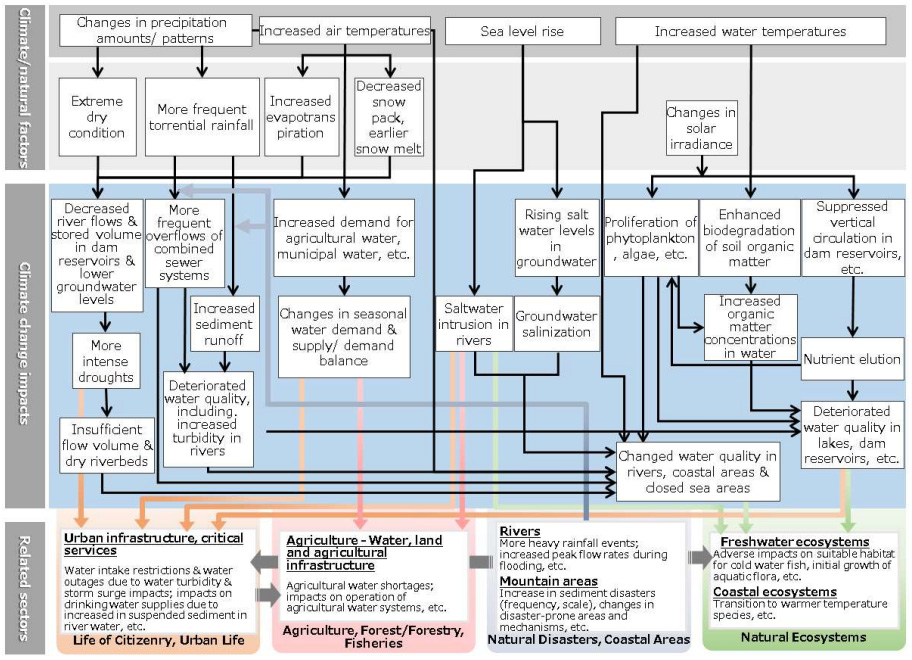
Schematic of projected impacts of climate change
Assessment Report on Climate Change Impacts in Japan, Figure 3-5., December 2020, Ministry of the Environment, Japan
Increases in air temperature caused by climate change can increase the water temperature in lakes, dams, rivers, coastal zones, and enclosed seas, with these changes potentially inducing decreases in water quality. Alterations in precipitation patterns can increase sediment inflow into dams and rivers, which may lead to greater inflows of turbid materials from rivers into coastal and enclosed marine areas.
In the water resources sector, climate change-induced shifts in precipitation patterns can reduce river discharge and lower groundwater levels because of increases in the frequency of dry days, declines in snowfall, and increases in evapotranspiration. During the hot summer season, the demand for both agricultural and urban water rises; however, the potential for water shortages during these periods is increasing due to greater winter rainfall, reduced snowfall, and earlier snowmelt. In addition, rising sea levels are extending the intrusion of seawater into river estuaries and groundwater systems, thereby causing salinization. These impacts extend across multiple sectors, including agricultural infrastructure, natural ecosystems, and the life of citizenry, etc.
(Partially adapted from the Climate Change Impact Assessment Report, p. 81).
Current Impacts and Future Projections for Water Environment and Water Resources
Declines in river and lake water quality due to rising temperatures
Over the past three decades, out of 4,477 sites nationwide, including rivers, lakes, and coastal areas, 72% and 82% have exhibited increasing water temperature trends during summer and winter, respectively.
Against this backdrop, Lake Biwa, the largest lake in Japan, has shown a decline in dissolved oxygen concentration (concentration of oxygen dissolved in the water), which is essential for sustaining aquatic organisms. From spring through autumn, surface warming of lake water leads to the formation of a thermocline, which is a layer where water temperature changes sharply between the surface and deeper layers. Once a thermocline develops, vertical mixing of water is suppressed, which restricts the supply of dissolved oxygen to deeper layers and causes increased oxygen consumption due to the decomposition of dead plankton and respiration of organisms. Under normal conditions, surface cooling during winter triggers full circulation, a process in which water mixes vertically down to the lake bottom, thereby equalizing temperatures and delivering oxygen-rich surface water to deeper layers. However, climate change is increasing the likelihood of milder winters, and if surface cooling is insufficient, full circulation may not occur, which will prevent the recovery of dissolved oxygen in deeper layers and increase the risk of oxygen depletion. Indeed, a declining trend in bottom-layer dissolved oxygen concentrations and recent rising trend in the frequency of hypoxic conditions have been observed in Lake Biwa.
In the future, water quality decline associated with rising water temperatures is expected to intensify. For example, at Urayama Dam in the upper Arakawa River basin, water temperatures are projected to increase in the surface, middle, and bottom layers while dissolved oxygen levels required for aquatic life are projected to decrease. In addition, higher concentrations are also predicted for suspended solids, total nitrogen, and total phosphorus, which will contribute to declining water quality.
Water shortages and water usage restrictions caused by prolonged low rainfall
Although short periods of heavy rain and intense downpours have become more frequent in recent years, the total number of rainy days per year has declined, with these extended dry periods leading to water shortages and water usage restrictions almost every year. Over the past 30 years, drought-related water shortages and tap water supply restrictions have occurred nationwide, with some areas of Shikoku experiencing such conditions in more than eight of those years.
As climate change progresses, water resources are projected to increase by the end of the century in Hokkaido and western Kyushu and along the Sea of Japan side of the Tohoku region, although they will substantially decrease in the eastern Kii Peninsula, central mountainous region, and Izu Peninsula. These projections are based on water resource simulations for individual river basins calculated by subtracting evapotranspiration from precipitation, and they show diverse patterns, including increasing trends, decreasing trends, and repeated fluctuations. As a result, regions expected to gain water resources and those likely to experience declines will coexist, raising concerns about future instability in water availability across different areas.
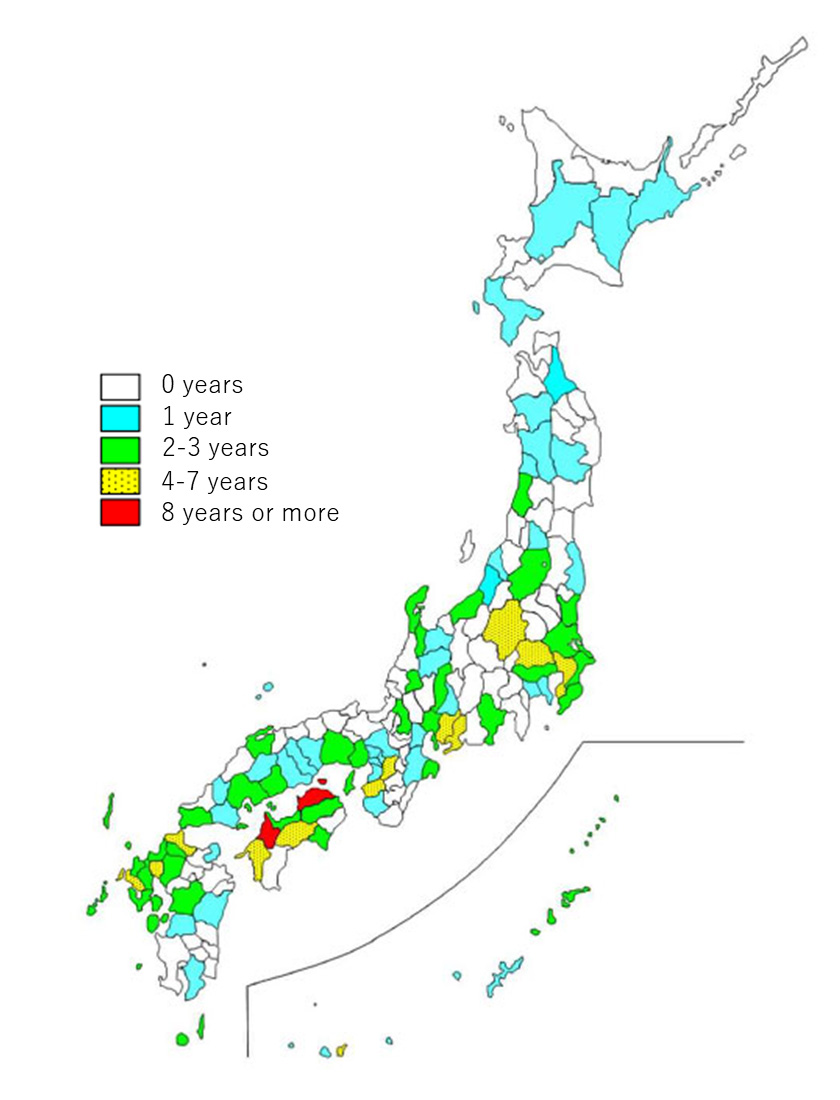
Number of years with water shortages and tap water supply restrictions due to drought (1992–2021)
Shifts in the Water Resource Situation (in Japanese: 水資源を巡る情勢の変化), May 2023, Ministry of Land, Infrastructure, Transport and Tourism, Japan. Translated from Japanese by CCCA
Shortages of irrigation water due to reduced snowfall and earlier snowmelt
In regions that experience heavy snowfall, such as Hokuriku, rising winter temperatures cause more precipitation to fall as rain than snow, leading to reduced snowfall, earlier snowmelt, and increased meltwater during winter. This situation has heightened concerns about insufficient irrigation water in early spring. For instance, decreases in river flow have been observed during periods of peak agricultural water demand, such as the puddling period, which occurs roughly 30 days after sowing when water is added to rice paddies to break up and level the soil, thereby creating a mismatch between water availability and traditional water use practices. According to an assessment covering 336 river basins nationwide, projections for the 2081–2100 puddling period indicate reduced water availability in northern Japan, including the Tohoku and Hokuriku regions, even under the RCP2.6 scenario. Moreover, further reductions are expected in western Japan, including the Kinki and Chugoku regions, as well as Hokkaido, under the RCP8.5 scenario.