Natural disasters and coastal areas
As climate change advances, rainfall intensity is expected to increase, potentially heightening the risk of natural disasters. What specific impacts may result?
This section outlines the impacts of climate change on Japan's natural disasters, including impacts observed to date and those anticipated in the future.
Natural Disasters that Intensify Under Climate Change
The scale of river flooding, storm surge, and landslide damage may be increasing because of climate change. Several examples are presented below.
Damage from river flooding caused by heavy rainfall
Increases in heavy rainfall associated with climate change have worsened the damage caused by river flooding. In 2019, flood-related damage reached the highest level since records began, with Typhoon Hagibis (2019) causing the largest amount of damage ever recorded from a single flood event. The intense rainfall brought by this typhoon triggered widespread river flooding, leading to raised riverbeds caused by sediment accumulation and driftwood accumulation around bridges. This heavy rainfall was closely linked to recent climate change, with total precipitation estimated to have increased by approximately 10% under the average temperature rise of approximately 1 °C since 1980.
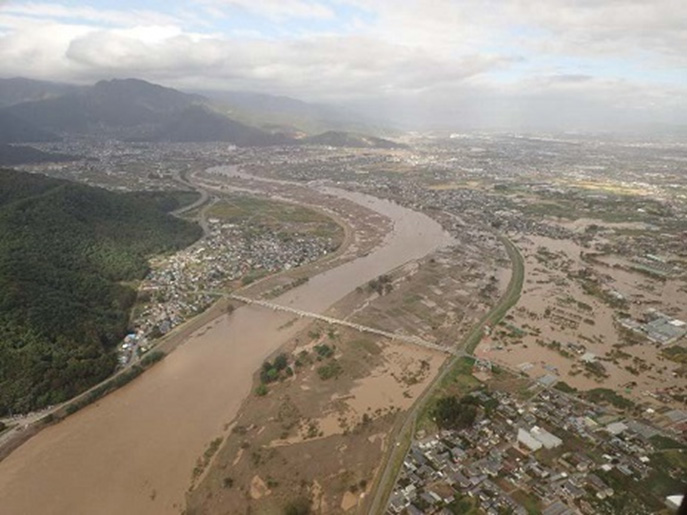
Damage status of Typhoon Hagibis in 2019(Nagano city)
Source: Cabinet Office, Japan. Translated from Japanese by CCCA
Sea level rise and storm surge damage associated with typhoons
Storm surge refers to an abnormal rise in sea level caused by two main processes: reduced atmospheric pressure-driven suction, which occurs during the passage of strong low-pressure systems such as typhoons, and wind-driven surge, in which seawater is pushed toward the coast by strong winds. Since sea levels continue to rise under current climate change, the risk of storm surge damage is expected to increase under future climate change projections. Climate change may also modify typhoon characteristics, including their frequency, intensity, and paths. Since typhoons are a primary driver of storm surges, such changes could influence future storm surge occurrence.
In 2018, Typhoon Jebi struck the Kansai region with extremely strong winds and unprecedented storm surge levels. These conditions caused a tanker to collide with the access bridge to Kansai International Airport and inundated airport runways, resulting in extensive damage.
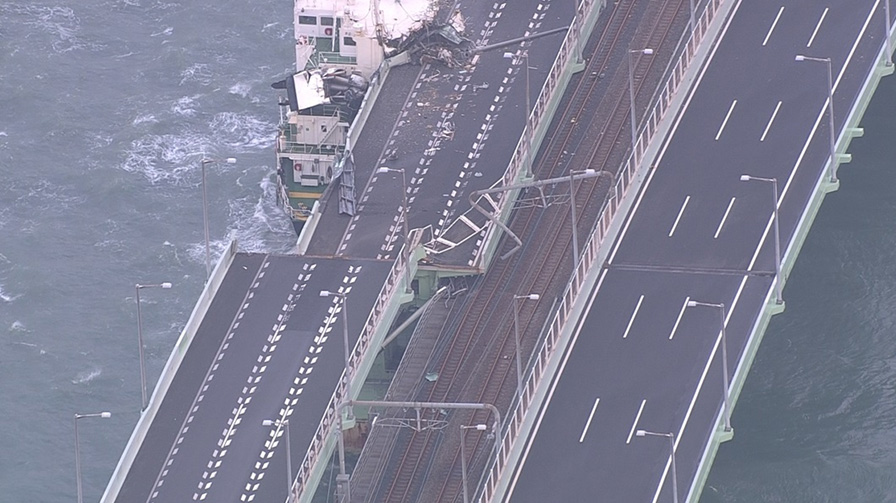
Damage from Typhoon Jebi in 2018: Vessel collision with the Kansai Airport bridge
Source: Kinki Regional Development Bureau, Ministry of Land, Infrastructure, Transport and Tourism (Kinki RDB,MLIT), Japan. Translated from Japanese by CCCA
Landslide damage caused by heavy rainfall
As heavy rainfall events become more frequent and widespread, landslides are also increasing in both frequency and scale. Moreover, their characteristics and areas in which they occur are also shifting.
During the heavy rains in July 2018, continuous precipitation caused the continuous flow of large volumes of sediment from landslides into the upstream areas of rivers, leading to severe damage as channels became clogged with sediment, a phenomenon known as sediment-laden flood inundation. This type of intense rainfall is closely linked to recent climate change, with the probability of rainfall events that previously occurred once every 50 years estimated to have increased by a factor of approximately 3.3.
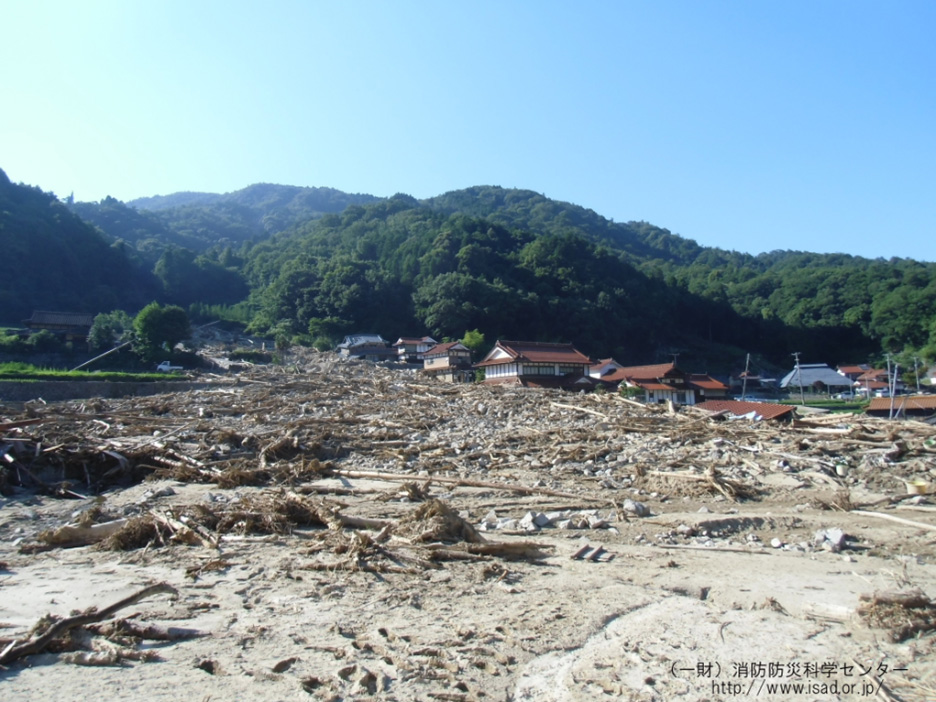
Damage caused by the July 2018 heavy rains
Source: Disaster Photo Database, Institute of Scientific Approaches for Fire and Disaster, Japan. Translated from Japanese by CCCA
Potential for greater damage in the future
Thus far, three types of natural disasters have been discussed, and the damage associated with these disasters is expected to increase in the future.
With respect to river flooding, rainfall intense enough to cause floods in major river basins across Japan is projected to increase by the end of this century compared with current conditions.
Regarding storm surge damage, a certain degree of sea level rise is inevitable, and the frequency of storm surge events may increase depending on future changes in typhoon intensity and paths.
For landslides and mudslides, stronger, longer-lasting, and more extensive heavy rainfall is expected to result in even greater damage in the future.
This section describes the mechanisms by which climate change affects Japan's natural disasters, the impacts observed so far, and the potential impacts anticipated in the future.
Mechanisms Underlying the Impact of Climate Change on Natural Disasters
Alterations in climate and natural conditions, including more frequent and intense extreme weather events such as heavy rainfall and typhoons and rising sea levels lead to a range of impacts, such as increased river flooding, inland flooding, and landslide events, as well as more frequent and severe storm surges and high waves. Changes in wave height, period, and direction also contribute to the accumulation and erosion of sandy beaches. These effects extend beyond the natural environment and influence various industries, economic activities, and national life.
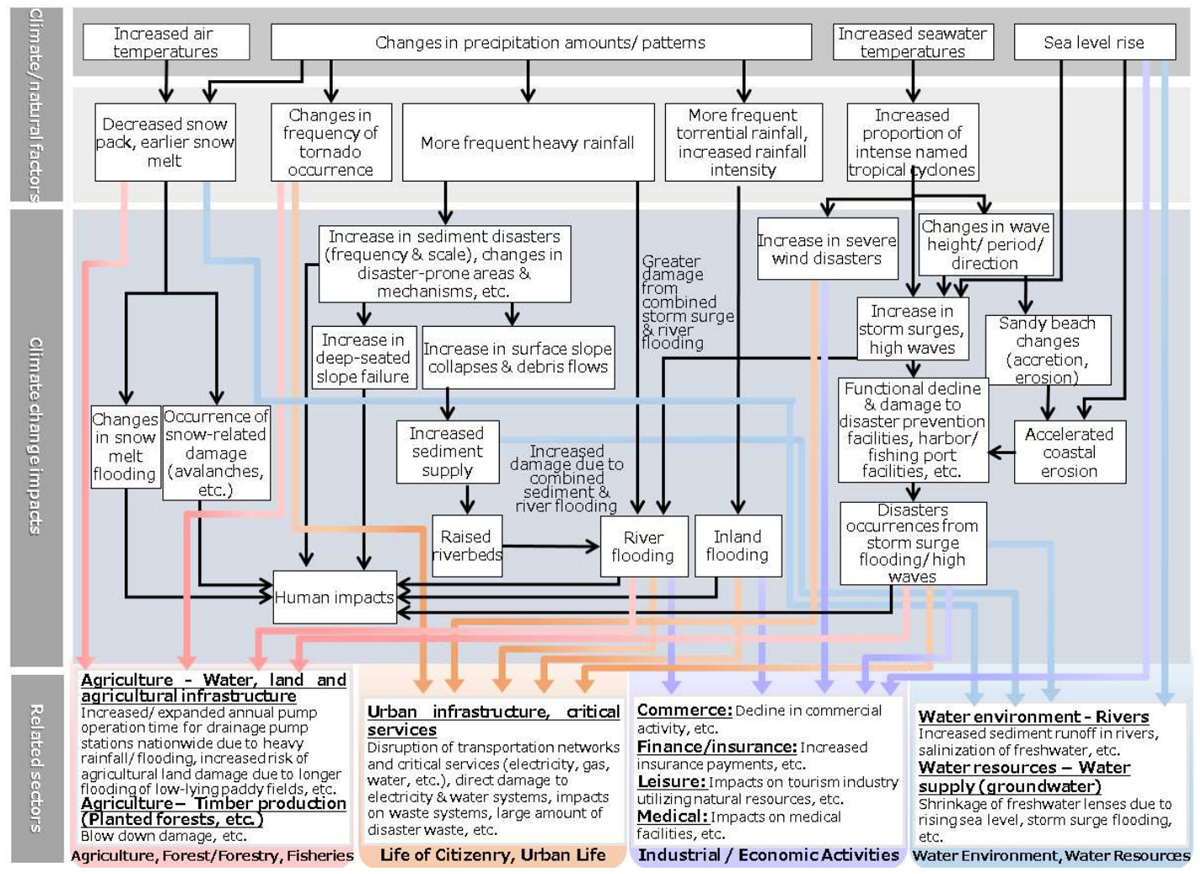
Schematic of projected impacts of climate change
Assessment Report on Climate Change Impacts in Japan, Figure 3-7., December 2020, Ministry of the Environment, Japan
Current Impacts and Future Projections for Individual Natural Disasters
Damage from river flooding caused by heavy rainfall
In recent years, damage caused by river flooding associated with heavy rainfall has become increasingly serious. As illustrated in the figure below, nationwide flood damage in 2019 reached approximately JPY 2.18 trillion, which is the highest annual total excluding tsunamis since records began. Additional reports have highlighted flood-related impacts, including the long-term increase in the frequency of heavy rainfall and rise in the number of locations where water levels exceeded flood risk thresholds.
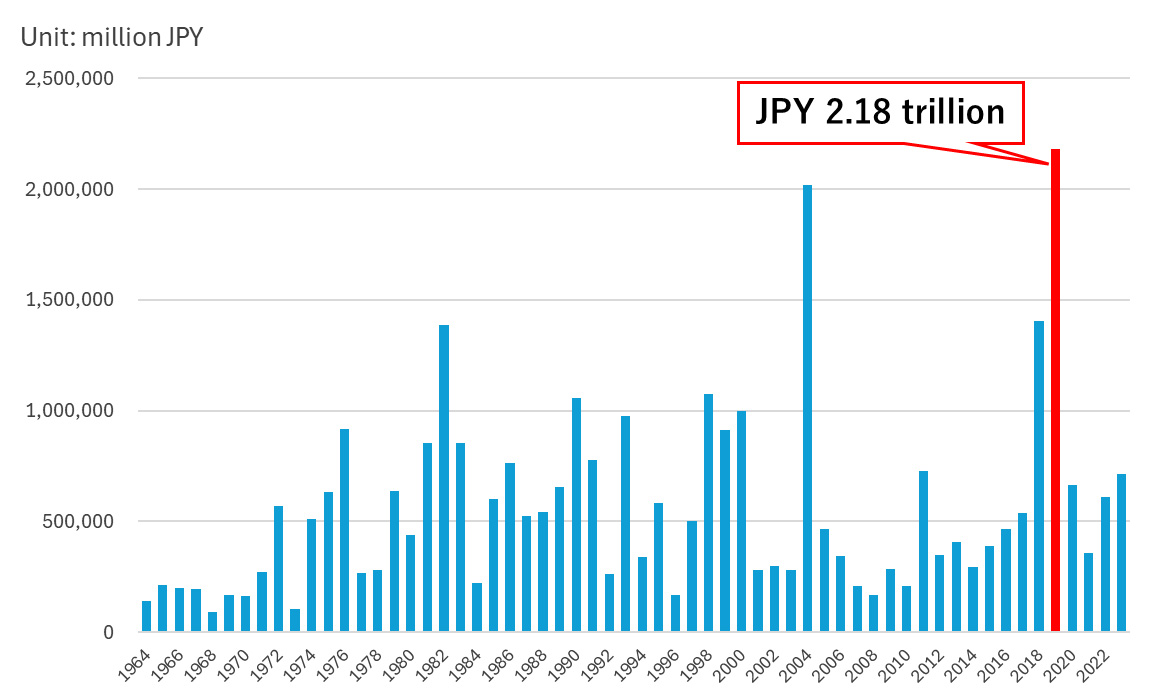
Nominal annual flood damage
Source: Created by CCCA based on data from the e-Stat (Portal Site of Official Statistics of Japan)
Looking ahead, continued temperature increases are expected to result in higher levels of rainfall across Japan. As precipitation increases, both river discharge and flood frequency are projected to rise. For instance, a 2 °C increase in temperature is estimated to increase river flow and flood frequency by factors of approximately 1.2 and 2, respectively. Meanwhile, a 4 °C increase could increase river flow and flood frequency by factors of approximately 1.4 and 4, respectively.
Sea level rise and storm surge damage associated with typhoons
As shown in the figure below, sea levels along Japan's coastline have been rising over time, which may heighten the risk of storm surge-related flooding. Climate change may also modify typhoon characteristics, including their frequency, strength, and paths, potentially increasing storm surge risk through mechanisms such as seawater uplift caused by low atmospheric pressure and seawater accumulation driven by strong winds. The intensification of low-pressure systems that develop during winter may also contribute to a higher storm surge risk. Indeed, the occurrence of extremely high tide levels has very likely increased worldwide since 1970.
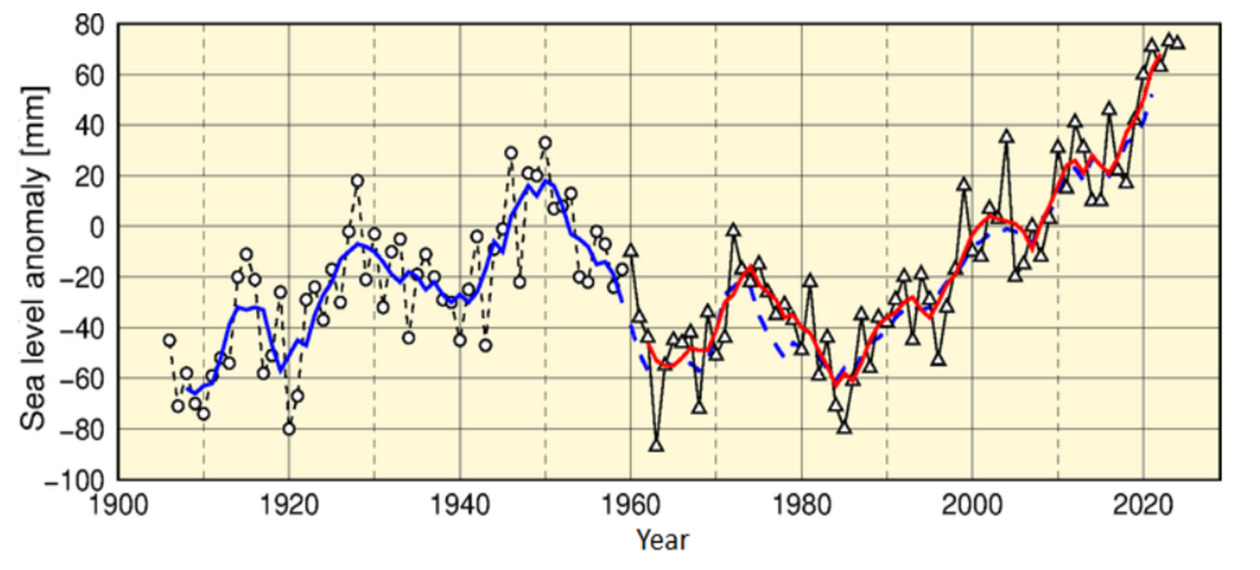
Time-series representation of annual mean sea level around Japan (1906 - 2024)
Sea level (around Japan), Japan Meteorological Agency, Japan
In the future, ongoing climate change is projected to raise sea levels by 0.38-0.77 m by the end of the 21st century compared with that of the 1995-2014 baseline period. This rise is expected to increase the risk of storm surge damage relative to that under present conditions. Further changes in typhoon intensity and trajectories could amplify this risk even more.
Moreover, sea level rise associated with climate change will likely accelerate coastal erosion, and some projections indicate that more than 80% of Japan's sandy beaches could disappear by the end of this century.
Landslide damage caused by heavy rainfall
The increasing frequency of heavy rainfall linked to climate change, expansion of regions experiencing such rainfall, and broader spatial extent of individual events are expected to increase the occurrence of landslides, mudslides, and debris flows, as well as the scale, form, and locations of these disasters.
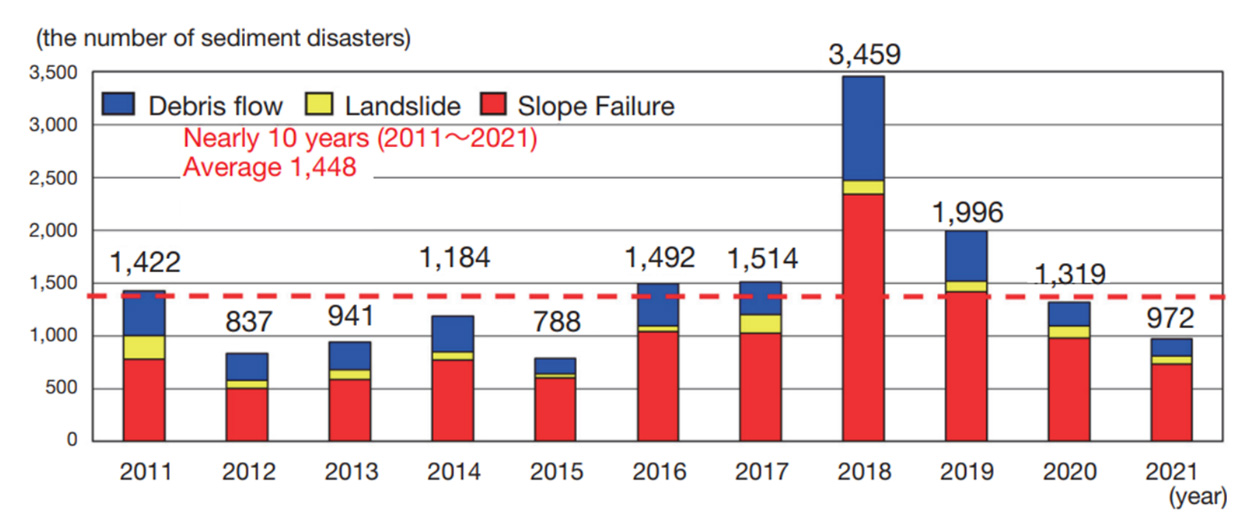
Number of sediment disasters
Rivers in Japan, Ministry of Land, Infrastructure, Transport and Tourism, Japan
In the future, continued intensification of heavy rainfall is projected to worsen landslide damage, including more frequent large-scale slope failures, landslides, and debris flows.