Field Report: Responses of Coastal Ecosystems to Environmental Change in a Temperate National Park in Japan
INTRODUCTION
Through AP-PLAT, we introduce NIES research on coastal environments and ecosystems in temperate areas, focusing on changes over time and their implications climate change adaptation measures.
Japan currently has 35 national parks, ranging from subtropical to subarctic zones. The Minister of the Environment designates national parks, which the government manages under the Natural Parks Act; their primary role is to protect outstanding natural landscapes and ecosystems while providing opportunities for interaction with nature and recreation.
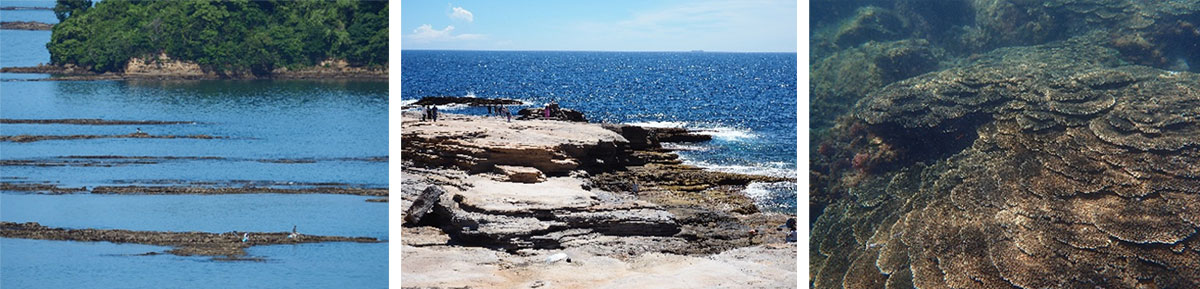
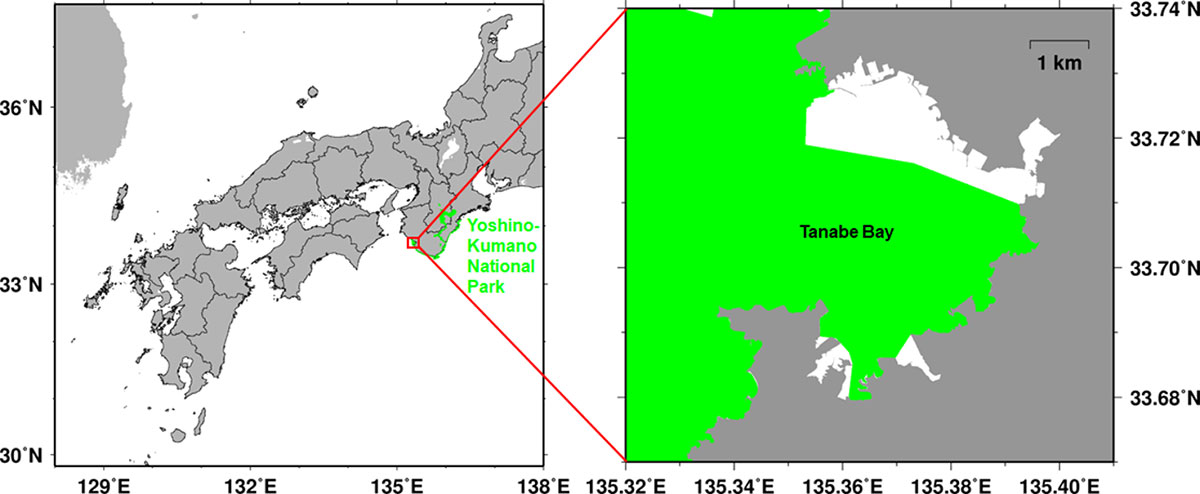
Yoshino-Kumano National Park is located in central Japan (temperate zone) and was designated as a national park in 1936. This national park spans three prefectures—Mie, Nara, and Wakayama—and is characterized by the landscapes and interconnectedness of the Kii Peninsula’s mountains, rivers, and seas, as well as the beliefs and culture nurtured within this natural environment (Fig. 1).
In temperate coastal areas, reef-building corals, seagrasses, and seaweed are key components of diverse marine ecosystems. Coral communities provide habitats for marine organisms and support fisheries, tourism, and coastal protection by reducing wave energy. Seagrass meadows and seaweed beds serve as spawning grounds, nursery habitats, and feeding areas for many species, while also contributing to water purification and the uptake and storage of carbon. From a natural-resource perspective in national parks, the underwater landscapes—coral communities, seagrass meadows, and seaweed beds—and the marine life that congregates there are recognized as outstanding features.
However, these ecosystems are highly susceptible to environmental stresses, such as fluctuations in water temperature. Because their distribution and condition may also vary seasonally, regular ecosystem and environmental surveys are essential. Long-term monitoring helps distinguish temporary fluctuations from persistent changes, identify priority areas for conservation, and evaluate whether management and restoration measures are effective under climate change.
Effective management of national parks and similar protected areas therefore requires understanding of how environmental and ecosystem conditions are changing, together with the flexible implementation of appropriate conservation and sustainable-use measures.
| Adaptation Sector/Theme | Biodiversity, Coastal areas, Fisheries, Tourism |
|---|---|
| Study Area | Tanabe Bay (Yoshino-Kumano National Park area), Wakayama Prefecture, Japan (33.6–33.7°N, 135.3–135.4°E) |
| Survey Period | Jul 2024–Oct 2026 |
MONITORING & INSIGHTS
From July 2024 through October 2026, we conducted ecosystem and environmental monitoring surveys in Tanabe Bay several times a year. At fixed observation points in the bay, we used SCUBA diving or snorkeling to qualitatively observe marine organism distribution, focusing primarily on corals, seaweed, and seagrass.
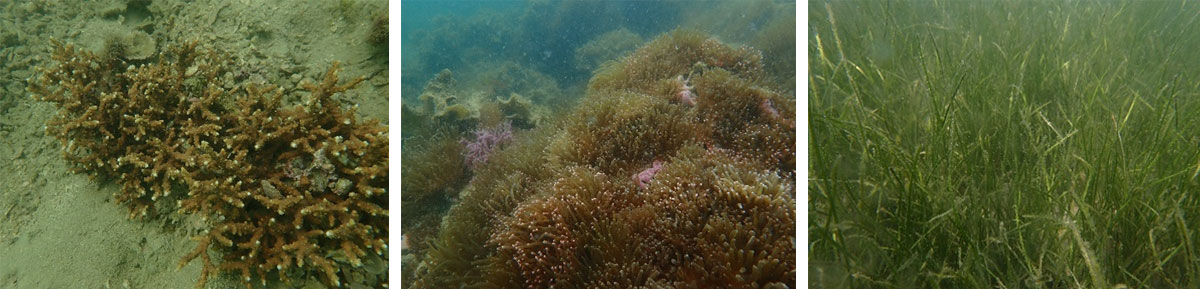
In the July 2024 survey (Fig. 2), we observed several coral species, primarily branching corals. We also confirmed a high density of anemones. Although we observed no Sargassum communities due to seasonal fluctuations, seagrasses such as genus Zostera and Halophila were abundant in shallow waters.
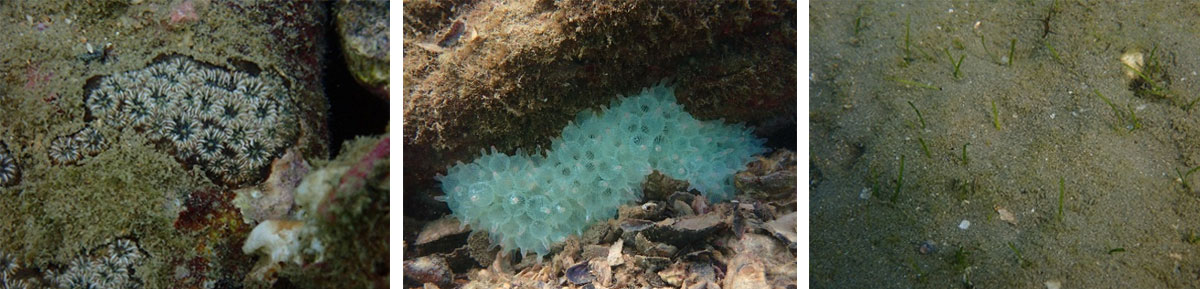
However, a survey conducted in October 2026 (Fig. 3) confirmed several coral species, but the branching corals observed in 2024 were absent. In addition, of the sea anemones that had been growing in high density, only a few bleached colonies remained. Although seagrass varies seasonally, its coverage was significantly lower than at the time of the initial survey. As shown, even over just a few years of research, the species and abundance of corals, seagrasses, and other marine organisms have changed significantly.
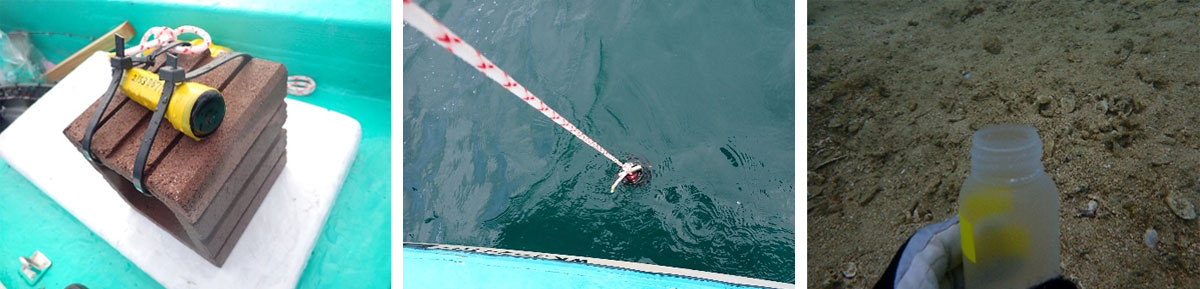
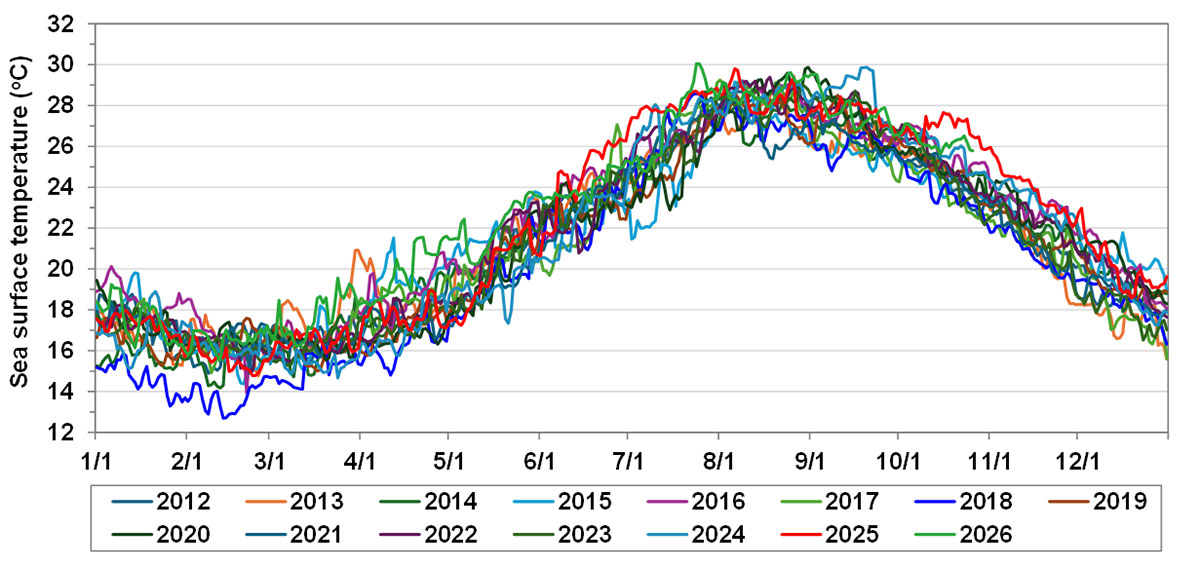
In addition to monitoring the ecosystem, our field surveys also involve measuring various parameters such as water temperature, salinity, chlorophyll concentration, and nutrient concentrations (Fig. 4). While it is not easy to accurately identify the factors driving changes in the distribution and abundance of organisms, ongoing environmental monitoring is one of the key missions for assessing the impacts of climate change. Although the data collected in the field are currently being analyzed, a focus on satellite-observed fluctuations in sea surface temperatures around Tanabe Bay reveals that, while there are significant seasonal and annual variations, temperatures from summer through fall in 2025 were higher than usual (Fig. 5). In addition, local fishermen have reported that a red tide occurred during the same period. Consequently, high water temperatures and red tides may have caused mass mortality among some corals and sea anemones, while also increasing grazing pressure on seagrasses and reducing their coverage. Not only high water temperatures but also low water temperatures affect coral survival, and it has been reported that the low water temperatures observed in the winter of 2018 caused the mass mortality of most corals.
FUTURE OUTLOOK
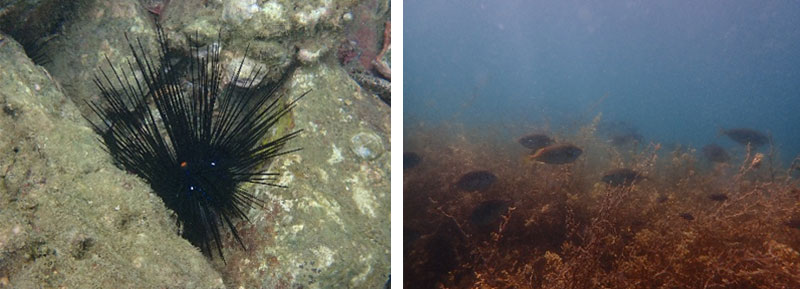
In many temperate marine regions, seaweed and seagrass beds have deteriorated. One factor contributing to this is increased activity in herbivorous sea urchins and fish due to rising water temperatures (Fig. 6). Because managing these populations can support vegetation recovery, it is necessary to promote appropriate conservation efforts. However, because preventing widespread ecosystem degradation is difficult, prioritizing conservation areas based on scientific data is crucial. Furthermore, under climate change, the biological resources and underwater landscapes of national parks are likely to change significantly (e.g., decline in temperate species and increase in tropical species); therefore, it is necessary to accurately assess these changes and flexibly adjust management and conservation practices in response.
AP-PLAT/CCCA will continue conducting research activities, including environmental monitoring and future projections, in various regions. In addition, AP-PLAT’s Adaptation Database also provides several case studies related to coastal ecosystems.
ACKNOWLEDGEMENT
This research is supported by the Climate Change Adaptation Research Project and Climate Change Adaptation Research Program at the National Institute for Environmental Studies. Field observations were conducted with the cooperation of local fishermen and permission from relevant authorities.
RELATED INFORMATION
Research Papers
- Climate-induced species range shift and local adaptation strategies in a temperate marine protected area, Ashizuri-Uwakai National Park, Shikoku Island, western Japan
- Distribution, use, management, regulation, and future concerns of reef-building corals based on administrative documents in Japan
- Description of Coastal Ecosystems (Coral, Macroalgae, and Seagrass) in Local Climate Change Adaptation Plans of Japanese Prefectures
AP-PLAT Adaptation Database
- Reef Restoration Drives Tourism and Climate Action in the Maldives
- Launching the InCORE Project: Reviving Coral Reefs in the Philippines for a Sustainable Future
- Strengthening Blue Carbon Management Capacities in the Coral Triangle
- Aiming to Restore Seaweed Beds by Regrowing Sea Urchins, a Cause of Isoyake (Desertification of the seabeds), and Promoting Them as a Local Specialty
EXPLORE ADAPTATION
- Climate Change and Biodiversity Synergy
- Climate Change Impacts and Adaptations in Japan: Agriculture, Forestry, and Fisheries and Natural Ecosystems
Activities
- Field Report: Coral Reefs and Adaptation in Subtropical Islands
- Field Report: Identifying Suitable Areas for Coral Conservation and Rehabilitation in Subtropical Islands
- Field Report: Nature-based-Solutions (NbS) for Resilient Societies to Climate Change in Marshall Islands
Reported by Hiroya ABE
(Posted : 10/Nov/2026)
