
|

The 9th Issue: 18 March 2026
|
|
The Asia-Pacific Climate Change Adaptation Information Platform (AP-PLAT) is a partnership on climate change adaptation launched under the lead of the Ministry of the Environment, Japan (AP-PLAT website: https://ap-plat.nies.go.jp/index.html).
|
1. AP-PLAT’s Activities and Updates |
|
Warm greetings from AP-PLAT!
AP-PLAT and its partners have a range of activities and updates, and we will introduce some of them here.
AP-PLAT Participated in JICA Knowledge Co-Creation Program and JICA Training Course on Climate Finance
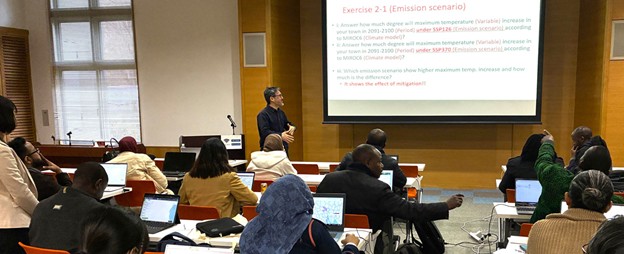
Every year, JICA offers a range of courses under its Knowledge Co-Creation Program. The two-month course covered both theoretical foundations and practical skills for improving access to climate finance, with a strong emphasis on hands-on application. AP-PLAT contributed to the program through lectures on enhancing access to climate finance and climate change adaptation initiatives and outreach tools.
|
|
Dr. Yuji Masutomi introducing NIES, the Center for Climate Change Adaptation Center (CCCA), and their role within Japan’s institutional framework for climate change adaptation.
|
Read more about the lectures on enhancing access to climate finance through this link and climate change adaptation initiatives and outreach tools through this link.
The ASEAN Centre for Energy (ACE), with support from the Government of Norway, the European Union (EU), and the Government of Germany, is promoting regional cooperation to strengthen the resilience of energy infrastructure. AP-PLAT, through the provision of its climate and impact projection tools is contributing to evidence-based policymaking and capacity building related to energy infrastructure resilience.

|
|
Dr. Masutomi, together with several researchers, delivered an introductory lecture as part of the program.
|
Read more about the tools introduced by AP-PLAT in the workshop through this link.
|
2. Introduction to AP-PLAT deliverables and achievements |
AP-PLAT Conducted Co-development Community Workshop and Stakeholder Workshops for Leveraging Climate-Induced Disaster Management in Bangladesh
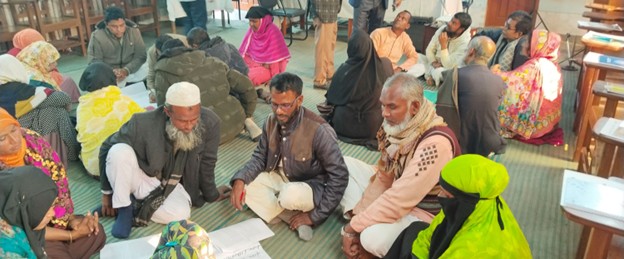
AP-PLAT conducted two activities as continuation of the previous Early Warning System (EWS) in Bangladesh. First, a Co-development Community Workshop in Flood-vulnerable Region. Second, a Co-development Workshop on Localization of Early Warning System (EWS) for All to Bridge National Plans to Local Practices. In localizing the EWS, participants discussed the current needs and possible solutions for the flood EWS in the region. The localization of EWS also requires a shift toward people-centered communication.
|
|
Group discussions identifying key challenges and proposing solutions.
|
Read more about the key findings from the community workshop in flood-vulnerable region through this link and about the key findings from the localization of EWS for all through this link.
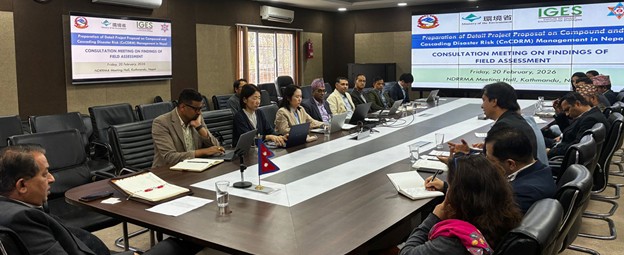
As continuation to the previous field assessment in Nepal, AP-PLAT conducted consultation meeting on discussing project proposal for compound and cascading disasters in Nepal. Participants exchanged ideas and recommendations for improving the proposal and ensuring its alignment with national priorities and local needs. The discussion revealed that the project aims to establish a community-based multi-hazard Early Warning System (EWS) equipped with an integrated Decision Support System (DSS). In addition, there is potential to enhance prediction capability using advanced technologies such as satellite data and improved observation infrastructure.
|
|
The participants discussing the findings from field assessment to improve and align future project proposals.
|
Read more about the key findings from the consultation meeting in Nepal through this link.
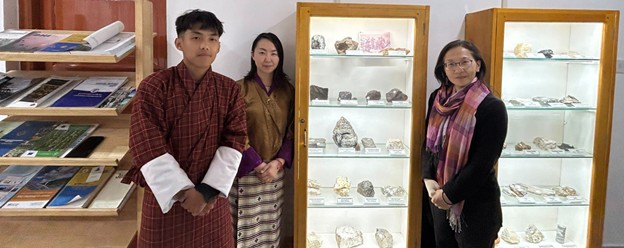
As a follow up from the previous training in Bhutan, AP-PLAT conducted discussions toward the institutionalization of adaptation MEL and the implementation of online systems such as JAMES. During the dialogue and discussion with multiple agencies, an important insight about how adaptation and monitoring tools should be integrated into national processes, to support the interim review of the National Adaptation Plan (NAP).
|
|
Meeting with representative officer from a government agency.
|
Read more about the key findings from the hands-on training in Bhutan through this link.
|
3. Activities and updates from our partners
The Stockholm Environment Institute (SEI) is calling for proposals to participate in a two-day in-person symposium, ‘Strengthening Evidence on the Outcomes of Locally Led Adaptation (LLA)’, will be held on 3–4 June 2026 in Bangkok. Researchers, practitioners, policy analysts, and community knowledge holders working on or with LLA are invited to submit proposals that promote a forward-looking agenda to enhance evidence on LLA's outcomes. The submission will close on March 25th, 2026.
Read more about the call through this link.
|
4. Call for your contributions to the AP-PLAT newsletter |
|
We invite partner organisations and stakeholders to actively participate in AP-PLAT activities to strengthen our network and expand access to adaptation knowledge. By sharing your updates and initiatives, you can help shape adaptation strategies and inspire meaningful action. Contributing your events, updates, or announcements through our newsletter allows you to reach over 30 partner organisations and more than 20 independent subscribers from other climate adaptation platforms, research institutes, the private sector, governmental agencies, and other stakeholders that are actively involved in climate adaptation initiatives.
To share your information with our community, please contact the AP-PLAT secretariat at [ap-plat@iges.or.jp].
|
5. Want to become a member? |
|
If you are interested in becoming a supporting organisation and/or capacity development partner organisation, please apply using the following links.
|
Please spread the word! |
|
If you know anyone who would be interested in AP-PLAT, please forward this newsletter to them and spread the word about AP-PLAT through your community. You can subscribe from this link.
|
|
|
|