AP-PLAT Conducted Consultation Meeting on Discussing Project Proposal for Compound and Cascading Disasters in Nepal
| Event | Consultation meeting on discussing project proposal for compound and cascading disasters in Nepal |
|---|---|
| Date | 20 February 2026 |
| Venue | National Disaster Risk Reduction and Management Authority (NDRRMA) Hall, Kathmandu, Nepal |
| Organizers | Ministry of the Environment, Japan (MOEJ) National Disaster Risk Reduction and Management Authority (NDRRMA) Tribhuvan University (TU) Institute for Global Environmental Strategies (IGES) |
OVERVIEW
As part of the capacity development program in South Asia, AP-PLAT conducted consultation meeting on discussing project proposal for compound and cascading disasters in Nepal.
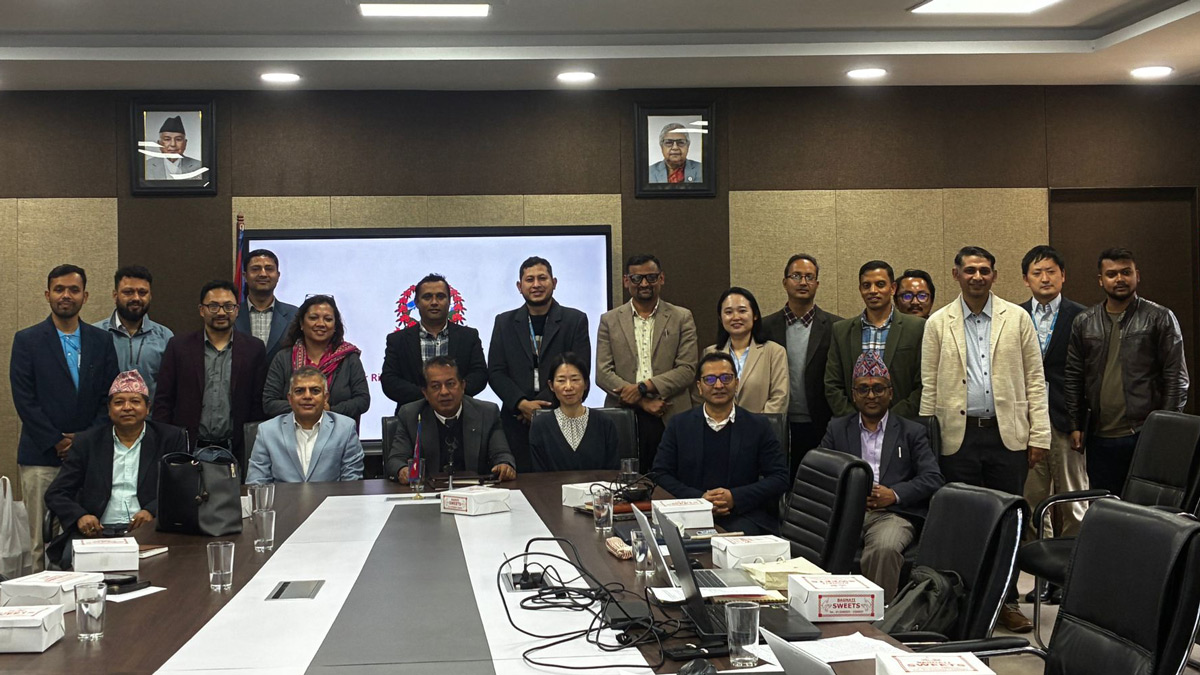
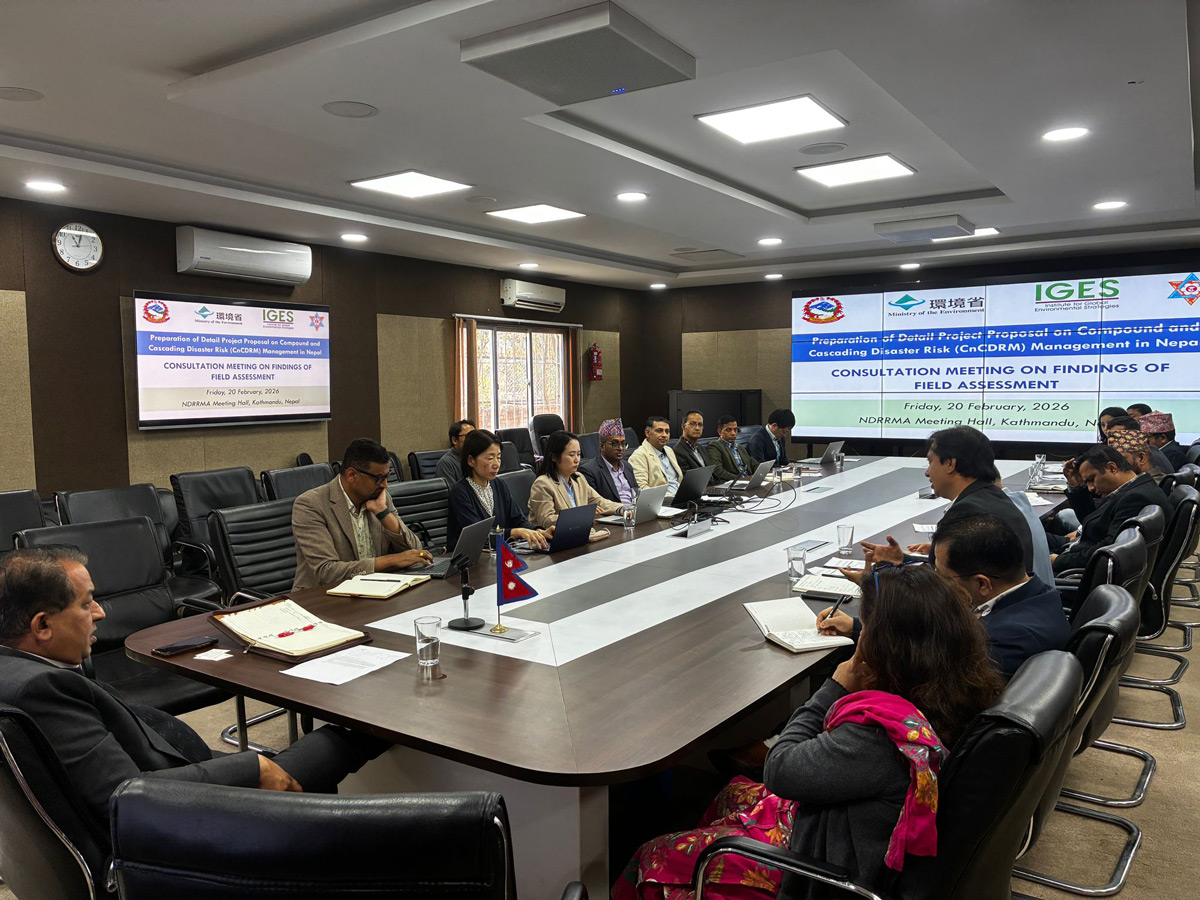
The workshop was held on 20 February 2026 at the National Disaster Risk Reduction and Management Authority (NDRRMA) in Kathmandu, Nepal, and was attended by 31 participants representing government agencies, academic institutions, and development partners. The event aimed to review and refine the current project proposal focusing on strengthening climate change adaptation and disaster risk reduction in Nepal.
The workshop began with opening remarks from Executive Chief of NDRRMA, Dr. Dinesh Prasad Bhatta. The session followed by presentations introducing climate change adaptation initiatives in both Japan and Nepal, followed by a detailed explanation of the current project proposal. Participants then engaged in discussions to exchange ideas and recommendations for improving the proposal and ensuring its alignment with national priorities and local needs.
KEY FINDINGS
-
1. Multi-hazard monitoring and decision-support systems are central to the project design
A key feature of the proposal is the development of a multi-hazard monitoring system and integrated risk model, which will provide practical insights and recommendations for policymakers and stakeholders. The project also aims to establish a community-based multi-hazard Early Warning System (EWS) equipped with an integrated Decision Support System (DSS). These systems are expected to facilitate the timely dissemination of early warnings, enabling emergency responders and local communities to protect lives and livelihoods during crisis situations. - 2. Field surveys highlight the importance of integrating local knowledge and preparedness practices
The surveys gathered baseline information such as geographic locations and demographic characteristics of target communities in the Sunkoshi River Basin. Risk assessments were conducted to identify historical disaster patterns, root causes of risk, levels of risk awareness, vulnerable populations, and critical assets.
The study also examined existing early warning systems, including official detection infrastructure such as sirens, water-level gauges, and sensors, as well as traditional and indigenous forecasting methods used by communities. - 3. Disaster preparedness and response capacity vary across communities
The survey also investigated community-level disaster preparedness and response practices. These included evacuation behaviors, communication methods, traditional coping mechanisms, and identification of first responders. Institutional aspects such as guidelines, standard operating procedures, and coordination mechanisms among relevant agencies were also assessed. The findings highlighted both capacity gaps and good practices, providing important insights into how response systems can be strengthened at the local level. - 4. Improved hazard monitoring and forecasting capacity is required
Participants highlighted the need to clarify the targeted climate risk assessments. Current forecasting capacity in Nepal is limited to approximately three days in advance, and there were recommendations to enhance prediction capability using advanced technologies such as satellite data and improved observation infrastructure, including possible collaboration with Japanese technology providers. - 5. Stronger coordination with local governments is essential
Workshop participants stressed the importance of strengthening the role of local governments, particularly through improved capacity of Local Emergency Operation Centers (LEOCs). Addressing local-level climate adaptation gaps and clearly defining the roles of implementing agencies, project-leading institutions, and other stakeholders were identified as key priorities for effective project implementation.
(Posted : 10/Mar/2026)
