AP-PLAT Conducted Stakeholder Workshops for Leveraging Climate-Induced Disaster Management in Bangladesh
| Event | Stakeholder Workshop on Localization of Early Warning System for All: Bridging National Plans to Local Practices |
|---|---|
| Date | 23 February 2026 |
| Venue | Holiday Inn, Dhaka, Bangladesh |
| Organizers |
Ministry of the Environment, Japan (MOEJ) Department of Disaster Management (DDM), Bangladesh Sustainnovate Bangladesh Institute for Global Environmental Strategies (IGES) |
OVERVIEW
As part of the capacity development program in South Asia, AP-PLAT conducted Stakeholder Workshop on Localization of Early Warning System for All: Bridging National Plans to Local Practices.
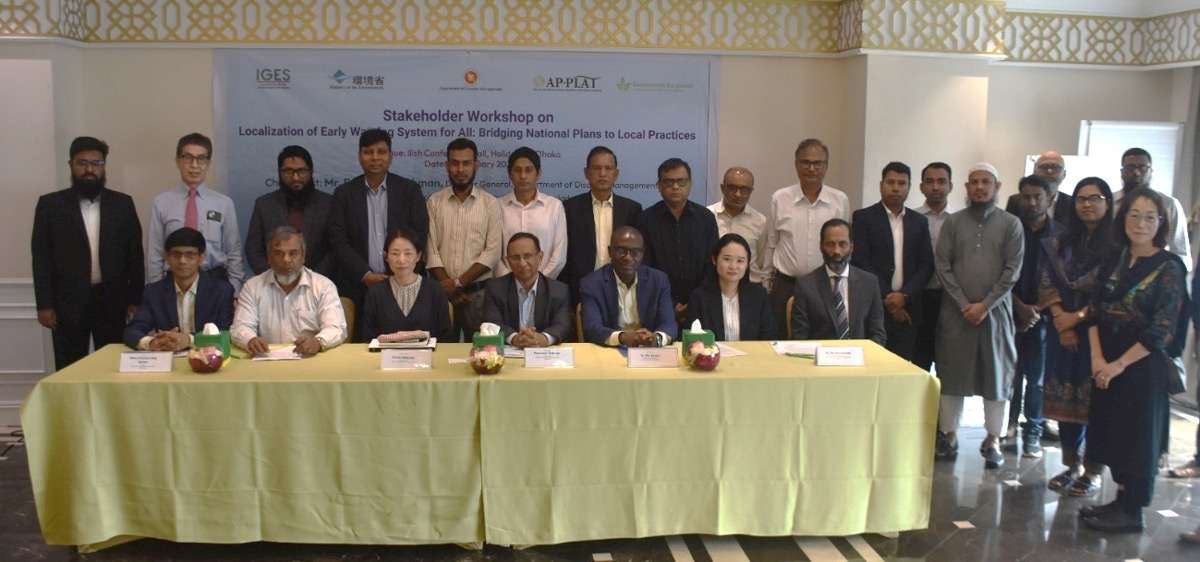
The workshop was held on 23 February 2026 at the Holiday Inn Dhaka City Centre in Dhaka, Bangladesh, with the participation of 31 stakeholders from government agencies, international organizations, research institutions, and development partners.
Opening remarks were delivered by representatives of the Department of Disaster Management (DDM), including Director General Razwanur Rahman and Director Netai Chandra Dey Sarker, as well as representatives from the Ministry of the Environment, Japan, the Food and Agriculture Organization (FAO) Bangladesh Office, and the Institute for Global Environmental Strategies (IGES).
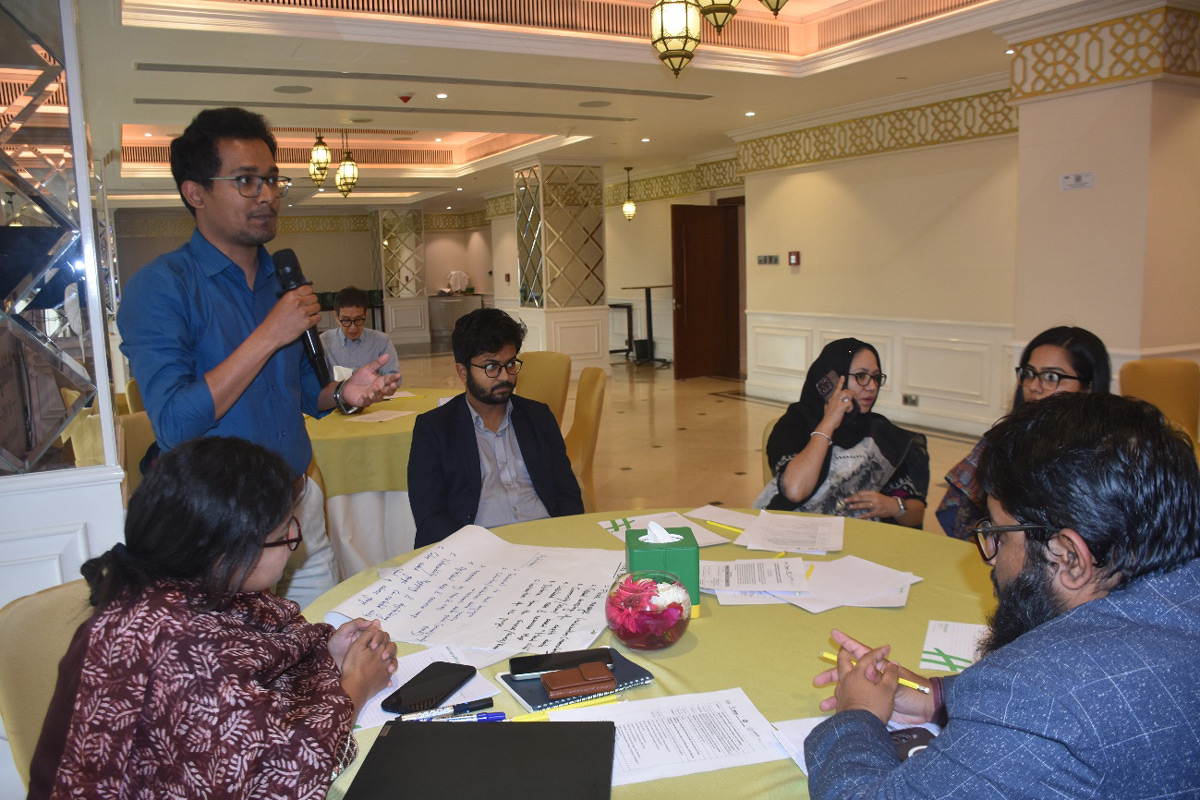
The workshop was structured in two parts. The first consisted of technical sessions aimed at sharing knowledge and information among participants, while the second involved group discussions designed to refine and build consensus on the project proposal, particularly focusing on the localization of flood early warning systems.
The workshop began with presentations that provided:
- An overview of the development and implementation of flood early warning systems in Bangladesh
- Insights into national climate change adaptation policies and strategies
- A technical explanation of Bangladesh’s modern flood forecasting and warning services
- Lessons from Japan’s disaster management system and institutional arrangements
- Findings from a household survey assessing community needs for flood early warning systems in Sirajganj District
In the second part of the workshop, participants engaged in group discussions to explore practical approaches for localizing early warning systems, strengthening agricultural resilience, improving communication mechanisms, and enhancing community participation in flood risk management.
KEY FINDINGS
-
1. Localization of early warning systems requires a shift toward people-centered communication
During group discussions, participants emphasized that improving early warning effectiveness requires moving beyond technical forecasting accuracy toward people-centered communication systems. Participants proposed translating technical water-level information into locally understandable indicators, such as simplified units or visual signals like flags. Additional recommendations included participatory flood data collection, the establishment of flood clubs in schools, and the creation of community observation stations to strengthen local engagement in monitoring and preparedness. -
2. Integrating climate forecasting with agricultural advisory services can strengthen farmer resilience
Participants proposed linking flood and climate forecasting with agricultural decision-making tools. This approach includes integrating crop simulation models such as DSSAT with seasonal, sub-seasonal, and short-term weather forecasts. By doing so, farmers could receive actionable advice on planting schedules, crop variety selection, water management, and early harvesting. Satellite-based crop monitoring and localized advisory systems were also proposed to support data-driven agricultural risk management and improve resilience among farming communities. -
3. Robust communication systems are essential to ensure warnings reach communities during disasters
Participants emphasized the importance of strengthening communication channels for early warning dissemination. Since communication infrastructure may fail during large-scale disasters, participants proposed alternative systems such as two-way radio communication and independent power sources. Community-based information dissemination through religious leaders and local organizations was also identified as a critical mechanism for ensuring warnings reach vulnerable populations. -
4. Community participation and inclusive governance are critical for flood resilience
Participants highlighted that effective flood risk management requires institutionalizing volunteer organizations, developing local flood management guidelines, and strengthening capacity-building programs for both residents and volunteers. Awareness activities using cultural events were also suggested to promote preparedness. Participants emphasized the importance of gender-inclusive community participation, noting that the involvement of women and marginalized groups is essential for improving community resilience to flood risks.
(Posted : 12/Mar/2026)
