AP-PLAT Conducted Co-development Community Workshop in
Flood-vulnerable Region in Bangladesh
| Event | Co-development Workshop on Localization of Early Warning System for All: Bridging National Plans to Local Practices in Bangladesh |
|---|---|
| Date | 18 January 2026 |
| Location | Sirajganj District of Bangladesh |
| Organizers | Ministry of the Environment, Japan (MOEJ) Department of Disaster Management (DDM), Bangladesh Sustainnovate Bangladesh Manab Mukti Sangstha (MMS) Institute for Global Environmental Strategies (IGES) |
OVERVIEW
As part of the capacity development program in Bangladesh, AP-PLAT conducted a Co-development Workshop on Localization of Early Warning System for All: Bridging National Plans to Local Practices in Bangladesh to discuss the current needs and possible solutions for the flood early warning system in the region.
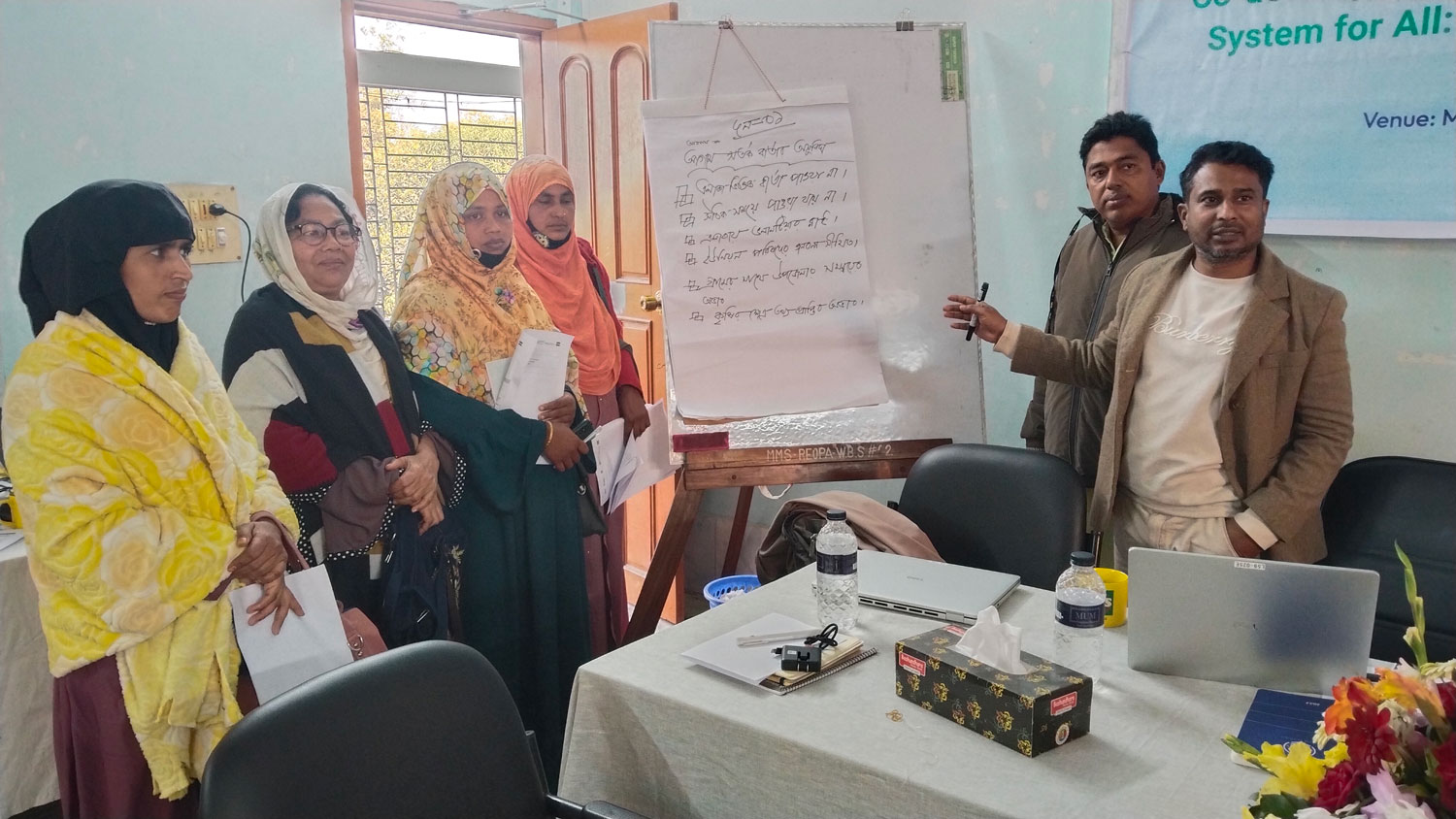
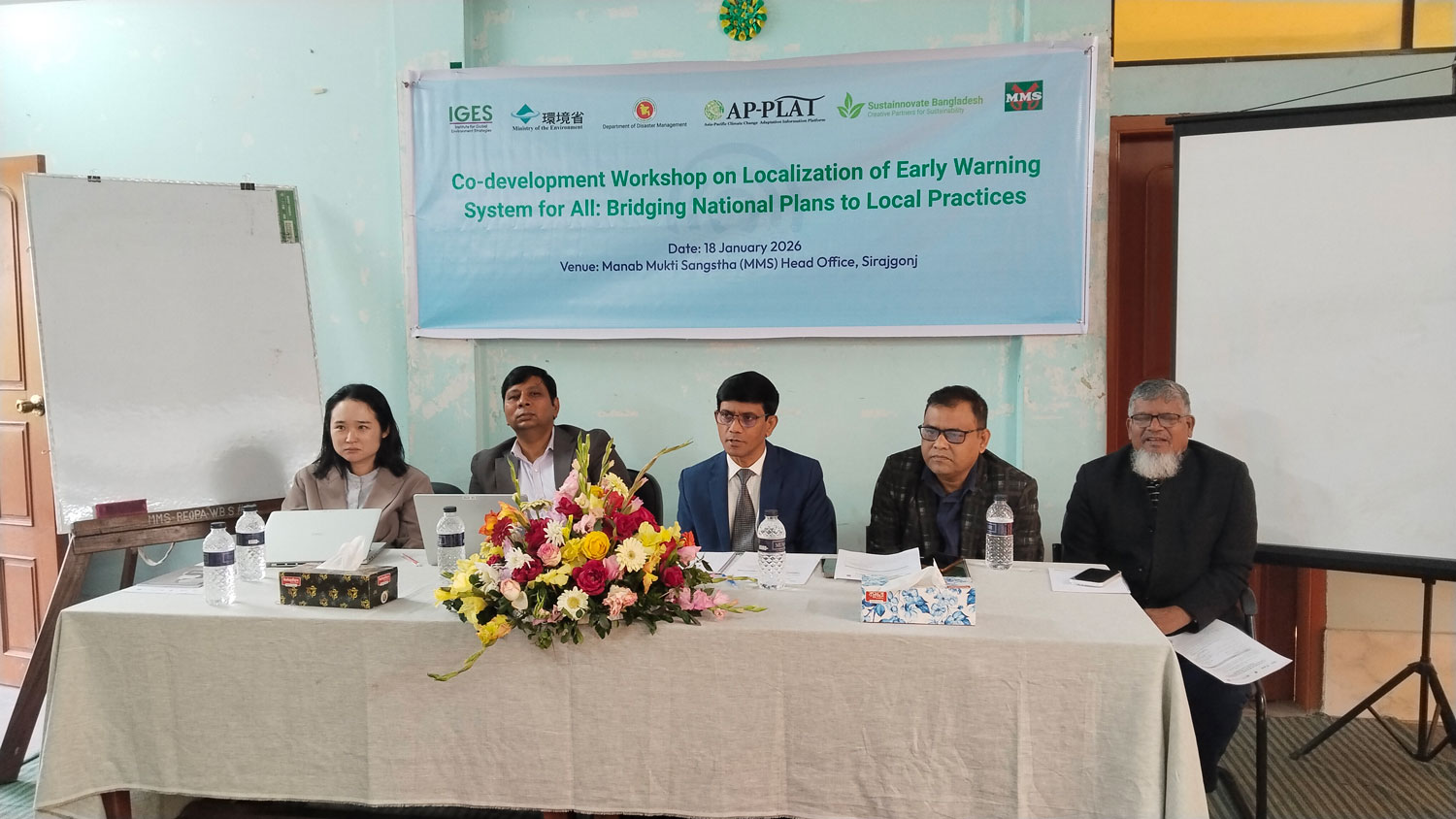
The workshop focused on improving the effectiveness of Flood Early Warning Systems (EWS) in Bangladesh, with particular attention to flood-prone areas in Sirajganj District. It brought together representatives from local NGOs, agricultural experts, and research institutions to examine both the technical situation of flood forecasting systems and the social, agricultural, and community dimensions of early warning dissemination and use.
The workshop began with a series of presentations that provided:
- An overview of the evolution and current capabilities of Bangladesh’s national flood forecasting and warning system
- Insights into the operational realities of EWS at the local level in Sirajganj District
- An assessment of climate change and flood risks facing the agricultural sector
- Findings from a household survey conducted in flood-vulnerable Char communities
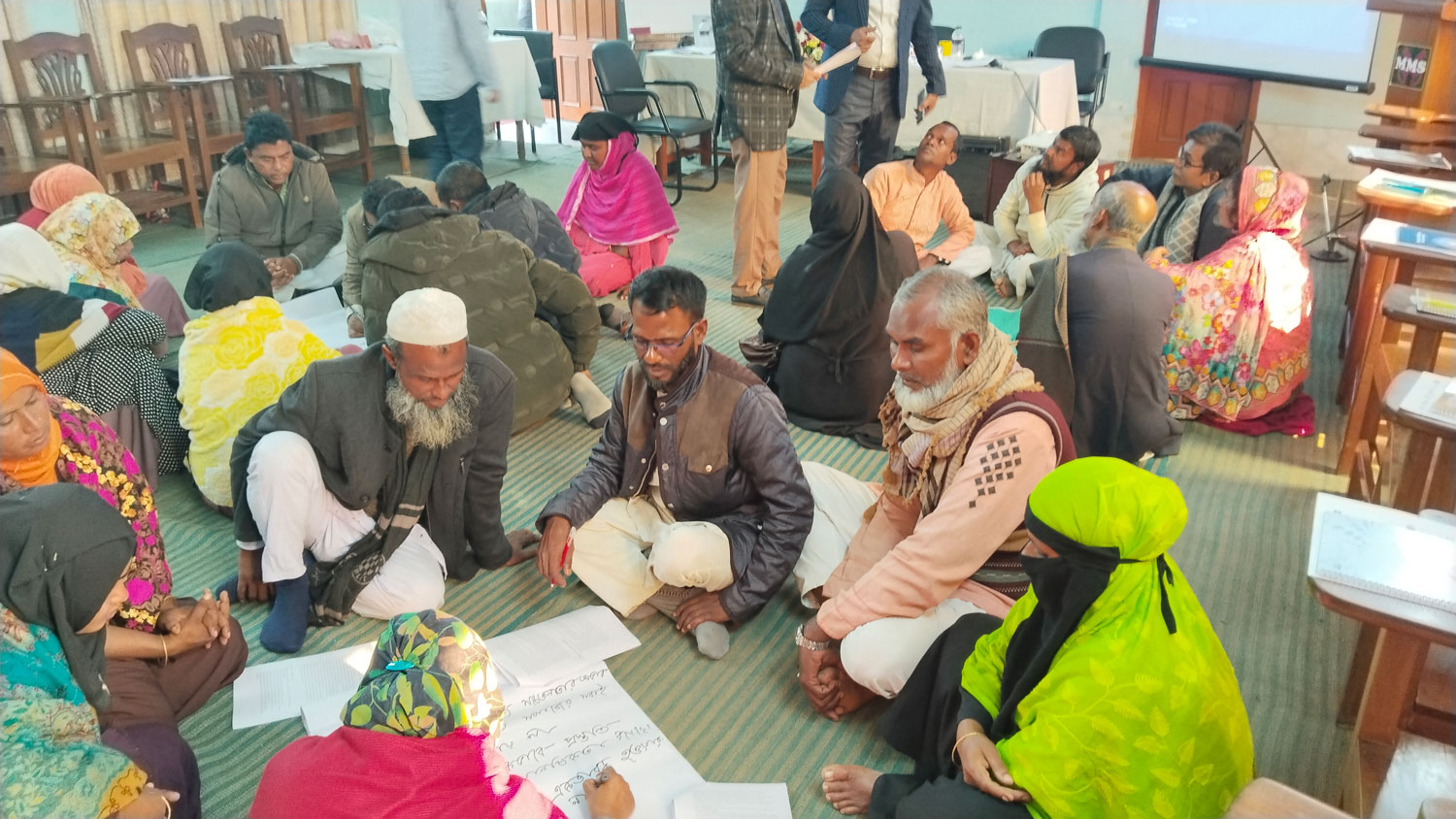
In the second part of the workshop, participants engaged in thematic group work under three focus areas:
- (A) Flood Early Warning Systems,
- (B) Agriculture and Livelihoods, and
- (C) Strengthening Community Engagement.
Through participatory discussions, each group identified key challenges, proposed practical solutions, and shared local and traditional knowledge relevant to flood risk management.
KEY FINDINGS
- 1. Advanced national forecasting exists, but local usability remains limited
Bangladesh has developed a technically advanced flood forecasting system that integrates hydrological and hydrodynamic models, satellite data, and numerical weather forecasts, enabling deterministic and probabilistic forecasts with lead times of up to ten days. However, these forecasts are not always translated into localized, understandable, and actionable warnings at the community level, limiting their effectiveness in reducing flood impacts. - 2. Gaps in last-mile delivery constrain EWS effectiveness in Sirajganj
In Sirajganj District, flood warnings are issued by national authorities and transmitted through local government bodies and NGOs. Nevertheless, limited coordination between national, district, and village levels, a shortage of trained community volunteers, and delayed information delivery—especially in remote Char areas—significantly reduce the reach and timeliness of warnings. - 3. Farmers need actionable agricultural guidance, not just flood alerts
Early warning systems play a critical role in enabling farmers to make informed decisions on evacuation, harvesting, and protection of agricultural assets. While some farmers reported that warnings helped reduce losses, many emphasized that current EWS lack practical, agriculture-specific advisories, such as guidance on crop management before, during, and after floods. There is strong demand for integrating agricultural advisory services into flood early warning systems. - 4. Vulnerable groups face persistent barriers to accessing and using warnings
Household survey results indicate that Char communities experience frequent and prolonged flooding, with livelihoods highly dependent on small-scale agriculture and limited access to infrastructure such as electricity and durable housing. Although awareness of EWS is relatively high, timeliness, clarity, and accessibility remain problematic, particularly for vulnerable groups. Overall satisfaction with existing warning dissemination systems is low. - 5. Community-centred approaches are essential for effective EWS
Group discussions highlighted that effective localization of EWS requires a people-centred approach, not solely technological improvements. The establishment of community-based volunteer groups, continuous coordination between district and village authorities, and sustained awareness-raising are essential to ensure that warnings are trusted, understood, and translated into timely action. - 6. Local and traditional knowledge can strengthen early warning systems
Communities possess valuable traditional knowledge for anticipating floods, including observing cloud movements, changes in river watercolour, simple water-level monitoring techniques, and the use of local plants as indicators. Participants emphasized that integrating this local knowledge with scientific forecasting systems can enhance community trust, comprehension, and responsiveness to early warnings.
(Posted : 05/Feb/2026)
