AP-PLAT conducted a field assessment on Early Warning System in Bangladesh
| Event | Field Assessment and Expert Meetings in Bangladesh |
|---|---|
| Date | 24-29 October 2025 |
| Venue | Dhaka City and Sirajganj District of Bangladesh |
| Organizers | Ministry of the Environment, Japan (MOEJ) Department of Disaster Management (DDM), Bangladesh Institute for Global Environmental Strategies (IGES) |
OVERVIEW
As part of the capacity-building program in Bangladesh, AP-PLAT conducted a field assessment and an expert meeting in Bangladesh to identify the current situation and challenges of Early Warning System (EWS) of the country.
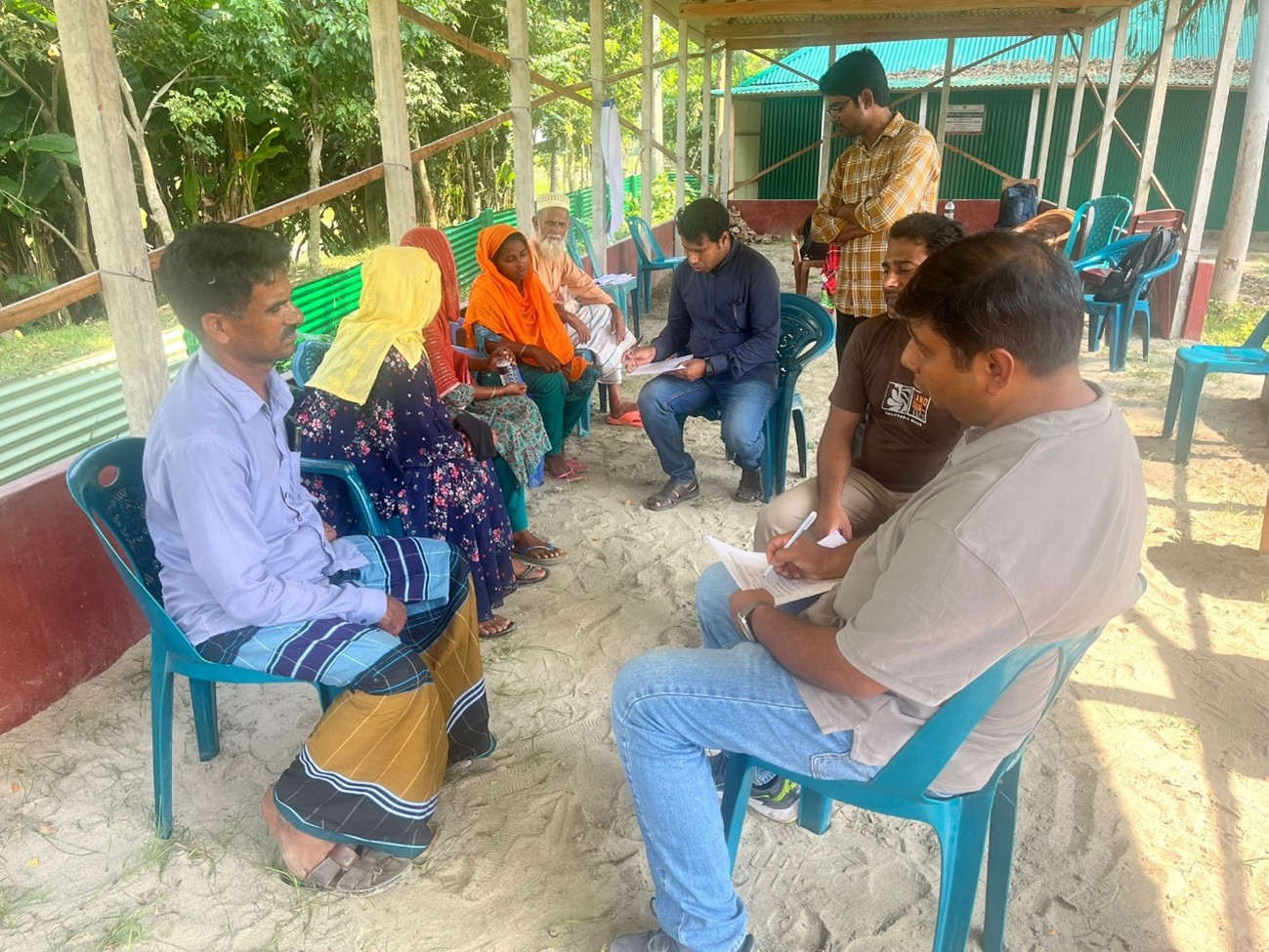
In the field visit to Sirajganj District, two focus group discussions (FGDs) were conducted—one at the Rajapur Union Council Office and another at Kirtikhula Village under Bordhul Union of Belkuchi Upazila in Sirajganj—with flood-affected local people (particularly farmers), the Union Disaster Management Committee (UDMC), and the Ward Disaster Management Committee (WDMC). The objective of the field visits and FGDs was to understand the effectiveness of the current early warning systems, the process of loss and damage reporting, and the community’s capacity-building needs.
The discussions focused on participants’ socio-economic background, flood exposure and risk, existing flood warning systems and their usefulness, early warning dissemination and performance—particularly for agricultural protection—estimation and reporting of flood loss and damage, and community participation in flood preparedness, response, and recovery. The FGDs also aimed to assess the community’s capacity-building needs to enhance their flood response and recovery capabilities and to reduce future loss and damage.
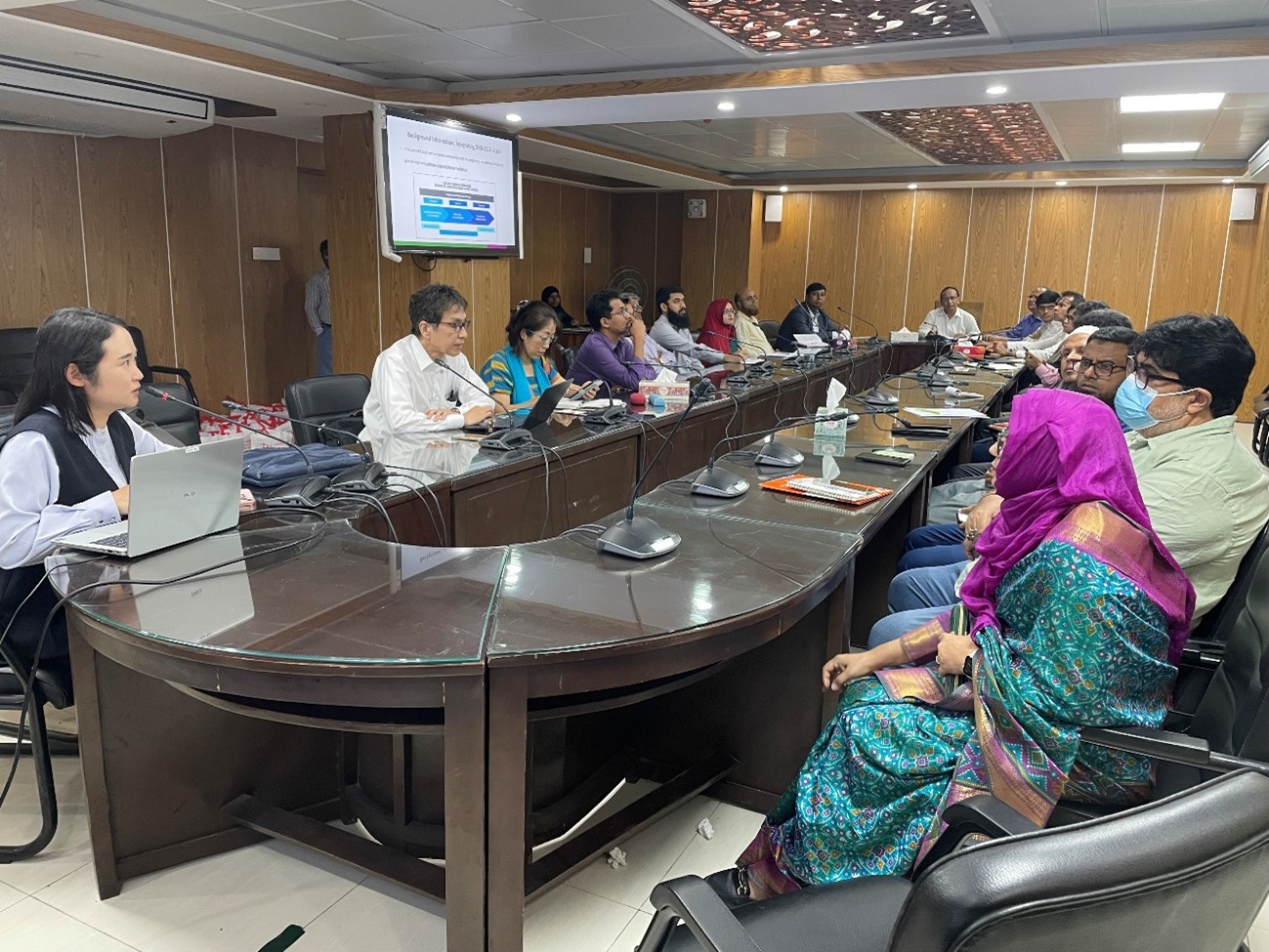
The Expert Meeting held in Dhaka was convened to present progress and seek expert feedback on the development of a localized Early Warning System (EWS) for riverine areas in Bangladesh. It aimed to strengthen integration among Disaster Risk Reduction (DRR), Climate Change Adaptation (CCA), and Loss and Damage (L&D), while promoting a people-centered disaster management approach.
KEY FINDINGS
- Early warnings provide insufficient lead time for farmers to prepare adequately: In many areas, warning lead times are extremely short—only 6 hours to 1 day—making preparations like harvesting crops or evacuating livestock nearly impossible. In some regions, warnings themselves may not reach the affected areas.
- Alert content does not match local needs, making it difficult to apply to farming or evacuation actions: Current alerts lack specific predicted water depth inundation zones and agricultural advice (information on crops and livestock), making them less useful for agricultural decision-making.
- Weak information dissemination channels prevent alerts from reaching vulnerable households: While many households own smartphones, information fails to reach residents from the administration, rendering the government’s EWS ineffective.
- The need to strengthen the capacity of local disaster prevention committees and create flood risk maps was highlighted. It was emphasized that measures must account for the varying impacts across different areas within the same district. To achieve this, training for local disaster prevention committees is essential.
- Standardization of loss and damage data collection using digital tools, and the establishment of an SMS-based multi-channel alert system through collaboration with telecommunications providers were proposed.
- Low awareness of EWS among residents in remote areas and insufficient inter-administrative coordination were also identified as challenges. The realization of an “Early Warning for All” approach, ensuring everyone can understand and receive information quickly, was recommended.
(Posted : 26/Nov/2025)
