 |

The 8th Issue: 9 February 2026 |
|
The Asia-Pacific Climate Change Adaptation Information Platform (AP-PLAT) is a partnership on climate change adaptation launched under the lead of the Ministry of the Environment, Japan (AP-PLAT website: https://ap-plat.nies.go.jp/index.html).
|
1. AP-PLAT’s Activities and Updates |
|
Happy New Years 2026 from AP-PLAT!
We have a range of activities and updates, and we will introduce some of them here.
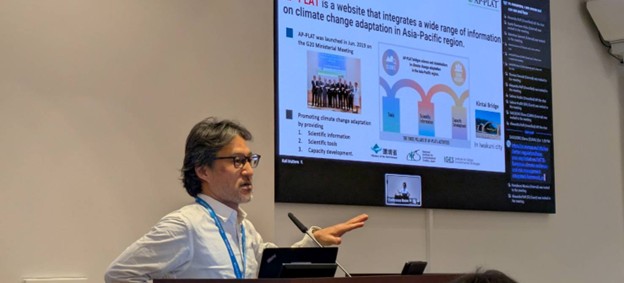
Dr. Masutomi presented AP-PLAT and the core feature of AP-PLAT in provisioning a freely accessible future climate data in Eionet Expert Workshop. One feature emphasized during the workshop was the GCF Concept Note Development tool. The concept note development guide is designed for the Asia-Pacific context by using three pillars of support: science-backed approach, practice-proven knowledge, and user centered design.
|
|
Masutomi introducing AP-PLAT in Eionet Expert Workshop on climate change adaptation platforms.
|
Regardless of the user, whether it is a government official, project coordinator, or climate finance practitioner, this guide provides the support needed to develop high-quality Concept Notes and begin your GCF funding journey.
Read more about what AP-PLAT presented in the workshop through this link.
|
2. Introduction to AP-PLAT deliverables and achievements |
|
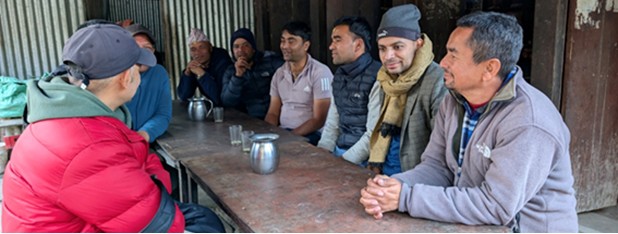
AP-PLAT conducted a community-level disaster preparedness assessment in the Upper Sunkoshi River Basin as part of the capacity-building program in Nepal. Consultations were held with national government agencies, municipal authorities, and disaster-prone communities around Melamchi and Bhotekoshi. The assessment find that the government support has focused more on infrastructure repair than livelihood recovery, among others. In addition, Local communities remain exposed to cascading hazards with insufficient or informal warning mechanisms. Local governments are is active in policy and DRR training, but uneven intervention exists.
|
|
A focused group discussion with the impacted communities around Melamchi, Nepal.
|
Emphasis was placed on identifying opportunities for coordination across government, research institutions, and development partners.
Read more about the Field Assessment in Nepal through this link.
|
3. Call for your contributions to the AP-PLAT newsletter |
|
We invite partner organisations and stakeholders to actively participate in AP-PLAT activities to strengthen our network and expand access to adaptation knowledge. By sharing your updates and initiatives, you can help shape adaptation strategies and inspire meaningful action. Contributing your events, updates, or announcements through our newsletter allows you to reach over 30 partner organisations and more than 20 independent subscribers from other climate adaptation platforms, research institutes, the private sector, governmental agencies, and other stakeholders that are actively involved in climate adaptation initiatives.
To share your information with our community, please contact the AP-PLAT secretariat at [ap-plat@iges.or.jp].
|
4. Want to become a member? |
|
If you are interested in becoming a supporting organisation and/or capacity development partner organisation, please apply using the following links.
|
Please spread the word! |
|
If you know anyone who would be interested in AP-PLAT, please forward this newsletter to them and spread the word about AP-PLAT through your community. You can subscribe from this link.
|
|
|
|