Field Report: Why Climate Change Adaptation is Urgent in the Marshall Islands
OVERVIEW
The Marshall Islands face significant climate risks alongside challenges in water security and waste management. In the first of a two-part series, AP-PLAT reviews recent climate observations and projections, the 2026 El Niño, and national adaptation policies ahead of a field survey in Majuro in late November 2026.
INTRODUCTION
As noted in our previous field report, the Republic of the Marshall Islands (RMI) is a large ocean state with very limited low-lying land. Much of its inhabited area is only around two meters above sea level, leaving communities particularly exposed to sea-level rise, coastal flooding, drought, saltwater intrusion, and coral reef degradation.
These risks affect homes, infrastructure, freshwater supplies, public health, fisheries, and coastal ecosystems. Limited waste disposal capacity and marine pollution pose additional environmental challenges.
In October 2026, the RMI government declared a State of Disaster in response to El Niño and an ongoing dengue outbreak. The declaration highlights the challenges of protecting public health and maintaining essential services in a vulnerable atoll environment.
WHAT RECENT CLIMATE DATA SHOW
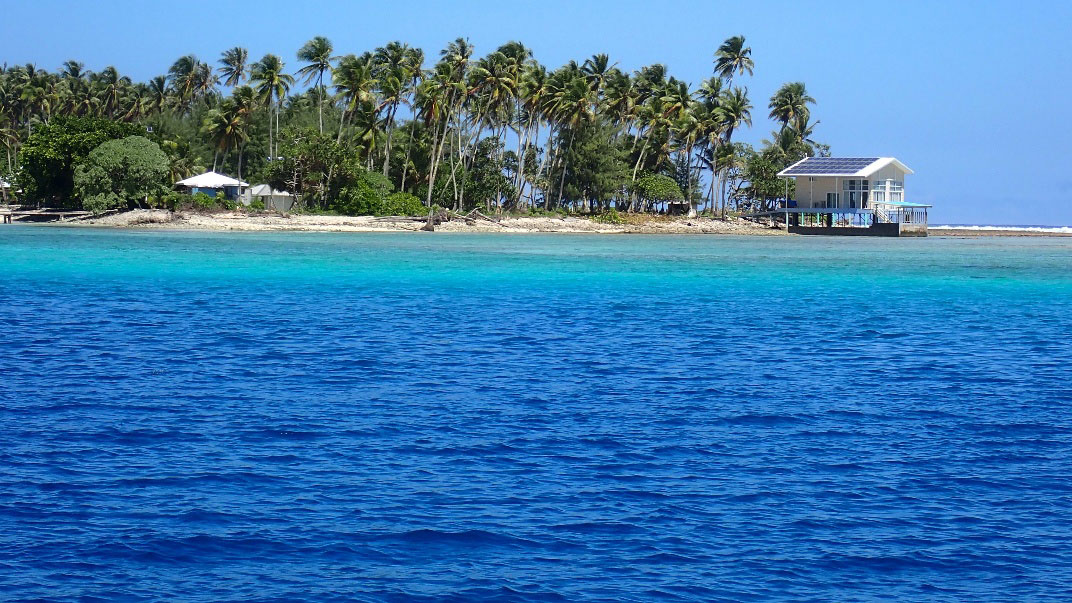
Recent observations provide insight into the climate conditions in Majuro, the capital of the RMI. According to the Japan Meteorological Agency (JMA), monthly mean temperatures from June to August 2026 were 0.9–1.3°C above the 1991–2020 averages, indicating warmer-than-usual conditions.
Rainfall varied considerably. June and August were each about 14% drier than average, while July was approximately 41% wetter. Overall, rainfall during these three months was only about 5% above average, despite the substantial monthly fluctuations (Fig. 1).
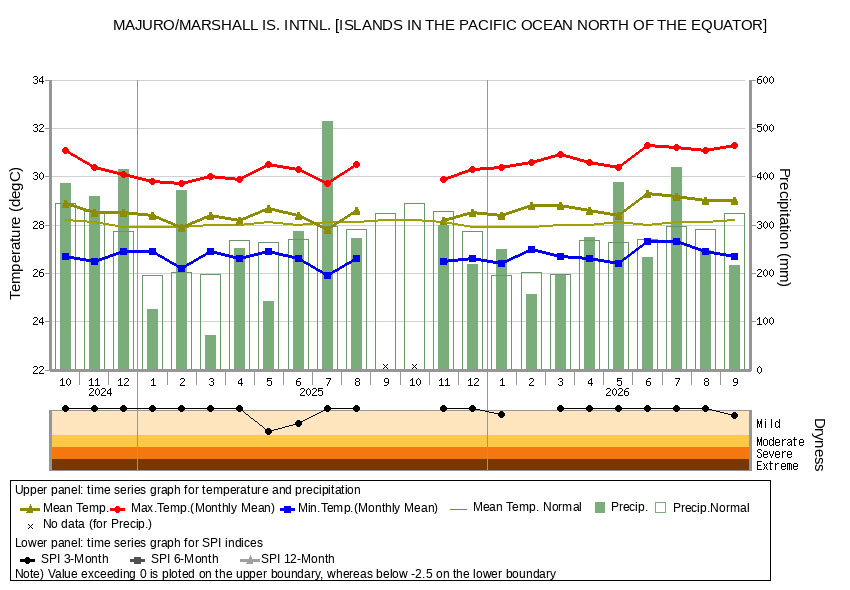
Source: JMA, ClimatView, chart/table
The waters around the Marshall Islands show above-average sea surface temperatures (SSTs), as indicated by positive temperature anomalies.
These warmer conditions may increase thermal stress on coral reef ecosystems (i.e., risk of coral bleaching), highlighting the importance of continued monitoring (Fig. 2).
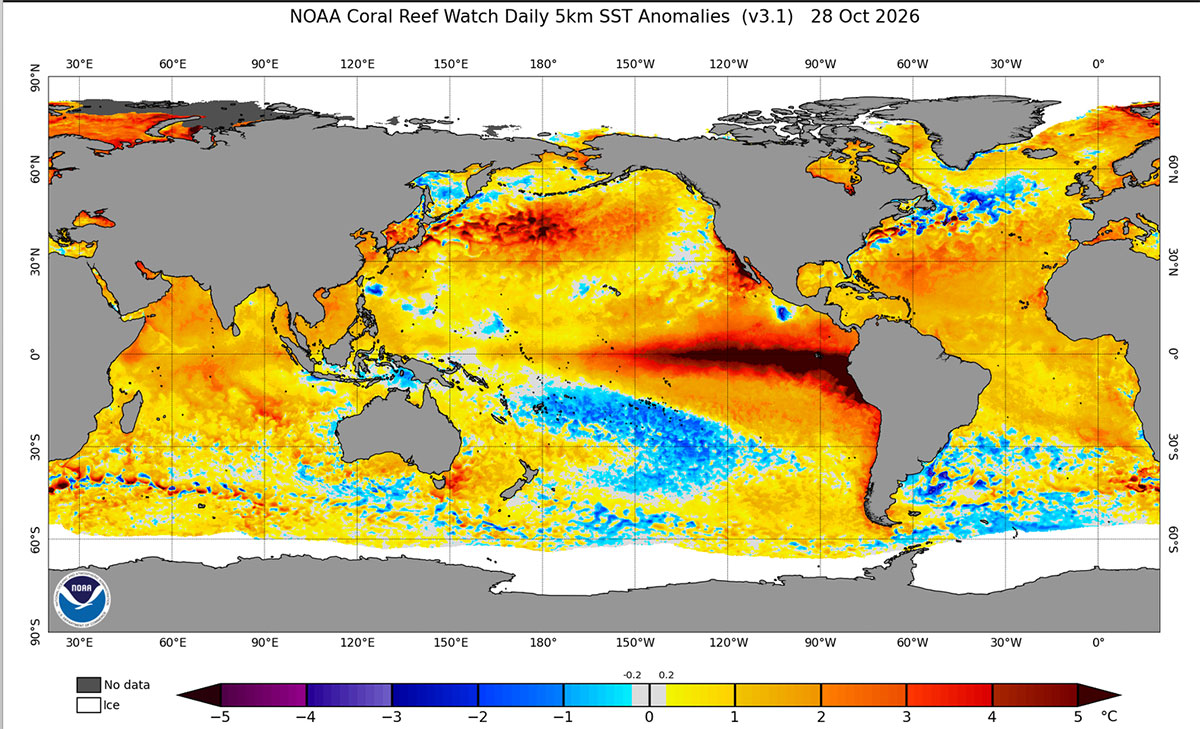
Source: NOAA, https://coralreefwatch.noaa.gov/data_current/5km/v3.1_op/daily/png/ct5km_ssta_v3.1_global_current.png
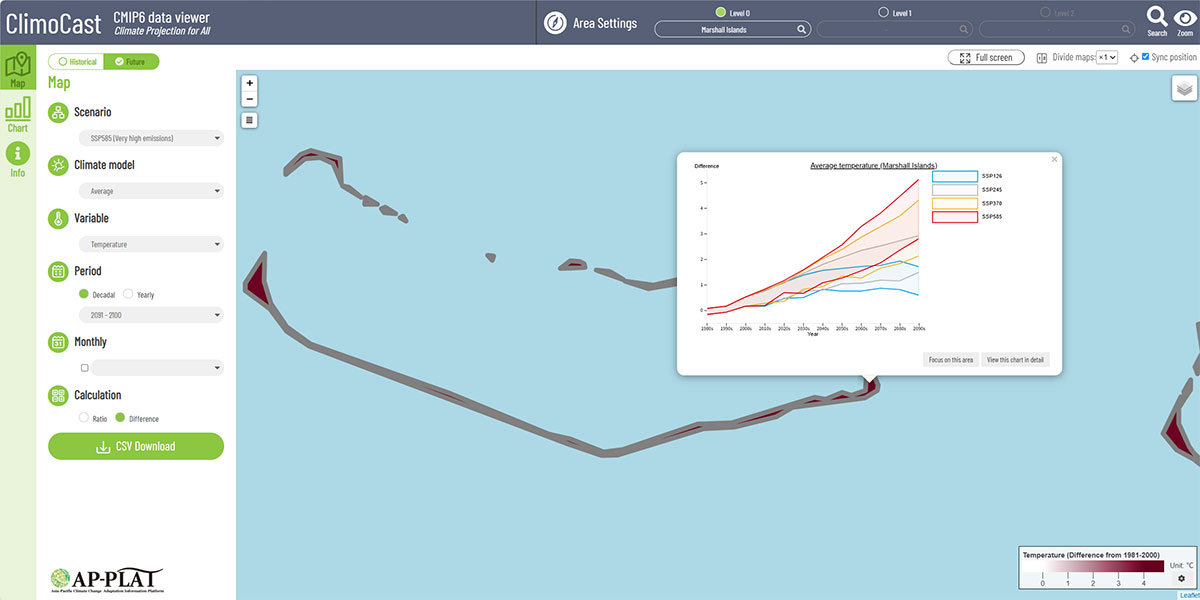
For additional context, climate projections from ClimoCast provide a longer-term perspective. Under the SSP5-8.5 scenario (high emission scenario), the annual mean temperature is projected to be approximately 3.9℃ higher during 2091–2100 than during the 1981–2000 baseline, while annual precipitation is projected to remain almost unchanged (Fig. 3).
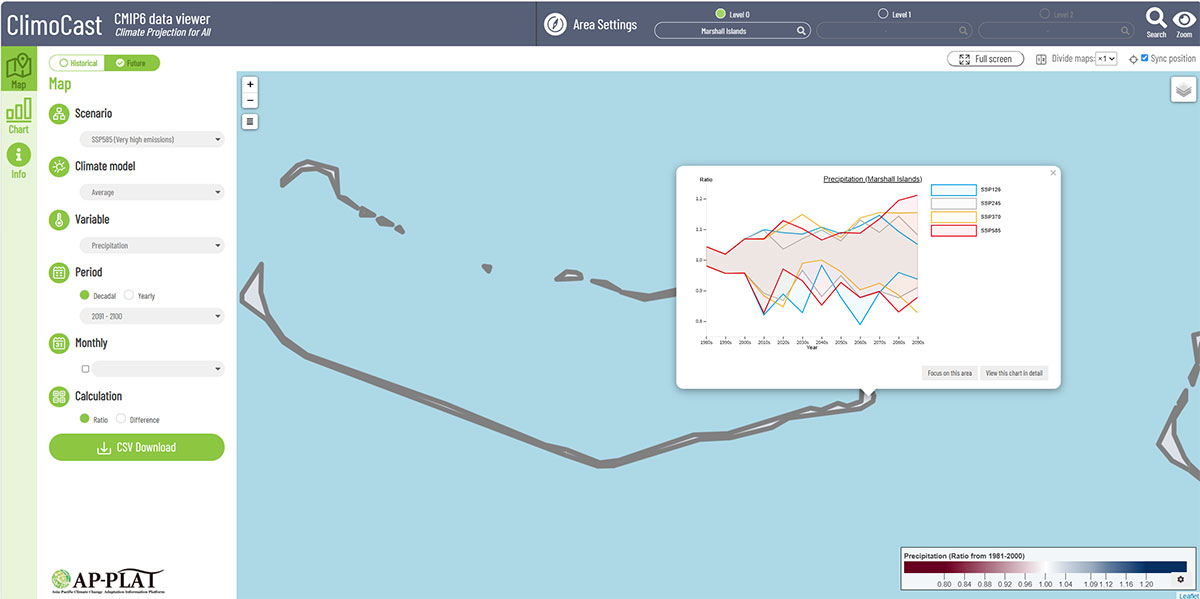
Although recent observations indicate above-average temperatures and variable rainfall, it is difficult to determine from these figures alone how strongly El Niño is affecting Majuro. During our upcoming field survey, we hope to better understand how these climatic variations are experienced locally and whether some communities are experiencing greater impacts than others.
EL NIÑO, CLIMATE, WATER, AND HEALTH
El Niño is a natural climate phenomenon characterized by unusually warm sea-surface temperatures in the central and eastern equatorial Pacific, affecting rainfall patterns worldwide.
Climate agencies report a strengthening El Niño in 2026. According to the National Oceanic and Atmospheric Administration (NOAA), the Niño 3.4 sea-surface temperature anomaly reached +2.1℃ in September, with strong-to-very strong El Niño conditions expected to continue through early 2027. The World Meteorological Organization (WMO) forecasts an average Niño 3.4 anomaly of approximately +3.8℃ for November 2026–January 2027, with a peak around December.
These figures describe El Niño conditions in the equatorial Pacific, rather than sea-surface temperatures around the Marshall Islands. For geographical context, Majuro lies just north of the Niño 4 monitoring region (5°N–5°S, 160°E–150°W), as defined by NOAA.
El Niño is also associated with changes in sea-surface height (Fig. 4) and atmospheric pressure (Fig. 5) across the Pacific.
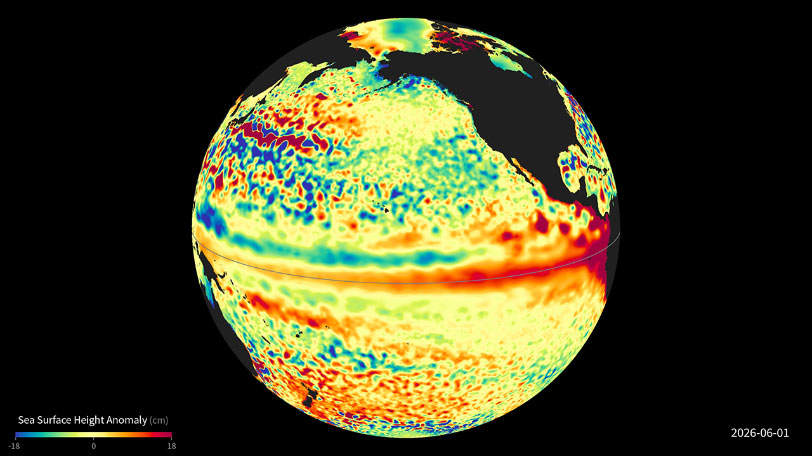
Source: https://svs.gsfc.nasa.gov/31399/
Visualization: NASA, data: E.U. Copernicus Marine Service Information, https://doi.org/10.48670/moi-00149.
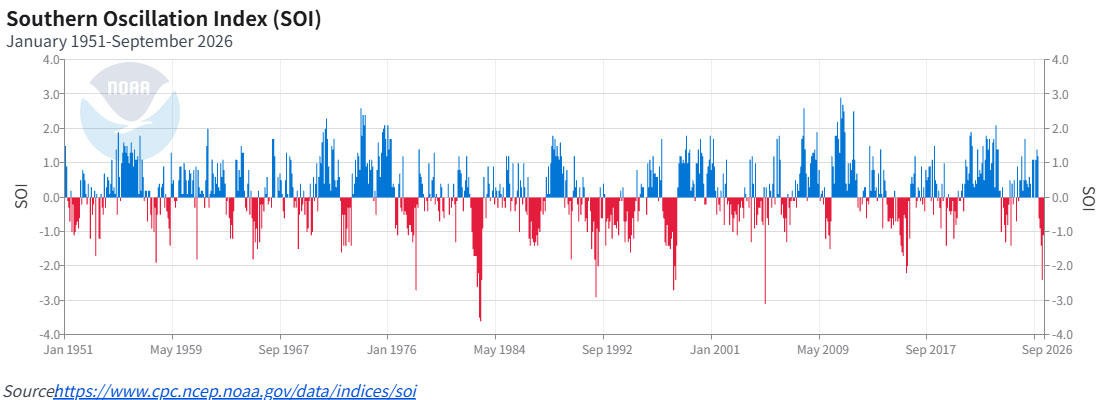
Source: https://www.ncei.noaa.gov/access/monitoring/enso/soi
According to the Marshall Islands’ 2023 National Adaptation Plan (NAP), rainfall may decline by as much as 80% following severe El Niño events, with drought risks particularly high in the northern atolls.
Majuro already faces challenges in securing a stable freshwater supply due to its limited water resources and dependence on rainfall. To address this long-standing issue, JICA’s Project for Improvement of Water Reservoir at Majuro Atoll aims to expand storage capacity for rainwater collected from the airport runway, improving water security and strengthening resilience to drought.
Health risks are also a concern. In October 2026, the government declared a State of Disaster for El Niño and a dengue outbreak. Although these are not necessarily directly linked, dengue transmission is influenced by temperature, rainfall, water storage, sanitation, and mosquito breeding conditions. The NAP also warns that high tides can disrupt sewage systems and spread waste, increasing exposure to mosquitoes. These risks highlight the connections among water security, public health, waste management, and coastal ecosystems.
El Niño itself is not caused by climate change, but it occurs within an already warming climate system. While climate change gradually increases temperatures and sea levels, El Niño can cause rapid changes over months or years. Adaptation must therefore address both long-term climate change and short-term climate variability.
Source:
- NOAA, EL NIÑO/SOUTHERN OSCILLATION (ENSO) DIAGNOSTIC DISCUSSION, 8 October 2026
- NOAA, Datasets Useful for ENSO Research
- WMO, Global Seasonal Climate Update for November-December-January 2026, 21 October 2026
- JICA, JICA’s Project for Improvement of Water Reservoir at Majuro Atoll - September 2020 to December 2026
- Office of the President & Cabinet (RMI), Executive Order Proclamation Declaring a State of Disaster for El Niño and Dengue Outbreak, 10 October 2026
- Springer Nature, Amplitude, duration, variability, and seasonal frequency analysis of the El Niño-Southern Oscillation, 11 October 2022
WASTE MANAGEMENT AND COASTAL RESILIENCE
Waste management is another serious environmental challenge in Majuro. According to the Secretariat of the Pacific Regional Environment Programme (SPREP), approximately 38.5 tons of waste were collected daily at the time of its 2021 report. The limited landfill space has led to substantial waste accumulation, and a 2025 SPREP publication described the Jable–Batkan dumpsite as overflowing. On this low-lying atoll, inadequate waste management also poses risks to the surrounding marine environment.
Efforts to address these challenges are underway. Recycling programs collect millions of cans and bottles annually, and in 2026, JICA's J-PRISM3 supported Majuro's first overseas shipment of used PET bottles for recycling. In our next field report, we will share local perspectives on how these initiatives are working and what challenges remain.
Source:
- JICA, J-PRISM Supports the First Export of Used PET Bottles from Majuro, Marshall Islands, 24 July 2026
- The Marshall Islands Journal, Recycling = millions of $$, 29 January 2026
- SPREP, Organic Project - Improving Solid Waste Management in Majuro-Diversion of 40% Waste from Landfill : Republic of the Marshall Islands, 24 June 2025
- SPREP, New Solid Waste Management Plan for Majuro, Republic of the Marshall Islands, Endorsed., 2 March 2021
A NATIONAL PATHWAY FOR ADAPTATION
RMI adopted its National Adaptation Plan (NAP) in 2023 as a long-term pathway for maintaining the country’s habitability and protecting Marshallese communities, culture, and self-determination.
The NAP includes a broad range of adaptation options, including nature-based adaptation, coastal protection infrastructure, land raising, strengthened public services, and, where necessary in the longer term, planned relocation.
Nature-based Solutions (NbS), such as coastal replanting and coral reef restoration, are important adaptation options. The NAP also recognizes the need to combine these approaches with engineered protection, such as seawalls, depending on local conditions.
The country’s 2025 Nationally Determined Contribution (NDC) reinforces these priorities, emphasizing disaster preparedness and resilience in essential sectors such as freshwater, health, fisheries, and biodiversity.
Source:
LOOKING AHEAD: FROM DATA TO THE FIELD
In late November 2026, AP-PLAT researchers will return to Majuro for field surveys. The next report will share field observations and local perspectives on El Niño, coral reef conditions, waste management, the potential of NbS, and international cooperation.
Through these observations and conversations with local stakeholders, we hope to gain a better understanding of local challenges and adaptation efforts, complementing the climate data and policies introduced in this article.
RELATED INFORMATION
- Adaptation Database: Marshall Islands Sets Unique Adaptation Pathway to 2150
- Field Report: Nature-based-Solutions (NbS) for Resilient Societies to Climate Change in Marshall Islands
(Posted : 16/Nov/2026)
