AP-PLAT Contributed to JICA’s 2026 Course on Adaptation to Climate Change
| Event | JICA FY2026 Knowledge Co-Creation Program (KCCP) Adaptation to Climate Change |
|---|---|
| Date | 13 October 2026 |
| Venue | National Institute for Environmental Studies (NIES), Tsukuba, Japan |
| Organizer | Japan International Cooperation Agency (JICA) |
OVERVIEW
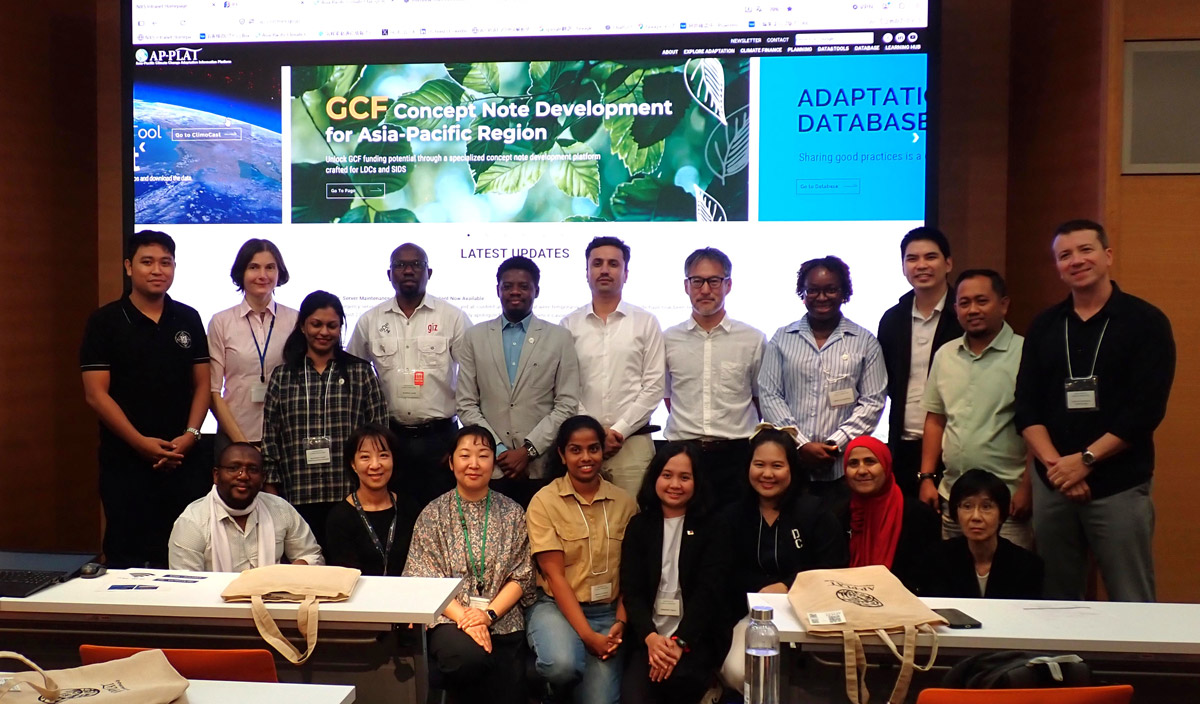
AP-PLAT has contributed lectures to JICA’s Course on Adaptation to Climate Change every year since 2023. This year – on October 13, 2026 – AP-PLAT welcomed 14 course participants to the National Institute for Environmental Studies (NIES) for a two-hour session introducing its tools and activities.
JICA Training Overview
JICA’s Course on Adaptation to Climate Change is part of JICA’s Knowledge Co-Creation Program (KCCP).
According to JICA, KCCP is a human resource development program conducted in Japan for participants from developing countries. It is an important component of technical cooperation under Japan’s Official Development Assistance (ODA). Through KCCP, JICA accepts approximately 8,000 participants from about 140 countries every year. The program covers a wide range of areas, including governance, urban and regional development, health and medicine, education, environment management, peacebuilding and social security, natural resources and energy, and disaster management.
The six-week Course on Adaptation to Climate Change, offered by JICA Tsukuba Center, is one of KCCP courses in the area of environmental management. This year, AP-PLAT welcomed 14 participants from 11 countries across 3 continents: Asia (Indonesia, Pakistan, the Philippines, Sri Lanka, and Thailand), Africa (Ethiopia, Sierra Leone, Somalia, Tunisia, and Zambia), and South America (Brazil).
Session program
Four AP-PLAT lecturers delivered the two-hour session, which covered the following topics:
- AP-PLAT Overview
- Adaptation Database
- Green Climate Fund Concept Note Navigator
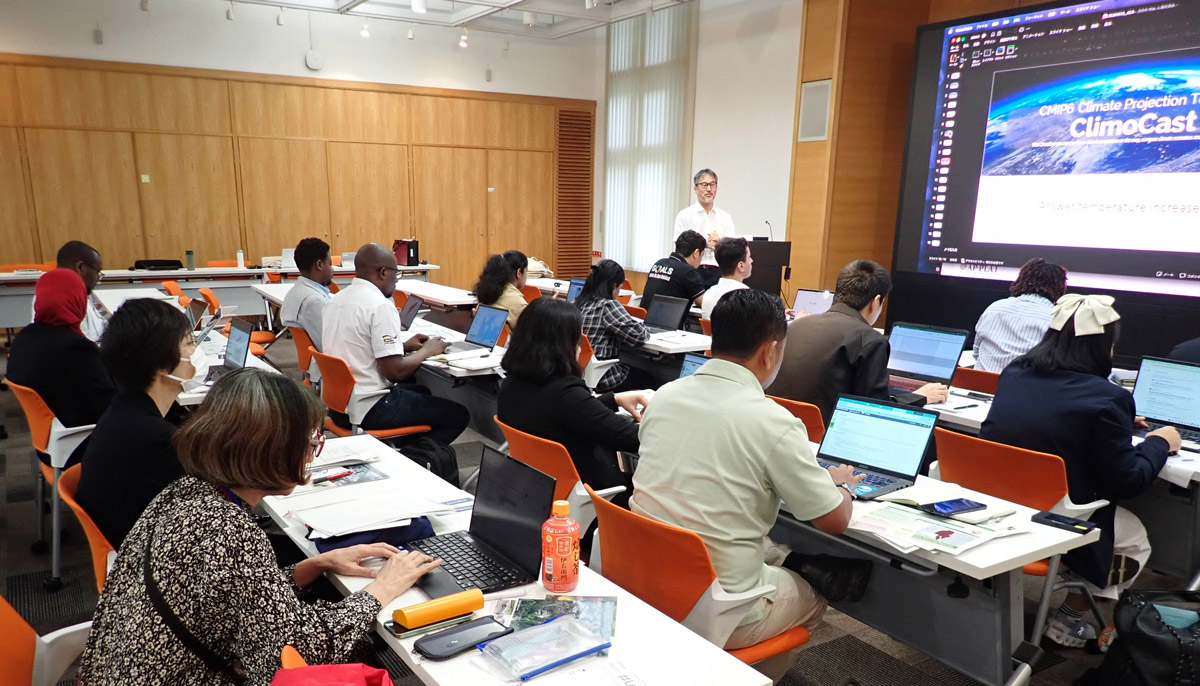
- Hands-on Session on ClimoCast
- Outreach
AP-PLAT Overview
Ms. Slavka Hubrova introduced AP-PLAT and provided a brief overview of Japan’s climate change adaptation framework. She also introduced A-PLAT, Japan’s domestic adaptation information platform, which is, together with AP-PLAT, operated by the Center for Climate Change Adaptation (CCCA) at NIES.
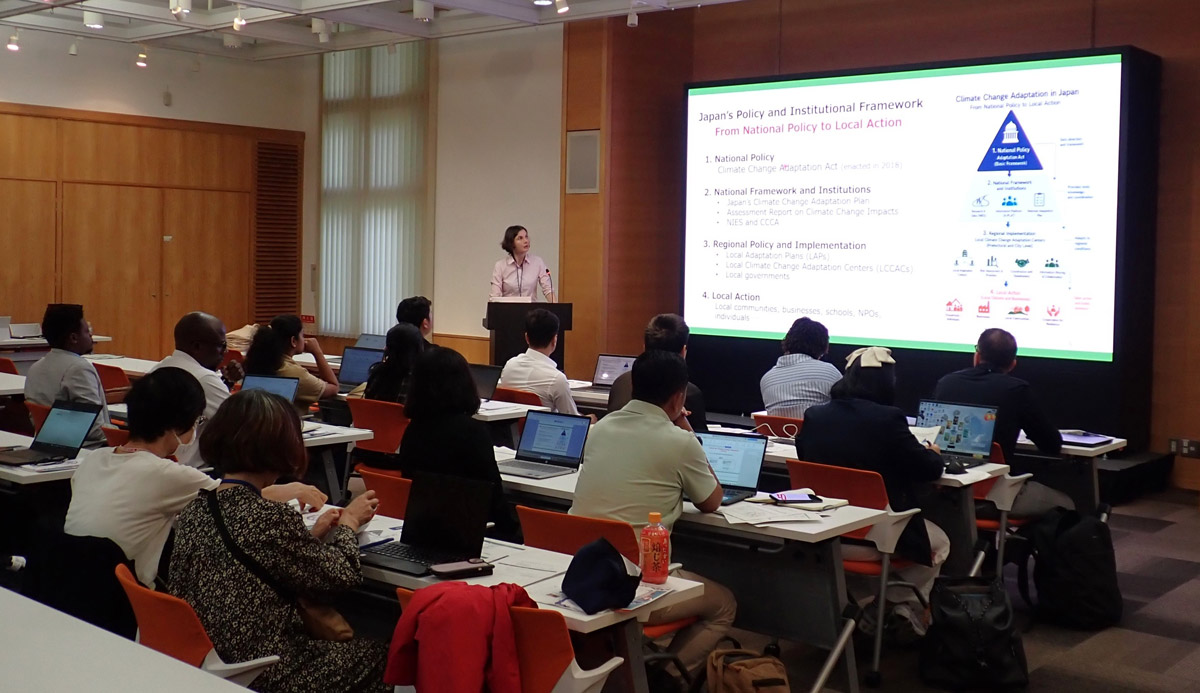
The presentation included two discussion topics.
In the first discussion, participants located their work within a four-level adaptation framework, from national policy to local action. Their work covered the national and regional levels, often spanning multiple levels. Almost all participants wanted to learn more about regional policy and implementation, and many also expressed interest in local action.
The second discussion explored participants’ use of adaptation information platforms and other online resources. Through this exchange, the AP-PLAT team learned, for example, about AdaptaBrasil, introduced by a participant from Brazil, and the Youth Negotiators Academy, introduced by a participant from Somalia.
Although discussion time was limited, many participants actively shared their experiences and views.
Adaptation Database
Ms. Hubrova then introduced the Adaptation Database, one of AP-PLAT’s online resources. At the time of the session, the database contained 335 entries. The lecture explained the database’s mission to make information about valuable adaptation projects more accessible, particularly information that might otherwise remain buried in lengthy technical reports and academic papers. It also showed how the database can help users find relevant examples that may help them find the solution to their own adaptation challenges.
Green Climate Fund (GCF) Concept Note Navigator
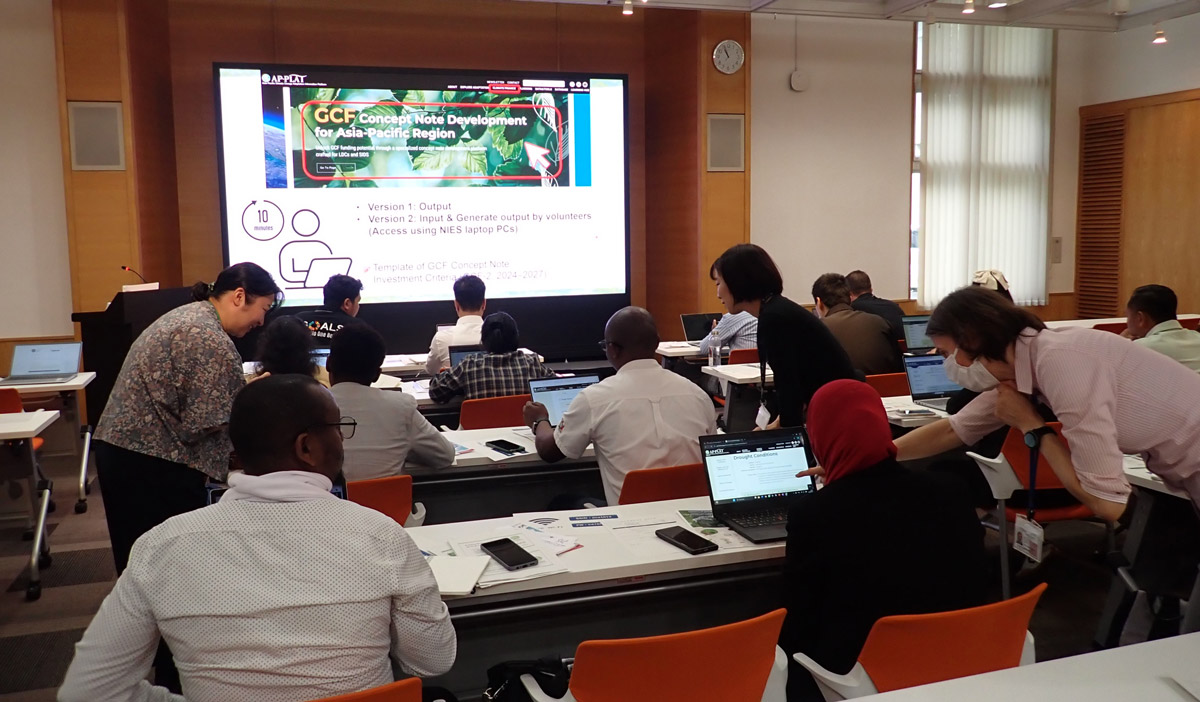
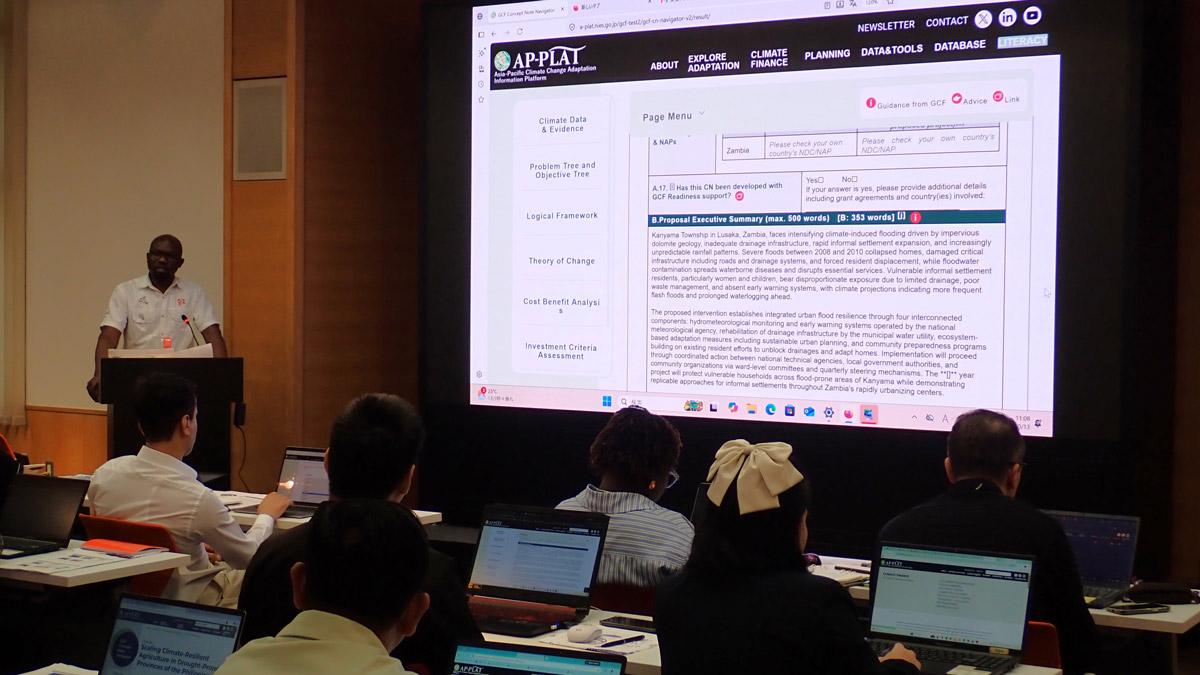
The next was a session on Green Climate Fund (GCF) Concept Note Navigator, delivered by Ms. Akiko Miyatsuka. Recent Conference of the Partis (COP) decisions and studies have highlighted a persistent gap between adaptation finance pledges by developed countries and the actual needs of developing nations. To help bridge this gap, Ms. Miyatsuka introduced the GCF Concept Note Navigator, a web tool developed by the AP-PLAT to facilitate access to climate finance.
The Navigator exists in two versions: a public web tool that generates downloadable sample texts in a Word template based on selected countries, sectors, and hazards, and an advanced AI-powered version currently in testing. This generative AI model instantly searches and synthesizes official GCF guidelines alongside national frameworks like NDCs and NAPs. After the hands-on session, feedback from a Zambian participant noted the tool’s time-efficiency and its potential to reduce administrative burdens in drafting financial information.
Ms. Miyatsuka concluded the session by noting that while generative AI demonstrates significant value in accelerating the Concept Note development, rigorous human oversight remains indispensable. She also shared that AP-PLAT is exploring ways to refine the tool in line with regional priorities and further assess the AI’s potential where appropriate.
ClimoCast
Dr. Yuji Masutomi introduced AP-PLAT’s climate projection tool ClimoCast and guided participants through hands-on exercises. Participants examined future temperature and precipitation projections for their hometowns, for example Cebu in the Philippines and Mahda in Tunisia. Comparing projections under different emission scenarios helped participants understand how mitigation could limit future climate change, with lower emissions generally resulting in less warming and, in locations where rainfall was projected to decline, smaller decreases in precipitation. By the end of the session, participants were able to obtain temperature and precipitation projection data for their hometowns under different climate scenarios, climate models, and time horizons.
Outreach
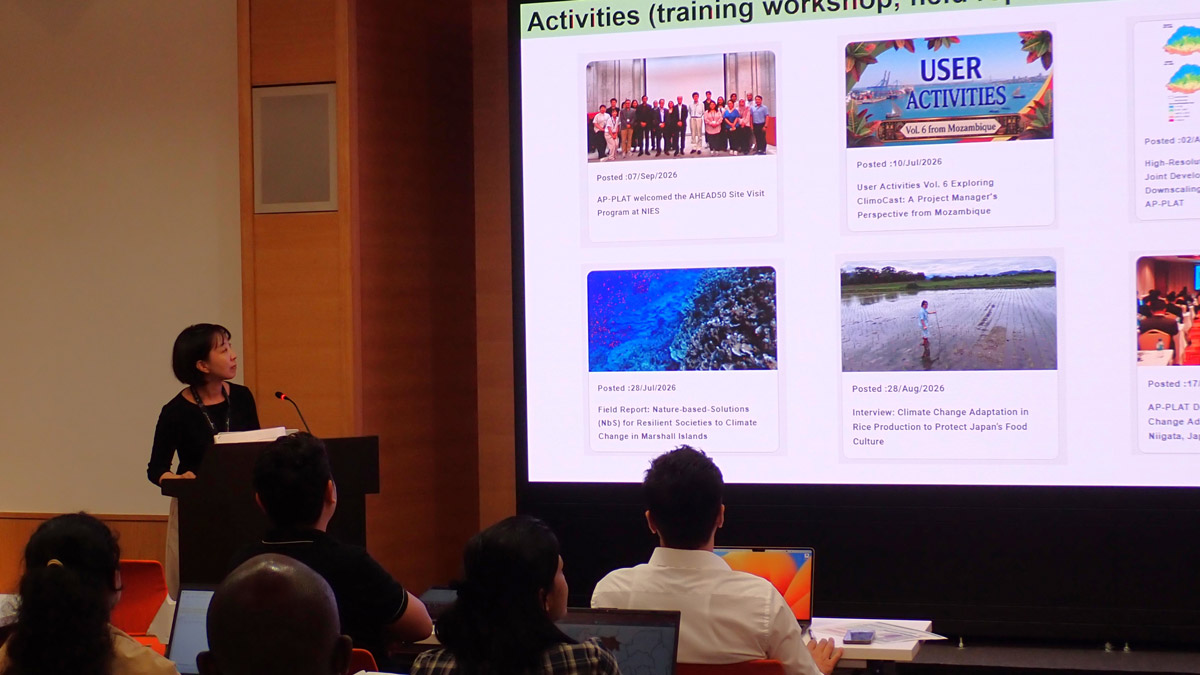
Ms. Reiko Seki introduced AP-PLAT’s outreach activities, including information sharing through the Activities page and social media.
Conclusion
AP-PLAT sincerely thanks JICA for the opportunity to host this session and all the course participants for their active participation and thoughtful contributions. We hope that the knowledge and tools introduced during the session will support the participants in their work and contribute to building more climate-resilient societies in their home countries.
Related Information
AP-PLAT Reports from previous years:
- 2025: AP-PLAT Participated in JICA Training Workshop on Climate Change Adaptation
- 2024: NIES Hosts JICA Trainees for Climate Change Adaptation Workshop
- 2023: AP-PLAT participated in JICA’s training course on “Adaptation to Climate Change”
What is JICA’s Knowledge Co-Creation Program (KCCP)?
(Posted : 19/Oct/2026)
