Interview: Climate Change Adaptation in Rice Production to Protect Japan’s Food Culture
INTRODUCTION
Japanese rice is highly valued both domestically and internationally, and demand overseas continues to grow. However, global warming and extreme heat are increasingly affecting domestic rice production, especially grain quality.
In this interview, we spoke with Dr. Yuji Masutomi, an AP-PLAT researcher studying heat-resilient rice varieties about how rising temperatures affect rice, how researchers are responding, and what is needed to protect Japan’s agricultural future.
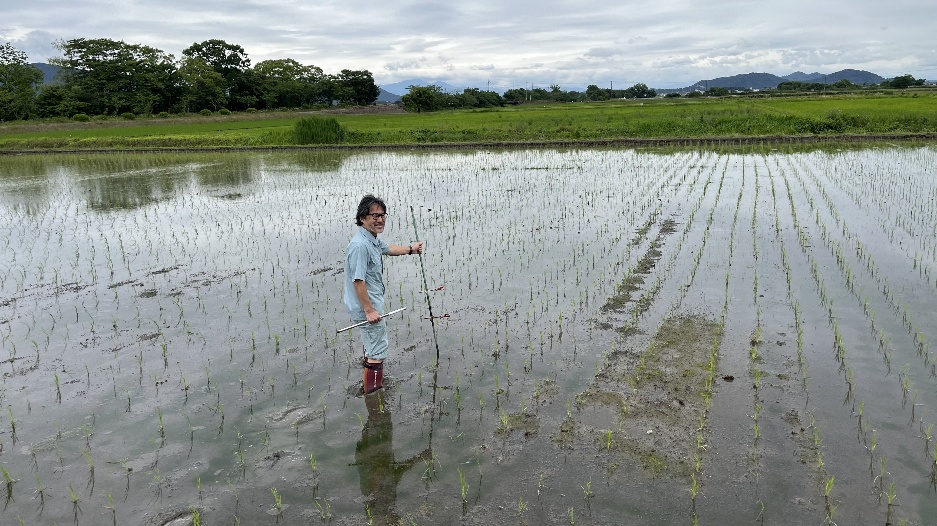
Q1: Japanese rice is highly valued globally, with exports reaching nearly 48,000 tons in 2025. However, we hear that global warming and extreme weather are threatening domestic production. How exactly is extreme heat affecting rice?
A1: The most critical threat is to the quality of the rice itself. High temperatures during the ripening period cause what we call “chalky grains,” or white immature grains. This occurs when it is excessively hot while the grains are filling with starch.
Chalky grains not only worsen the taste and appearance of rice, but also make the grains more fragile. As a result, the overall harvest volume may decrease. In addition, the ratio of first-grade rice can drop sharply, leading to lower trading prices and significant economic losses for farmers.
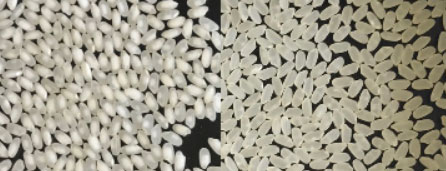
Chalky grains have a whitish appearance.
Q2: That sounds like a severe situation for agricultural stability. How are researchers and the agricultural sector responding to this crisis?
A2: One effective adaptation measure in paddy rice production is the introduction of heat-tolerant varieties that grow well even under high temperatures. Although the share of heat-tolerant varieties has been gradually increasing, it is still not sufficient.
Therefore, we are focusing particularly on water management as a feasible adaptation measure that farmers can implement directly in their fields. Our research aims to develop water management techniques to reduce low-quality rice grain caused by global warming.
As part of this work, we are conducting collaborative research with Omihachiman City in Shiga Prefecture and Taneya, a Japanese confectionery company. Taneya organically cultivates glutinous rice used for its confectionery products, and producing high-quality rice under a warming climate has become a major challenge.
Q3: Could you tell us more about the specific experimental methods used in this research?
A3: We install monitoring equipment in rice paddy fields to measure water level and water temperature. By doing so, we analyze the relationship between water level and water temperature.
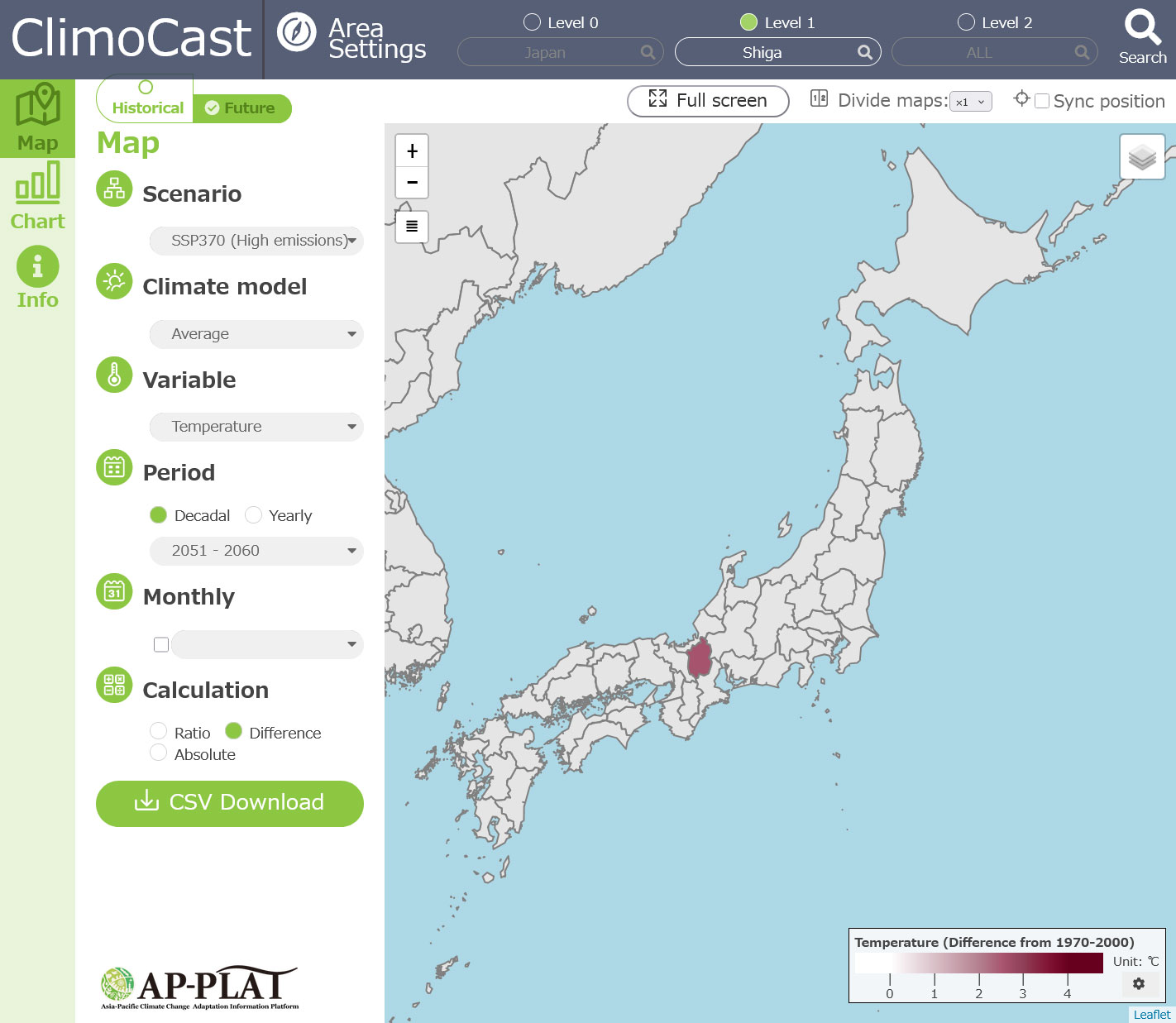
It is known that rice quality declines when water temperature increases. Therefore, if water temperature can be lowered by adjusting the water level, it may be possible to improve rice quality. In fact, water temperature varies significantly from one paddy field to another, and we have found that even under the same air temperature, water temperature can differ by about 2°C.
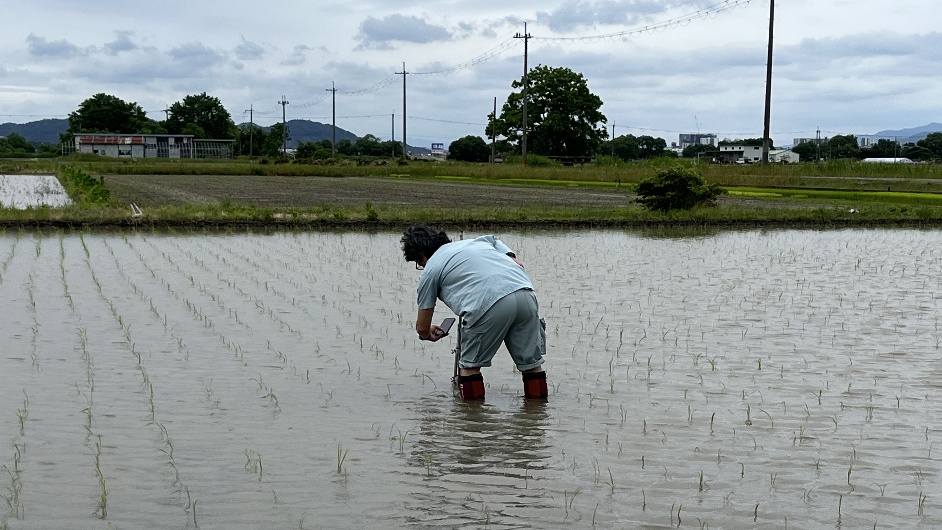
Q4: In addition to developing heat-tolerant varieties, field-level measures such as water management can also serve as important adaptation options that farmers can implement directly in their fields.
Finally, could you tell us what is important for protecting Japan’s food culture in the long term?
A4: Protecting Japan’s food culture under a warming climate requires cooperation among researchers, farmers, policymakers, distributors, consumers, and many other stakeholders.
Many people are involved in the process of producing rice and delivering it to consumers’ tables. First, it is important for people to become aware of the impacts of climate change on rice production and the adaptation measures being developed through research such as this.
In order for research findings to be used effectively in the field, it is also important to carefully understand the challenges and needs faced by farmers and to provide clear feedback based on the knowledge gained. For example, scientific verification of adaptation measures that farmers can implement directly in their fields, such as water management, and sharing those findings in a practical and accessible way will become increasingly important.
Building on this awareness, each stakeholder needs to accept new knowledge and initiatives and translate them into concrete adaptation actions. We believe that the accumulation of understanding and action across society will be a major force in supporting Japan’s agriculture and food culture for the future.
CLOSING
Extreme heat is no longer a distant threat to rice production. It is already affecting the quality, value, and stability of one of Japan’s most important crops. Through research on heat-resilient rice varieties, water management, and other practical adaptation measures, AP-PLAT hopes to contribute to climate change adaptation in agriculture and help protect Japan’s food culture for future generations.
AP-PLAT/CCCA will continue to share information on research activities, including environmental monitoring and future projections, in various regions.
RELATED INFORMATION
Research Papers
- Breeding targets for heat-tolerant rice varieties in Japan in a warming climate
- Monsoon Asia Rice Calendar (MARC): a gridded rice calendar in monsoon Asia based on Sentinel-1 and Sentinel-2 images
AP-PLAT Adaptation Database
- MIDORI Strategy and ASEAN–Japan Climate-Smart Agriculture
- Achieving Sustainable Agriculture by Mitigating the Impact of Heat on Crops through New Variety Introduction and Cultivation Technology Research
A-PLAT (Japanese website)
(Posted : 28/Aug/2026)
