User Activities Vol.3
Exploring Climate Impact Viewer: A Seoul University Student’s Perspective

In this third installment of our “User Activities” series, we continue to share practical use cases and insights from real users. Through this series, we hope to inspire more people to explore and make use of scientific tools related to climate change.
INTRODUCTION
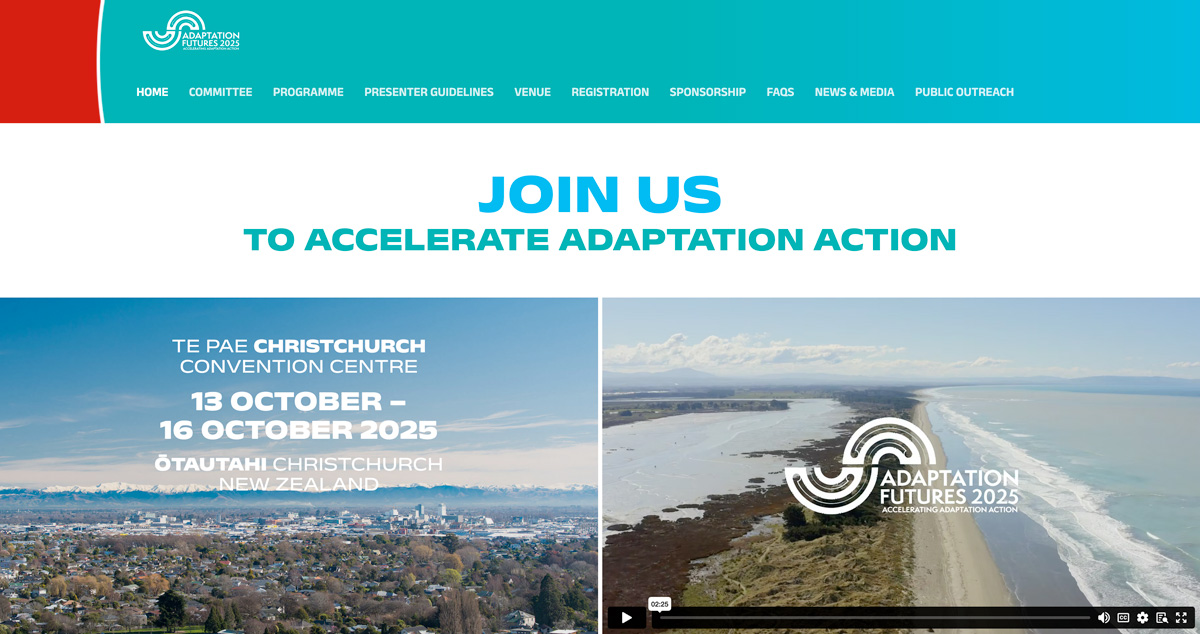
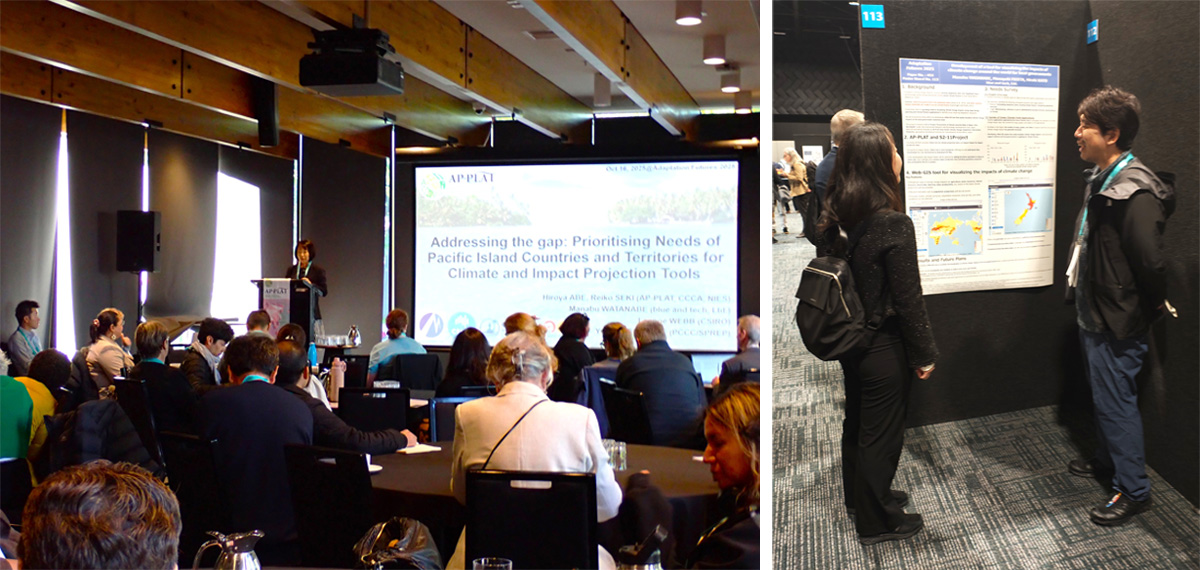
For this article, a student from Seoul National University whom we met at Adaptation Futures 2025 kindly participated in our interview. She showed strong interest in our poster presentation and also joined the AP-PLAT Knowledge Café, where we had the opportunity to exchange ideas and discuss climate adaptation in an open and engaging atmosphere.
INTERVIEW
Q: What kind of research are you currently working on?
A: My research focuses on developing decision-support approaches for climate adaptation at the local and regional levels. In particular, I study strategies to enhance heat resilience in urban environments. I am especially interested in integrating scientific evidence with policy and planning processes to support more effective adaptation measures.
Q: What motivated you to start this research topic?
A: Rising temperatures represent an unprecedented challenge that many regions are already beginning to experience. Because we have little historical reference for such extreme heat, it is difficult for communities to fully imagine the potential impacts or prepare adequate responses. There are still limited tools and frameworks to support effective decision-making under these new conditions. This is why I believe it is crucial to focus on this topic and advance research that can help societies adapt.
Q: What types of data are important for your research, and how do you usually collect or analyze climate-related data?
A: Reliable climate impact projections across various sectors and the effectiveness of different adaptation measures.
I usually review academic articles and scientific reports that focus on the region of interest, as well as reputable websites that provide relevant climate information. When no region‑specific references are available, I try to adapt or replicate methods used in other regions and apply them to our case.
Q: What did you learn from using the climate prediction tools?
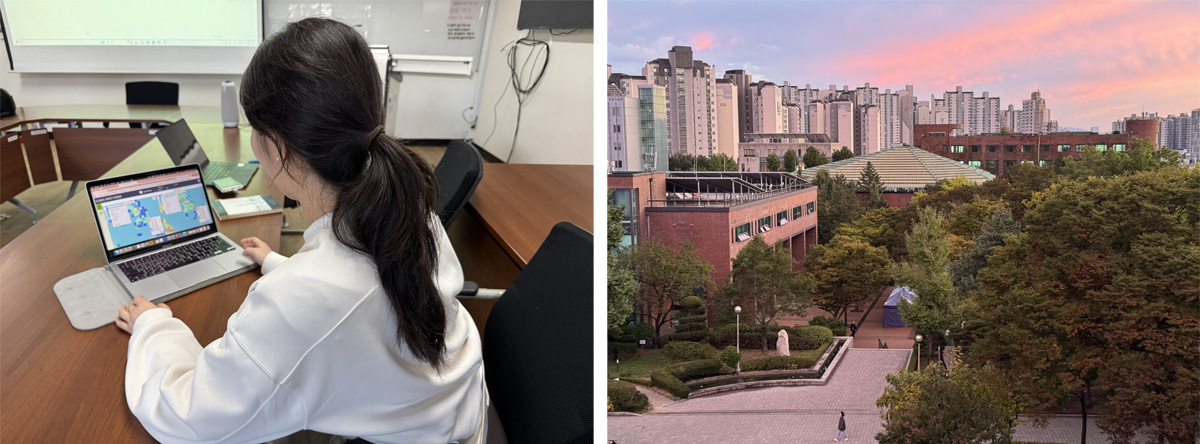
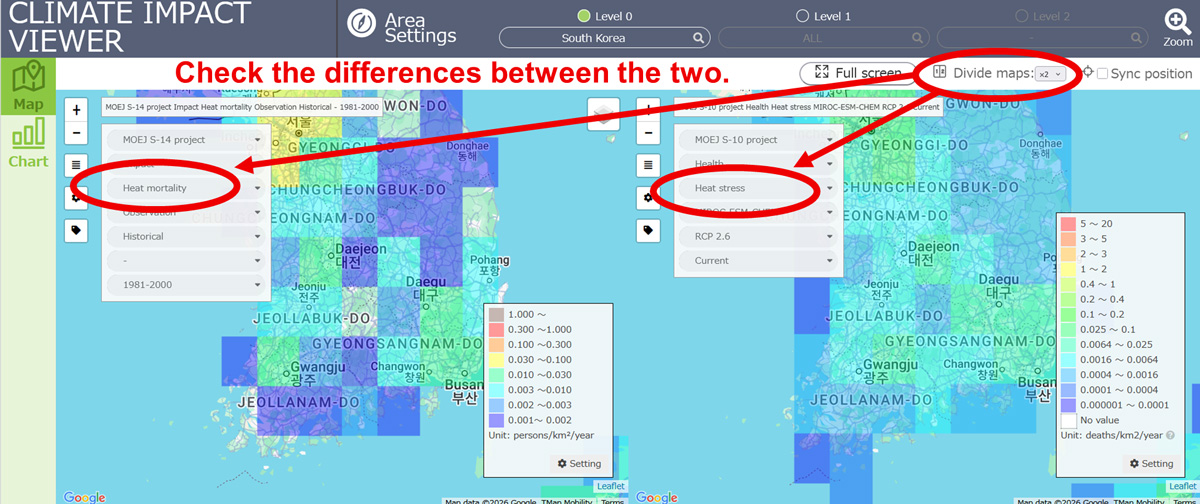
A: I found it interesting that the Climate Impact Viewer provides a wide range of datasets across multiple sectors, which helps build a more comprehensive understanding of climate impacts. The split window function was also particularly useful, as it allowed me to directly compare current conditions with future projections, including changes in mortality. This feature made it easier to visualize how risks may evolve over time.
Q: Do you think these tools can be applied to your research?
A: I think these tools can be very useful for comparing climate risk trends across different regions. They also play an important role in the early stages of adaptation planning by helping identify how risks may increase over time. This information can guide decisions about the level of adaptation effort that may be required.
Q: What kinds of features or spatial scales would be useful in the future?
A: It would be highly beneficial for local adaptation planning if higher‑resolution data, such as 1‑km grids, were available. Guidance on selecting appropriate scenarios and climate models—or using model ensembles—would also be very helpful for ensuring robust analysis. These features could greatly improve the accuracy and usability of climate information at the local scale.
Q: How do you hope your research will contribute to society or your local community?
A: I hope to help integrate scientific knowledge with local insights to better address the challenges of the climate crisis. Reliable scientific data are essential for responding to an uncertain future, while local communities hold valuable experience in managing their environments. Bridging and interpreting these two types of knowledge can play a crucial role in supporting effective, locally led adaptation.
Q: What are your future goals or plans after completing your current research?
A: I am currently focusing on climate risk projections, which are essential in the early stages of adaptation planning. As a next step, I hope to expand my work to include research on adaptation measures. This will help local communities identify appropriate solutions for their specific contexts while considering future climate impacts.
IN CLOSING
The student is currently focusing on climate risk projections, which are essential in the early stages of adaptation planning, but she also shared her perspective on the next steps in her research.
“As a next step, I hope to expand my work to include research on adaptation measures themselves. By considering future climate impacts, I want to help local communities identify solutions that fit their specific contexts.”
Her strong commitment to tackling climate adaptation research in a concrete and forward-looking way left a lasting impression on us.
REFERENCES
Heat countermeasures are an important adaptation approach to urban warming, and AP-PLAT features several case studies on heat-related impacts and adaptation.
- Integrating Gender-Sensitive Heat Adaptation into Urban Climate Policies in South Asia
- Assessing Heat-Health Risks and Advancing Local Adaptation in the Asia-Pacific
- Rising Urban Heat: Health, Energy, and Planning Responses in Bangkok and Bandung
- Green Corridors in Medellin, Colombia
- Assessing Impacts of Climate Change for Local Adaptation Planning in Indonesia
A-PLAT (Japanese Website) also provides a wide range of information related to heatstroke prevention and response in Japan:
(Posted : 16/Apr/2026)
