 Asia - Bangladesh, India, Sri Lanka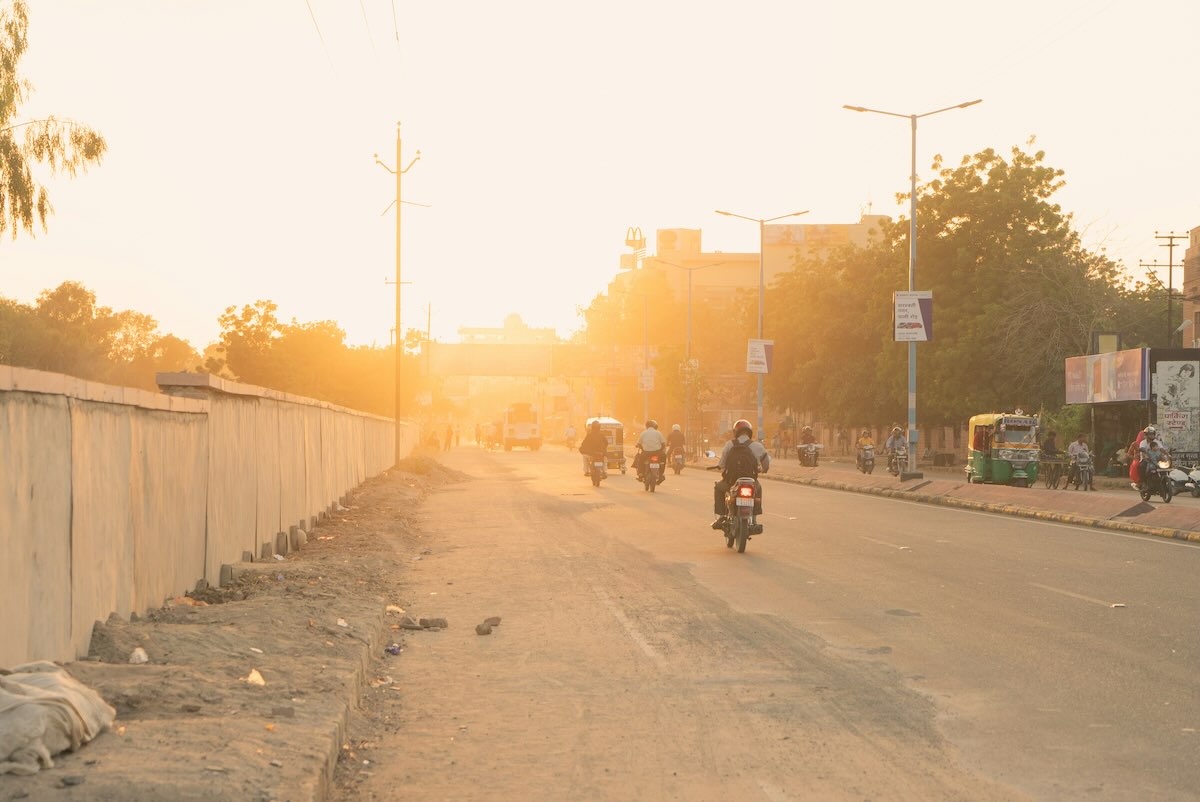
Challenge
South Asian cities face rising heat and humidity, but lack local plans to protect vulnerable communities. Women and low-income groups are especially at risk.
Solution
Build local capacity and provide tools for designing spatially differentiated, gender-sensitive Heat Action Plans, integrating heat adaptation into policy and planning.
Overview
South Asia has experienced a surge in heatwave frequency and intensity in recent decades, with temperatures projected to continue rising 3–6°C in some areas. However, few cities have actionable heat adaptation plans that local administrations can implement.
Led by Rohit Magotra (Integrated Research and Action for Development, India) and supported by the Asia Pacific Network for Global Change Research (APN), this project was a regional initiative to help South Asian cities in India, Bangladesh, and Sri Lanka tackle these intensifying heatwaves.
The project focused on developing Heat Action Plans (HAPs), which are city-level frameworks for coordinated extreme heat response, and ensuring these plans are gender-sensitive and inclusive of vulnerable groups. The project team engaged policymakers and stakeholders to co-create strategies for heat risk management, building capacity through training and on-the-ground research.
HAPs for urban adaptation to rising temperatures
A HAP provides a framework to implement and coordinate measures before, during, and after heatwave events. For example, it might include heat early-warning alerts, public cooling centers, adjusted work hours during heatwaves, and community outreach on hydration and first aid. Cities with a structured HAP in place can prevent heat-related illnesses and deaths.
The project underscored that effective HAPs save lives and protect livelihoods, preventing productivity losses and economic damages during extreme heat.
Developing HAPs with a gender lens
Women often face unique vulnerabilities to heat stress, from maternal health risks to increased caregiving burdens during heatwaves. This project integrated gender-sensitive adaptation into heat planning.
In stakeholder workshops, the team highlighted how heat impacts can differ by gender and socioeconomic status. For example, in Rajshahi, Bangladesh, workshop discussions noted mental health problems and that gender-based violence seems to have accelerated with increased heat. Vulnerability assessments focused on slums and low-income settlements where housing and service conditions shape heat risks.
Recognizing these disparities, the project ensured that the HAP framework explicitly addresses the needs of women, children, older people, and the urban poor. The training manual provides a gender integration framework and step-by-step process for developing gender-integrated HAPs, and the Surat plan includes gender-inclusive interventions – such as prioritizing water distribution and healthcare access for pregnant women, or tailoring heat awareness campaigns to reach women in informal settlements. The HAPs sensitized city officials to gender and social equity, aiming to protect those most vulnerable to extreme heat.
Capacity building and local action
The project carried out a series of capacity-building activities across India, Bangladesh, and Sri Lanka. In October 2022, multi-stakeholder meetings and workshops were held in each target city to kickstart local heat action planning. In that month, a consultative meeting with Colombo’s Municipal Council in Sri Lanka brought together city officials, meteorologists, and NGOs. They discussed integrating heat stress management into city policies and initiated a Colombo HAP working group.
A workshop in Surat, India, gathered municipal officers and researchers to review Surat’s existing heat measures and to design a more inclusive Heat-Health Action Plan. In Rajshahi, Bangladesh, a stakeholder consultation engaged the city corporation, community leaders, and academics in drafting a local heat adaptation strategy.
The project produced urban heat island maps for Surat and Rajshahi and set out plans in Colombo to identify urban heat islands and vulnerable communities. The training manual includes GIS-based hotspot mapping methods. A household survey in the Colombo Municipal Council also assessed housing, water, electricity, health, and gender-wise differential impacts of heat.
The assessments informed city-specific recommendations. Throughout the project, emphasis was placed on participatory planning – engaging local residents (especially women) in identifying solutions and building public awareness about heat risks.
Tools, training, and knowledge sharing
The initiative produced practical tools to ensure the longevity of its outcomes. A comprehensive training manual was published in 2023 to guide city officials and practitioners in developing climate-adaptive, gender-integrated HAPs. This manual covers step-by-step processes, from analyzing a city’s climate data and mapping heat hotspots to implementing early warning systems and public heat health campaigns. It also includes checklists for integrating gender considerations, ensuring that adaptation strategies address the needs of all community members.
Ultimately, the project delivered heat adaptation roadmaps for three South Asian cities and strengthened institutional capacity and awareness to sustain and scale these efforts amid a warming climate.
Outcomes and results
- City-specific outputs: These included a Climate Adaptive and Gender Integrated Heat Action Plan for Surat City and vulnerability assessments of households in Colombo, Surat, and Rajshahi. The project also produced urban heat island maps for Surat and Rajshahi and city factsheets (Rajshahi, Colombo).
- Gender-inclusive adaptation measures: Each HAP integrated gender considerations, informed by project research.
- Capacity building of stakeholders: Stakeholders, including municipal officials, health officers, meteorological officials, NGOs, and researchers, participated in the Master Classes on HAPs and other city-level engagements. A training module in English on designing and developing gender-sensitive HAPs was translated into two local languages (Bangla and Sinhalese).
- Communication and awareness: The project implemented an effective communication strategy to broaden outreach. Project objectives included developing an effective communication strategy and country-level factsheets, and knowledge sharing continued through a 2024 webinar on heatwave early warning and HAPs.
- Sustainability and policy integration: The project worked with municipal councils and aimed to build capacities for policy integration and implementation of urban heat stress management.
Project details
| Project title | Integrating Heat Action Plans in the Climate Policy and Guidelines for Evolving Gender Sensitive Heat Adaptation Plan in Cities in South Asia |
|---|---|
| Year started | 2021 |
| Duration | 1.5 years |
| Countries involved | Bangladesh, India, Sri Lanka |
| Funding awarded | US$40,000 |
| Funded by | Asia‑Pacific Network for Global Change Research (APN) |
| Grant DOI | https://doi.org/10.30852/p.20539 |
| Program | Scientific Capacity Development Programme (CAPaBLE) |
| Project reference number | CBA2021-07SY-Magotra |
| Project leader | Rohit Magotra (Integrated Research and Action for Development, India) |
Acknowledgements
This project was supported by the Asia-Pacific Network for Global Change Research (APN) under its Scientific Capacity Development Programme (CAPaBLE). Acknowledgements also go to India Meteorological Department (India), Urban Health and Climate Resilience Centre (India), International Centre for Climate Change & Development, ICCCAD (Bangladesh), SLYCAN Trust (Bangladesh), Surat Municipal Corporation (India), Rajshahi City Corporation (Bangladesh), and Colombo Municipal Council (Sri Lanka) for their collaboration and support.
Related information
- Project Permalink
- Project Final Report
- Magotra, R. (2022) Climate adaptive heat stress action plans for vulnerable communities in South Asia. Session Proceedings, Global Gobeshona Conference 2. https://www.apn-gcr.org/publication/session-proceedings-climate-adaptive-heat-stress-action-plans-for-vulnerable-communities-in-south-asia/
- Magotra, R. (2022) Integrating heat stress management into climate policies and guidelines for gender-sensitive heat action plans in Sri Lanka – Meeting with Colombo Municipal Council. Integrated Research and Action for Development, India. https://www.apn-gcr.org/publication/colombo-municipal-council-sri-lanka-integrating-heat-stress-management-into-climate-policies-and-guidelines-for-gender-sensitive-heat-action-plans-in-sri-lanka/
- Magotra, R. (2022) Stakeholder consultation workshop proceedings – Developing gender-sensitive heat action plan Surat. Integrated Research and Action for Development, India. https://www.apn-gcr.org/publication/stakeholder-consultation-workshop-surat-india-developing-gender-sensitive-heat-action-plan/
- Magotra, R. (2022) Stakeholder consultation workshop proceedings – Developing gender-sensitive heat action plan Rajshahi. Integrated Research and Action for Development, India. https://www.apn-gcr.org/publication/stakeholder-consultation-workshop-rajshahi-bangladesh-developing-gender-sensitive-heat-action-plan/
- Madurasinghe, M., Samarakoon, D., Magotra, R., & Jha, N. (2023). Vulnerability Assessment of Households to Socio-Economic Impacts of Heat Stress in Colombo. Slycan Trust & IRADe. https://www.apn-gcr.org/publication/vulnerability-assessment-of-households-in-colombo-sri-lanka-to-heat-stress/
- Desai, V, Magotra, R., Jha, N. (2023). Climate Adaptive and Gender Integrated Heat Action Plan – Surat City, Gujarat. Integrated Research and Action for Development (IRADe): India. https://www.apn-gcr.org/publication/climate-adaptive-and-gender-integrated-heat-wave-action-plan-of-surat-city-india/
- Magotra, R.; Jha, N, Desai, V.; (2023). Developing Climate Adaptive and Gender Integrated Heat Action Plans for South Asian Cities. Integrated Research for Action for Development, India. https://www.apn-gcr.org/publication/training-manual-developing-climate-adaptive-and-gender-integrated-heat-action-plans/
- Integrated Research and Action for Development, South Asian Meteorological Association & South Asia Heat Health Network. (2024). Webinar Summary: Heatwave Early Warning and Heat Action Plans in South Asia. https://www.apn-gcr.org/publication/webinar-summary-heatwave-early-warning-and-heat-action-plans-in-south-asia/
- APN Facebook
- APN LinkedIn
- APN X
 DISCOVER MORE

