 Asia - Indonesia, Japan, Thailand
Challenge
Southeast Asian cities face rising temperatures from the urban heat island effect, increasing health risks and energy consumption for cooling.
Solution
Researchers modeled urban heat island patterns and surveyed households in Bangkok and Bandung to guide urban planning and adaptation strategies for cities.
Overview
Urban areas in Southeast Asia are warming faster due to the urban heat island (UHI) effect, where urban areas experience higher temperatures than surrounding rural areas.
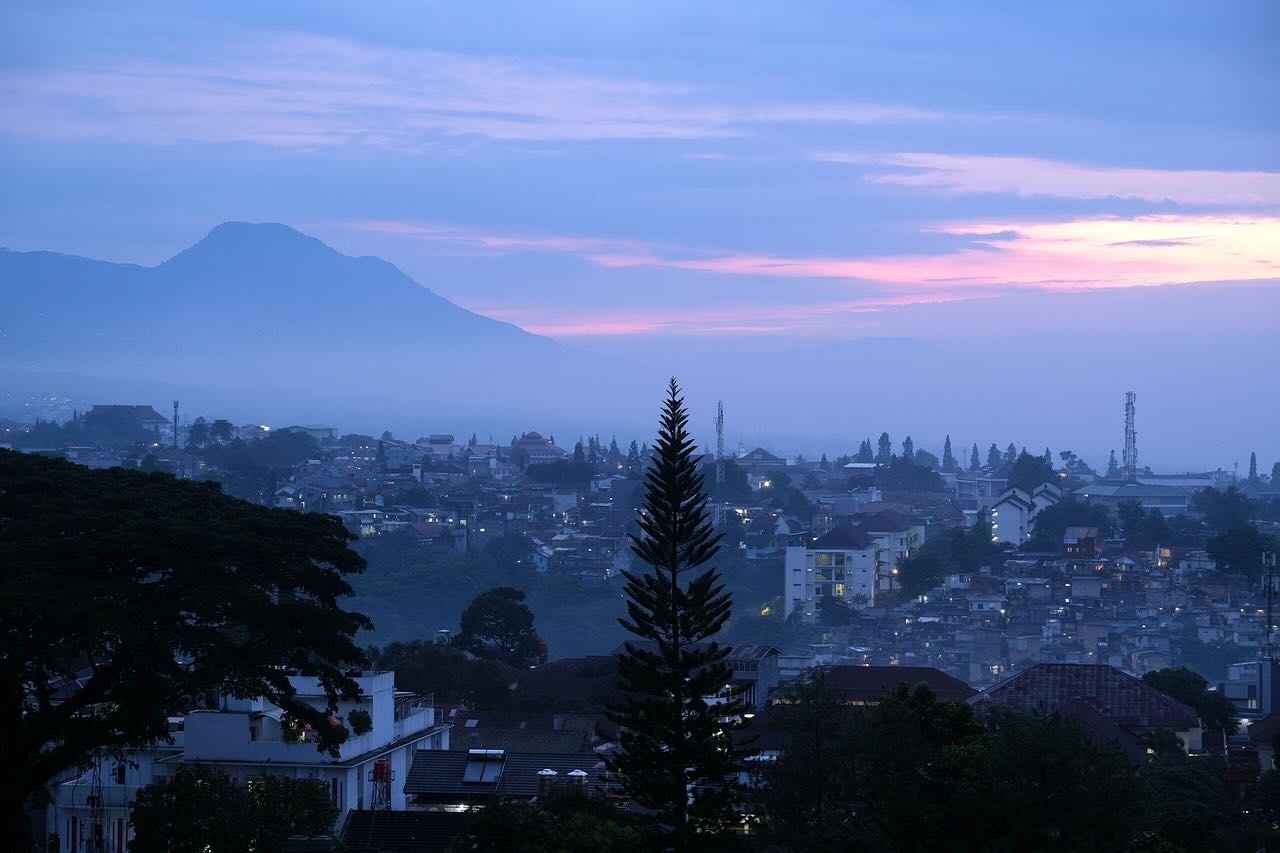
As cities grow, buildings and roads replace vegetation, absorbing heat during the day and releasing it at night. This leads to higher nighttime temperatures, increased energy use for cooling, and growing health concerns. Thailand’s capital Bangkok, a low-lying city with a maximum elevation of 4 meters above sea level and a population of 7 million, and the Indonesian mountain city of Bandung , at 768 meters and with a population of 2.4 million, were selected to represent different geographical and urban contexts.
The Asia-Pacific Network for Global Change Research (APN) funded a regional research project led by Sigit D. Arifwidodo of Kasetsart University (Thailand) in evaluating UHI.
The researchers used remote sensing, meso-climate modeling (simulating and predicting climate conditions in a specific geographic area), and household surveys to examine how UHI affects daily life, focusing on urban energy consumption and policy implications. They assessed its links to energy use, physical and mental health, and urban planning practices. Despite differing geography, both cities experienced clear UHI patterns and faced challenges in integrating microclimate concerns into urban policy. The project identified major risks and laid the groundwork for better planning and cross-sector responses to climate-related heat stress.
Practitioner guidebooks in the Thai and Bahasa Indonesia languages were also developed to support replication across other cities.

Methodology
To measure UHI, the team used air temperature data, satellite-derived land surface temperature (LST), and urban climate simulations. In Bangkok, the Weather Research and Forecasting (WRF) model was applied for urban climate simulations using land use data from 2014 and projections from the Bangkok Master Plan 2013. This model is a numerical weather prediction system designed for atmospheric research and operational forecasting.
For Bandung, LST data from 1995, 2007, and 2015 were analyzed, as meso-climate modeling was not used because of insufficient data.
Health effects were studied using surveys, though the project noted a limitation of collecting only a few respondents for perceived health effects. Respondents rated heat-related interference in daily life (e.g., sleep, travel, exercise) and reported on physical and mental well-being. Household energy consumption was analyzed using cooling degree days (CDD) and electricity bills. Results were analyzed using statistical models, including linear regression and Spearman correlations.
Key results and findings
- In Bangkok, UHI intensity peaked at night, with urban areas up to 4.5°C warmer than surrounding areas.
- The new Bangkok master plan could significantly increase the UHI magnitude by 62.5% (from 4°C to 6.5°C), particularly in the daytime (up to 4.5°C increase).
- Heat stress was associated with lower well-being and increased emotional problems among Bangkok residents.
- In Bandung, the average LST increased by 4°C (from 18°C to 22°C), and maximum LST rose by 13°C (from 24°C to 37°C) between 1995 and 2015, especially in dense areas.
- Energy use for cooling was highest in wealthier households who owned more vehicles and electronic appliances.
- In Bandung, higher energy consumption for cooling was recorded in central business districts, but many respondents reported no health effects from warming temperatures, which was unexpected.
Future outlook
The study highlighted the lack of direct UHI-related policies in both cities. In Bangkok, UHI concerns are scattered across different sectoral plans, leading to a lack of coordinated efforts. In Bandung, there is no direct policy for UHI, but efforts are integrated into general greening and energy programs. The project recommends integrating UHI into urban policy through tailored climate modeling and land use planning.
Future research should expand to include more cities across Southeast Asia with similar socioeconomic and geographical conditions, adopting longitudinal approaches to track UHI trends and their long-term effects, facilitating more generalized findings. Strengthening collaboration across planning, health, energy, and environment sectors will be key to implementing practical heat adaptation strategies.
Project details
| Project title | Understanding Urban Heat Island Effect and Its Implications to Climate Change Adaptation Strategies in Major Southeast Asian Cities |
|---|---|
| Year started | 2015 |
| Duration | 2 years |
| Countries involved | Thailand, Japan, Indonesia |
| Funding awarded | US$40,000 (year 1), US$40,000 (year 2); Total: US$80,000 |
| Funded by | Asia-Pacific Network for Global Change Research (APN) |
| Program | Climate Adaptation Framework (CAF) |
| Grant DOI | https://doi.org/10.30852/p.4538 |
| Project reference number | CAF2015-RR17-NMY-Arifwidodo CAF2016-RR12-CMY-Arifwidodo |
| Project leader (organization, country) | Sigit D. Arifwidodo (Kasetsart University, Thailand) |
Acknowledgements
This case study was made possible thanks to the Asia-Pacific Network for Global Change Research (APN). Acknowledgement is extended to Sigit D. Arifwidodo (Kasetsart University, Thailand) for leading the project and to Rizqi Abdulharis (Institut Teknologi Bandung, Indonesia) and Tetsu Kubota (Hiroshima University, Japan) for their contributions to data collection, modeling, and stakeholder engagement. The project also acknowledged the International Health Policy Programme, Ministry of Public Health Thailand, for its assistance in analyzing UHI health effects in Bangkok.
Related information
- Project Permalink
- Arifwidodo, S. D. (2018). Final technical report: CAF2016-RR12-CMY-Arifwidodo. Asia-Pacific Network for Global Change Research. https://www.apn-gcr.org/publication/project-final-report-caf2016-rr12-cmy-arifwidodo/
- Arifwidodo, S. D., & Kubota, T. (2020). Understanding urban heat island effects in Southeast Asian cities: Insights from Bangkok and Bandung. Atmospheric Environment. https://doi.org/10.1016/j.atmosenv.2020.117120
- Asia-Pacific Network for Global Change Research. (n.d.). Understanding urban heat island effect and its implications to climate change adaptation strategies in major Southeast Asian cities. https://www.apn-gcr.org/project/understanding-urban-heat-island-effect-and-its-implications-to-climate-change-adaptation-strategies-in-major-southeast-asian-cities/
- APN Facebook
- APN LinkedIn
- APN X
 DISCOVER MORE

