AP-PLAT Interviewed by Kyoto University Students
| Event | Discussion between Dr. Masutomi and Kyoto University students |
|---|---|
| Date | 15 December 2025 |
| Location | National Institute for Environmental Studies (NIES), Tsukuba, Japan |
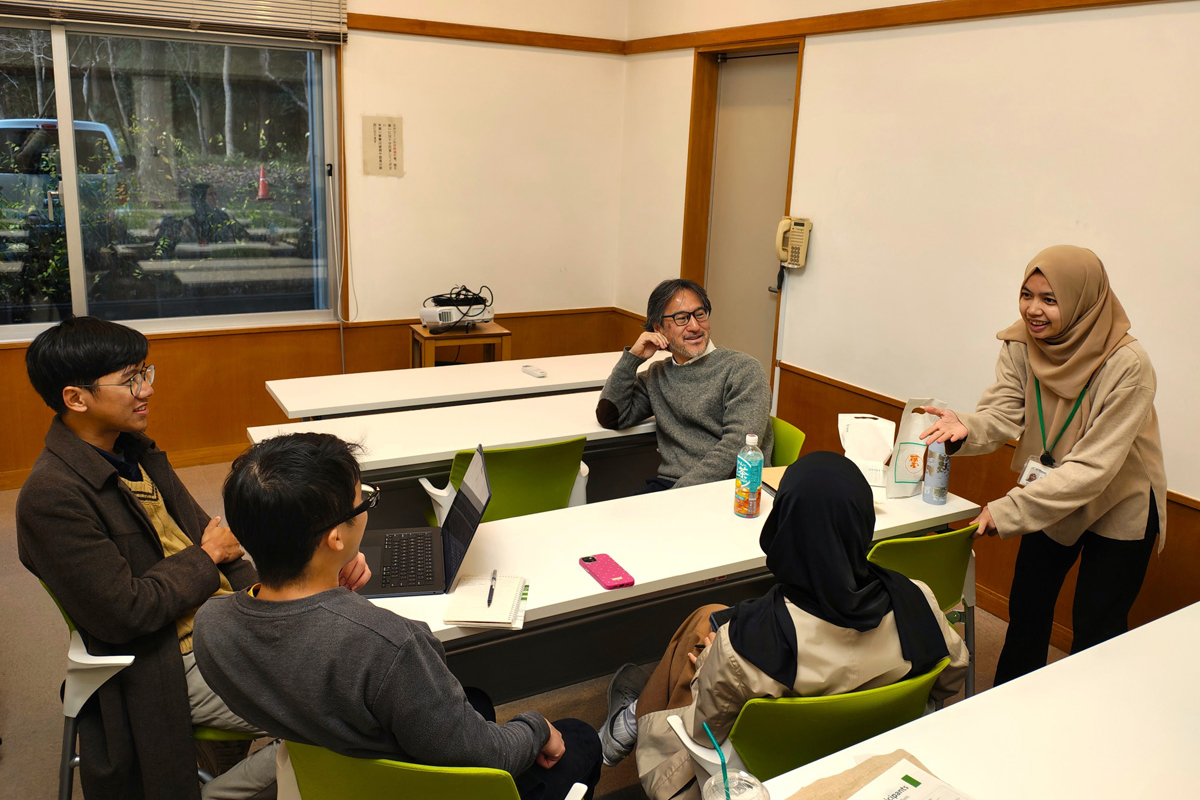
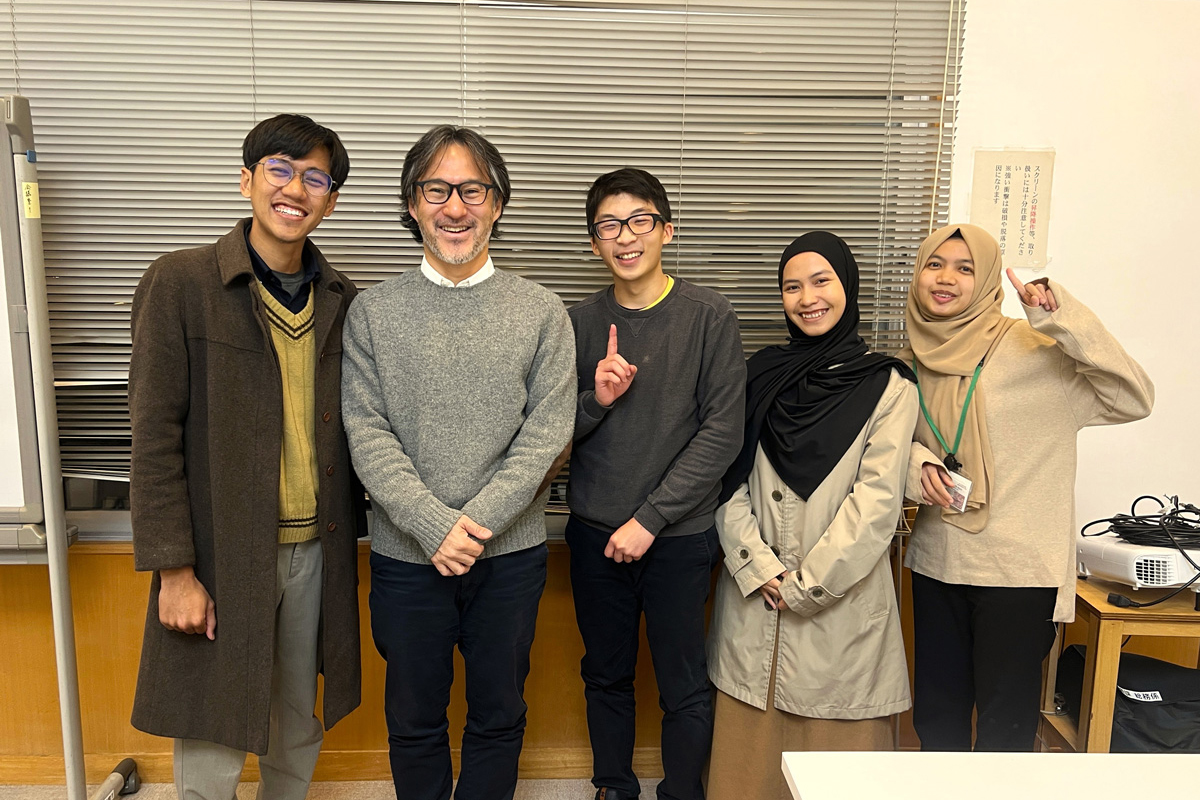
Dr. Masutomi responded to an interview conducted by Kyoto University students, researching climate change adaptation from the perspective of the Center of Climate Change Adaptation (CCCA), NIES. The interview was included as the Experience-Based Learning (EBL) project from the Asian Future Leaders Scholarship Program, which allows scholars to actively engage in local communities and future professions concerning their interests.
The students came from different faculties, including Environmental Studies, Agriculture, Law, and Energy Science. Their research focuses on East Asia, exploring social challenges, international cooperation, and practical solutions. They aim to better understand how scientific knowledge can be translated into real-world action.
In an open and lively atmosphere, we discussed the role of AP-PLAT in disseminating scientific climate change information, incorporating perspectives from scientists.
Q1: How can specialized climate data be made usable for the general public?
A: Scientific data must be “translated” for non-experts. Instead of complex formats like NetCDF, we provide future climate projections in CSV files that can be used in Excel. Our user-friendly visual tools, ClimoCast and Climate Impact Viewer, help users intuitively understand local impacts, such as temperature increases.
Q2: What is the reputation of the tool among users worldwide?
A: User feedback is largely positive, with about 95% satisfaction. While we sometimes receive comments about minor errors, such as boundary lines, continuous improvement based on feedback is key. These tools are widely regarded as one of the easiest ways to access future climate projection data.
Q3: What are the main needs in developing countries?
A: The three major needs in developing countries are access to scientific information, financial resources, and capacity development. To support governments in applying for international funds such as the Green Climate Fund, we provide example concept notes that significantly help with the planning of adaptation projects. We also conduct capacity development through programs such as JICA training, enabling practitioners to effectively use scientific knowledge and tools. Because levels of understanding vary, we adopt a “Training of Trainers” approach, focusing on key individuals who can share knowledge within their communities and help translate it into policy.
Q4: Are there any success stories from this approach?
A: As one example, in Bhutan, our research contributed to the scientific background report for the National Adaptation Plan. In the preparation of the Climate Change Projection Report 2024, we provided downscaled climate data, scientific expertise, and technical assistance.
Q5: Have you faced any challenges or limitations when supporting developing countries?
A: There is significant diversity among countries.” Therefore, rather than customizing for each country, we focus on common climate challenges—such as floods or changes in rainy seasons—that can be applied across regions with similar conditions.
Q6: Do you have a message for students and the next generation?
A: First, imagine a perfectly climate-resilient world. Clearly envisioning this goal is essential, because without imagination, realization is impossible.
Exchanging ideas with the younger generation brought fresh energy and new perspectives to AP-PLAT. We hope that as they continue their research on climate change adaptation, we will have opportunities to collaborate and co-create solutions together in the future.
(Posted : 24/Dec/2025)
