AF2025 Report (Part2): Further contributions from the Center for Climate Change Adaptation (CCCA)
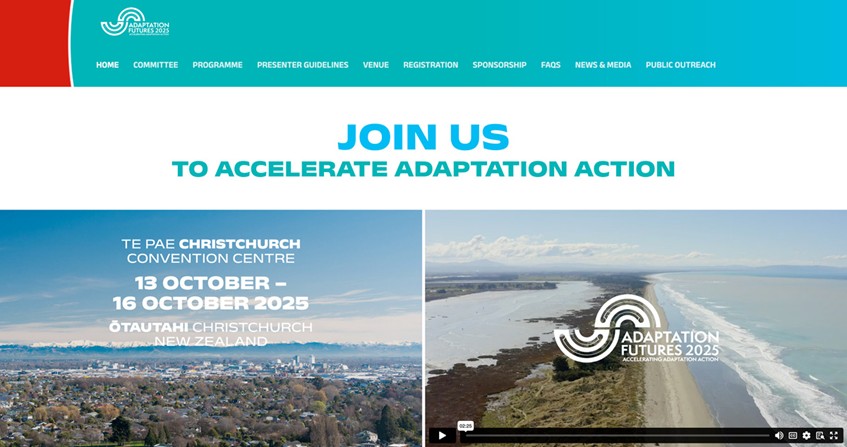
| Event | The 8th International Adaptation Futures Conference 2025 |
|---|---|
| Date | October 13–16, 2025 |
| Location | Christchurch, New Zealand |
| Registered Participants | Approximately 1,200 people from over 90 countries |
While the first report focused on the AP-PLAT session at Adaptation Futures 2025, this second installment highlights the key presentations and contributions made by other members of the Center for Climate Change Adaptation (CCCA) at the National Institute for Environmental Studies (NIES).
CCCA Member’s Contributions
Takahiro Oyama (October 14)
| Session Name | Health, Wellbeing, and Future Generations – Integrating Health into Adaptation Actions |
|---|---|
| Presentation Title | A Targeted Approach for Heat Illness Prevention: Mapping High-Risk Population at 1 km Grid Resolution and Policy Implications for Adaptation in Japan |
| Overview | Oyama presented research integrating future heat and population projections at a 1-km grid resolution to identify areas at high risk of heat illness. The study also analyzed the cost-effectiveness of countermeasures utilizing household air conditioning as a countermeasure. He emphasized the need for targeted heat-illness interventions—guided by where and to what extent risk is concentrated—in order to protect the 30 million people projected to be at risk. The discussion further highlighted the importance of sustainable countermeasures that do not emit greenhouse gases, as well as the potential use of cooling shelters as an effective heat-risk reduction strategy. |
| Presentation Materials | A Targeted Approach for Heat Illness Prevention: Mapping High-Risk Population at 1 km Grid Resolution and Policy Implications for Adaptation in Japan |
Yoshifumi Masago (October 14)
| Session Name | The Arts of Adaptation, Communication and Education – Legal and Artistic Tools for Adaptation |
|---|---|
| Presentation Title | From Data to Decision, Defining Adaptation Urgency in Japan’s Climate Strategies |
| Overview | Masago presented a framework for defining “adaptation urgency” in Japan’s climate strategies. He proposed a method of communication that links scientific data with societal decision-making and introduced approaches for “turning data into human action”. |
Yasuaki Hijioka (October 15)
| Session Name | Cities, Settlements and Infrastructure – Strategies for Governance & Digital Networks |
|---|---|
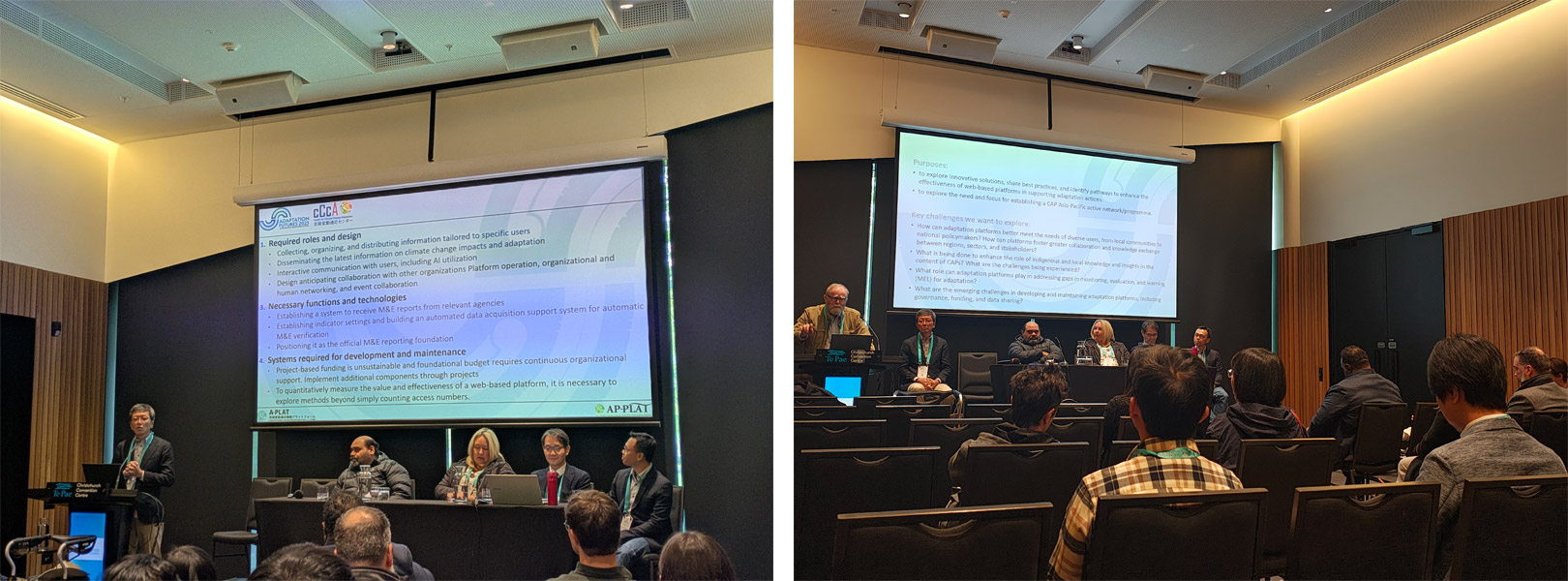
| Presentation Title | Advancing (Enhancing) Climate Adaptation Action in The Asia-Pacific Region Through Web-Based Platforms |
| Speakers |
|
| Overview | This session focused on utilizing Web-based platforms to promote climate change adaptation action in the Asia-Pacific region, presenting efforts and collaboration examples from various countries. Hijioka provided an overview of the Climate Change Adaptation Platform (A-PLAT), operated by the National Institute for Environmental Studies of Japan. His presentation focused on the mechanisms for linking scientific knowledge with policy and local practices, as well as the systems for information sharing among a wide range of stakeholders, including local governments, citizens, and businesses. Discussions with researchers from the UK, Taiwan, Pacific Island countries, and South Korea highlighted common challenges such as data interoperability, capacity building, and policy integration. Participants shared the view that developing an “adaptation information infrastructure accessible to everyone” is essential for strengthening resilience across the region. |
| Presentation Materials | Advancing (Enhancing) Climate Adaptation Action in the Asia-Pacific region through Web-Based Platforms |
Midori Nemoto (October 15)
| Session Name | Beyond Adaptation – Climate Resilient Development & Practice |
|---|---|
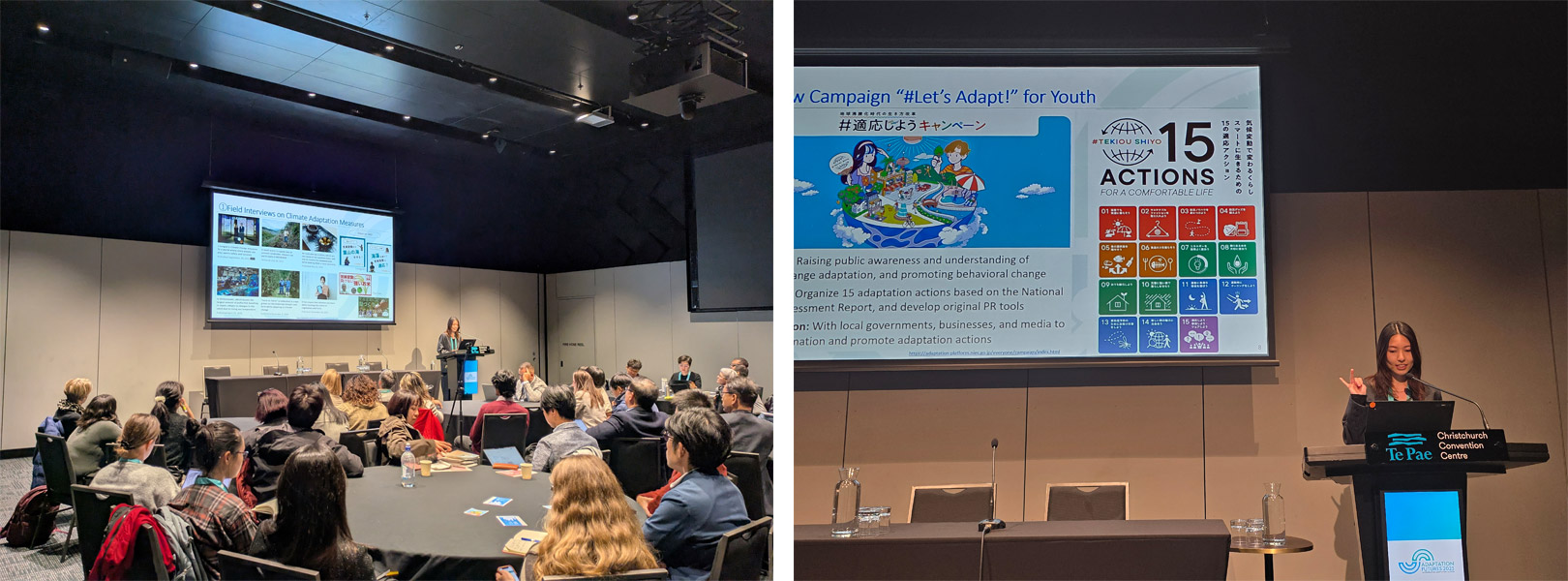
| Presentation Title | Enhancing Climate Change Adaptation Practice: What we Know, What we Need, and How to Act |
| Speakers |
|
| Overview | This session brought together researchers, government officials, and practitioners from Asia and Europe to discuss strategies for linking scientific knowledge to social implementation, focusing on the theme of “how to enhance adaptation practice”. Nemoto introduced initiatives related to communication strategies for climate change adaptation. In particular, she highlighted efforts to promote citizen-participatory adaptation actions through A-PLAT’s core content and the newly launched “#Let’s Adapt” campaign. She also emphasized the importance of “communication that connects science with society,” aiming to convey scientific information clearly and accessibly to the public. In the panel discussion, participating institutions identified shared challenges—including evaluating the effectiveness of adaptation actions and addressing regional information gaps—reinforcing the need for cross-sector collaboration among education, public outreach, and policy to strengthen adaptation practice. |
| Presentation Materials |
|
| Media Coverage | Adaptation promotion using the comic was featured in “The Asia Media Centre,” a media outlet operated by the Asia New Zealand Foundation. |
Significance of the Conference and Future Outlook
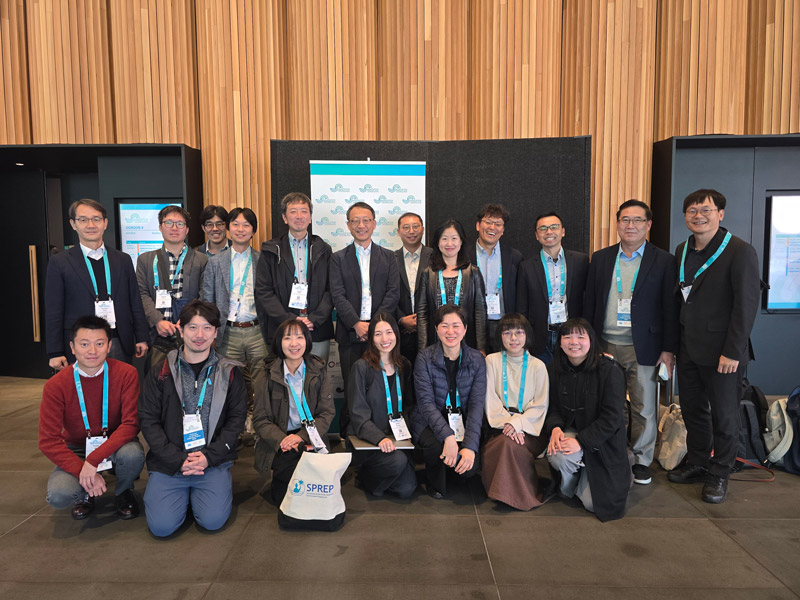
At AF205, the importance of “linking scientific knowledge to social implementation” was repeatedly emphasized across all sessions. The presentations by NIES also demonstrated the direction of “practical adaptation” promoted through collaboration among science, government, local communities, and citizens. The next Adaptation Futures is scheduled to be held in Cancun, Mexico, in 2027, and stronger outreach from the Asia-Pacific region and enhanced international cooperation are anticipated.
Related Information
- Adaptation Futures 2025
- AF2025 Report (Part1): AP-PLAT Co-Hosted a Session at Adaptation Futures in New Zealand
(Posted : 11/Dec/2025)
