User Activities Vol. 4
Exploring Adaptation Database: A Principal Officer from Zimbabwe
In this fourth installment of our “User Activities” series, we continue to share practical use cases and insights from real users. Through this series, we hope to inspire more people to explore and make use of scientific tools related to climate change.
INTRODUCTION
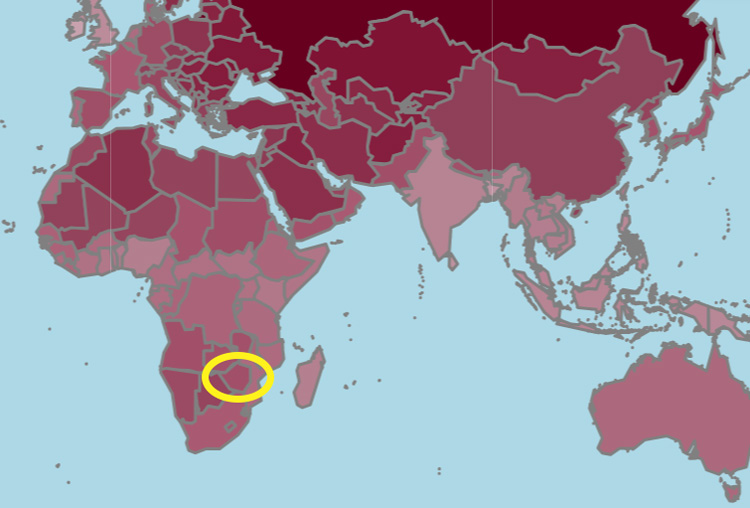
For this article, we focus on the Adaptation Database. We were pleased to receive feedback from a Principal Climate Change Adaptation Officer (Research) of the Government of Zimbabwe, who showed great interest in AP-PLAT during the JICA training held in February 2026.
INTERVIEW
Q: What kind of role are you currently working on?
A: I am a climate change Adaptation officer in the Climate Change Management Department under the Ministry of Environment, Climate and Wildlife of Zimbabwe. I coordinate climate change research and contribute to the formulation of climate change policies, strategies and plans. I also coordinate climate change adaptation projects across the country.
Q: Could you tell us about your experience using the ADAPTATION DATABASE?
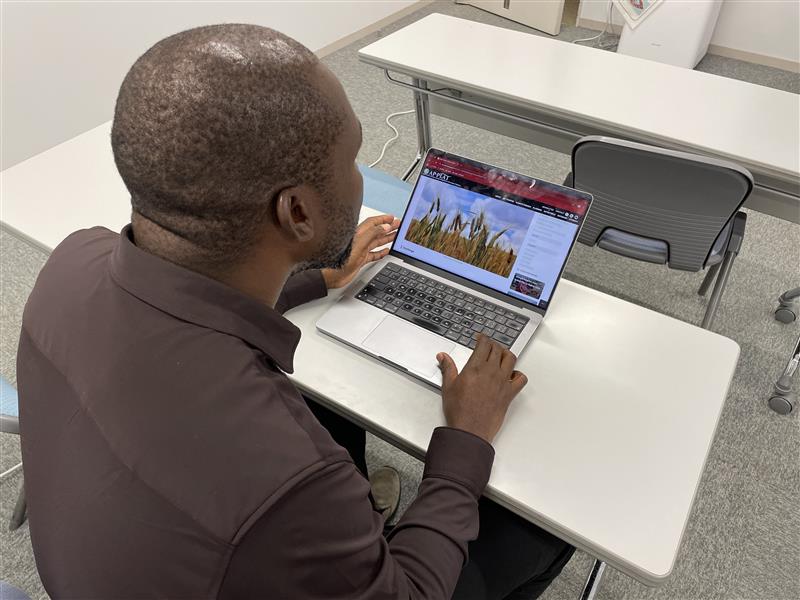
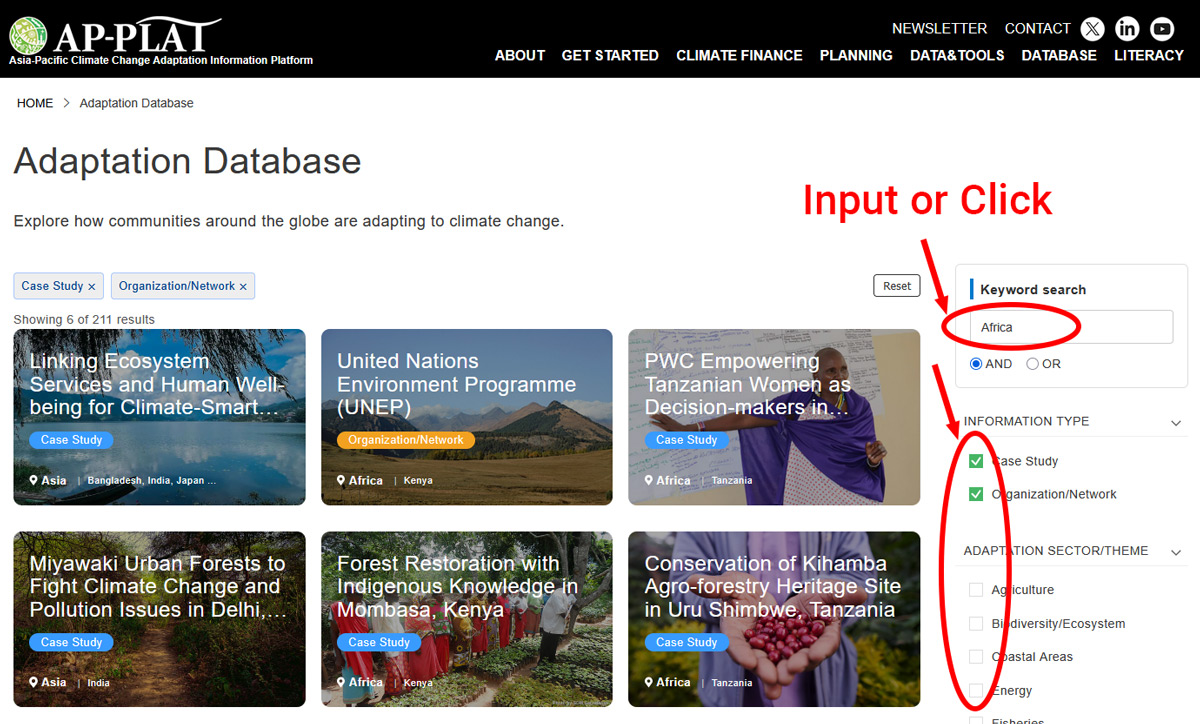
A: The Adaptation Database is easy and simple to use. It provides the best experience in terms of the various climate action projects that aim to build climate resilience and promote decarbonization. It is also easy to visit areas of interest, as it only takes simple steps to do so.
Q: How do you usually collect or analyze climate change related information?
A: The future climate modelling and predictions are primarily the responsibility of the Meteorological Services Department (MSD) of Zimbabwe which is also under the Ministry of Environment, Climate and Wildlife. They employ various weather instruments and climate monitoring equipment, including seismological tools, to inform both weather and climatic patterns.
The data they generate is also used by other departments, such as the Climate Change Management Department (CCMD), Zimbabwe National Water Authority (ZINWA), Ministry of Lands, Agriculture, Fisheries, Water and Rural Development and others to anticipate and prepare for the future.
Data collection also involves vulnerability assessments to identify climate change risks, hazards, and impacts on communities. This data will then be used to inform both the adaptation and mitigation interventions.
Some data that is used is also collected during the national census especially issues around population within the various provinces, districts and wards. This also contributes to the formulation of not only mitigation and adaptation measures, but also national policies, plans and strategies toward resilience building. The Ministry’s parastatals, such as the Environmental Management Agency (EMA) also collect data on emissions, water quality, waste levels and number of institution and organizations complying with the environmental laws of the country.
Forestry Commission also deals with data from the forests and use it for our mitigation interventions related to carbon sink enhancement.
The CCMD also collect data for reporting on emission through the various data providers who feed into the Green House Gass Information Management System (GHGIMS)
Q: Which aspects of the case studies did you find most useful or informative?
A: There is a lot to learn, especially on issues of capacity building, adaptation business, gender and social inclusion, international cooperation in research and innovation, and several other interventions, especially in areas of commonality. There are critical issues we can adopt and domesticate by making them suitable to our national circumstances.
Q: Did any examples provide new ideas or perspectives for your work or decision-making?
A: Yes, the idea of not only fighting climate change but also seeing the business opportunities that come with it.
The idea of having a database of what is happening and where can help come up with a replication roadmap for projects especially in areas of similar geographical traits.
Research on climate change is also a critical issue with new ideas being generated every time comes the birth of real solutions to the global crisis and the springboard into resilience.
Q: How easy was it to understand and apply the information to your own context?
A: The Adaptation Database is very easy to follow, with no complications, as it involves clear and concise issues on climate change adaptation providing a database on how communities across the globe are adapting to climate change.
This platform therefore provided a springboard for developing countries like Zimbabwe to learn and quickly find solutions to the climate change problem. Sure, their national circumstances vary, but there are areas of commonality and intersection from which we can learn.
Issue of finance are also incorporated within the platform, and this is a critical component where we can as well learn from especially considering that climate discussions without financial support and technological transfer is barren.
Q: In what ways could this collection be improved to better support your work or role?
A: There is a need to also establish sister research institutions within other African countries and diversify across the globe. This being an Asia Pacific platform, it is also possible to identify researchers in Africa and have some work from Africa also aired and inform the world on the various adaptation and mitigation interventions taking place in Africa, as the world join hands in making our environments habitable and sustainable.
Q: How do you hope your job will contribute to society or your local community?
A: Yes, my job is to ensure that we reduce as much as possible the impacts of climate change and ensure resilience across Zimbabwe. This we do by monitoring and evaluating adaptation and mitigation projects within the country. These are not just resilience projects, but also development interventions that are contributing to the development of Zimbabwe towards her national development goals, with every part of the country benefiting and thus leaving no one and no place behind in the fight against climate change and a push towards national development.
IN CLOSING
We sincerely appreciate the detailed insights you shared on data collection in Zimbabwe from a policymaker’s perspective. Your perspectives have provided AP-PLAT with a deeper understanding of on-the-ground practices and challenges.
Thank you as well for using AP-PLAT and for sharing your bold and forward-looking vision. We hope to continue strengthening collaboration, including with African countries, as we explore pathways to advance climate change adaptation together.
REFERENCES
While AP-PLAT mainly focuses on case studies from the Asia-Pacific region, it also presents examples from Africa and other global contexts.
- United Nations Environment Programme (UNEP)
- PWC Empowering Tanzanian Women as Decision-makers in Pastoralist Societies
- Forest Restoration with Indigenous Knowledge in Mombasa, Kenya
- Conservation of Kihamba Agro-forestry Heritage Site in Uru Shimbwe, Tanzania
(Posted : 07/May/2026)
