User Activities Vol. 2
Exploring Climate Impact Viewer: A Kyoto University Student’s Perspective

In this second installment of our “User Activities” series, we continue to share practical use cases and insights from real users. Through this series, we hope to inspire more people to explore and make use of scientific tools related to climate change.
INTRODUCTION
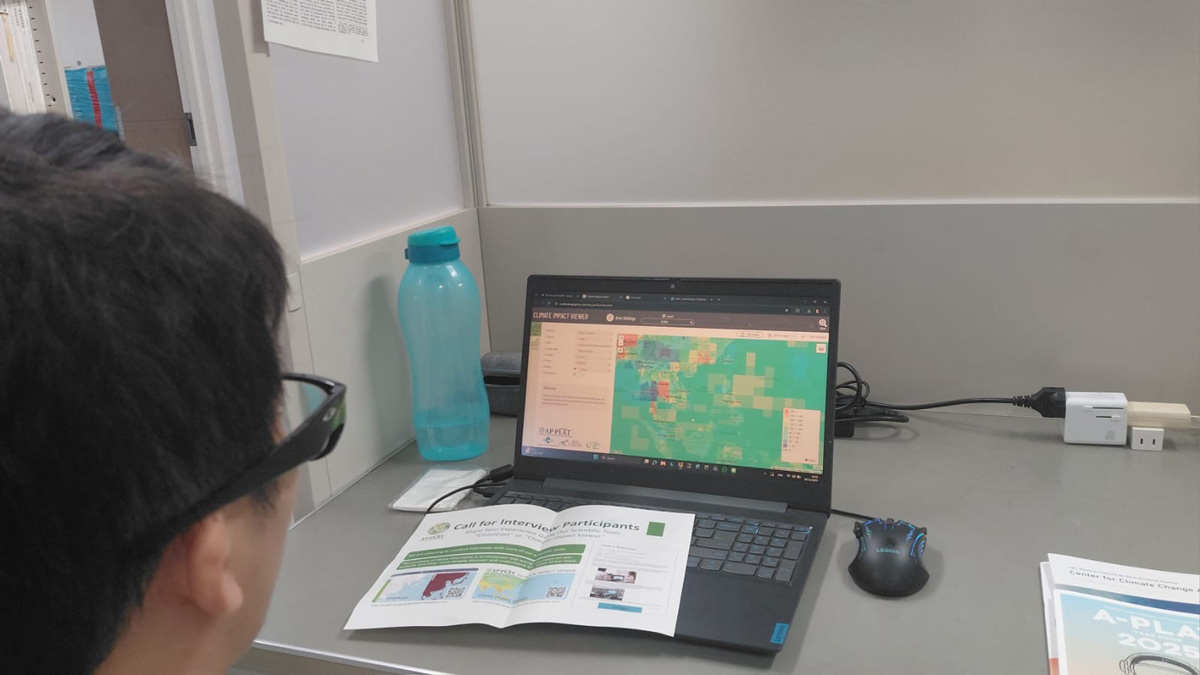
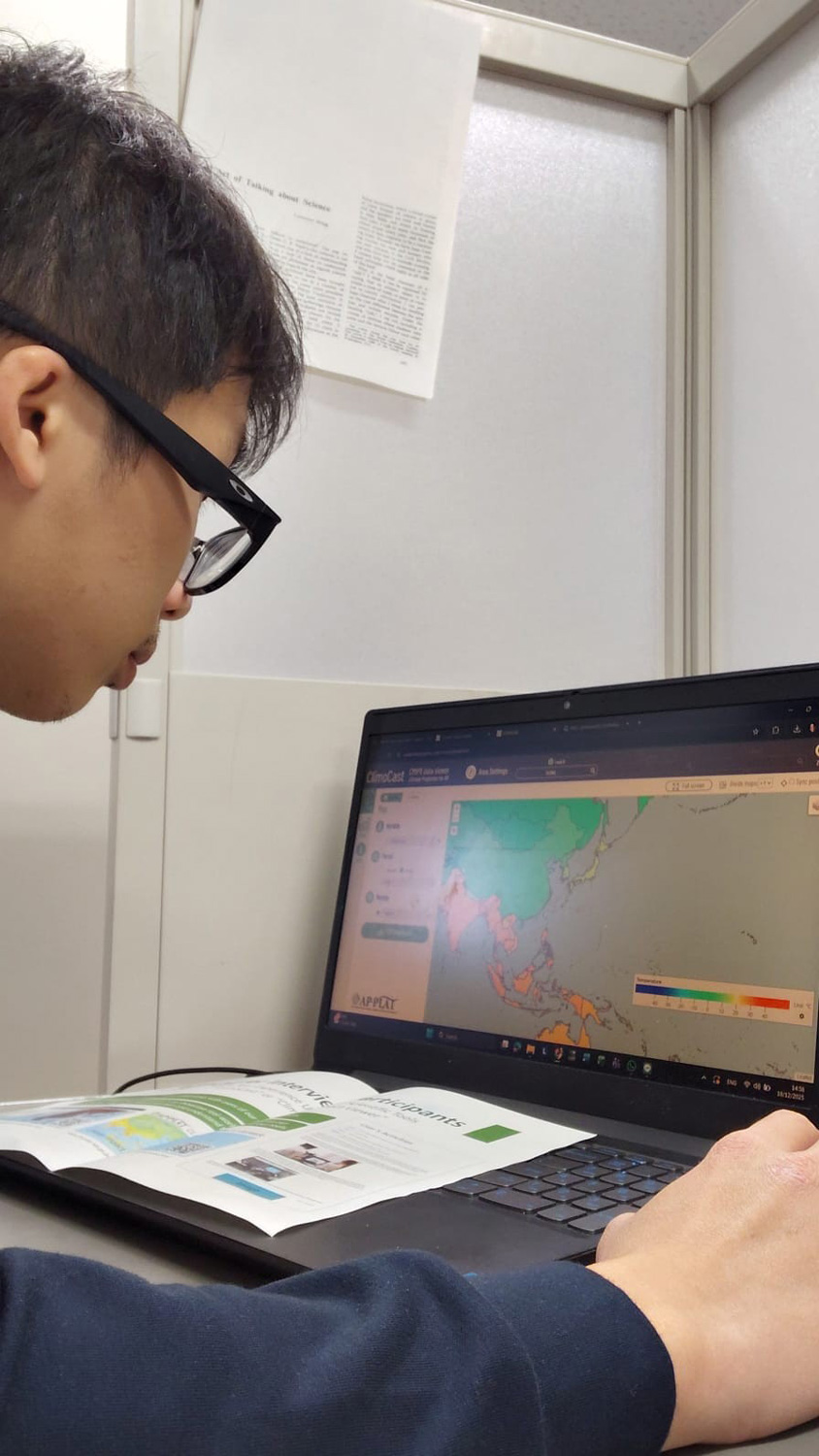
In the first installment, we featured experiences with ClimoCast. In this second article, we focus on the Climate Impact Viewer, as one Kyoto University student used the tool after returning to his university and shared his impressions with us.
INTERVIEW
Q: What kind of research are you currently working on?
A: I am planning to conduct research on the mechanisms of soil amendments in organic farming, with a particular focus on the use of sludge and digestates as fertilizers. Both sludge and digestates have high potential to close the agricultural loop, returning waste into nutrition for the soil. If it is optimized, it can further minimize inorganic fertilizer usage and help farmers economically and environmentally.
Q: What types of data are important for your research?
A: For my research, soil parameters such as pH and electrical conductivity (EC), as well as precipitation data, are important reference data.
Q: Could you tell us about your experience using either ClimoCast or Climate Impact Viewer?
A: Both climate prediction tools are fascinating, as they help visualize climate-related parameters across a wide range of regions. The tutorials provided on the website were also helpful in understanding the basics of each tool.
However, the visual raster data is presented at a relatively large spatial scale, which can limit detailed interpretation. At the same time, this broader scale contributes to a smooth and seamless user interface. More detailed visualizations—particularly for historical datasets—would be a welcome addition.
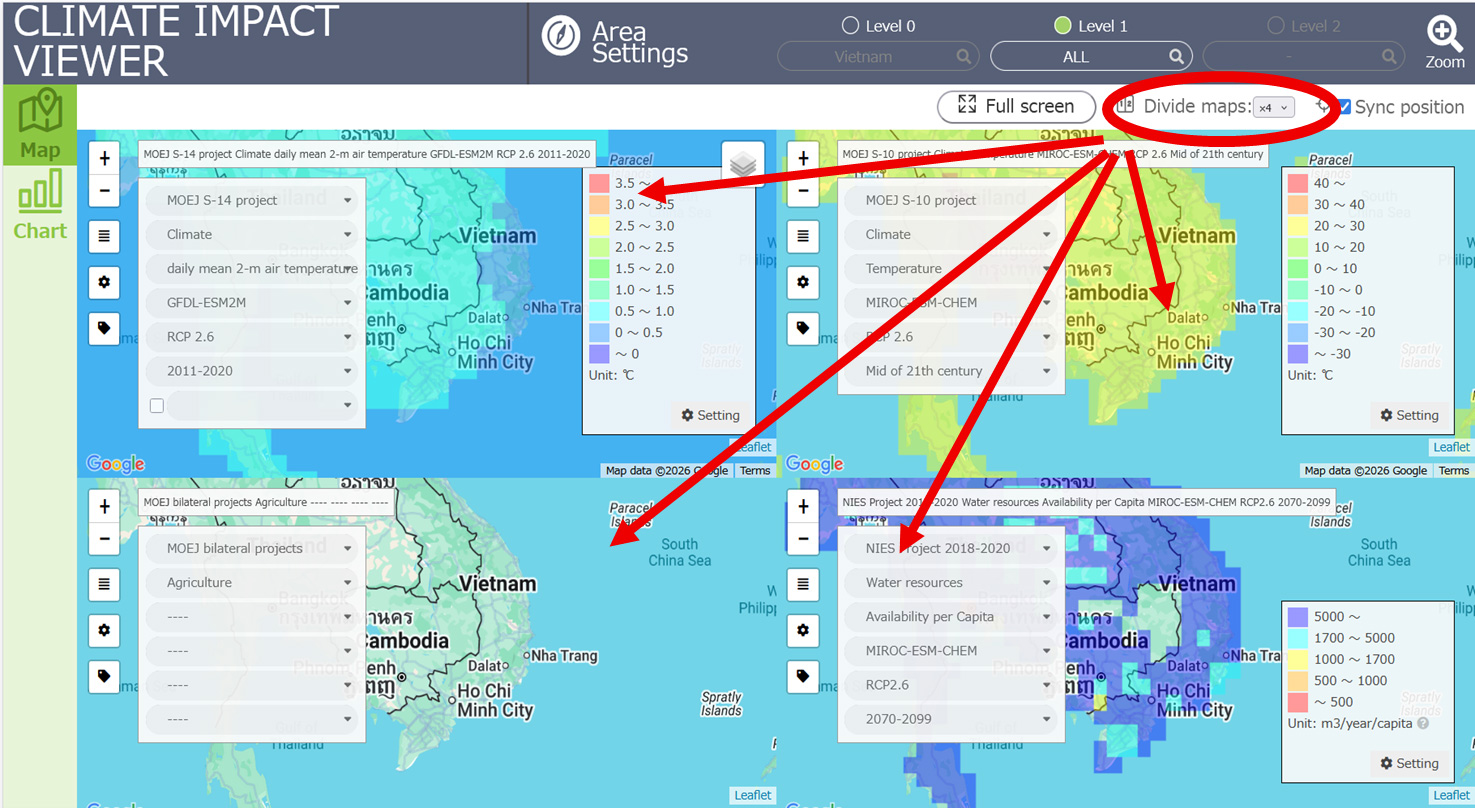
In addition, further explanations of the indices, climate models, and scenarios would enhance the usability of the Climate Impact Viewer. Finally, the map division feature stood out as a particularly attractive function.
Q: What did you learn from using the climate prediction tools?
A: I learned that climate models form the foundation of these predictions, and that their accuracy must be carefully considered. With reliable estimates, it becomes possible to make better-informed plans.
Q: Do you think these tools can be applied to your research?
A: At present it is not directly related to my research. But it can help me visualize the future climate, one that may be indirectly affected by the agriculture industry itself. Therefore, it can help me build up a basis for my hypothesis.
Q: What kinds of features or spatial scales would be useful in the future?
A: Land use, biome, land cover, and soil mapping parameters could also be useful.
Q: How do you hope your research will contribute to society or your local community?
A: I hope my research can help explain how organic amendments can technically change soil quality (nutrition contents, physical appearance, chemical makeup, microbiome, etc.).
CONCLUSION AND FURTHER RESOURCES
Climate change affects agricultural productivity both directly and indirectly through changes in rainfall patterns, droughts, floods, and pests. Organic farming can be part of the solution for transitioning toward more sustainable food systems and greater climate resilience. AP-PLAT has published case study on strengthening resilience through organic farming.
- Comparing Agroecological and Conventional Rice for Climate-Smart Choices in Northern Vietnam
- Crop Modeling Training for Climate-Resilient Farming in Southeast Asia
- Transforming Livestock Waste into Renewable Energy in Rural Vietnam
- Climate-Resilient Organic Farming in Yokosuka, Japan
- Managing Grasslands for Sustainable Agriculture in Kumamoto, Japan
A-PLAT(Japanese Website) highlights private-sector initiatives focused on soil improvement.
The dialogue with this promising student was highly valuable and offered thoughtful perspectives. We hope that our tools will one day contribute to the advancement of his research.
(Posted : 16/Mar/2026)
