High-Resolution Climate Projections: Joint Development of an Interpolated Downscaling Methodology by ESCAP and AP-PLAT
OVERVIEW
In the Asia-Pacific region, climate change is having serious impacts on societies, economies, and the environment. To develop effective adaptation measures, policymakers require high-resolution climate projection data; however, conventional global climate models (GCMs) have relatively coarse spatial resolutions (approximately 100 km), which limits their usefulness for local-level decision-making.
As part of AP-PLAT’s activities, Dr. Yuji Masutomi of the National Institute for Environmental Studies (NIES) co-developed the Interpolated Downscaling Methodology with the United Nations Economic and Social Commission for Asia and the Pacific (ESCAP), which is now published on the ESCAP website as a formal methodology.
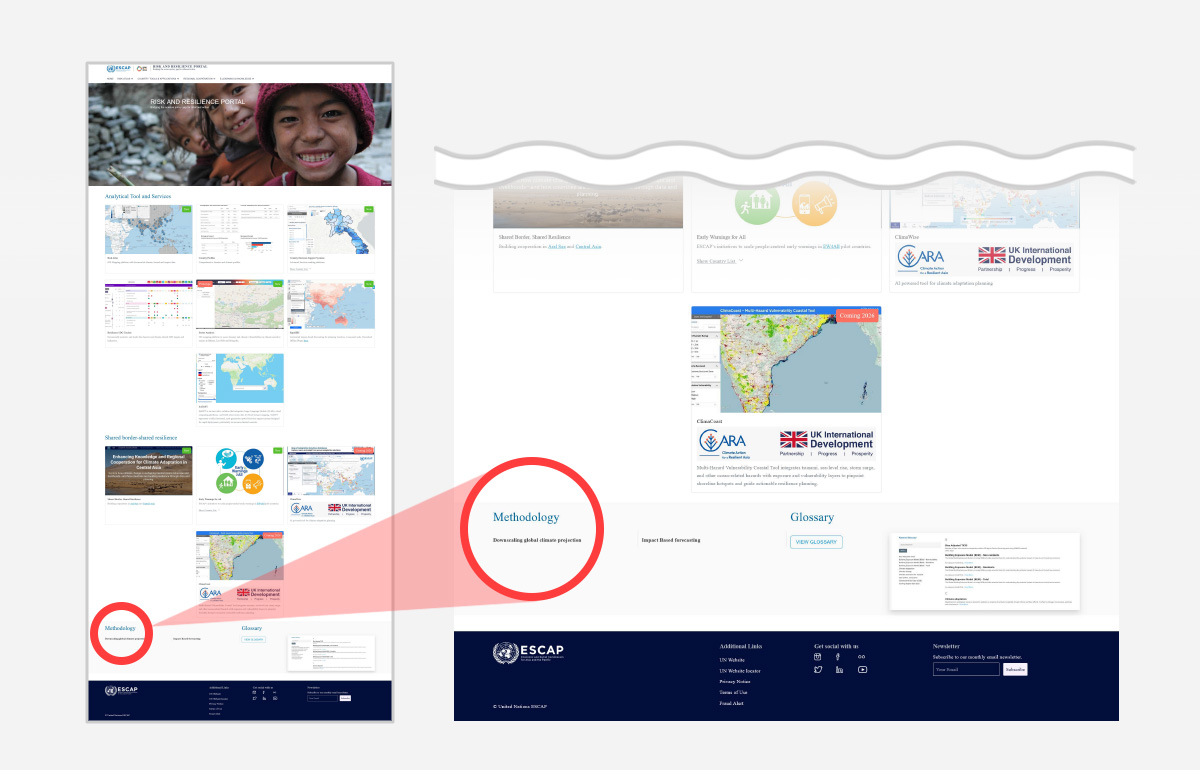
His approach refines coarse-resolution GCM data to a 1-km resolution using bilinear interpolation, achieving high spatial representativeness while keeping computational costs low. The methodology has already been applied in practical contexts, including the Bhutan Climate Projection Report (2024) and analyses of extreme heat (heat indices) across the Asia-Pacific region, serving as a foundation for evidence-based climate adaptation strategies.
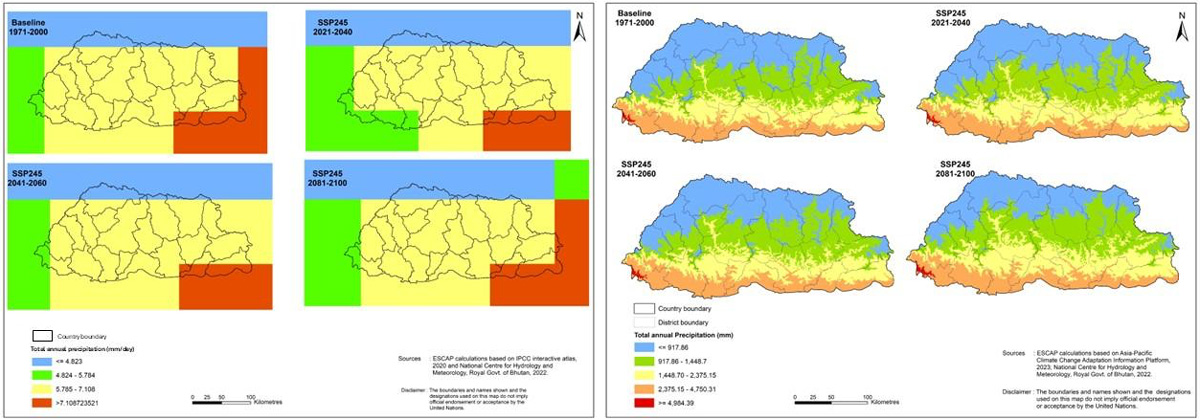
Source : ESCAP, High-Resolution Climate Projections: An Interpolated Downscaling Methodology
CONCLUSION
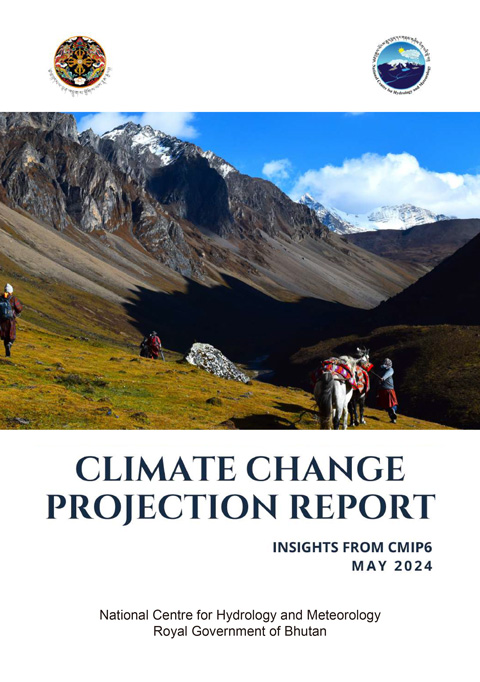
This methodology has also been applied to address Bhutan’s complex topography and made a significant contribution to the development of Bhutan’s Climate Projection Report.
In addition, it can be extended to analyze heat indices (HI) for predicting health impacts. As heat-related risks have increased in recent years, the methodology is expected to be provided to local policymakers as a tool for identifying adaptation “hotspots” where targeted measures are most needed.
The collaboration between ESCAP and NIES has previously contributed to downscaling efforts in the Maldives. In 2024, the two organizations signed a Memorandum of Agreement (MoA) to provide expertise and support for the implementation of transformative adaptation and regional planning across countries in the Asia-Pacific region. Through this ongoing partnership, AP-PLAT aims to continue making a significant contribution to strengthening climate resilience in the years ahead.
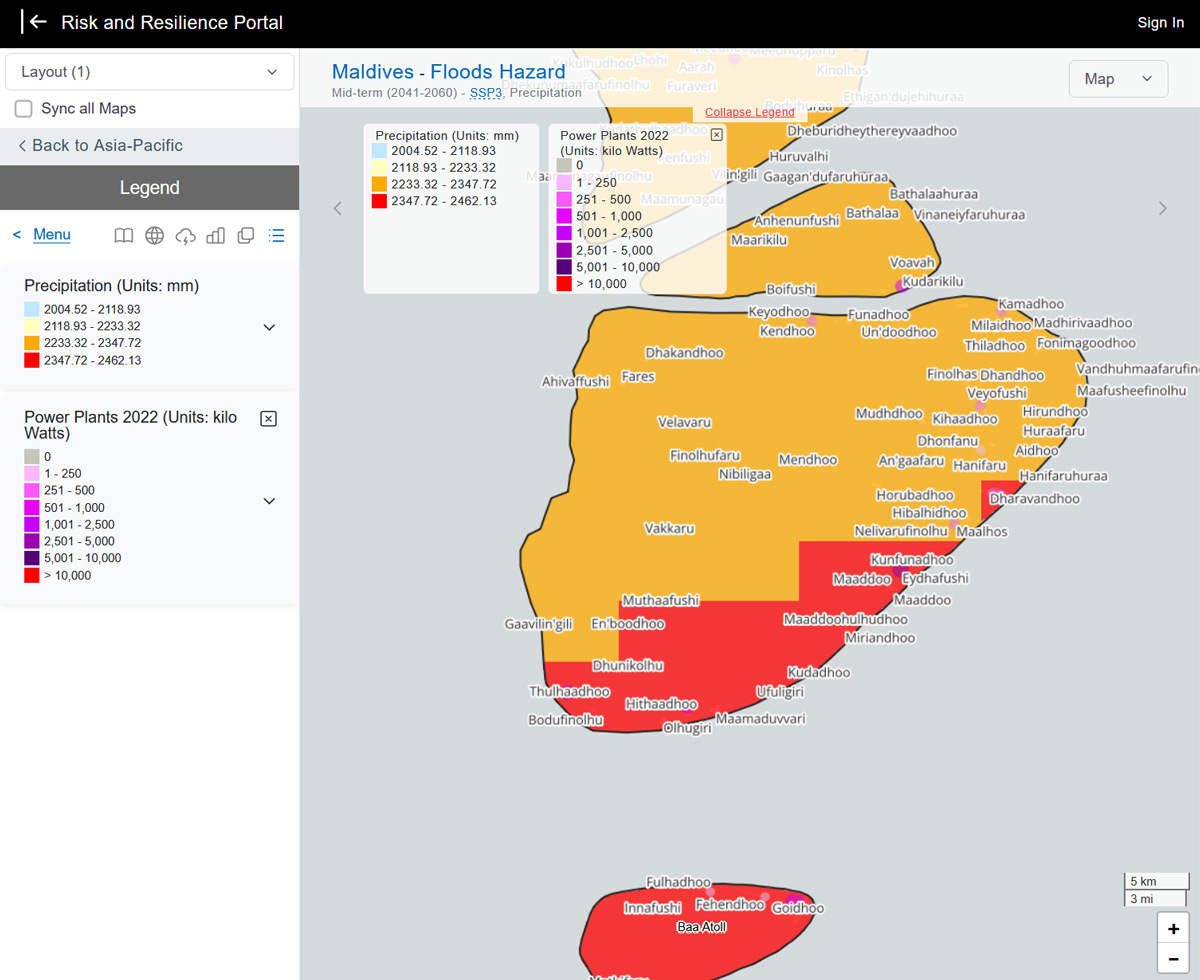
High-resolution hazard mapping enabled by NIES’s downscaling methodology.
RELATED INFORMATION
- ESCAP
- Bhutan Climate Projection Report
- A-PLAT E-learning (Japanese) What is Downscaling / Downscale (DS)?
(Posted : 02/Apr/2026)
