 Asia - Indonesia, Japan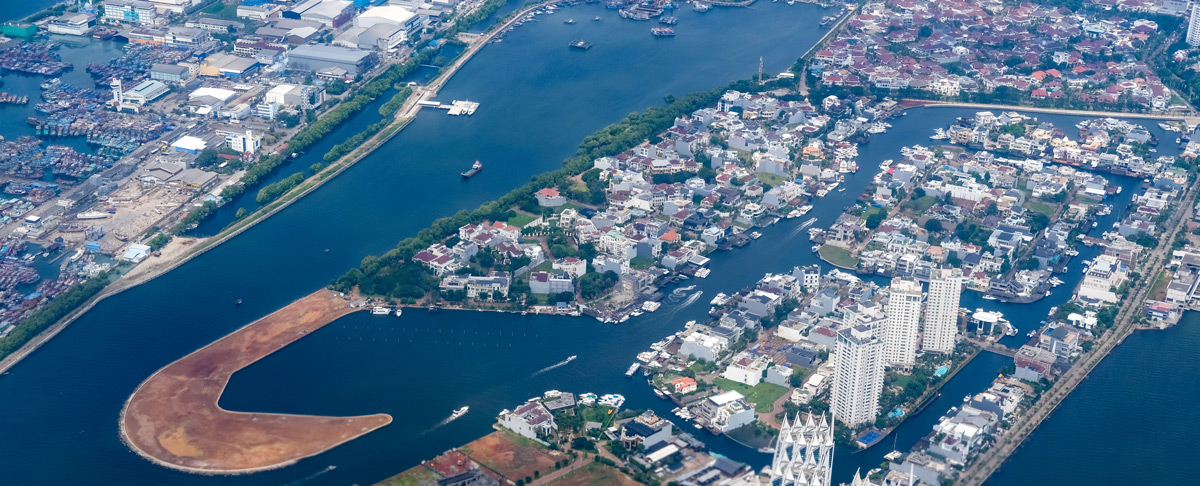
Challenge
Jakarta faces severe land subsidence caused by excessive groundwater extraction, drastically increasing flood risks and exacerbating the threats of climate change and sea-level rise.
Solution
With JICA’s technical cooperation, Indonesia improved Jakarta’s climate resilience by establishing monitoring systems, proposing alternative water sources, raising public awareness, and creating long-term action plans.
Overview
As the economic and political center of Indonesia, Jakarta is a rapidly developing metropolis.
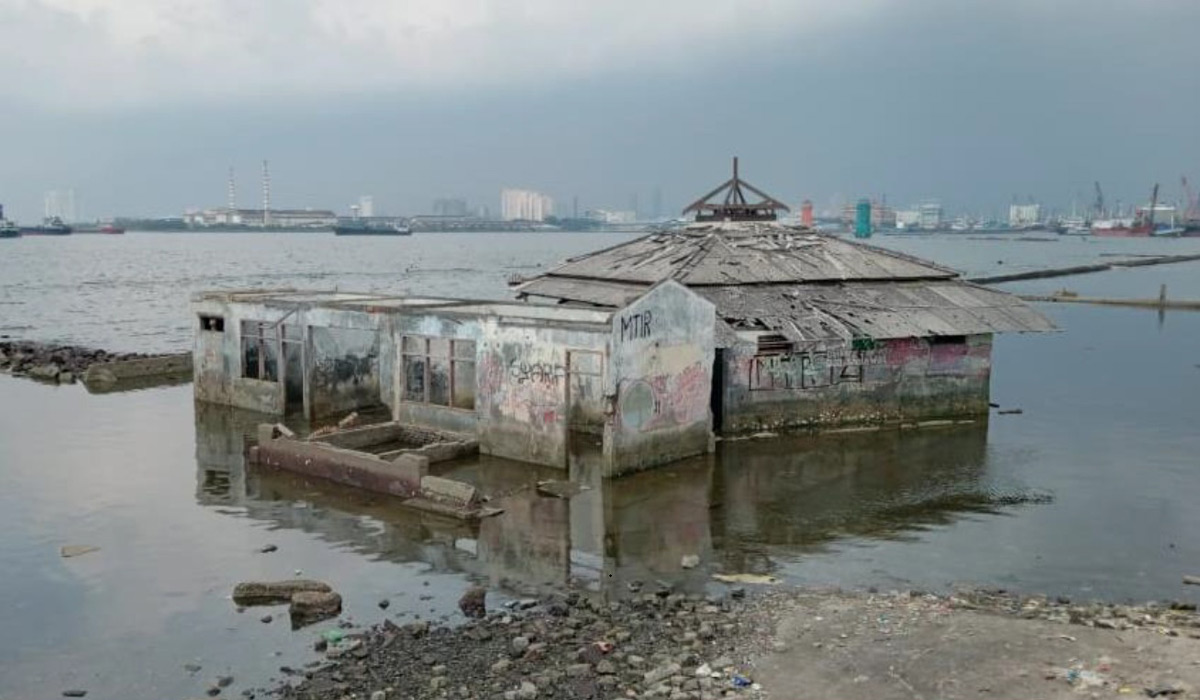
However, alongside this economic growth and population concentration, the city has been experiencing significant land subsidence. In some northern coastal areas, the ground has subsided by more than 4 meters since the 1970s – at a rate rarely seen in the world. The primary cause is the excessive extraction of groundwater by factories, businesses, and residential buildings. This sinking drastically increases the risk of severe flooding, storm surges, and infrastructure damage, threatening the daily lives and economy of millions. Because land subsidence multiplies the disaster risks induced by climate change—such as sea-level rise and more intense torrential rainfall—addressing this issue is positioned as a critical climate change adaptation measure to improve Jakarta’s overall climate resilience.
To combat this urgent threat, the Indonesian government partnered with the Japan International Cooperation Agency (JICA) to launch a comprehensive initiative. Instead of just treating the symptoms, the project took an integrated approach combining engineering, data management, and social sciences to simultaneously halt the sinking and mitigate future climate-related disaster risks.
Gathering the data
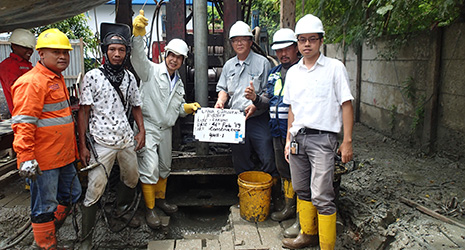
The project utilized advanced satellite imagery (InSAR) to map the exact distribution and magnitude of the subsidence across Jakarta and its neighboring cities, Tangerang and Bekasi. Furthermore, the team constructed highly specialized double-tube monitoring wells in critical areas like Cengkareng, Cakung, and the Jakarta Fishing Port. These state-of-the-art wells provided undeniable evidence linking groundwater extraction directly to land subsidence, which was crucial for convincing skeptical stakeholders.
Calculating the true cost
To highlight the urgency of the issue, the project team modeled future flood risks and calculated the social cost of doing nothing. They estimated that if the sinking continues unabated and climate change impacts worsen, the financial damage could increase drastically by 2050, resulting in social costs of approximately 223 trillion rupiah. By proving that the cost of regulating groundwater and developing alternative water sources is far less than the potential disaster damages, the project provided a compelling economic argument for immediate action.
Raising public awareness
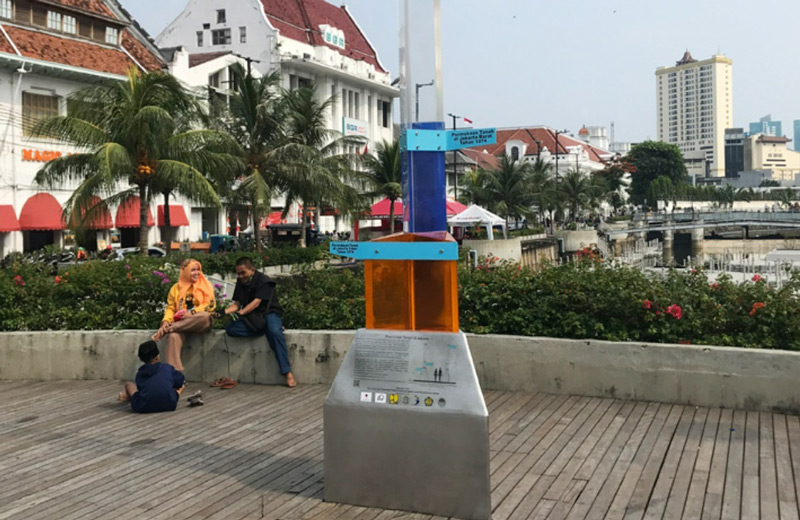
Many residents and businesses were unaware that their groundwater pumping was causing the ground beneath them to sink. To change this, the project launched a dedicated website to share monitoring data and explain the causes and risks of subsidence in an easy-to-understand way. In historic areas like Kota Tua, the team installed public signboards showing past subsidence levels to educate tourists and locals alike. Workshops and discussions were also held with government officials and groundwater users to foster a shared sense of crisis and encourage sustainable water use.
Learning from Tokyo’s experience
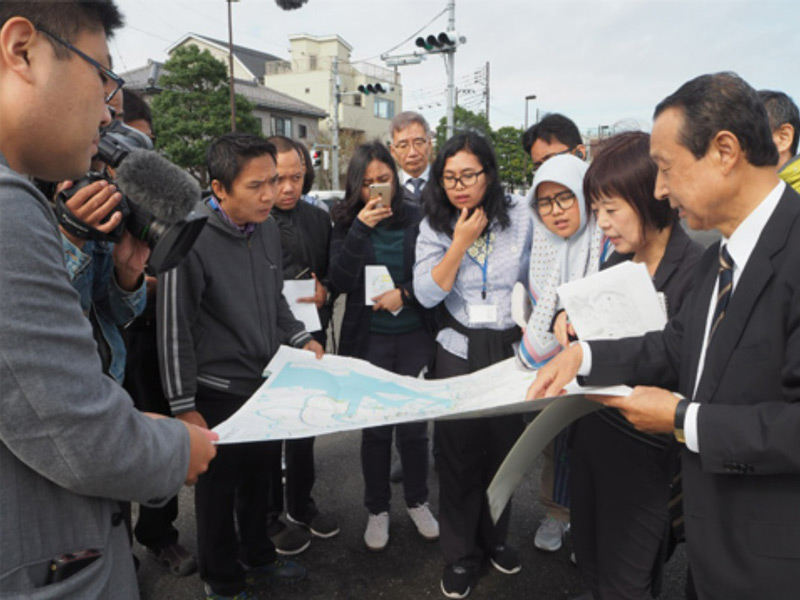
To strengthen local capacity and inspire action, Indonesian government officials and project stakeholders participated in training programs in Japan in 2018 and 2020. A key component of these programs was conducting on-site inspections of Tokyo’s “zero-meter zone” – areas that historically suffered from severe land subsidence. Participants examined subsidence traces, monitoring wells, and flood countermeasures from the ground, by boat, and even from the Tokyo Skytree observation deck. By witnessing firsthand how Tokyo successfully halted its sinking through strict groundwater regulations and alternative water supplies, Indonesian officials gained the practical knowledge needed to apply similar solutions – such as public sea-level indicator signboards – and formulate the project’s action plans.
A Roadmap for the future
Building on these lessons and the established data, the project established a long-term governance structure. A Planning and Implementation Committee (PIC) was formed to ensure the work continues collaboratively. The team developed short, medium, and long-term action plans extending to 2030 and beyond, complete with specific goals for regulations, infrastructure development, and continued monitoring. Through these comprehensive efforts, the project has laid a solid foundation to halt land subsidence in Jakarta and secure a safer future.
Project details
| Project title | The Project for Promoting Countermeasures against Land Subsidence in Jakarta |
|---|---|
| Period | May 2018 to November 2022 |
| Project site | Jakarta Special Capital Province, along with surrounding areas involved in specific analyses (Bekasi, Tangerang, Karawang, Serang, Bogor, and Depok) |
| Project partners | Japan: – Japan International Cooperation Agency (JICA) Indonesia: – Ministry of Public Works and Housing (PUPR) – Jakarta Special Capital Provincial Government (DKI) – National Development Planning Agency (BAPPENAS) – Ministry of Energy and Mineral Resources (ESDM) – Ministry of Environment and Forestry |
| Type of Cooperation | Technical Cooperation for Development Planning |
| Funding and other input | Japan (JICA): Technical experts, satellite analysis (InSAR), construction of monitoring wells and pilot rainwater harvesting facilities, and capacity building/training in Japan. Indonesia: National Budget (APBN) and Local Government Budget (APBD) for counterpart personnel, long-term facility maintenance, and implementation of the action plans. |
Acknowledgements
This project was implemented by the Indonesian Ministry of Public Works and Housing (PUPR), the Jakarta Special Capital Provincial Government (DKI), the National Development Planning Agency (BAPPENAS), the Ministry of Energy and Mineral Resources (ESDM), and the Ministry of Environment and Forestry, with technical cooperation and support from the Japan International Cooperation Agency (JICA). AP-PLAT expresses its sincere appreciation to everyone involved in its implementation, and especially to JICA for its cooperation in the preparation of this article.
Related information
- Project for Promoting Countermeasures against Land Subsidence in Jakarta (Japanese website)
- Project Final Report – Part 1 (in Japanese) (pdf)
- Project Final Report – Part 2 (in Japanese) (pdf)
- Project Final Report – Part 3 (in Japanese) (pdf)
- Public Relations Office, Government of Japan: Support for Land Subsidence Countermeasures in Jakarta
- Manuals of Land Subsidence Monitoring Well (pdf)
 DISCOVER MORE

