 Oceania - Japan, Samoa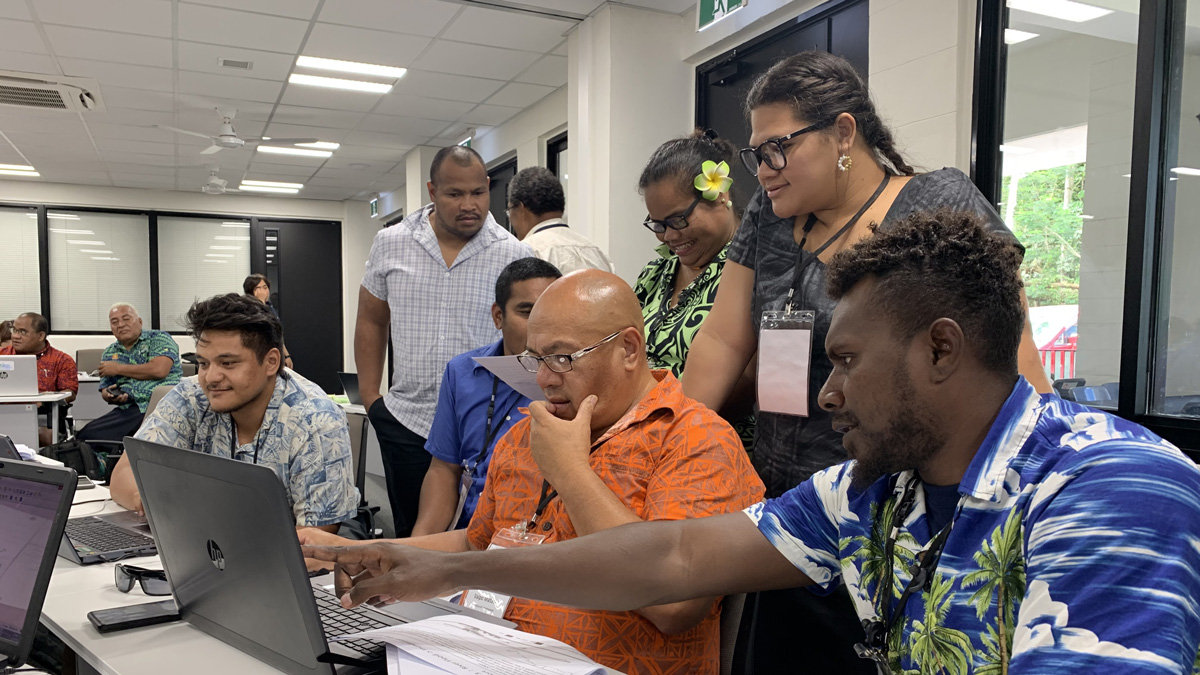
Challenge
Pacific Island countries face limited capacity to assess climate impacts and access climate finance for adaptation and resilience-building.
Solution
A regional capacity development project strengthens technical skills, project design capacity, and access to climate finance through comprehensive training programs.
Overview
Pacific Island countries are among the most vulnerable to climate change, facing rising sea levels, intensified natural disasters, and ecosystem degradation. Despite the urgency, many countries lack sufficient technical capacity to assess climate risks, design effective adaptation strategies, and access international climate finance mechanisms.
To address these challenges, Japan International Cooperation Agency (JICA) implemented the Project for Capacity Building on Climate Resilience in the Pacific from 2019 to 2023. The project aimed to strengthen both human and institutional capacity across three core areas: climate change adaptation, climate finance access, and mitigation. Training programs covered multiple sectors, including disaster risk reduction, ecosystems, water, agriculture, tourism, and health.
The project was a partnership between the Government of Samoa, the Secretariat of the Pacific Regional Environment Programme (SPREP), and the Japan International Cooperation Agency (JICA).
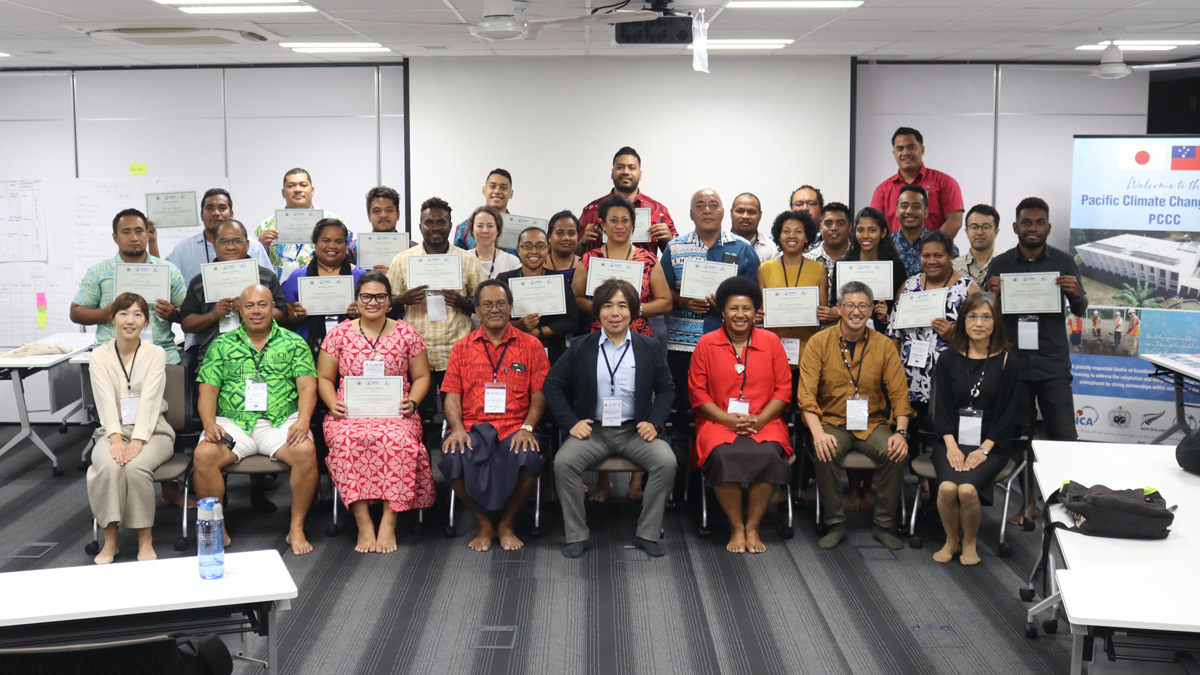
The project has delivered 12 training programs targeting practitioners in the Pacific Island Countries and Territories during the project period, with 345 participants completing the programs.
Around 70% of participants who responded to follow-up surveys reported continued use of the knowledge and skills acquired through the training, indicating sustained impact.
The trainings were attended by participants from the following countries and territories (in alphabetical order): American Samoa, Cook Islands, Fiji, Federated States of Micronesia, Kiribati, Nauru, Niue, Palau, Papua New Guinea, Samoa, Solomon Islands, Timor-Leste, Tonga, Tuvalu, and Vanuatu.
The training approach combined self-paced learning, virtual sessions, group work, and practical exercises such as problem tree analysis and logical framework development. These hands-on components enabled participants to translate knowledge into concrete project ideas relevant to their national contexts.
Innovation and adaptation during COVID-19
Originally designed as in-person training, the project adapted to the COVID-19 pandemic by shifting most of its training activities online. This transition led to the development of an e-learning platform and open learning courses, enabling continued access to materials.
In addition, a Project Formulation Handbook and mentoring support were provided to help participants develop climate finance proposals.
Key achievements and lessons learned
The project contributed to operationalizing the training function of PCCC and establishing regular training programs, sustainability planning, and open-learning resources. High participant satisfaction and continued application of knowledge highlighted its effectiveness.
Key lessons include the importance of hybrid training approaches, continuous content updates, and strong regional collaboration.
Project details
| Project title | Project for Capacity Building on Climate Resilience in the Pacific |
|---|---|
| Period | July 2019 – January 2023 |
| Project site | Apia, Samoa |
| Training beneficiaries | Relevant ministries and institutions in 14 Pacific Island Countries and Territories* |
| Implemented by | – Japan International Cooperation Agency (JICA) – Government of Samoa – Secretariat of the Pacific Regional Environment Programme (SPREP) |
| Type of cooperation | Technical cooperation |
| Funding and other input | Input by Japanese side: – Financial support for project implementation – Dispatch of Japanese experts Input by SPREP/PCCC: – Personnel assignment, provision of office space, training rooms and equipment, services for IT, communications, etc. |
*14 countries and territories are Cook Islands, Federated States of Micronesia (FSM), Fiji, Kiribati, Marshal islands, Nauru, Niue, Palau, Papua New Guinea (PNG), Samoa, Solomon islands, Tonga, and Vanuatu.
Project’s broader context
This project forms part of JICA’s broader, continuous cooperation with the Pacific Island countries to enhance resilience to climate change. JICA’s support can be seen as a continuum of complementary projects summarized below.
| Project name | Period | Status | Type of cooperation |
|---|---|---|---|
| Project for Construction of the Pacific Climate Change Centre | 2017 – 2019 | Completed | Grant aid |
| Project for Capacity Building on Climate Resilience in the Pacific * | 2019 – 2023 | Completed | Technical cooperation |
| Project for Innovative Solutions for Pacific Climate Change Resilience | 2024 – 2027 | Ongoing | Technical cooperation |
*The project described in this article is the second project listed above.
The Project for Construction of the Pacific Climate Change Centre (2017-2019) supported the “hard” infrastructure, namely the construction of the PCCC building in Apia, Samoa. The Centre, while located in Samoa, serves as a hub for the Pacific region, equipped with training facilities, conference spaces, and knowledge-sharing infrastructure. It is hosted by the Secretariat of the Pacific Regional Environment Programme (SPREP).
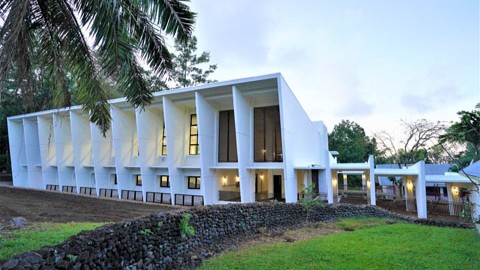
The establishment of PCCC provided the essential physical and institutional foundation for the subsequent Project for Capacity Building on Climate Resilience in the Pacific (2019-2023), which focused on the “soft” components – human capacity, knowledge systems, and institutional frameworks for climate resilience in the Pacific – and is described in this article.
The ongoing Project for Innovative Solutions for Pacific Climate Change Resilience (2024-2027) builds on these foundations to promote innovative and practical approaches to climate resilience across the region.
Acknowledgements
This project was implemented by the Japan International Cooperation Agency (JICA), the Government of Samoa, and the Secretariat of the Pacific Regional Environment Programme (SPREP). AP-PLAT expresses its sincere appreciation to everyone involved in its implementation, and especially to JICA for its cooperation in the preparation of this article.
Related Information
- Project for Capacity Building on Climate Resilience in the Pacific (Japanese website)
- Project Completion Report (pdf)
- Project for Construction of the Pacific Climate Change Centre (Japanese website)
- Project for Innovative Solutions for Pacific Climate Change Resilience (Japanese website)
- Japan International Cooperation Agency (JICA) website
- Secretariat of the Pacific Regional Environment Programme (SPREP) website
 DISCOVER MORE

