 Asia - Thailand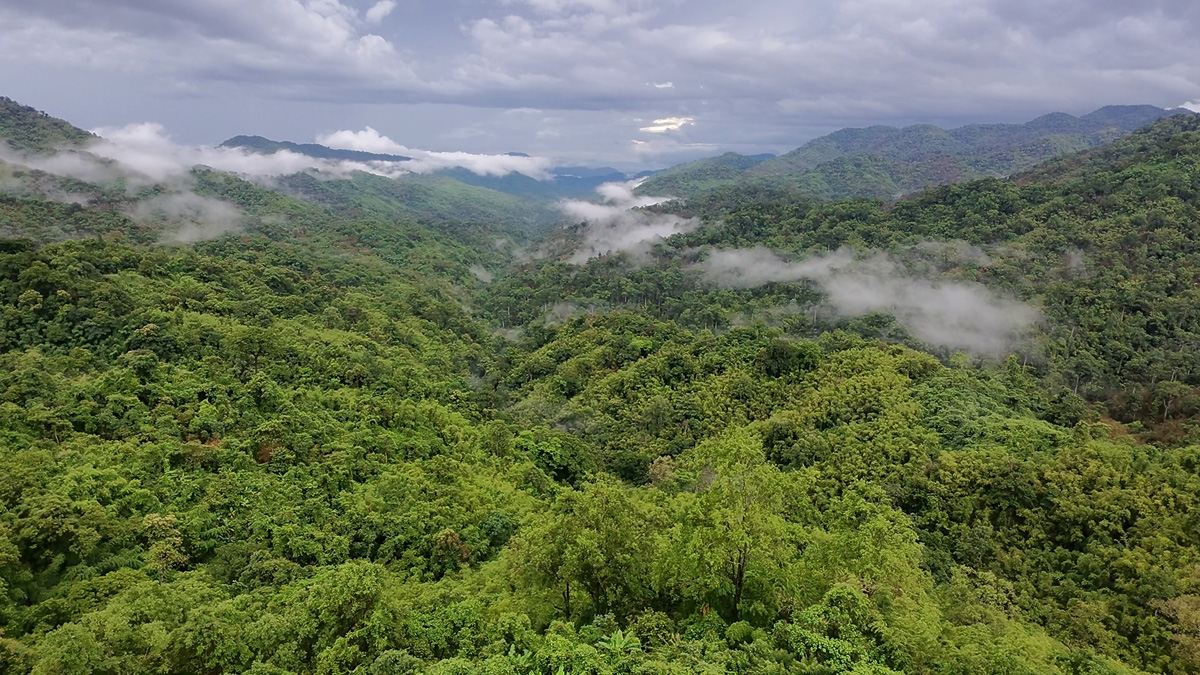
Challenge
Tigers, an IUCN Red List endangered flagship species, have stable populations in Thailand’s Western Forest Complex, but future dispersal and range expansion require connected habitats.
Solution
A forest corridor is being developed to connect the Western Forest Complex with the Kaeng Krachan Forest Complex, restoring habitat connectivity for wildlife movement.
Overview
Under the global biodiversity target known as “30by30,” the focus is not only on increasing the total area under conservation, but also on strengthening ecological connectivity between protected areas. In biodiversity conservation, conserving large, connected landscapes is considered more effective than protecting fragmented and isolated areas. The focus is not only on increasing the total area under conservation, but also on strengthening ecological connectivity between protected areas.
The Dana–Tenasserim region, stretching from western Thailand to southern Myanmar, is a forested landscape that provides habitat for diverse wildlife, including the Indochinese tiger. Seventeen national parks and wildlife sanctuaries are located adjacent to one another, forming a single conservation cluster with a total area of approximately 18,700 km².
The region currently hosts approximately 100 wild tigers, and their population is considered stable. However, a recent challenge has been that the number has not begun to increase, prompting various conservation efforts. In the future, it is hoped that as the tiger population grows, individuals will naturally disperse to other areas, establishing and maintaining healthy ecosystems with tigers at the top of the food chain.
However, some areas surrounding the protected sites have already lost their natural forests, resulting in sections where forest continuity is not fully maintained.
In response, WWF (World Wide Fund for Nature) is promoting the establishment of “green corridors,” also referred to as ecological corridors, in the region. Green corridors aim to connect multiple protected areas and forest patches, ensuring continuous forest environments that allow wildlife to move safely across the landscape. This project focuses on forest areas located between existing national parks and wildlife sanctuaries, with the objective of ecologically reconnecting these areas to enhance landscape-level connectivity.
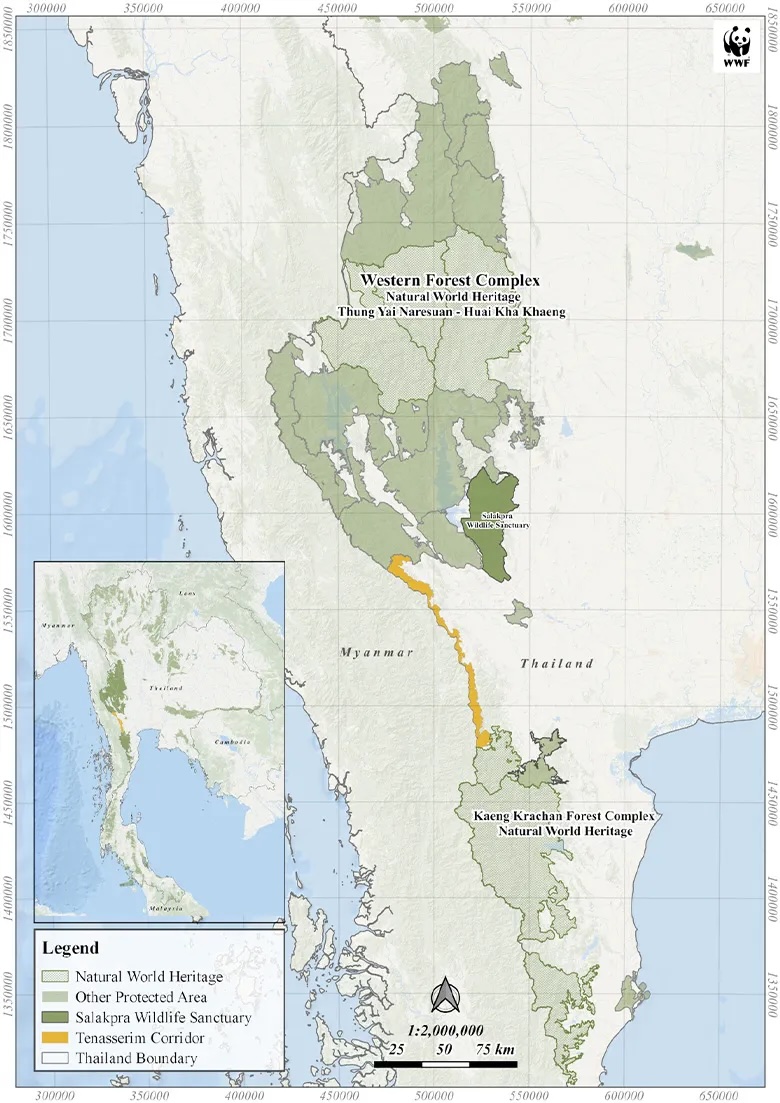
The target area includes multiple land-use types, such as community forests and areas managed under the Royal Project. The development of forest corridors involves consultation with local residents and relevant stakeholders, with adjustments made according to the legal frameworks and actual land-use practices. Land outside formally designated protected areas is being considered as OECMs (Other Effective Area-based Conservation Measures), contributing to biodiversity conservation through effective, long-term management.
WWF also conducts camera trap surveys to monitor the distribution and movement of tigers and other wildlife species. These surveys provide baseline information to assess whether proposed corridor areas are actually used by wildlife.
This initiative seeks to prevent further forest loss and maintain landscape continuity, thereby supporting not only the long-term viability of tiger populations but also the conservation and expansion of healthy forest ecosystems, and ultimately biodiversity and nature-positive. Forests play an important role from the perspective of climate change mitigation, and this project is regarded as an effort expected to contribute to climate change responses.
Project details
| Project title | Corridor (Green Corridor) Project for the Recovery of Tigers and Biodiversity in Thailand |
|---|---|
| Objective | To reconnect fragmented forest areas through the establishment of corridors (green corridors) |
| Period | From July 2022 |
| Project Area | Thailand: Dana–Tenasserim Landscape |
| Implementing Organizations | WWF Thailand, WWF Japan |
| Partners | Thailand National Parks, Wildlife and Plant Conservation Department; Royal Forest Department; Royal Princess Project; Local communities |
Acknowledgements
This article was prepared based on activity reports published by WWF Japan.
Related information
- WWF Japan: Reconnecting Thailand’s Forests through Green Corridors: A Nature-positive Challenge to Restore Tigers and Biodiversity (in Japanese)
https://www.wwf.or.jp/activities/activity/5630.html - WWF Japan: Recovery of Wild Tiger Populations in Thailand (in Japanese)
https://www.wwf.or.jp/activities/achievement/5719.html
 DISCOVER MORE

