 Asia - Philippines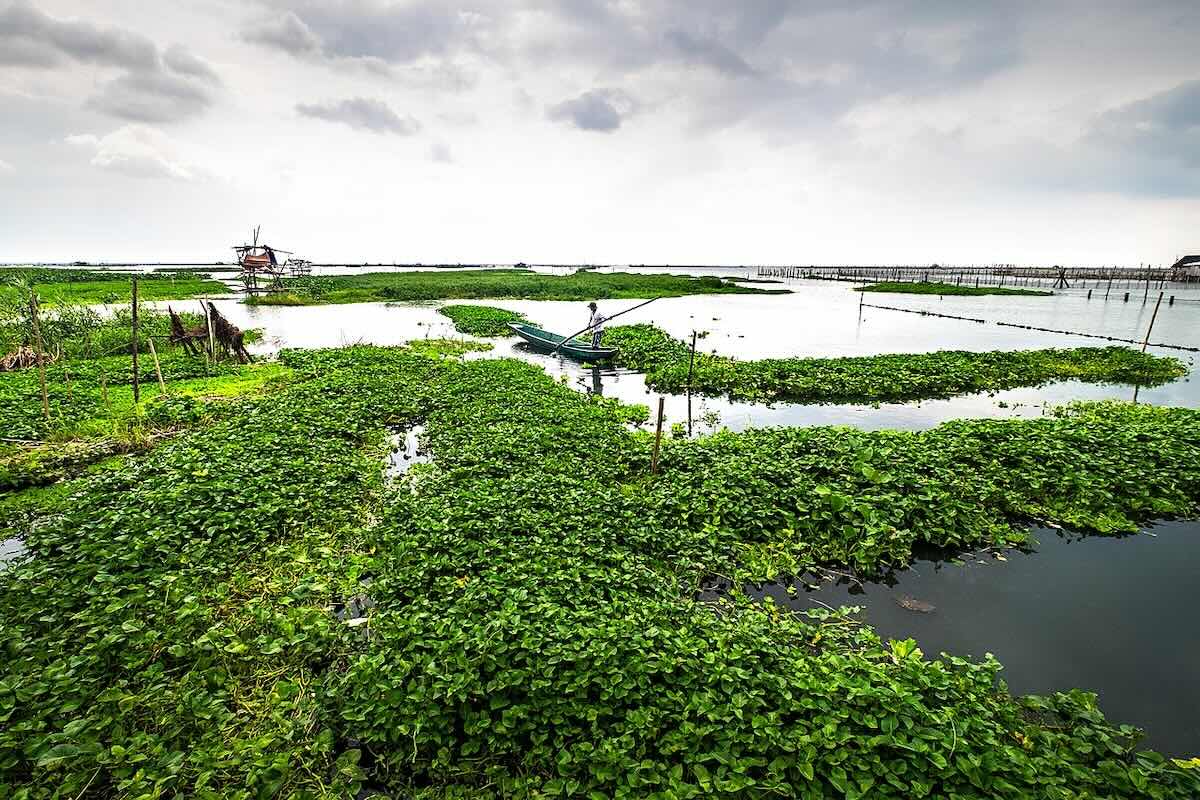
Challenge
A floating photovoltaic project on Laguna Lake in the Philippines must withstand intensifying typhoons and protect ecosystems and communities depending on the lake for livelihoods.
Solution
Environmental Compliance Certificate guidelines for the floating photovoltaic project require climate risk assessment, adaptive management, and consultation with local communities and other stakeholders.
Overview
Laguna Lake, the largest lake in the Philippines, is on the island of Luzon and supports fisheries, transport, and other local livelihoods. It is also the site of a large renewable energy project. As part of national efforts to decarbonize the energy system, plans are underway to install large-scale floating photovoltaic (FPV) plants on the surface of the lake.
The proposed project spans about 2,000 hectares and is expected to generate 1,300 megawatts of electricity. If implemented, it could contribute to lower carbon emissions and expand access to clean power for surrounding communities. At the same time, the Philippines faces rising climate risks, including more intense typhoons and other extreme weather. Any long-lasting floating solar installation on Laguna Lake must remain viable under these conditions and avoid undermining the ecosystems and livelihoods that already depend on the lake.
The project will require extensive physical works on the water surface and related infrastructure onshore. These changes may affect water quality, aquatic habitats, fishing activity, and other uses of the lake. Local communities rely on Laguna Lake for income and basic needs, so large-scale changes to the lake environment could influence their daily lives and their ability to cope with climate impacts.
Floating solar development and climate risks
The scale of the proposed FPV development on Laguna Lake is unusual in the Philippines and internationally. The country’s location in a typhoon-prone region raises questions about how FPV structures and moorings will perform under strong winds, waves, and heavy rainfall.
Ensuring that FPV installations can withstand climate and weather extremes requires continuous monitoring and evaluation, and the flexibility to adjust siting, design, and operation as experience and climate risks evolve.
Environmental compliance guidelines for floating solar on Laguna Lake
To address these concerns, the Department of Environment and Natural Resources (DENR) established Environmental Compliance Certificate (ECC) guidelines specifically for FPV projects on Laguna Lake. These guidelines set out requirements for environmental and social impact assessment and for project implementation.
The ECC guidelines aim to ensure that FPV development on the lake accounts for climate risks and potential impacts on ecosystems and communities. Project developers must assess environmental, social, and economic effects, including possible changes to fisheries, navigation, and other uses. The guidelines also call for consultation and coordination with local communities and other stakeholders during planning and implementation.
Continuous research and studies are planned as the project work moves forward to address potential risks and challenges as FPV development evolves.
Adaptive management and community concerns
Adaptive management forms a central part of the ECC approach for Laguna Lake FPV work. Because there are few precedents for an FPV project of this size, the guidelines recognize that not all risks and effects can be fully anticipated in advance.
Under this approach, project developers and regulators monitor impacts and performance, then adjust management measures in light of new information. These adjustments can include changes to layout, operation, or mitigation actions if monitoring shows unexpected environmental or social effects.
Communities around Laguna Lake may be concered about how large FPV arrays will affect fishing, transport routes, and daily life, and there is a growing call for transparency and inclusive decision making in project planning and implementation. Involving affected residents and local governments in discussions and decisions can build shared understanding and responsibility, and can support the project’s long-term success.
Acknowledgements
This report is based on publicly available information on floating solar development on Laguna Lake and related Environmental Compliance Certificate guidelines.
Related information
- Floating solar project on Philippines natural lake brings hope — and questions
https://news.mongabay.com/2023/04/floating-solar-project-on-philippines-natural-lake-brings-hope-and-questions/ - Guidelines for Floating Photovoltaic Plants Within Laguna Lake
https://eia.emb.gov.ph/wp-content/uploads/2023/08/DAO-2023-08-1.pdf
 DISCOVER MORE

