 Asia - Cambodia, Mongolia, Nepal, Philippines, Thailand, Vietnam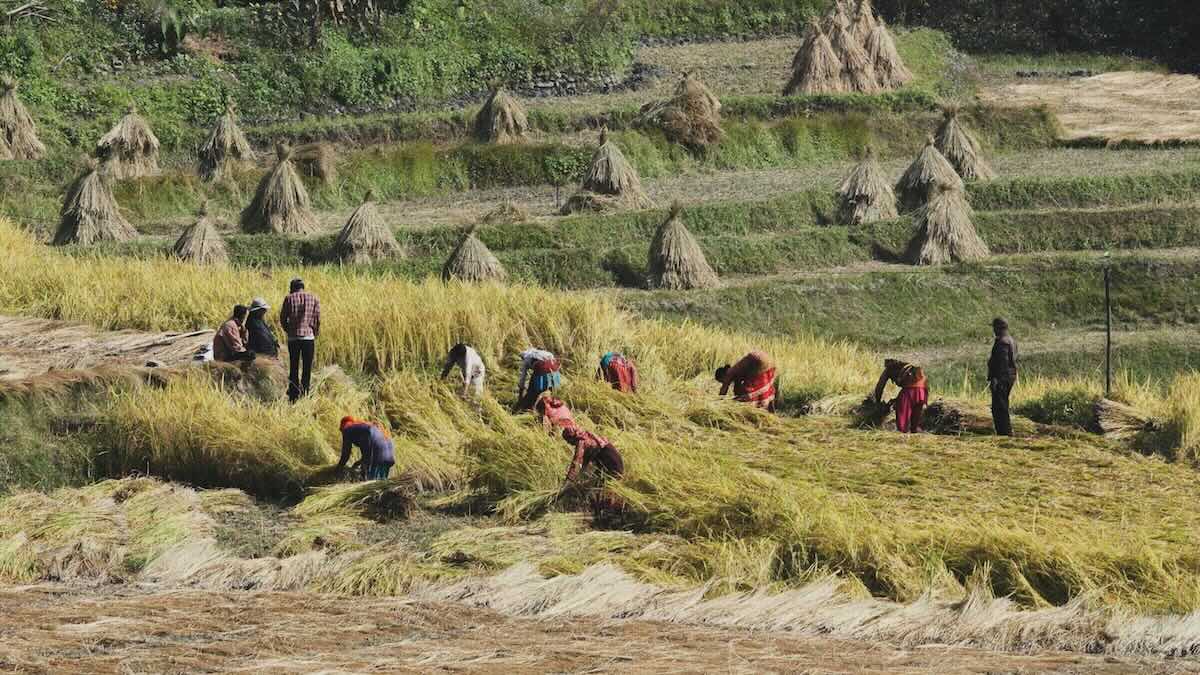
Challenge
Agriculture is highly vulnerable to climate change, yet many countries lack strong systems to plan, implement, and track adaptation in the sector.
Solution
UNDP and FAO programs support climate-resilient agriculture, stronger National Adaptation Plans (NAPs) and Nationally Determined Contributions (NDCs), and robust monitoring and evaluation of adaptation progress.
Overview
The United Nations Development Programme (UNDP) and the Food and Agriculture Organization (FAO) have developed joint programs to help countries adapt their agricultural sectors to climate change. NAP-Ag (Integrating Agriculture in National Adaptation Plans), implemented from 2015 to 2020, focused on incorporating the agriculture sector into National Adaptation Plans (NAPs). SCALA (Scaling up Climate Ambition on Land Use and Agriculture through Nationally Determined Contributions and National Adaptation Plans), running from 2021 to 2025, builds on NAP-Ag and extends support to Nationally Determined Contributions (NDCs) and their implementation.
Agriculture is highly exposed to climate impacts, while also contributing to greenhouse gas emissions. NAP-Ag responded to these dual challenges by promoting the mainstreaming of climate change adaptation into agricultural planning. The programme provided guidance and technical support for sectoral adaptation strategies and frameworks in NAPs, particularly for countries prioritizing climate-smart agriculture. It encouraged practices that increase productivity, improve resilience, and reduce emissions.
SCALA uses lessons from NAP-Ag and links them more directly to the Paris Agreement. It supports countries as they turn NDC commitments for land use and agriculture into concrete policies and actions. Activities include support for sustainable land management, climate-resilient agriculture, and measures that reduce emissions while maintaining food security and promoting sustainable development. Though both programs have a global reach, countries such as Nepal, the Philippines, Thailand, Vietnam, Cambodia, and Mongolia participate from the Asia-Pacific region.
Strengthening M&E systems for agricultural adaptation
A central focus of both programs is strengthening monitoring and evaluation (M&E) of adaptation in the agricultural sector. Two reports in particular highlighted the value of robust M&E systems.
The 2019 report, “Strengthening M&E for adaptation planning in the agriculture sector,” highlights the need to understand policy context, identify risks, and map existing M&E frameworks when designing a national system. It also stresses stakeholder engagement and data availability. Resources from this work were compiled into a training package.
The 2023 report, “Progress in developing a national monitoring and evaluation system for adaptation in the agriculture sector: a multi-country case study,” examines progress in Nepal, the Philippines, Thailand, and Vietnam. It reports advances in identifying relevant indicators, establishing data collection mechanisms, and building institutional capacity for M&E. It also notes that these efforts have strengthened evidence-based adaptation planning in the agricultural sector.
Contributions to global adaptation M&E
Under the United Nations Framework Convention on Climate Change (UNFCCC), Parties are negotiating how to assess progress toward the Global Goal on Adaptation (GGA) set out in the Paris Agreement. Findings from NAP-Ag and SCALA are contributing to the development of indicators for assessing adaptation in the agricultural sector at the global level. UNDP experts involved in NAP-Ag and SCALA are also engaged in work on indicators for GGA target assessment in food and agriculture.
In 2024, UNDP published “Capturing Collective Progress on Adaptation: A Proposal to move forward on the UNFCCC Global Stocktake,” which emphasizes the need for robust M&E systems to track adaptation progress, including in agriculture. The report calls for improvements in methodologies and indicators for measuring the effectiveness of adaptation interventions, as well as better understanding of qualitative changes and long-term impacts on vulnerable communities and ecosystems.
To inform policy making and to support the Global Stocktake, it is necessary for countries to strengthen their M&E systems, including data collection and analysis, and to develop indicators that reflect improved resilience and reduced vulnerabilities in agricultural systems. Stronger M&E can clarify how adaptation measures perform in practice and support learning and knowledge sharing across countries.
Taken together, the findings and experience from NAP-Ag and SCALA are reinforcing efforts to achieve the GGA and improving how adaptation in agriculture is assessed in the Global Stocktake. Technical expertise, stakeholder engagement, and practical experience from these programs are shaping ongoing discussions and supporting the design and implementation of more effective adaptation measures in the agricultural sector.
Acknowledgements
This article is based on publicly available information from the United Nations Development Programme (UNDP) and Food and Agriculture Organization (FAO). We appreciate the efforts of organizations and researchers who have made this knowledge accessible.
Related Information
- https://www.adaptation-undp.org/naps-agriculture
- https://www.adaptation-undp.org/resources/annual-reports/integrating-agriculture-national-adaptation-plans-nap-ag-programme
- https://www.fao.org/in-action/naps/adaptation-planning/guidelines/en/
- https://www.fao.org/in-action/naps/overview/programme-activities/en/
- https://climatepromise.undp.org/what-we-do/flagship-initiatives/scala-programme
- https://www.fao.org/in-action/scala/overview/about/en
 DISCOVER MORE

