 Asia - Brunei, Cambodia, Indonesia, Laos, Malaysia, Myanmar, Philippines, Singapore, Thailand, Timor-Leste, Vietnam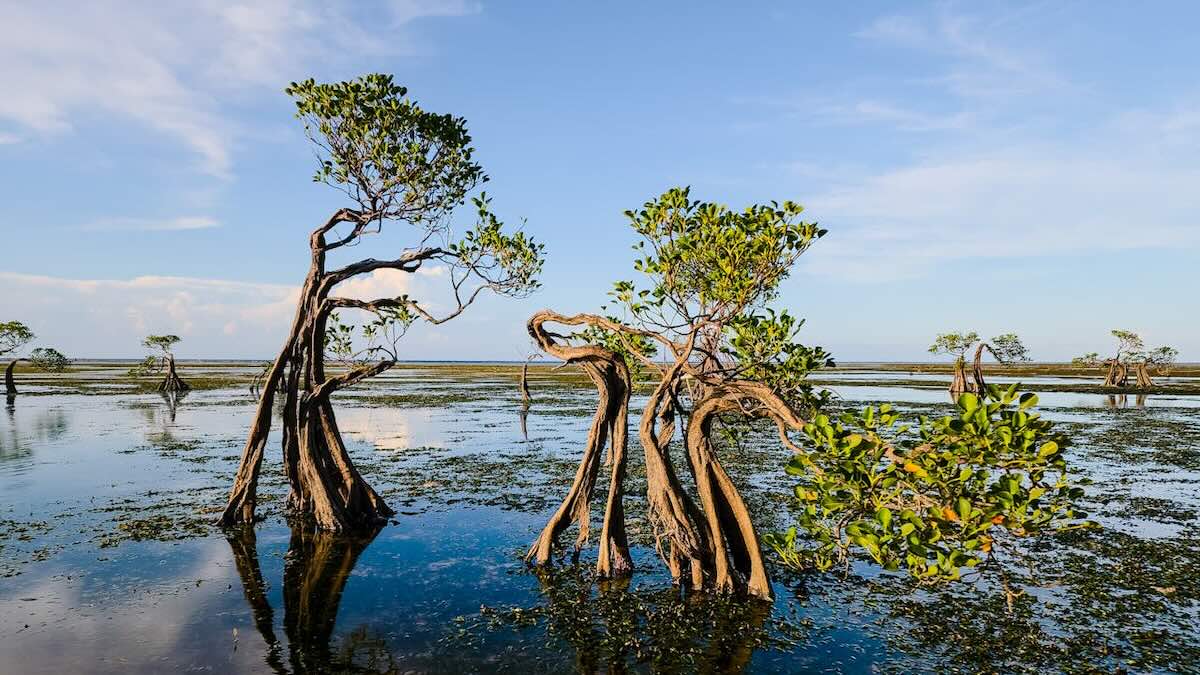
Challenge
ASEAN countries face mounting climate risks while degraded ecosystems reduce natural resilience and limit community adaptation options.
Solution
The ASEAN Biodiversity Plan promotes ecosystem restoration, nature-based solutions, and regional cooperation to strengthen climate resilience and safeguard biodiversity.
Overview
The ASEAN Biodiversity Plan 2024–2030 sets a regional framework for conserving biodiversity, restoring degraded ecosystems, and aligning ASEAN priorities with the Kunming–Montreal Global Biodiversity Framework. Although the plan’s main purpose is biodiversity conservation, many of its strategies directly support climate change adaptation by strengthening ecosystem functions that buffer climate impacts.
The plan outlines 23 regional biodiversity targets for all ASEAN member states to pursue. These targets complement national biodiversity strategies and guide shared regional action. Several targets explicitly promote adaptation outcomes, while others incorporate adaptation co-benefits through restoration, improved ecosystem services, and more effective knowledge exchange.
Ecosystem restoration as a foundation for resilience
Target 2 focuses on promoting science-based restoration of terrestrial, inland water, coastal, and marine ecosystems. This target aligns with the global commitment to restore 30% of degraded ecosystems and includes actions such as recognizing best practices in ecosystem restoration and supporting nurseries that propagate native plants.
Restoration activities under this target vary in their adaptation value depending on location. Restoration on steep slopes can reduce soil erosion and landslide risks expected to increase with more intense rainfall. In coastal zones, mangrove restoration can reduce storm surge impacts, support sediment accretion, and increase protection against sea level rise. These restoration measures strengthen natural buffers and provide communities with safer, more stable environments.
Strengthening knowledge on nature-based solutions
Target 8 aims to improve understanding of nature-based solutions and ecosystem-based approaches. It calls for stocktaking adaptation practices across ASEAN and developing e-learning resources to support their use. These activities create a shared knowledge base that can guide restoration work under Target 2 and improve the design of ecosystem-based adaptation strategies.
This target consolidates lessons learned and provides accessible learning materials to help countries adopt effective approaches that integrate biodiversity conservation with climate adaptation.
Valuing natural capital and adaptation benefits
Target 11 promotes mechanisms to advance discussions on natural capital and the economic valuation of natural resources. The target supports the compilation of cases and good practices on valuing biodiversity and ecosystem services.
Including the climate adaptation benefits of ecosystems in valuation processes can help policymakers fully understand the economic contributions of ecosystem-based adaptation and nature-based solutions. Highlighting these benefits can strengthen support for restoration investments and long-term biodiversity protection.
Policy relevance across ASEAN
The ASEAN Biodiversity Plan provides a structured approach for regional collaboration on biodiversity and climate resilience. The plan emphasizes restoration, knowledge exchange, and natural capital valuation to bridge biodiversity objectives and adaptation goals. It offers a platform for ASEAN member states to coordinate actions, share evidence, and integrate ecosystem-based adaptation into their policies.
Acknowledgements
This report is based on information compiled from publicly available sources.
Related Links / References
- ASEAN Centre for Biodiversity. 2024. ASEAN Biodiversity Plan 2024-2030. https://asean.org/wp-content/uploads/2024/10/48-Final_ASEAN-Biodiversity-Plan.pdf.
- ASEAN Clearing House Mechanism, https://asean.chm-cbd.net/
- ASEAN Green Initiative: https://agi.aseanbiodiversity.org/
- CBD. 2022. ‘CBD/COP/15/L.25’. https://www.cbd.int/doc/c/e6d3/cd1d/daf663719a03902a9b116c34/cop-15-l-25-en.pdf. (January 26, 2023).
- Johnson, Brian A, Pankaj Kumar, Naoyuki Okano, Rajarshi Dasgupta, and Binaya Raj Shivakoti. 2022. ‘Nature-Based Solutions for Climate Change Adaptation: A Systematic Review of Systematic Reviews’. Nature-Based Solutions 2: 100042. doi: 10.1016/j.nbsj.2022.100042.
- Sierra-Correa, Paula Cristina, and Jaime Ricardo Cantera Kintz. 2015. ‘Ecosystem-Based Adaptation for Improving Coastal Planning for Sea-Level Rise: A Systematic Review for Mangrove Coasts’. Marine Policy 51: 385–93. doi: 10.1016/j.marpol.2014.09.013.
 DISCOVER MORE

