 Asia - Indonesia, Japan, Malaysia, Philippines, Singapore, Thailand, Vietnam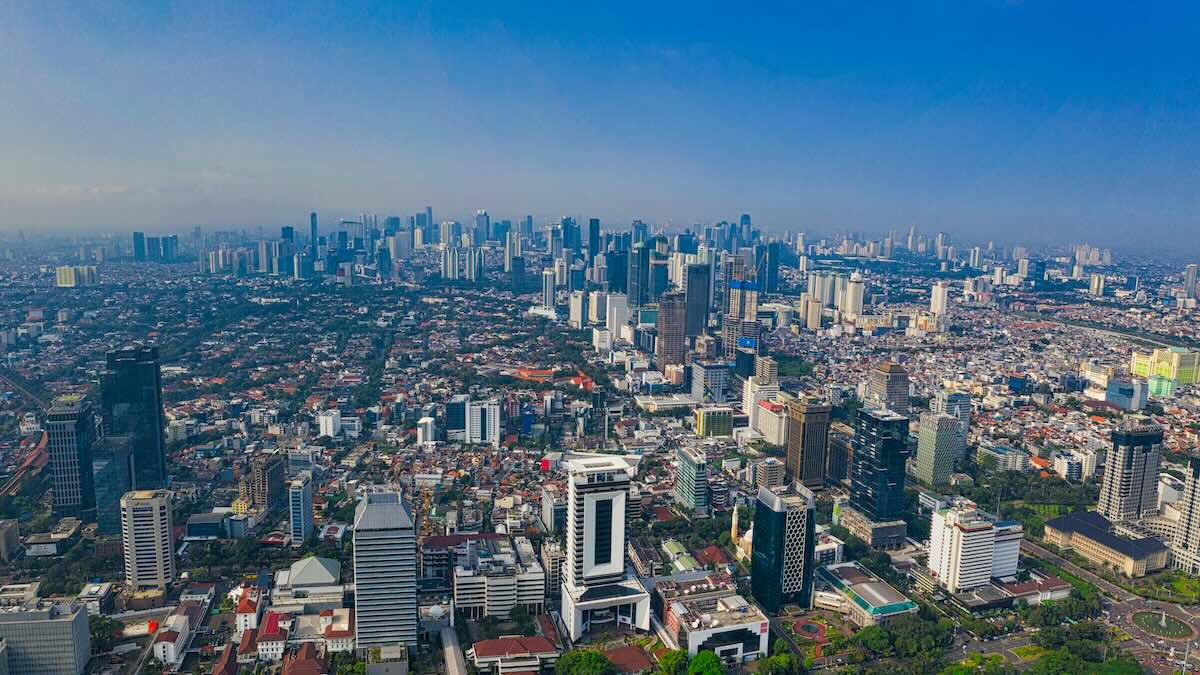
Challenge
Climate extremes expose Southeast Asian megacities to heavy losses, but decision-makers lack city-scale hazard information for planning.
Solution
Generate city-scale climate hazard information and build partnerships among scientists and city stakeholders to support urban resilience decisions.
Overview
Climate extremes such as heat, flooding, and drought put pressure on Southeast Asian megacities including Bangkok (Thailand), Hanoi (Vietnam), Jakarta (Indonesia), Kuala Lumpur (Malaysia), and Manila (Philippines). City planners need climate information that matches the scale of streets, districts, and infrastructure, but available datasets often do not match the spatial and temporal detail needed for urban decisions.
Faye Abigail Tolentino Cruz (Manila Observatory, Philippines) is leading a project, supported by the Asia-Pacific Network for Global Change Research (APN), that is generating city-scale climate hazard information and strengthening collaboration between regional climate scientists and local decision-makers.
Study aims and approach
The project builds on more than a decade of work in the Southeast Asia Regional Climate Downscaling / Coordinated Regional Climate Downscaling Experiment Southeast Asia (SEACLID/CORDEX-SEA) collaboration. It focuses on producing policy-relevant information on future climate impact-drivers for the five megacities, using shared socioeconomic pathway scenarios to explore different futures. High-resolution climate information is being generated with several downscaling (transforming large-scale, coarse-resolution data into finer, more detailed information for smaller regions) approaches, including dynamical downscaling with an urban physics model, empirical statistical downscaling, and a land-surface physics-based downscaling approach.
The project team is designing a city-scale downscaling framework that can provide consistent climate hazard information for the participating megacities. Work includes updating land-cover information for use in models, conducting test runs to tune models to local conditions, and coordinating regional simulations of Coupled Model Intercomparison Project Phase 6 (CMIP6) climate projections that will provide input for city-scale analyses.
Workshops and stakeholder engagement
The project has held an inception workshop and stakeholder consultation in Bangkok, bringing together collaborators from the climate downscaling community, local policymakers, and other stakeholders from each megacity. Participants reviewed empirical statistical and dynamical downscaling activities in Southeast Asia, explored collaboration with the My Climate Risk Lighthouse Activity, and discussed the internal structure of the regional downscaling community.
Through facilitated discussions, the project team has identified stakeholder-informed priority hazards for each megacity, including floods, drought, heat extremes, sea level rise, tropical cyclones and typhoons, rainfall-induced landslides, air quality, and cold surges.
A training workshop in Kuala Lumpur, introduced empirical statistical downscaling, land-surface physics-based downscaling, and urban climate modeling approaches such as Weather Research and Forecasting with an urban module. Lecture and hands-on sessions provided training for the project team on applying these tools for city-scale climate projections.
Downscaling progress and next steps
The project team is coordinating regional downscaling experiments for CMIP6 climate projections across the Southeast Asia domain, including decisions on model selection, experiment design, and data sharing. City-scale downscaling is being prepared through test simulations and technical work on data storage and access.
The project team is also working with collaborators to plan a special session within a regional scientific conference, which is intended as a venue to share downscaling results and discuss user needs with stakeholders for climate information in the megacities.
Current and expected results
So far, the project has:
- Held an inception workshop and stakeholder consultation in Bangkok, bringing together collaborators from the regional climate downscaling community, policymakers, and other stakeholders from each megacity.
- Identified stakeholder-informed priority climate hazards for each megacity, covering combinations of flood, sea level rise, urban heat island effects, heatwaves and heat stress, heavy rainfall, drought, tropical cyclones, thunderstorms and strong winds, and rainfall-induced landslides.
- Delivered a training workshop in Kuala Lumpur on empirical statistical downscaling, land-surface physics-based downscaling, and urban climate modeling, including hands-on sessions using Weather Research and Forecasting with an urban module.
- Started coordinating regional downscaling experiments for CMIP6 climate projections and preparing city-scale downscaling through test simulations and work on data storage and access.
It also expects to:
- Finalize and publish the stakeholder-informed priority hazards for each megacity, alongside a city-scale downscaling framework and publicly accessible projections for participating cities.
- Produce policy-relevant climate information for the megacities, including at least 2 peer-reviewed articles on key findings.
- Co-design a data communication platform for policymakers, city planners, and vulnerability, impact, and adaptation users.
- Prepare knowledge products such as fact sheets and policy briefs on climate change adaptation and disaster risk reduction for each city.
Project details
| Project title | Climatic hazard assessment to enhance resilience against climate extremes for Southeast Asian megacities (CARE for SEA megacities) |
|---|---|
| Year started | 2023 |
| Duration | 3 years (October 1, 2023 – September 30, 2026) |
| Countries involved | Indonesia, Japan, Malaysia, Philippines, Thailand, Vietnam, Singapore |
| Funding awarded | US$135,000 |
| Funded by | Asia‑Pacific Network for Global Change Research (APN) |
| Grant DOI | https://doi.org/10.30852/p.26687 |
| Program | Collaborative Regional Research Programme (CRRP) |
| Project reference number | CRRP2023-08MY-Cruz |
| Project leader | Faye Abigail Tolentino Cruz (Manila Observatory, Philippines) |
Acknowledgements
This project was supported by the Asia-Pacific Network for Global Change Research (APN) under its Collaborative Regional Research Programme (CRRP). Acknowledgments are also extended to Julie Mae Dado (Manila Observatory, Philippines), SPG Fredolin Tangang (Universiti Brunei Darussalam, Brunei Darussalam), Jing Xiang Chung (Universiti Malaysia Terengganu, Malaysia), Ester Salimun (Universiti Kebangsaan Malaysia, Malaysia), Phan Van Tan (Vietnam National University – Hanoi University of Science, Vietnam), Thanh Ngo-Duc (University of Science and Technology of Hanoi, Vietnam), Nguyen Xuan Thanh (University of Science and Technology of Hanoi, Vietnam), Jerasorn Santisirisomboon (Ramkhamhaeng University, Thailand), Patama Singhruck (Chulalongkorn University, Thailand), Jaruthat Santisirisomboon (Ramkhamhaeng University, Thailand), Edvin Aldrian (National Research and Innovation Agency, Indonesia), Dodo Gunawan (Meteorological, Climatological and Geophysical Agency, Indonesia), Donaldi Permana (Meteorological, Climatological and Geophysical Agency, Indonesia), Doan Quang Van (University of Tsukuba, Japan), Srivatsan Raghavan (National University of Singapore, India), Southeast Asia Regional Climate Downscaling / Coordinated Regional Climate Downscaling Experiment Southeast Asia (SEACLID / CORDEX-SEA) collaboration (International), and World Climate Research Programme Coordinated Regional Climate Downscaling Experiment (International).
Related information
- Project Permalink
- Summary report of the CARE for SEA Megacities and CORDEX-SEA: A Special Session – https://www.apn-gcr.org/publication/summary-report-of-the-care-for-sea-megacities-and-cordex-sea-a-special-session/
- Ngo-Duc, T., Nguyen-Duy, T., Desmet, Q. et al. Performance ranking of multiple CORDEX-SEA sensitivity experiments: towards an optimum choice of physical schemes for RegCM over Southeast Asia. Climate Dynamics 62, 8659–8673 (2024). https://doi.org/10.1007/s00382-024-07353-5
- Summary Report: CARE for SEA megacities Training Workshop – https://www.apn-gcr.org/publication/summary-report-care-for-sea-megacities-training-workshop/
- APN Facebook
- APN LinkedIn
- APN X
 DISCOVER MORE

