 Asia - Bangladesh, India, Pakistan, Sri Lanka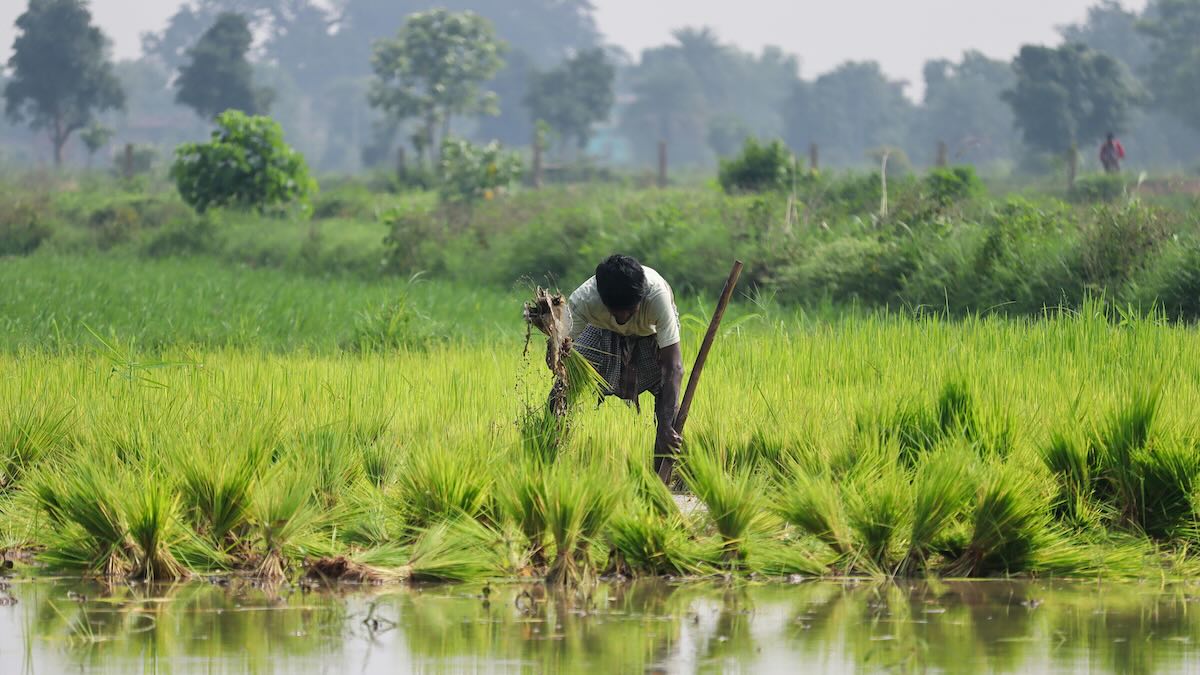
Challenge
South Asian coastal farmers face salinity intrusion, tidal inundation, and cyclonic impacts, while policy practice gaps limit climate-resilient agro-farming.
Solution
Use field-based research to assess policy practice gaps and develop a policy matrix and produce country white papers.
Overview
Coastal agriculture in South Asia faces intensifying cyclones, saltwater intrusion, shifting rainfall, and soil decline, and these pressures threaten food security and rural livelihoods. National climate policies and agricultural programs do not always incorporate field realities in coastal zones, and climate-resilient agro-farming is not yet fully reflected in national implementation.
Malancha Dey (South Asian Forum for Environment, India) led the Enabling Stakeholder Participation and Applied Research (ESPAR) project, supported by the Asia-Pacific Network for Global Change Research (APN), to connect applied research with policy interpretation and help embed climate-resilient agro-farming in national climate agendas. The project focused on Bangladesh, India, Pakistan, and Sri Lanka, centered on coastal production systems that already experience climate stress.

The project’s researchers examined how well agricultural and climate policies in the four countries addressed salinity, cyclonic risk, rainfall variability, soil decline, and livelihood security. They combined multi-country field assessments, policy diagnostics, and structured stakeholder engagement to identify gaps between national instruments and farm-level practice. Multi-criteria analysis, a weighted SWOT analysis, and decision matrices compared policy coherence and sustainability across environmental, economic, and institutional dimensions.
Study context and design
The project was structured around three objectives: identifying synergies and trade-offs between climate-resilient agricultural policy and coastal farming practice, using field-based evidence at the community level to feed a Multi-Attribute Decision Advice Matrix (MADAM) for policy options, and documenting resilient community farming practices through country white papers.
The researchers used multi-criteria decision-making (MCDM) tools to assess agricultural sustainability and policy coherence, with indicators grouped under environmental, economic, and institutional dimensions. Policy reviews, expert consultations, and scoring exercises produced comparable indices of policy coverage and implementation depth in the four countries.
Coastal field sites and methods
Field work covered the Indian Sundarbans, Bangladesh Haor basin, Indus Delta in Pakistan, and the Jaffna Peninsula in Sri Lanka. Teams collected household and community data on exposure to cyclones and saline flooding, access to water, soil conditions, income sources, and local adaptation strategies.
They applied the Livelihood Vulnerability Index (LVI), which groups indicators under exposure, sensitivity, and adaptive capacity, to compare vulnerability profiles across sites. Geospatial analysis – including land use and land cover classification of mangrove-fringe areas based on multi-temporal satellite imagery – supplied spatial context for policy discussion, showing how agriculture, aquaculture, bare land, and mangroves have changed over time in coastal regions.
Policy comprehension and stakeholder engagement
The project treated policy comprehension as a shared task between researchers and decision-makers rather than a purely academic exercise. Teams reviewed national agricultural and climate policies, then convened onsite and online workshops across the four countries to discuss findings and co-develop recommendations. Participants included policymakers, extension officers, researchers, civil-society organizations, and local practitioners, who tested multi-criteria matrices against experience from coastal farming contexts.
Online citizen-science awareness campaigns invited farmers, youth, and community groups to share examples of climate-resilient agro-farming practices and reflect on barriers to adoption. Inputs from these activities fed into country white papers that set out evidence-based options for mainstreaming climate-resilient agro-farming into national climate and development planning.
Outcomes and results
- Developed 4 national white papers that consolidate evidence, stakeholder insights, and policy pathways for climate-resilient agro-farming in Bangladesh, India, Pakistan, and Sri Lanka.
- Produced an article on institutional design and climate resilience in agriculture across coastal South Asia.
- Delivered a consolidated LVI assessment, multi-country land use and land cover study, and multi-criteria decision-making analysis report for coastal agricultural systems.
- Produced proceedings of 2 onsite workshops and 8 webinars across to support drafting of national white papers.
- Conducted 3 online seminars and 2 dedicated capacity-building workshops on integrated coastal resilience and climate-resilient agriculture.
- Organized 3 citizen science awareness campaigns – 1 each in India, Bangladesh, and Sri Lanka – and documented proceedings focused on local observation and community-based understanding of climate impacts.
Project details
| Project title | Enabling stakeholder participation and applied research in policy comprehension to mainstream climate resilient agro-farming practices in national climate agenda (ESPAR) |
|---|---|
| Year started | 2023 |
| Duration | 2 years |
| Countries involved | Bangladesh, India, Pakistan, Sri Lanka |
| Funding awarded | US$84,000 |
| Funded by | Asia‑Pacific Network for Global Change Research (APN) |
| Grant DOI | https://doi.org/10.30852/p.26683 |
| Program | Collaborative Regional Research Programme (CRRP) |
| Project reference number | CRRP2023-06MY-Dey |
| Project leader | Malancha Dey (South Asian Forum for Environment, India) |
Acknowledgements
This project was supported by the Asia-Pacific Network for Global Change Research (APN) under its Collaborative Regional Research Programme (CRRP). Acknowledgments also go to Punarbasu Chaudhuri (Department of Environmental Science, University of Calcutta, India), Sanjay Deshmukh (Department of Life Sciences, University of Mumbai, India), Ayyandaar Arunachalam (ICAR – Central Agroforestry Research Institute [CAFRI], Jhansi, India), Sachin S Gunthe (Department of Civil Engineering, Indian Institute of Technology Madras (IIT Madras), India), and Priyanie Amerasinghe (International Water Management Institute, Sri Lanka).
Related information
- Project Permalink
- Project Website
- Project Final Report
- Harvests on the Brink: Climate, Policy & the Future of Farming in South Asia – https://www.apn-gcr.org/publication/harvests-on-the-brink-climate-policy-the-future-of-farming-in-south-asia/
- Livelihood Vulnerability to Climate Change in Coastal South Asia – https://www.apn-gcr.org/publication/livelihood-vulnerability-to-climate-change-in-coastal-south-asia/
- Assessing Agricultural Policy Coherence for Climate Resilience in South Asia: Insights from Multi-Criteria Decision-Making – https://www.apn-gcr.org/publication/assessing-agricultural-policy-coherence-for-climate-resilience-in-south-asia-insights-from-multi-criteria-decision-making/
- Building Coastal Resilience: A Strategic Framework for Climate-Smart Agriculture in India – https://www.apn-gcr.org/publication/building-coastal-resilience-a-strategic-framework-for-climate-smart-agriculture-in-india/
- Securing the Harvest: A Vision for the Coastal Agriculture of Pakistan – https://www.apn-gcr.org/publication/securing-the-harvest-a-vision-for-the-coastal-agriculture-of-pakistan/
- Mainstreaming Climate-Resilient Agricultural Policies into the National Framework in Sri Lanka – https://www.apn-gcr.org/publication/mainstreaming-climate-resilient-agricultural-policies-into-the-national-framework-in-sri-lanka/
- APN Facebook
- APN LinkedIn
- APN X
 DISCOVER MORE

