 Asia - Australia, Malaysia, Thailand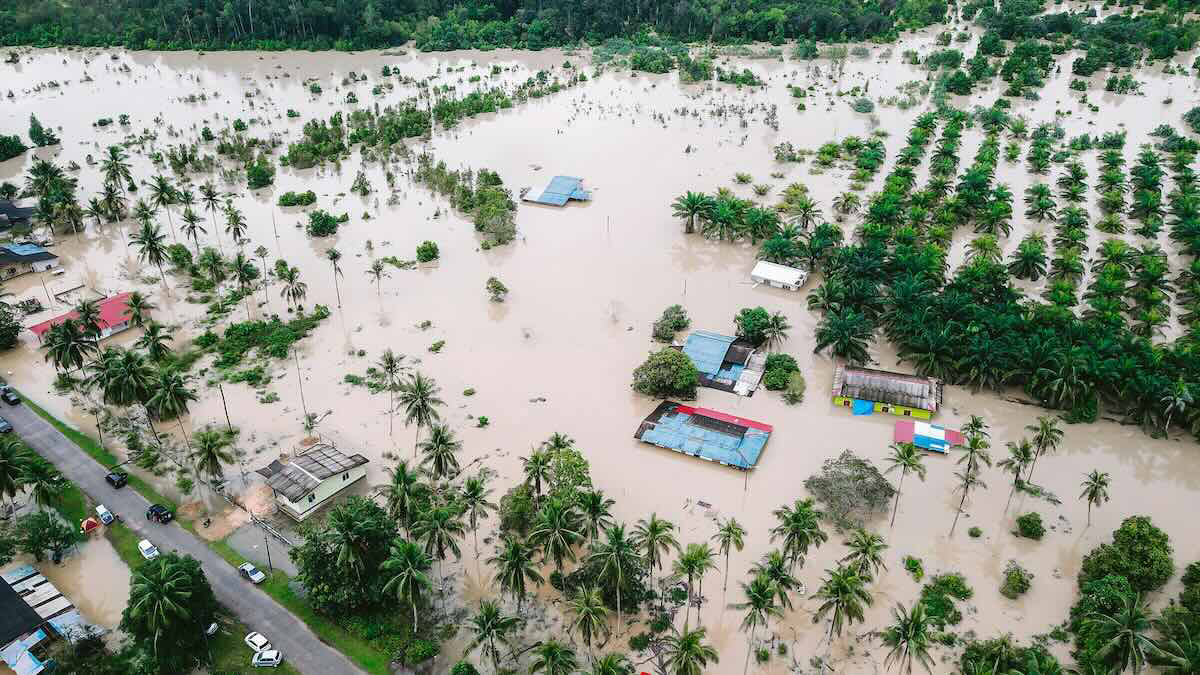
Challenge
Flood risk management in Malaysia and Thailand requires improved forecasting lead time and accessible real-time flood modeling tools.
Solution
Develop real-time flood models and a cloud-based forecasting system and test them with agencies and communities.
Overview
Flooding related to dam failure and extreme rainfall threatens communities and infrastructure in Malaysia and Thailand, and response depends on forecasting lead time and access to modelling tools.
Hidayah Basri (Universiti Tenaga Nasional, Malaysia) led a project supported by the Asia-Pacific Network for Global Change Research (APN) to strengthen early warning and preparedness through real-time flood simulation and structured engagement with government and communities.
Researchers on the project team focused on two Malaysian dam sites (Batu and Bekok) and non-dam, rainfall-driven flooding in Pathum Thani, Thailand. They developed and tested the National Reservoir Inflow Forecasting System (NaRIF) and associated real-time flood modelling tools, and applied them with agencies and communities in Malaysia and Thailand.

Flood modeling and forecasting system
NaRIF is accessible through a dedicated project website. The project team developed coupled 1D–2D hydrological and hydraulic models using PCSWMM (a flood modeling platform built on the Storm Water Management Model, SWMM) to analyze floods from dam failures at Batu Dam and Bekok Dam and to analyze flooding from extreme rainfall in Pathum Thani, Thailand.
At the Thailand site, the model represented canals, downstream outlets, and pumping stations. It also represented parts of the subsurface pipe network and pump operations in selected urbanized areas, including a residential estate.
Real-time data and rainfall forecasts were combined with cloud computing to reduce run time and support operational use. Flood forecast data and results were sent to cloud-based platforms in Malaysia to support reservoir water-level and flood forecasting and to increase prediction lead time.
Climate change scenarios using Representative Concentration Pathways (RCP4.5 and RCP8.5) were applied to examine future flood risk.
Community engagement and resilience assessment
The work applied design thinking and the United Nations Development Programme (UNDP) CoBRA (Community-Based Resilience Analysis) framework to examine community resilience alongside technical modeling. This approach was adapted for application in Malaysia and applied with students, local residents, and dam safety stakeholders.
Engagement activities included site visits, resilience simulations, and exercises focused on early warning and preparedness. In Thailand, workshop participants used the online UNDRR Stop Disasters Game, which teaches flood management, as an icebreaker and discussion tool.
Policy alignment and operational use
The work aligned with national climate and disaster management policies in Malaysia and Thailand. It also supported dam safety planning and flood risk management through early warning and hazard mapping work around Batu Dam.
Outcomes and results
- Tested and demonstrated the National Reservoir Inflow Forecasting (NaRIF) system in Malaysia and applied related modeling approaches in Thailand.
- Held CoBRA workshops with 90 participants – 58 from Malaysia and 32 from Thailand.
- Ran a trial exercise with 16 Universiti Tenaga Nasional students.
- Conducted a Batu Dam community exercise with 21 village representatives.
- Conducted a stakeholder exercise with 21 officers from the Department of Irrigation and Drainage Malaysia in May 2024.
- Held Thailand CoBRA workshops with 17 Thammasat University students and with 15 single-family residential estate residents.
- Hosted collaborator presentations with 15 faculty and graduate students and 4 staff from the Electricity Generating Authority of Thailand (EGAT).
- Published 4 peer-reviewed articles.
- Produced a guideline for dam break analysis and flood hazard mapping.
Project details
| Project title | Real-time flood modelling for improved community resiliency in Southeast Asia |
|---|---|
| Year started | 2022 |
| Duration | 2 years (October 1, 2022 – September 30, 2024); First extension: October 1, 2024 – March 31, 2025; second extension: April 1, 2025 – September 30, 2025 |
| Countries involved | Australia, Malaysia, Thailand |
| Funding awarded | US$87,000 |
| Funded by | Asia‑Pacific Network for Global Change Research (APN) |
| Grant DOI | https://doi.org/10.30852/p.22130 |
| Program | Collaborative Regional Research Programme (CRRP) |
| Project reference number | CRRP2022-07MY-Basri |
| Project leader | Hidayah Basri (Universiti Tenaga Nasional, Malaysia) |
Acknowledgements
This project was supported by the Asia-Pacific Network for Global Change Research (APN) under its Collaborative Regional Research Programme (CRRP). Acknowledgments also go to the Ministry of Higher Education (Malaysia), Resilient Water-Energy & Dam Intelligence (REDI-Lab) (Malaysia), Institute of Energy Infrastructure (IEI) (Malaysia), Universiti Tenaga Nasional (Malaysia), Department of Irrigation and Drainage Malaysia (Malaysia), Design and Dam Division, Department of Irrigation and Drainage Malaysia (Malaysia), Pejabat Lembangan Sg. Klang (PLSK) (Malaysia), Department of Irrigation and Drainage Gombak (Malaysia), Malaysian National Committee on Large Dam (MYCOLD) (Malaysia), ZHL Engineers Sdn. Bhd. (Malaysia), National Disaster Management Agency (NADMA) (Malaysia), ATLAS Informatics (Malaysia), Universiti Teknologi MARA (Malaysia), Pengurusan Air Selangor Sdn Bhd (Air Selangor) (Malaysia), Deakin University (Australia), Thammasat University (Thailand), Kasetsart University (Thailand), and Electricity Generating Authority of Thailand (EGAT) (Thailand).
Related information
- Project Permalink
- Project Final Report
- Guideline for Dam Breaking Analysis and Flood Hazard Mapping – https://www.apn-gcr.org/publication/guideline-for-dam-breaking-analysis-and-flood-hazard-mapping/
- National Reservoir Inflow Forecasting: System Functional Overview – https://www.apn-gcr.org/publication/national-reservoir-inflow-forecasting-system-functional-overview/
- Chitwatkulsiri, D.; Irvine, K.N.; Chua, L.H.C.; Teang, L.; Charoenpanuchart, R.; Likitswat, F.; Sahavacharin, A. Assessing Urban Resilience Through Physically Based Hydrodynamic Modeling Under Future Development and Climate Scenarios: A Case Study of Northern Rangsit Area, Thailand. Climate 2025, 13, 200. https://doi.org/10.3390/cli13100200
- Hafilah Wan Ariffin, W. N., Sidek, L. M., Basri, H., Idros, N., Adrian, M. T., Abd Ghani, N. H., Khambali, H. M., Allias Omar, S. M., Azhar Khebir, M. I., & Ahmed, A. N. (2025). Overtopping risk of high-hazard embankment dam under climate change condition. In S. Muhammad (Ed.), PLOS ONE (Vol. 20, Issue 2, p. e0311181). Public Library of Science (PLoS). https://doi.org/10.1371/journal.pone.0311181
- Sahavacharin, A.; Likitswat, F.; Irvine, K.N.; Teang, L. Community-Based Resilience Analysis (CoBRA) to Hazard Disruption: Case Study of a Peri-Urban Agricultural Community in Thailand. Land 2024, 13, 1363. https://doi.org/10.3390/land13091363
- Burhanuddin, M. F., Mohd Sidek, L., Salih, G. H. A., Ahmed, A. N., Escuder-Bueno, I., & Basri, H. (2023). Conceptual frameworks of real-time flood modelling for improved community resilience. In L. Mohd Sidek, G. H. A. Salih, A. N. Ahmed, I. Escuder-Bueno, & H. Basri (Eds.), Proceedings of the 2nd International Conference on Dam Safety Management and Engineering. ICDSME2023 2023. Water Resources Development and Management. Springer, Singapore. https://doi.org/10.1007/978-981-99-3708-0_57
- APN Facebook
- APN LinkedIn
- APN X
 DISCOVER MORE

