 Asia - Bangladesh, China, Japan, Mongolia, Taiwan, Vietnam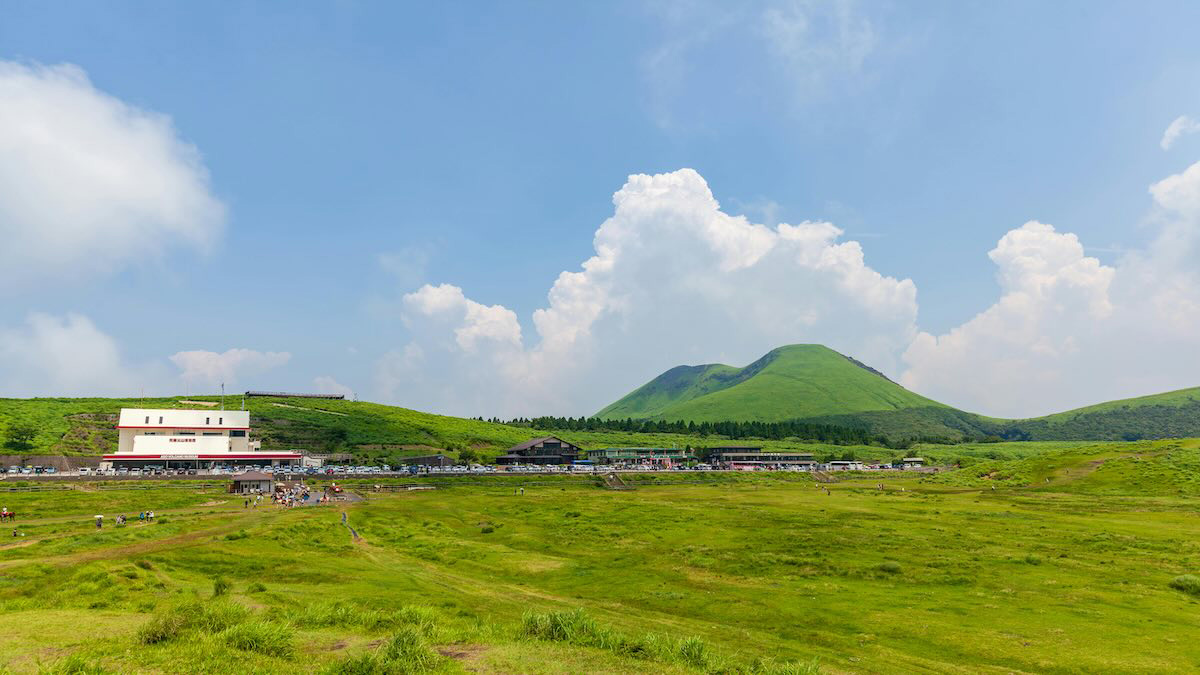
Challenge
Ecosystem restoration is widespread in Temperate East Asia, but a consistent, locally validated evaluation of livelihood and resilience effects is limited.
Solution
Develop a community-based framework and indicator system to evaluate ecosystem restoration impacts on rural livelihoods and resilience.
Overview
Climate-related disasters such as droughts and floods strongly affect Temperate East Asia (a vast, climatically diverse region including parts of China, Japan, Korea, Mongolia, and Siberia), and the effects vary by country and ecosystem type. Ecosystem-based adaptation, including ecosystem restoration, has been implemented in a wide range of approaches to adapt to climate change, but its socioeconomic effects have not been fully quantified due to the lack of scientific evaluation based on locally validated indicator systems.
Kikuko Shoyama (Ibaraki University, Japan) led a project, supported by the Asia‑Pacific Network for Global Change Research (APN), to develop an indicator system that can be applied across sites while staying grounded in local social and ecological realities.
The work examined the impact of ecosystem restoration on rural livelihoods and ways to reduce vulnerability to climate change risks and climate-induced disasters by increasing rural resilience in Temperate East Asia. It focused on community-level conditions and indicators that support assessment over time, space, and stakeholder level.

Study context and approach
The project examined ecosystem restoration as a human intervention to restore degraded ecosystems and maintain ecosystem services. It conducted case studies in Luoyugou watershed on Loess Plateau in China, Ugii Lake watershed in Mongolia, and Aso volcanic zone in Japan. These sites were used to synthesize restoration objectives, methods, duration, scale, and stakeholder roles in different socio-ecological systems.
The project team used a community-based analytical framework to organize indicators and support cross-site comparison. Indicators were structured around ecosystem services (provisioning, regulating, cultural, and supporting functions) and livelihood indicators assessed at community and household levels, including education, participation, health, access to social services, and multiple dimensions of security.
Stakeholder engagement
Project activities included coordination meetings and workshops among researchers, along with household surveys, interviews, and field surveys in study areas. A multistakeholder policy workshop at Ugii Lake brought together stakeholders and researchers to discuss environmental and socioeconomic issues and to develop policy briefs.
Policy and practice links
The evaluation framework supported assessment of ecosystem restoration as an approach to ecosystem-based adaptation and linked local policies to international best practices. Project outputs were published so they could support decision-making at multiple levels and inform international processes, including Intergovernmental Science-Policy Platform on Biodiversity and Ecosystem Services (IPBES) assessments.
Outcomes and results
- Produced a community-based analytical framework and indicator system for evaluating ecosystem restoration impacts on rural livelihoods.
- Produced a database of characteristics of Ecological Restoration (ER) in East Asia and a package of tools for conducting scientific research on ER assessments.
- Held 3 regional workshops on ecosystem restoration assessment: 1 online and 2 in-person.
- Published 4 peer-reviewed articles.
- Delivered 5 conference presentations.
- Trained 10 researchers from China, Mongolia, and Vietnam to assess ecosystem restoration using the indicator system.
Project details
| Project title | Ecosystem-based adaptation in Temperate East Asia: Development of an indicator system for evaluating rural ecosystem restoration programs |
|---|---|
| Year started | 2022 |
| Duration | 2 years (October 1, 2022 – September 30, 2024); First no-cost extension: October 1, 2024 – March 31, 2025 |
| Countries involved | Bangladesh, China, Japan, Mongolia, Vietnam, Chinese Taipei |
| Funding awarded | US$85,000 |
| Funded by | Asia‑Pacific Network for Global Change Research (APN) |
| Grant DOI | https://doi.org/10.30852/p.22117 |
| Program | Collaborative Regional Research Programme (CRRP) |
| Project reference number | CRRP2022-02MY-Shoyama |
| Project leader | Kikuko Shoyama (Ibaraki University, Japan) |
Acknowledgements
This project was supported by the Asia-Pacific Network for Global Change Research (APN) under its Collaborative Regional Research Programme (CRRP). Acknowledgments are also extended to Lin Zhen (Institute of Geographic Sciences and Natural Resources Research, Chinese Academy of Sciences, China), Hu Yunfeng (Institute of Geographic Sciences and Natural Resources Research, Chinese Academy of Sciences, China), Mandakh Nyamtseren (Institute of Geography and Geoecology, Mongolian Academy of Sciences, Mongolia), Wan-Yu Liu (National Chung Hsing University, Taiwan), Tien Dat Pham (Macquarie University, Australia), and Md. Giashuddin Miah (Bangabandhu Sheikh Mujibur Rahman Agricultural University, Bangladesh).
Related information
- Project Permalink
- Project Final Report
- Navaandorj, I., Tsogtbayar, E., Tsogtbaatar, S., Dashdondog, G., Nyamtseren, M., & Shoyama, K. (2025). Mongolian freshwater ecosystems under climate change and anthropogenic pressure: A case study of UGII Lake. Land, 14(5), 998. https://doi.org/10.3390/land14050998
- Nyamtseren, M., Pham, T. D., Vu, T. T. P., Navaandorj, I., & Shoyama, K. (2025). Mapping Vegetation Changes in Mongolian Grasslands (1990–2024) Using Landsat Data and Advanced Machine Learning Algorithm. Remote Sensing, 17(3), 400. https://doi.org/10.3390/rs17030400
- Shoyama, K., Dasgupta, R., & Estoque, R. C. (2022). Ecosystem service and land-use changes in Asia: Implications for regional sustainability. Sustainability, 14(21), 14263. https://doi.org/10.3390/su142114263
- APN Facebook
- APN LinkedIn
- APN X
 DISCOVER MORE

