 Asia - India, Nepal, United States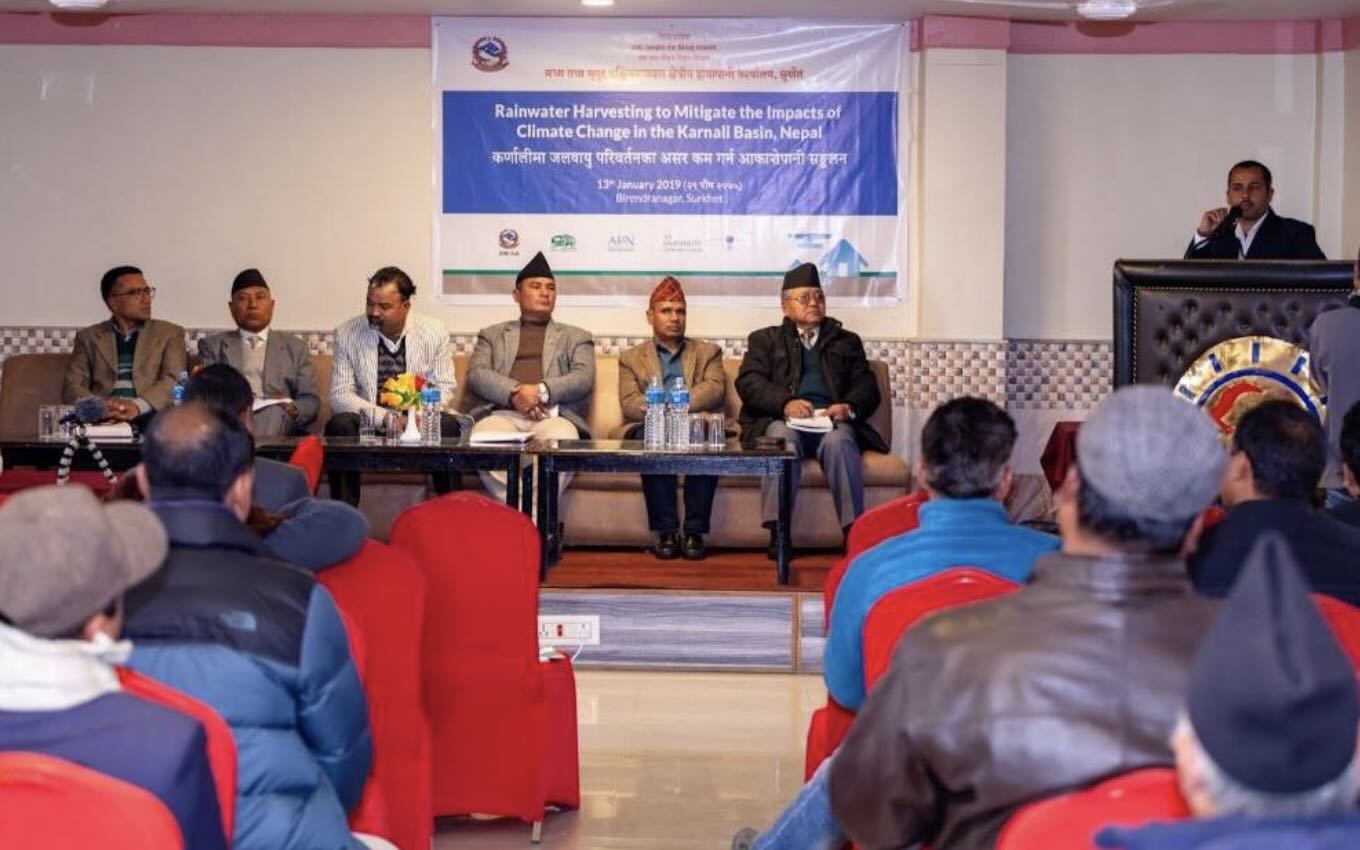
Challenge
Communities in western Nepal face chronic water shortages due to seasonal drought, which affects agriculture, health, and daily life.
Solution
Researchers piloted rooftop rainwater harvesting systems in water-scarce villages to provide an alternative source of water during dry months.
Overview
Drought conditions are a major challenge for many parts of western Nepal, especially during the dry season. In rural hill and mountain regions, residents, especially women, must travel long distances to collect water. The scarcity affects drinking water supply, sanitation, food production, and overall health.
With support from the Asia-Pacific Network for Global Change Research (APN), researchers led by Jeeban Panthi (The Small Earth Nepal, Nepal) carried out a project to evaluate rainwater harvesting as a climate adaptation strategy to address drought-related water insecurity. The project focused on the feasibility, effectiveness, and community-level benefits of rooftop rainwater harvesting systems.
In addition to piloting household systems, the project developed a site suitability map for surface rainwater harvesting to support groundwater recharge and created a mobile app to promote rooftop systems. The intent was to present technical and cost-related data in a format that would be easily understandable and usable by the public.
Project approach
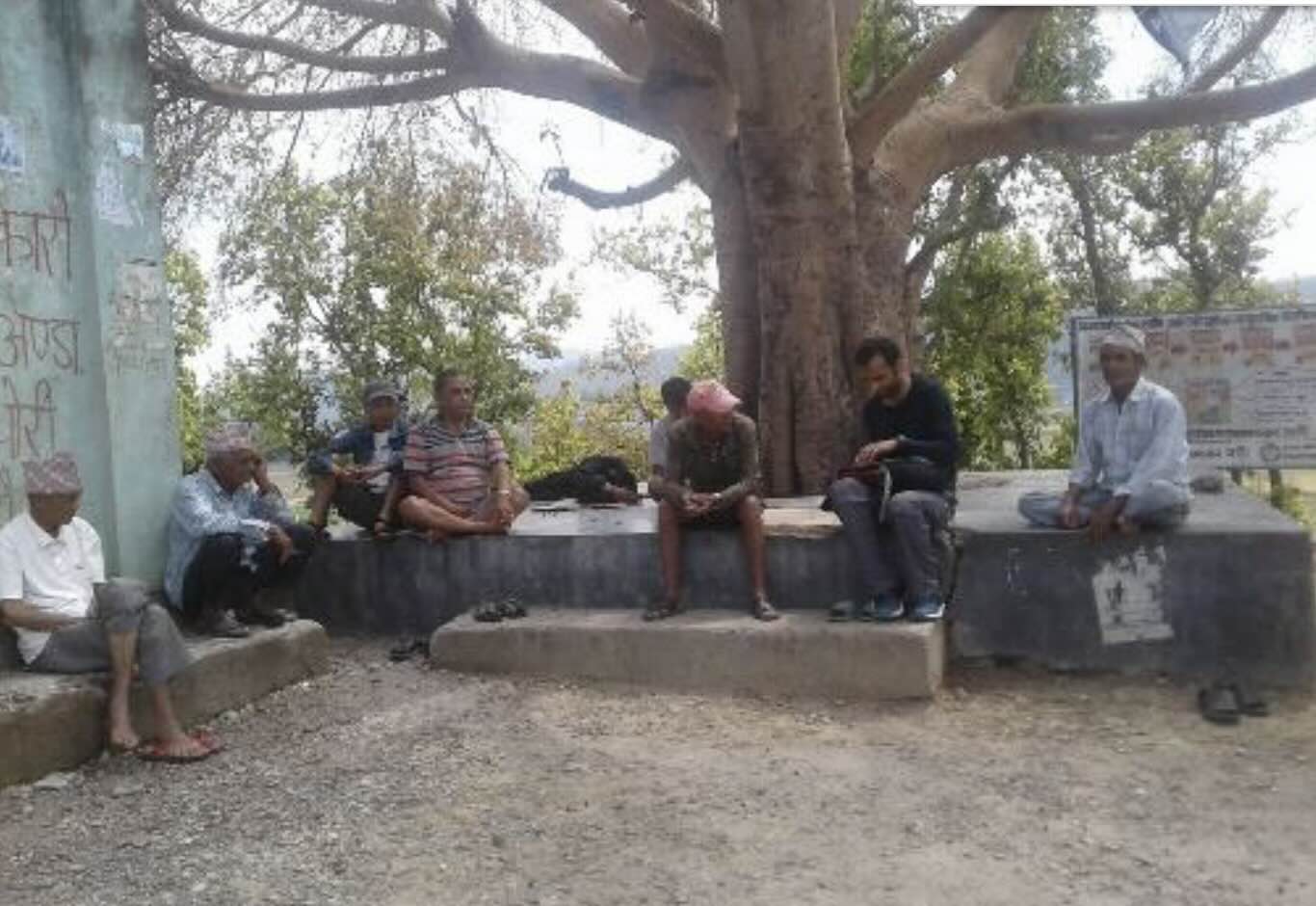
The research team followed a comprehensive, community-focused approach to study rainwater harvesting as a solution for water insecurity. The project’s pilot activities and field surveys were carried out in three districts – Jumla, Dailekh, and Surkhet – within the Karnali River Basin of western Nepal.
The methodology included two key components:
- Development of a site suitability map
- Creation of a mobile app
To create the map, researchers gathered geospatial and meteorological data, including land use maps, digital elevation models, soil maps, and long-term rainfall records. They analyzed these datasets to identify ideal locations for surface rainwater harvesting systems that would support groundwater recharge.
To complement the field work, the research team developed a free mobile app, called Aakaashepani, which is available for download. This user-friendly tool helped communities design and plan rooftop rainwater harvesting systems. Users could input their roof area and local rainfall data to receive a calculated tank size, as well as graphical and numeric outputs to guide their planning. This was a central part of the project’s strategy to empower households, schools, and community buildings to design systems suited to their needs.
Key results and outcomes
- Expanded capacity of local and province level decision-makers for prioritizing groundwater recharge sites, using datasets (land use, precipitation, slope, drainage network, soil) developed by the project.
- Installed systems stored sufficient water to meet household needs for up to 60 days during dry periods.
- Households gained time and labor savings, especially women and children who typically collect water.
- Participants were generally satisfied with the system and expressed willingness to maintain it with government or community support.
- Stakeholders considered the mobile app, named Aakaashepani, to be practical and accessible.
- Twenty graduate students received training in groundwater management through a short course.
- Five early-career researchers participated directly in the study.
Outreach and capacity building
Project findings were shared at local, provincial, and national levels through workshops and seminars. Farmers, technicians, researchers, and policymakers were among the participants. The short course strengthened academic knowledge and field practice among students. These outreach efforts helped promote informed adoption of rainwater harvesting and fostered dialogue around water resilience in rural Nepal.
Outlook and potential for scaling
The project demonstrated that rooftop and surface rainwater harvesting can be cost-effective, practical, and socially accepted in rural drought-prone areas. Tools like the Aakaashepani app offer pathways for communities to independently design systems suited to their needs. For greater impact, the researchers recommend incorporating rainwater harvesting into regional adaptation policies and extending training and awareness efforts in similar geographies.
Project details
| Project title | Rainwater Harvesting for Mitigating Drought in Western Nepal |
|---|---|
| Year started | 2017 |
| Duration | 2 years |
| Countries involved | India, Nepal, United States of America |
| Funding awarded | US$29,850 (for 2 years) |
| Funded by | Asia‑Pacific Network for Global Change Research (APN) |
| Grant DOI | https://doi.org/10.30852/p.4568 |
| Program | Collaborative Research Programme for Young Researchers (CRYS) |
| Project reference number | CRYS2017-01MY-Panthi |
| Project leader | Jeeban Panthi (The Small Earth Nepal, Nepal) |
Acknowledgements
This project was supported by the Asia-Pacific Network for Global Change Research (APN) under its Collaborative Research Programme for Young Researchers (CRYS). Acknowledgement is extended to the local communities in western Nepal for their participation, and to research partners in Nepal, India, and the United States for their collaboration.
Related information
- Project Permalink
- Panthi, J., Pokhrel, Y. N., Tarannum, F, & Pradhananga, D. (2020). Technical Report: Rainwater Harvesting for Mitigating Drought in Western Nepal. Kobe: APN. https://www.apn-gcr.org/publication/project-final-report-crys2017-01my-panthi/
- Panthi, J., Khatiwada, K. R., Shrestha, M. L., & Dahal, P. (2018). Water poverty in the context of climate change: a case study from Karnali river basin in Nepal Himalaya. International Journal of River Basin Management, 17(2), 243–250. doi:10.1080/15715124.2018.1531421
- APN Facebook
- APN LinkedIn
- APN X
 DISCOVER MORE

