 Asia - Australia, Netherlands, Philippines, Vietnam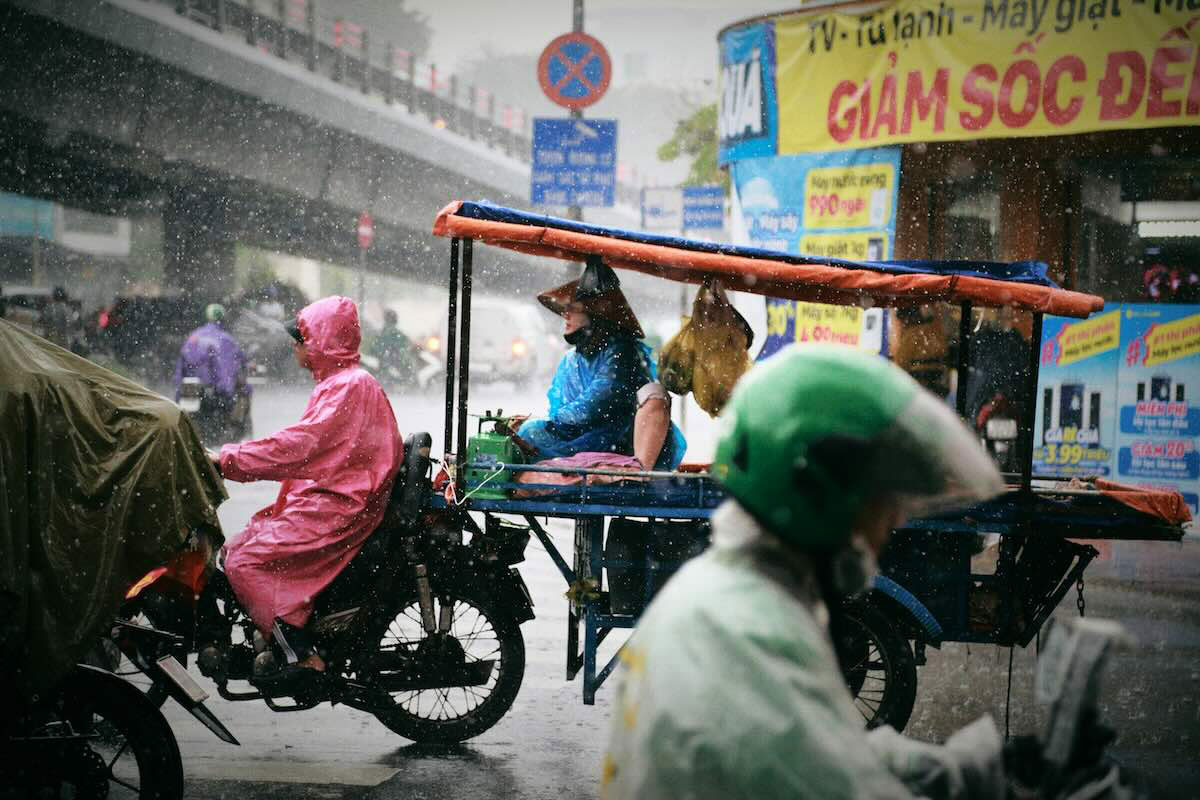
Challenge
Urban flooding in two Southeast Asian regions caused loss and damage, while women were left out of decisions and carried greater burdens.
Solution
Use stakeholder workshops, household surveys, interviews, and focus groups to bring women’s perspectives into urban flood governance.
Overview
Climate change heightens flood risk in Can Tho, Vietnam, and Metro Cebu, Philippines, where annual urban flooding caused loss of life, damage, and disproportionate burdens on women. Women have often been excluded from governance and policy processes for flood mitigation and adaptation.
This project, supported by the Asia-Pacific Network for Global Change Research (APN), and led by Thai Van Nguyen (An Giang University, Vietnam) examined women’s roles in adapting to urban flood risk and aimed to increase women’s representation in urban flood governance and resilience efforts.
Study context and approach
Work began in November 2019, when the project team convened a stakeholder workshop in Can Tho establish a shared framework and action plan. During COVID-19 restrictions, the Vietnam and Philippines teams coordinated project operations via virtual meetings to align schedules and adapt data collection methods. The Vietnamese side prepared survey tools, interview guides, and ward‑level logistics. The Filipino side organized courtesy calls and barangay (village) meetings, worked with river‑basin counterparts from the Butuanon River Watershed Water Quality Management Area (BRWWQMA) and set schedules for community activities.
In Phu Hoa and Ke Sach Wards (Vietnam), household surveys, key‑informant interviews, and focus groups gathered evidence on health, livelihoods, mobility, unpaid care, early‑warning access, and recovery barriers. In Metro Cebu (Philippines), barangay discussions identified roles, information gaps, and practical steps for preparedness, response, and cleanup.
Evidence from Can Tho, Vietnam
Discussions and household accounts described how recurrent street and compound flooding disrupts work, school, and care routines, and how women manage food, water, and safety when transport is limited.
Participants outlined coping steps that work at neighborhood scale, such as neighbor help networks, safeguarding documents, and simple home‑level adjustments, and flagged gaps where city services or information flows break down. The work highlighted the value of women’s local knowledge for practical measures and for setting ward‑level priorities.
Outcomes and results
Philippines
- Engaged community leaders in Metro Cebu (Philippines) through courtesy calls and barangay meetings to align activities and roles.
- Presented research to the BRWWQMA Governing Board (June 2022) and at the Local River Summit (October 2022) to link findings with river‑basin actions.
- Established the Project Dolphin Flood Hub with barangay partners to coordinate preparedness and response.
- Adopted two BRWWQMA monitoring stations and initiated monthly drainage monitoring routines.
- Formed a Disaster Risk Reduction and Management team at the University of Cebu and launched a campus Materials Recovery Facility to support flood‑related waste management.
- Shared research materials and tools with six barangays and three cities and produced nine research articles presented locally to sustain dialogue.
Vietnam
- Convened a stakeholder workshop in Can Tho in November 2019 to set the research framework and action plan.
- Completed 150 household surveys, focus groups, and key informant interviews in Phu Hoa and Ke Sach Wards, documenting effects on health, livelihoods, mobility, and unpaid care during floods.
- Engaged 15 university students in fieldwork and research training.
Project details
| Project title | Exploring Gendered Knowledge and Inclusiveness in Community Resilience for Flooding Disaster. Case Studies in Can Tho City (Vietnam) and Cebu City (Philippines) |
|---|---|
| Year started | 2019 |
| Duration | 5 years (extended due to COVID-19) Original: September 1, 2019, to August 31, 2021 (first COVID-19 extension: to February 28, 2022; second COVID-19 extension: to August 31, 2022; third COVID-19 extension: to February 28, 2023; fourth COVID-19 extension: to August 31, 2023; first regular extension: to February 29, 2024; second regular no-cost extension: to August 31, 2024) |
| Countries involved | Australia, Philippines, Vietnam, Netherlands |
| Funding awarded | US$47,465 |
| Funded by | Asia‑Pacific Network for Global Change Research (APN) |
| Grant DOI | https://doi.org/10.30852/p.4602 |
| Program | Collaborative Regional Research Programme (CRRP) |
| Project reference number | CRRP2019-02MY-TNguyen |
| Project leader | Thai Van Nguyen (An Giang University, Vietnam) |
Acknowledgements
This project was supported by the Asia-Pacific Network for Global Change Research (APN) under its Collaborative Regional Research Programme (CRRP). Acknowledgments also go to the Vietnam National University of Agriculture (Vietnam), University of Cebu Lapu-Lapu and Mandaue (Philippines), University of Amsterdam (Netherlands), Can Tho University (Vietnam), Australian National University (Australia), Science & Technology Association (Vietnam), Vinh University (Vietnam), Thammasat University (Thailand), and the Ministry of Natural Resources and Environment (Vietnam).
 DISCOVER MORE

