 Asia - China, India, Japan, Myanmar, Philippines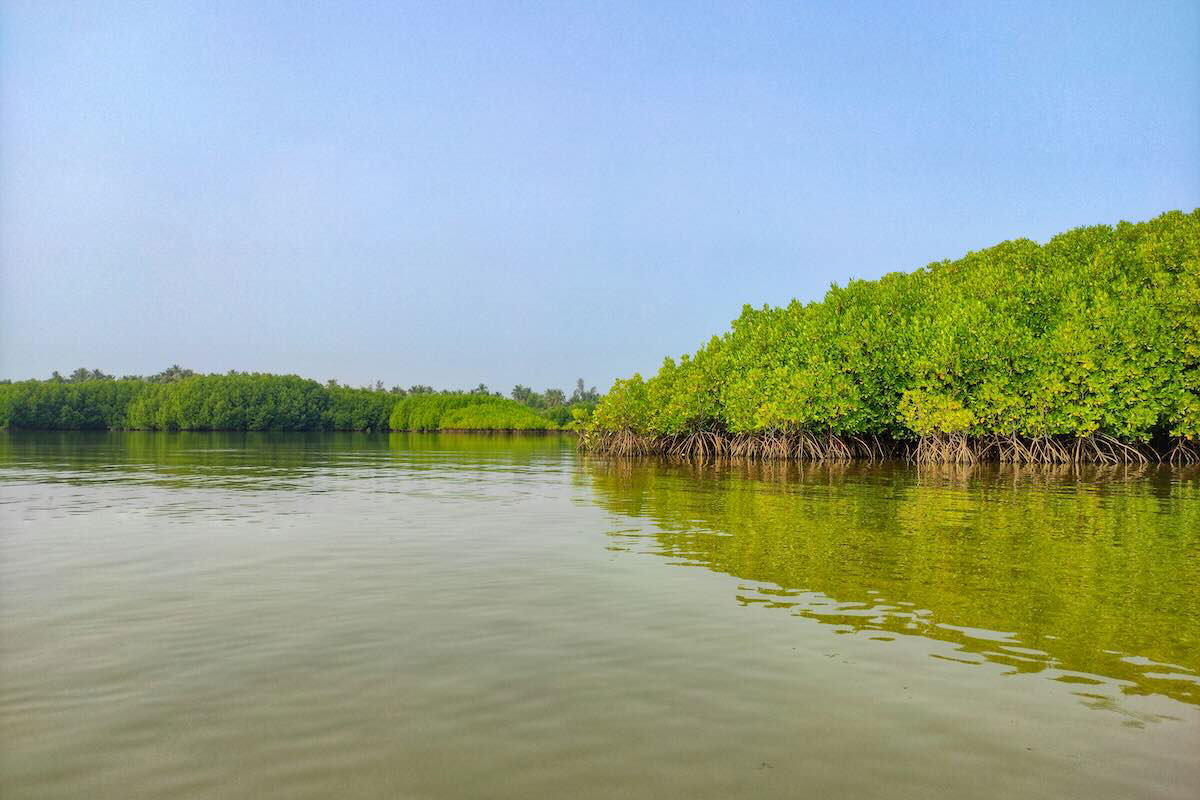
Challenge
Mangrove rehabilitation efforts in the Philippines and Myanmar often struggle with unsuitable sites, rapid planting targets, and weak local ownership.
Solution
Apply ecological restoration and community-led planning to match species to sites and secure stewardship.
Overview
Mangrove forests buffer coasts, store carbon, and support fisheries and livelihoods, yet many rehabilitation programs fall short of lasting recovery. An APN-supported project led by Leni D. Camacho (University of the Philippines Los Baños, Philippines) examined how policy frameworks and practice converged in participatory mangrove rehabilitation. The work drew on case studies in the Philippines and Myanmar, policy consultations, and literature synthesis that also examined India and Japan to propose guidelines that pair ecological criteria with community priorities.
The project team compared rehabilitation experiences across ecological and social settings, focusing on how institutions, people’s organizations, and technical partners planned and maintained projects. Ecological mangrove restoration means matching species to hydrology and site conditions, protecting natural regeneration, and avoiding planting in habitats that are not suitable.
Methods included site assessments, land use and land cover change mapping, and blue carbon assessment in a Philippine case site. Community roles were analyzed through importance–influence mapping and reviews of training content, meeting schedules, and monitoring practices.
Country cases
In the Philippines, case studies covered Katunggan Ecopark in Leganes, the Taklong Island National Marine Reserve in Guimaras, and a rehabilitation site in Barotac Nuevo, Iloilo. People’s organizations and local governments collaborated with agencies and NGOs on nursery work, planting protocols adjusted to local hydrology, and regular maintenance. Communities joined monitoring and replacement planting, and they discussed tenure, roles, and incentives through routine meetings.
In Myanmar, the Taw Htwin Gyi Community Forestry in Myeik Township, Tanintharyi Region provided a contrasting example in which a shrimp farming community organized to conserve remaining mangroves, rehabilitate gaps, and formalize rights through community forestry with support from government and NGOs.
Workshops and training
Capacity building focused on strengthening the people’s organization, coaching its officers, running a nursery, producing seedlings, and doing hands-on mangrove ecology and site monitoring. Field sessions with technical partners taught practical checks, such as plant seedlings at least 1 foot tall or with six or more leaves, and members then passed skills on to peers.
Regular meetings set rules and targets, agreed on sites and species, assigned maintenance and protection, and linked monitoring results to replanting or method changes.
Policy and engagement
The project analyzed how national programs and agency mandates shaped practice on the ground. Targets that favored rapid planting were compared with approaches that emphasized site suitability and long-term maintenance.
Engagement with protected area boards, environment agencies, local governments, universities, and NGOs underscored the need for clear tenure, realistic budgets, and sustained monitoring. The associated APN publication on the materialist–idealist divide synthesized how resource needs and community aspirations influence participation and outcomes.
Outcomes and results
- In Leganes, Iloilo, the people’s organization formed with municipal support and joined capacity-building activities, including nursery management, while monitoring involved members of the people’s organization with weekly visits by the Local Government Unit, and additional National Greening Program funding covered another 5 hectares amounting to PHP 1.5 million (approx. US$30,000 at that time) for labor and seedlings.
- In the Taklong Island National Marine Reserve, Guimaras, the people’s organization, Protected Area Management Board, and Department of Environment and Natural Resources – Provincial Environment and Natural Resources Office conducted quarterly monitoring, replaced dead seedlings based on survival, and the communities met a target of rehabilitating around 38 hectares in 2017.
- In Barotac Nuevo, Iloilo, activities included hands-on sessions on mangrove assessment and regular site monitoring by the people’s organization, and stakeholder mapping identified which agencies influenced decisions and which primarily provided support.
- In Myanmar’s Taw Htwin Gyi Community Forestry, the community formalized stewardship over about 300 acres, with roughly 200 acres of natural mangroves and 100 acres designated for rehabilitation, and 20 acres were replanted in 2018 with Avicennia and Bruguiera species.
- Technical work included land use and land cover mapping in Leganes and a blue carbon assessment at Katunggan Ecopark, which reported an average blue carbon stock of about 408 t/ha with roughly 97% stored in sediment along with dense mangrove stands.
Project details
| Project title | Sustainable Mangrove Rehabilitation for Global and Local Benefits |
|---|---|
| Year started | 2017 |
| Duration | 2 years |
| Countries involved | China, India, Japan, Philippines, Myanmar |
| Funding awarded | US$45,000 (year 1), US$45,000 (year 2) |
| Funded by | Asia‑Pacific Network for Global Change Research (APN) |
| Grant DOI | https://doi.org/10.30852/p.4570 |
| Program | Collaborative Regional Research Programme (CRRP) |
| Project reference number | CRRP2017-03MY-Camacho |
| Project leader | Leni D. Camacho (University of the Philippines Los Baños, Philippines) |
Acknowledgements
This project was supported by the Asia-Pacific Network for Global Change Research (APN) under its Collaborative Regional Research Programme (CRRP). Acknowledgements also go to the many partners in the Philippines and Myanmar, and collaborating institutions in India and Japan.
Related information
- Project Permalink
- Project Final Report
- Case Study: Jalaud, Barotac Nuevo, Iloilo Province. https://www.apn-gcr.org/publication/case-study-jalaud-barotac-nuevo-iloilo-province/
- Case Study: Taklong Island National Marine Reserve(TINMAR), Guimaras. https://www.apn-gcr.org/publication/case-study-taklong-island-national-marine-reservetinmar-guimaras/
- Case Study: Katunggan Ecopark, Leganes, Iloilo Province. https://www.apn-gcr.org/publication/case-study-katunggan-ecopark-leganes-iloilo-province/
- Case Study of Taw Htwin Community Forestry, Myeik Township, Tanintharyi Region. https://www.apn-gcr.org/publication/case-study-of-taw-htwin-community-forestry-myeik-township-tanintharyi-region/
- Camacho, L. D., Gevaña, D. T., Sabino, L. L., Ruzol, C. D., Garcia, J. E., Camacho, A. C. D., … Takeuchi, K. (2020). Sustainable mangrove rehabilitation: Lessons and insights from community-based management in the Philippines and Myanmar. APN Science Bulletin, 10(1). doi:10.30852/sb.2020.983
- Ruzol, C. D., Camacho, A. C. D., Sabino, L. L., Garcia, J. E., Gevaña, D. T., & Camacho, L. D. (2020). A materialist-idealist divide? Policy and practice in participatory mangrove rehabilitation in the Philippines. Environmental Science & Policy, 112, 394–404. doi:10.1016/j.envsci.2020.06.026
- APN Facebook
- APN LinkedIn
- APN X
 DISCOVER MORE

