 Oceania - Australia, Fiji, Micronesia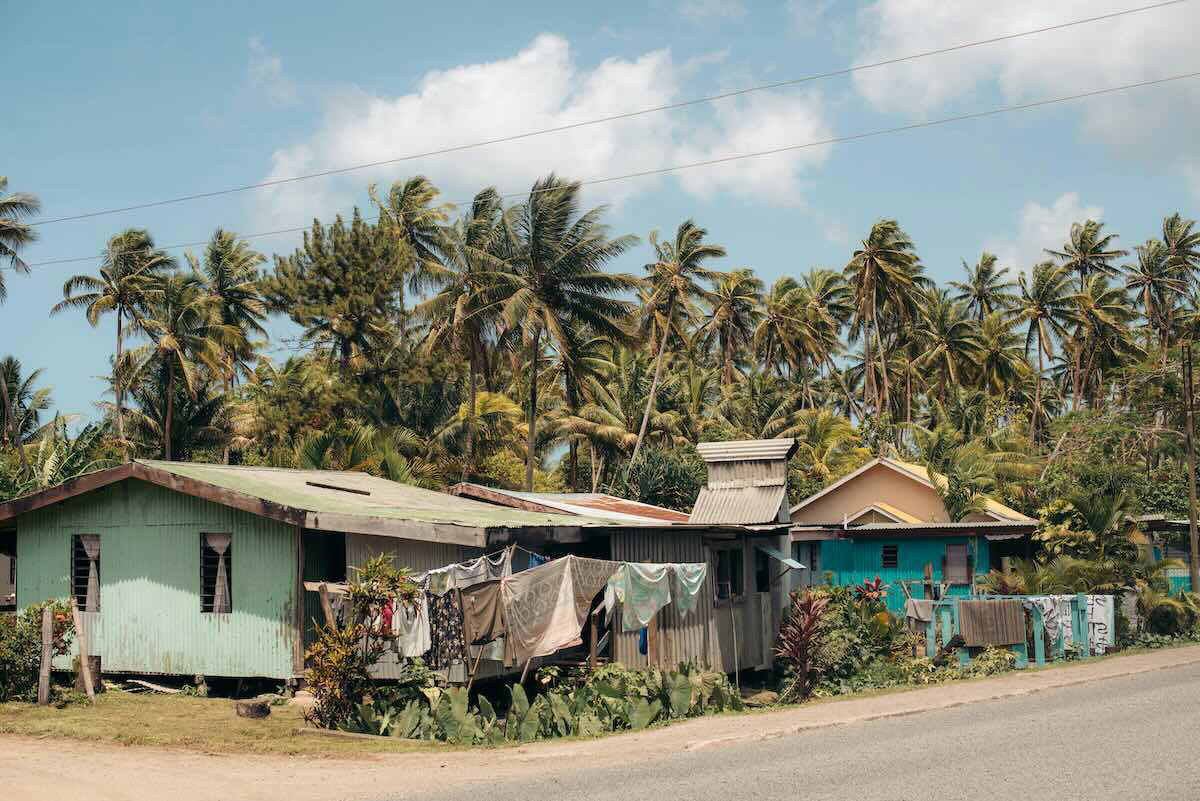
Challenge
Pacific island communities experience uneven climate risk and limited tools to target support based on how peripheral each place is.
Solution
Use simple measures of remoteness and access, linked with how well communities cope on their own, to target community-specific adaptation and investments.
Overview
Peripherality – how far a community is from towns and services, and how easy it is to reach them – shapes daily life and climate risk in Pacific islands. Conditions vary widely, yet communities are often treated as if they face the same risks and needs.
This Asia-Pacific Network for Global Change Research (APN) project, led by Patrick Nunn (University of the Sunshine Coast, Australia), developed a practical way to measure peripherality and relate it to how communities cope without outside assistance.
The project’s tools can help planners and practitioners match adaptation support to real community conditions.

Project context and approach
The research documented how communities differ along a scale from central, well-connected places to remote, less-connected places and how those differences relate to everyday coping. Field teams gathered information on travel time to towns, transport and communication options, job opportunities, age structure, traditional knowledge, diet patterns, and the reliability of water and electricity.
The research team used this information to build three simple peripherality indices that show, as numbers, where a community sits on that scale.
Alongside the indices, the research team examined everyday choices and signals that reveal how people manage stress, including the use of traditional and Western medicines and attention to traditional disaster precursors. This mix of variables allows peripherality to be read through distance and access, through livelihoods and services, and through the knowledge and practices that shape daily life.
Peripherality insights and applications
Patterns emerged that align with experience on the ground. In more peripheral places, traditional knowledge and self-reliance play a larger role in daily life and in how people respond to shocks. In less-peripheral places, indicators such as more frequent use of Western health care, lower reliance on traditional disaster precursors, and higher mobile-phone penetration are more common. The indices help explain everyday choices as well as risk: medicine preferences, the use of traditional disaster precursors, and mobile-phone access all vary in ways that track with peripherality.
Because the indices are easy to calculate, they can be used to segment rural regions into groups that share needs and strengths. That segmentation supports decisions about where to invest in access improvements, where to reinforce traditional knowledge and local safety signals, and where to reduce bottlenecks that increase dependency.
Peripherality for policy and engagement
The work speaks to a long-standing challenge in Pacific adaptation: one size seldom fits all. The results show how peripherality links to both vulnerability and autonomous coping capacity (how well a community manages stress without outside help), which provides a way to design support that fits real conditions.
Results show that communities nearer to cores tend to be more dependent on outside assistance, whereas more peripheral communities demonstrate stronger autonomous coping. Support designed with peripherality in mind can reduce dependency risks and reinforce local capacities.
Using peripherality as a guide can help shift investments toward measures that strengthen what already works locally, while improving access to services in ways that do not increase dependency. Because the indices translate community diversity into clear categories, they can support conversations between communities, local government, and donors about tailored pathways for adaptation.
Results and key findings
- Peripherality was measured across 73 rural communities in Fiji and the Federated States of Micronesia using three simple indices.
- Among the indices, Index 1 captured geographic access to cores through usual travel time and transport options; Index 2 reflected population structure and employment; Index 3 combined traditional knowledge, diet, and the reliability of water and electricity.
- Analysis grouped communities by how remote they are, making it easier to tailor adaptation support for each group.
- Autonomous coping capacity and everyday choices aligned with peripherality; more peripheral communities showed greater reliance on traditional knowledge and signals, including traditional remedies and disaster precursors.
- The project produced extensive socio-cultural and economic datasets and a geospatial database for the surveyed communities, and generated multiple outputs, including 12 publications, 14 conference presentations, and four posters. See the “Related information” for more on this output.
Project details
| Project title | Risk and Resilience in the Pacific: Influence of Peripherality on Exposure and Responses to Global Change |
|---|---|
| Year started | 2016 |
| Duration | 3 years |
| Countries involved | Australia, Fiji, Federated States of Micronesia |
| Funding awarded | US$68,506 (year 1), US$39,684 (year 2), US$55,330.02 (year 3) |
| Funded by | Asia‑Pacific Network for Global Change Research (APN) |
| Grant DOI | https://doi.org/10.30852/p.4554 |
| Program | Collaborative Regional Research Programme (CRRP) |
| Project reference number | CRRP2016-03MY-Nunn |
| Project leader | Patrick Nunn (University of the Sunshine Coast, Australia) |
Acknowledgements
This project was supported by the Asia-Pacific Network for Global Change Research (APN) under its Collaborative Regional Research Programme (CRRP). Acknowledgements also go to Conservation Society of Pohnpei (CSP); Fiji Museum; Historical Preservation Office, Yap (HPO); Institute of Applied Sciences, University of the South Pacific (IAS); Kosrae Safety and Conservation Office; Micronesia Conservation Trust; Ministry of Education, Fiji; Ministry of iTaukei Affairs; National FSM Historic Preservation Office – Pohnpei; Provincial Offices for Bua, Kadavu, Macuata, Nadroga Rewa, Serua in Fiji; University of the Sunshine Coast (USC).
Related information
- Project Permalink
- Project Final Report
- Nunn, P., & Kumar, R. (2018). Understanding climate-human interactions in Small Island Developing States (SIDS). International Journal of Climate Change Strategies and Management, 10(2), 245–271. doi:10.1108/ijccsm-01-2017-0012
- Martin, P. C. M., Nunn, P., Leon, J., & Tindale, N. (2018). Responding to multiple climate-linked stressors in a remote island context: The example of Yadua Island, Fiji. Climate Risk Management, 21, 7–15. doi:10.1016/j.crm.2018.04.003
- Klöck, C., & Nunn, P. D. (2019). Adaptation to Climate Change in Small Island Developing States: A Systematic Literature Review of Academic Research. The Journal of Environment & Development, 28(2), 196–218. doi:10.1177/1070496519835895
- Westoby, R., McNamara, K. E., Kumar, R., & Nunn, P. D. (2019). From community-based to locally led adaptation: Evidence from Vanuatu. Ambio, 49(9), 1466–1473. doi:10.1007/s13280-019-01294-8
- Piggott-McKellar, A. E., McNamara, K. E., Nunn, P. D., & Watson, J. E. M. (2019). What are the barriers to successful community-based climate change adaptation? A review of grey literature. Local Environment, 24(4), 374–390. doi:10.1080/13549839.2019.1580688
- Piggott-McKellar, A., McNamara, K., Nunn, P., & Sekinini, S. (2019). Moving People in a Changing Climate: Lessons from Two Case Studies in Fiji. Social Sciences, 8(5), 133. doi:10.3390/socsci8050133
- Nunn, & Kumar. (2019). Measuring Peripherality as a Proxy for Autonomous Community Coping Capacity: A Case Study from Bua Province, Fiji Islands, for Improving Climate Change Adaptation. Social Sciences, 8(8), 225. doi:10.3390/socsci8080225
- Nunn, P.D. and McNamara, K.E. (2019). Failing adaptation in island contexts: the growing need for transformational change. In: Klöck, C. and Fink, M. (eds). Dealing with Climate Change on Small Islands: Towards Effective and Sustainable Adaptation? Göttingen: Göttingen University Press, pp 19-44. https://www.apn-gcr.org/publication/failing-adaptation-in-island-contexts-the-growing-need-for-transformational-change/
- Nunn, P., Joseph, E., Korovulavula, I., & Kumar, R. (2019). Peripherality as key to understanding climate-associated risk and resilience for Pacific island communities. APN Science Bulletin, 9(1). doi:10.30852/sb.2019.888
- Korovulavula, I., Nunn, P. D., Kumar, R., & Fong, T. (2019). Peripherality as key to understanding opportunities and needs for effective and sustainable climate-change adaptation: a case study from Viti Levu Island, Fiji. Climate and Development, 1–11. doi:10.1080/17565529.2019.1701972
- Nunn, P. D., & Kumar, R. (2019). Cashless Adaptation to Climate Change: Unwelcome yet Unavoidable? One Earth, 1(1), 31–34. doi:10.1016/j.oneear.2019.08.004
- APN Facebook
- APN LinkedIn
- APN X
 DISCOVER MORE

