 Asia - Bangladesh, India, Nepal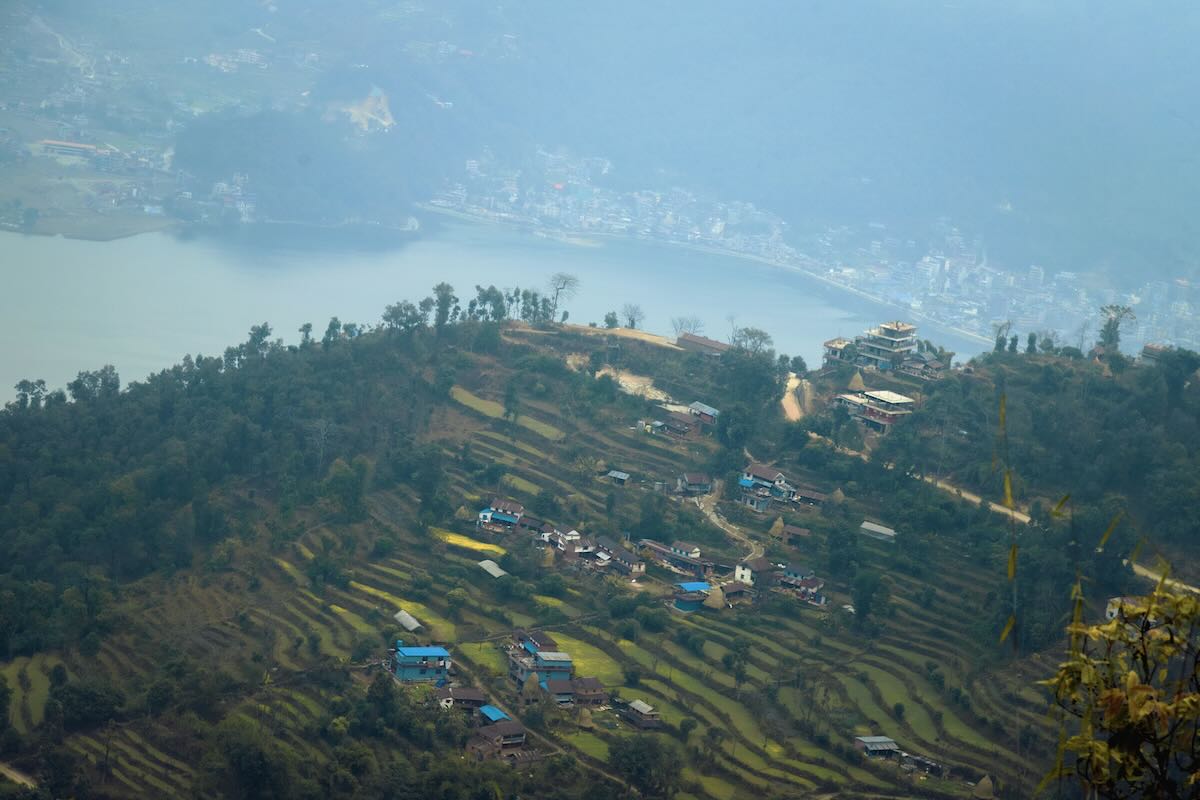
Challenge
Mountain cities in the Hindu Kush Himalaya (HKH) region face growing water scarcity due to climate change, population growth, and inadequate infrastructure.
Solution
Engage communities and officials to set priorities and co-develop practical urban water strategies through a participatory approach.
Overview
This project, supported by the Asia-Pacific Network for Global Change Research (APN) and led by Menuka Maharjan (Tribhuvan University, Nepal), addressed urgent water security needs in the Hindu Kush Himalaya (HKH) region, with fieldwork in peri-urban areas of Nepal and Bangladesh and learning drawn from India.
The HKH is a transboundary mountain area spanning parts of South and Central Asia. It is often called the “Third Pole” because its glaciers and snow reserves feed major rivers that sustain hundreds of millions of people. Water supplies are often seasonal, infrastructure lags behind demand, and climate change is altering rainfall patterns and river flows. Meanwhile, glacial melting and shifts in snowmelt timing are affecting downstream water availability.
Addressing these pressures requires integrated planning that combines scientific assessment with local knowledge and active community participation.
A perception-based, not indicator-based, approach
This project used a perception-based approach, combining interviews and focus groups with tools such as problem-and-solution tree (PAST), seasonal calendars, and participatory GIS to understand local water issues and responses. Unlike an indicator-based framework that relies mainly on metrics, this approach integrated community perspectives with scientific information to build practical solutions.
Participatory approach and project activities for water security challenges
Cities in Nepal and Bangladesh face systemic water security challenges, and the project drew lessons from India to inform comparisons. Fragile water sources are under increasing pressure from growing populations and inadequate storage or distribution infrastructure. Climate-related hazards, such as floods and droughts, further strain municipal utilities and threaten the reliability and quality of urban water supplies.
The project brought together municipal officials, water utility managers, community leaders, and researchers to address pressing water security challenges. In 2022, a hybrid inception workshop and virtual training connected 43 participants from Nepal, India, and Bangladesh, along with several other experts. The workshop and subsequent training sessions introduced participants to various water security issues, assessment tools, and participatory planning methods.
Participants shared local case examples, compared management practices, and identified interventions suited to their specific contexts. Follow-up activities included on-site capacity-building and a field program in Nepal, plus networking that encouraged collaboration and the exchange of data, methods, and lessons learned.
The inception workshop served as a platform to discuss water security challenges and introduce the project’s methodologies. Panelists from various institutions highlighted the complexities of the Himalayan water crisis, from changing weather patterns to institutional gaps. The training covered practical skills for water security planning and introduced participatory mapping, basic data analysis, and remote-sensing/GIS tools. This hands-on approach was pivotal for building capacity among early-career researchers.
Link to research and outcomes
As a related output, project leader Maharjan co-authored a peer-reviewed article in Water Science (a special issue of Urban Water Journal), which examined the seasonal variation of water quality in the peri-urban mountain region of Nepal.
The project produced practical, city-specific recommendations for sustainable water management. Developed with stakeholders, these recommendations can guide infrastructure investments, inform local policy, and improve resilience to climate variability.
Project details
| Project title | Towards Sustainable Urban Water Management in Hindukush Himalayan (HKH) Region: A Participatory Approach to Improving Water Security in Mountain Cities |
|---|---|
| Year started | 2021 |
| Duration | 2 years |
| Countries involved | Bangladesh, India, Nepal |
| Funding awarded | US$28,000 |
| Funded by | Asia‑Pacific Network for Global Change Research (APN) |
| Grant DOI | https://doi.org/10.30852/p.16255 |
| Program | Collaborative Research for Early-Career Scientists (CRECS) |
| Project reference number | CRECS2020-06MY-Maharjan |
| Project leader | Menuka Maharjan (Tribhuvan University, Nepal) |
Acknowledgements
This project was supported by the Asia-Pacific Network for Global Change Research (APN) under its Collaborative Research for Early-Career Scientists (CRECS) program, with collaborators from the Institute of Forestry, Tribhuvan University (Nepal); TERI School of Advanced Studies (India); WforW Foundation (India); Bangladesh University of Engineering and Technology (Bangladesh); and the University of Chittagong (Bangladesh).
Related information
- Project Permalink
- Sharma, A., Pantha, S., Joshi, T. P., Chhetri, S., Tiwari, S. N., Paudyal, P., Adhikari, S., Burlakoti, N., Timilsina, Y. P., & Maharjan, M. (2025). Seasonal variation of water quality in the peri-urban mountain region of Nepal. Water Science, 39(1), 303–324. https://doi.org/10.1080/23570008.2025.2495238
- Related workshop (2022): https://www.apn-gcr.org/news/inception-workshop-and-virtual-training-on-water-security-issues-in-the-himalayan-region-and-assessment-tools/
- APN Facebook
- APN LinkedIn
- APN X
 DISCOVER MORE

