 Asia - China, Japan, Mongolia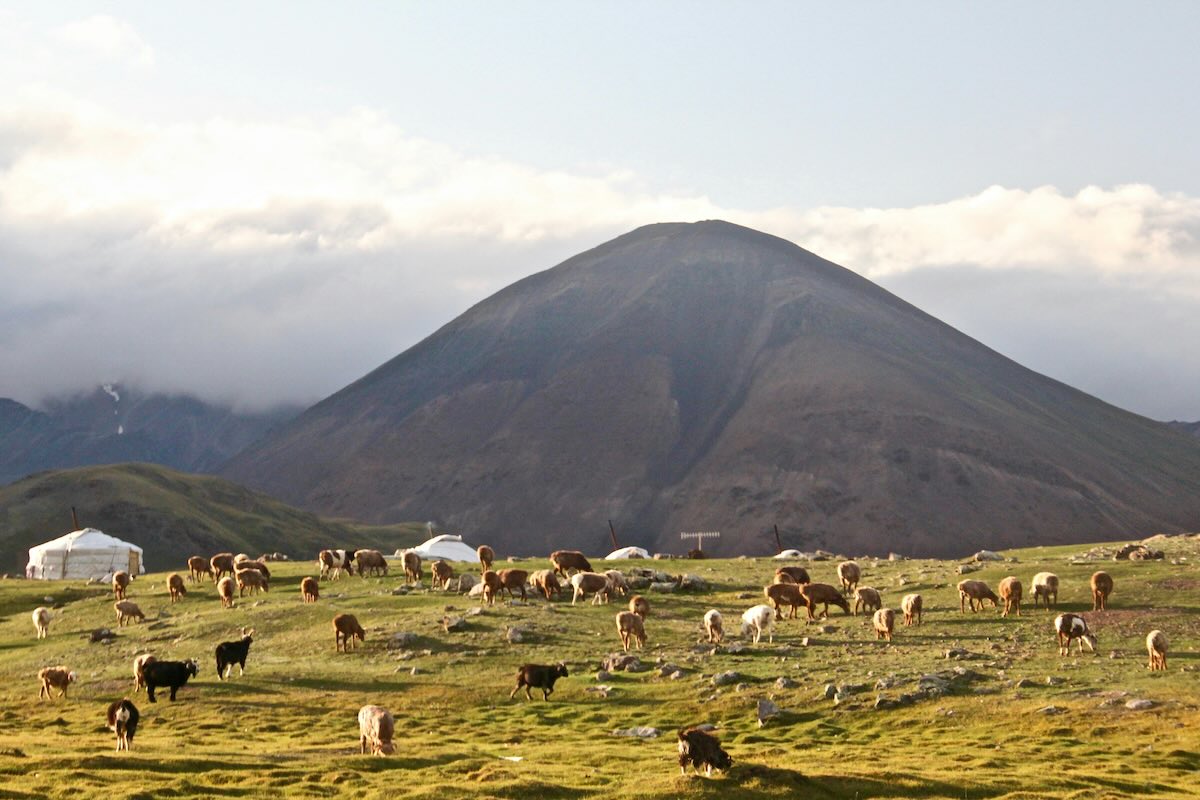
Challenge
Pastoralists in Mongolia and China face droughts, harsh winters, and pasture loss, while government support for adaptation remains limited.
Solution
Herders and government officers join workshops, surveys, and dialogues to co-develop strategies that reduce climate vulnerability.
Overview
Herding remains central to livelihoods and culture in East Asia, yet climate change increasingly threatens this sector. More frequent droughts, severe dzud (extreme winter disasters), and shifting precipitation patterns endanger livestock and incomes. Government agencies often struggle to address these issues effectively, as policy decisions can lack grounded input from herders.
To bridge this gap, an Asia-Pacific Network for Global Change Research (APN)-supported project led by Suvdantsetseg Balt (Mongolian Academy of Sciences, Mongolia) set out to strengthen science-policy capacity for adaptation in Mongolia and China.
The project focused on creating joint spaces where herders and policymakers could exchange perspectives and co-produce knowledge. It combined on-the-ground surveys with training, regional workshops, and science-policy dialogues. Outputs included a training guidebook, project reports, presentations, and media coverage that amplified local voices and brought herder concerns into national and regional adaptation discussions.
Science-policy dialogues
Workshops and dialogues were organized in Ulaanbaatar and provincial centers in Mongolia, as well as in Inner Mongolia (China). These brought together herders, provincial government officials, and researchers. Discussions addressed immediate issues such as pasture degradation, livestock mortality during extreme winters, and the need for early warning systems.
Japanese partners contributed presentations at project events. These events revealed gaps in existing adaptation measures and highlighted the importance of local knowledge in shaping workable policies.
Training and participatory assessments
The project carried out household surveys and participatory assessments with herding families across central and western Mongolia. Herders identified major climate risks, including reduced pasture quality, water scarcity, and emerging livestock diseases.
Training sessions provided practical instruction on rangeland monitoring, rotational grazing, and herd diversification to reduce climate risk. Government participants learned how participatory approaches could improve the design of local adaptation strategies. The project combined scientific data with community insights, building trust between stakeholders.
Regional knowledge exchange
Cross-country exchanges enabled participants to compare pastoral systems and governance structures. Herders from Mongolia shared coping strategies for dzud, while Chinese participants discussed managing grasslands under pressures of urban expansion and climate change.
Japanese partners contributed through presentations, including by researchers from Green Network (Japan) and Research Institute for Humanity and Nature (Japan). The regional scope helped identify both shared and context-specific adaptation options.
Research outputs and dissemination
Researchers analyzed survey data to document herder vulnerability and adaptive practices. Results showed that mobility, herd diversification, and community-based pasture management remain central to coping strategies, but require institutional support to remain viable under intensifying climate risks.
Findings were shared through reports, a training guidebook, and conference presentations for government use. The project also received coverage in Mongolian and Chinese media, raising public awareness of climate impacts on herding livelihoods.
Outcomes and lessons
The project demonstrated that adaptation efforts are most effective when science and community experience intersect. Herders gained tools to better manage pasture and livestock, while government officers improved their understanding of ground realities.
Trust built through continuous dialogue encouraged both groups to collaborate more closely on adaptation planning. Lessons include the value of participatory surveys, the importance of regional learning across East Asia, and the role of modest investments in creating long-lasting networks for climate resilience.
Outcomes and results
- Five workshops and dialogues were delivered. The first workshop in Gobi-Altai brought together more than 65 participants, and the final dissemination workshop gathered more than 70 participants.
- A pastoral vulnerability assessment report for Gobi-Altai province and five soums (Biger, Bayan-Uul, Khaliun, Taishir, and Tugrug) covering 1990–2023 was completed.
- A training guidebook was published and used throughout the sessions.
- Five soums drafted local strategic development plans that incorporate climate change adaptation; provincial authorities expressed willingness to support approval and implementation.
- Side events at the March 2023 kickoff, including a Science-policy pathways forum and a Science, technology and innovation exhibition in Altai City, gathered more than 400 people and showcased over 120 innovative products.
- Dissemination outputs included 2 project reports, 48 presentations, 4 international conference presentations, 3 videos, 9 news items, and 1 scientific paper under submission as of the final report’s writing.
Project details
| Project title | The Science-Policy Adaptive Capacity for Local Herding and Government Groups to Reduce Climate Vulnerability |
|---|---|
| Year started | 2022 |
| Duration | 2 years |
| Countries involved | China, Japan, Mongolia |
| Funding awarded | US$75,000 |
| Funded by | Asia‑Pacific Network for Global Change Research (APN) |
| Grant DOI | https://doi.org/10.30852/p.22603 |
| Program | Scientific Capacity Development Programme (CAPaBLE) |
| Project reference number | CBA2022-10MY-Balt |
| Project leader | Suvdantsetseg Balt (Mongolian Academy of Sciences, Mongolia) |
Acknowledgements
This project was supported by the Asia-Pacific Network for Global Change Research (APN) under its Scientific Capacity Development Programme (CAPaBLE). Acknowledgements also go to partner institutions in Mongolia, China, and Japan, and to the herders and government officers who contributed their knowledge and experience.
Related information
- Project Permalink
- Suvdantsetseg, B. (2023). Report of the “Policy formulation methods and document review analysis” training workshop. Ulaanbaatar, Mongolia: Mongolian Academy of Sciences. https://www.apn-gcr.org/publication/report-of-the-policy-formulation-methods-and-document-review-analysis-training-workshop/
- Suvdantsetseg, B. (2023). Report on the “The climate change and its impacts on pasture and desertification” training workshop in Inner Mongolia, China. Ulaanbaatar, Mongolia: Mongolian Academy of Sciences. https://www.apn-gcr.org/publication/report-on-the-the-climate-change-and-its-impacts-on-pasture-and-desertification-training-workshop-in-inner-mongolia-china/
- Dorjgotov, B. (2023). Application of research and development knowledge for policy planning in the Gobi-Altai province, Mongolia. APN Presentation. Mongolia Ministry of Education and Science: Mongolia. https://www.apn-gcr.org/publication/application-of-research-and-development-knowledge-for-policy-planning-in-the-gobi-altai-province-mongolia/
- Balt, T (2023). Policy analysis of Gobi-Altai Province, Mongolia. APN Presentation. Mongolian Academy of Sciences: Mongolia. https://www.apn-gcr.org/publication/policy-analysis-of-gobi-altai-province-mongolia/
- Balt, T (2023). Climate of the Gobi-Altai Province and the impact of change and ecological vulnerability. APN Presentation. Mongolian Academy of Sciences: Mongolia. https://www.apn-gcr.org/publication/climate-of-the-gobi-altai-province-and-the-impact-of-change-and-ecological-vulnerability/
- Balt, T (2023). Training Report: The Science-Policy adaptive capacity for local herding and government groups to reduce climate vulnerability. Mongolian Academy of Sciences: Mongolia. https://www.apn-gcr.org/publication/training-report-the-science-policy-adaptive-capacity-for-locl-herding-and-government-groups-to-reduce-climate-vulnerability/
- APN Facebook
- APN LinkedIn
- APN X
 DISCOVER MORE

