 Asia, Oceania - Cambodia, Vanuatu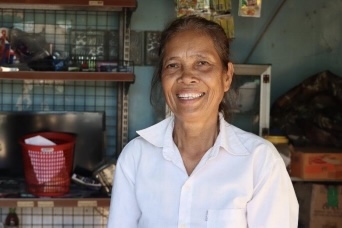
Challenge
Women in Cambodia and Vanuatu face disproportionate climate and disaster risks but remain excluded from decision-making.
Solution
Workshops and exchanges to build women’s leadership, document experiences, and link them with adaptation and disaster risk reduction agendas.
Overview
In Cambodia and Vanuatu, women are often at the frontline of disasters, managing households, farming, and community care, yet their perspectives are rarely included in climate and disaster planning. Supported by the Asia-Pacific Network for Global Change Research (APN), this project, led by Michelle Higelin (ActionAid Australia, Australia), sought to connect women-led local realities with the global discourse on climate adaptation and disaster risk reduction (DRR).
The work linked Cambodia’s Women Champion Network and Vanuatu’s Women I TokTok Tugeta (WITTT) network.
A two‑day learning exchange workshop in February 2023 brought together in‑country groups in meeting rooms connected by Zoom, with continuous Khmer–English interpretation and Bislama facilitation to ensure inclusive participation.
Sharing lived experiences
The exchange centered on photo stories presented by women leaders from both countries. In Cambodia, Women Champions described responses to floods, droughts, and water shortages, including organizing relief with local authorities, restoring community water facilities in Kampot, and securing earth-filling of low-lying areas in Pursat to reduce flood risk.
In Vanuatu, WITTT mobilizers described the Woman Led Community Based Protection Framework that helps women map risks, collect disaggregated data, and design preparedness plans. They also showcased Women Wetem Weta, an early warning system that relays cyclone alerts through a hub–correspondent–community structure, and community initiatives such as resilience markets (women-led spaces for trading and sharing climate-resilient goods) and poultry farms that support livelihoods after climate and disaster shocks such as cyclones, floods, and droughts. On Tanna Island, leaders work across seven area councils with thousands of WITTT members to manage recurring ashfall events and plan recovery.
A framework diagram created by the project team gives a visual overview of the interaction needed for gender-responsive approaches to climate change.
Building leadership and advocacy
Participants reflected on changes achieved through collective action, such as increased confidence to engage officials, recognition of women’s roles in community disaster committees, and stronger skills in documenting cases and conducting interviews.
Vanuatu participants highlighted the use of disability-inclusive protection tools and national dialogues that brought ministries and the National Disaster Management Office into conversation with women and girls with disabilities.
Cambodian participants noted gains in proposal writing, advocacy, and public communication, which they used to pursue local solutions like water supply restoration and flood-safe infrastructure.
Toward a community of practice
The workshop concluded with the next steps to maintain collaboration. Participants agreed to create a bilateral community of practice using an online Facebook group and messaging applications to continue sharing tools, lessons, and advocacy messages. They emphasized the importance of resourcing, technical support, safe spaces, and the inclusion of women with disabilities as priorities for future exchanges.
Project details
| Project title | Connecting Women-led Local Realities with the Global Discourse on Climate Adaptation and DRR: Interrogating Women’s Lived Experiences in Cambodia and Vanuatu |
|---|---|
| Year started | 2021 |
| Duration | 3 years, 3 months |
| Countries involved | Cambodia, Vanuatu |
| Funding awarded | US$33,400 |
| Funded by | Asia‑Pacific Network for Global Change Research (APN) |
| Grant DOI | https://doi.org/10.30852/p.13872 |
| Program | Scientific Capacity Development Programme (CAPaBLE) |
| Project reference number | CBA2020-11SY-Higelin |
| Project leader | Michelle Higelin (ActionAid Australia, Australia) |
Acknowledgements
This project was supported by the Asia-Pacific Network for Global Change Research (APN) under its Scientific Capacity Development Programme (CAPaBLE). Acknowledgements also go to ActionAid Cambodia, ActionAid Vanuatu, the Women Champion Network (Cambodia), and the Women I TokTok Tugeta (WITTT) Network (Vanuatu) for facilitation and leadership, and to the women champions and community mobilizers who shared their stories.
Related information
- Project Permalink
- Gender Responsive Alternatives to Climate Change (GRACC) Framework diagram – https://www.apn-gcr.org/publication/gracc-climate-change-framework/
- Das, J (2023). ActionAid Learning Exchange Workshop Report – Final Report. Go Equal, 29 June 2023. https://www.apn-gcr.org/publication/actionaid-learning-exchange-workshop-report/
- APN Facebook
- APN LinkedIn
- APN X
 DISCOVER MORE

