 Asia - Vietnam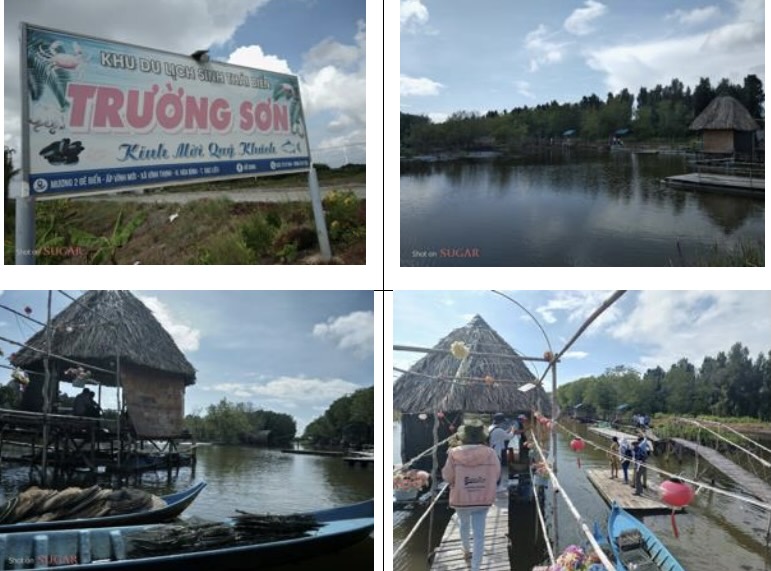
Challenge
Mangrove loss and weak farming practices in Tra Vinh, Vietnam reduces yields, incomes, and resilience in shrimp-farming communities.
Solution
Develop an aquaculture protocol, deliver training, and hold a policy dialogue to support ecological certification and protect mangroves.
Overview
The Mekong River Delta is highly productive yet vulnerable to climate risks and resource pressures. In Vietnam’s Tra Vinh Province, small-scale shrimp farmers reported declining yields and incomes alongside continued mangrove clearance. Healthy mangroves shield coasts, store carbon, and support livelihoods, but farm practices, infrastructure gaps, and limited market access have undermined sustainability.
With support from the Asia-Pacific Network for Global Change Research (APN), Le Thi Van Hue (Center for Environment and Community Assets Development, Vietnam) led a capacity development project to strengthen sustainable mangrove–shrimp aquaculture in Tra Vinh. The work drew on Aquaculture Stewardship Council (ASC) requirements and Asian Seafood Improvement Collaborative (ASIC) standards, and convened local agencies, farmer groups, researchers, and exporters to build shared solutions.
Designing a sustainable mangrove–shrimp protocol
The team developed a Sustainable Mangrove–Shrimp Aquaculture Protocol for Tra Vinh, drawing on a literature review and a September 2022 consultation workshop with agencies, cooperatives, companies, and farming households.
The review examined best practices and certification criteria relevant to ecological and organic shrimp farming, including canopy cover targets, water management, seed quality, disease prevention, and social aspects.
The workshop brought together provincial departments, forest protection and extension services, a university, cooperatives, companies, and shrimp-farming households to discuss sustainable shrimp-farming protocols and certification. Participants emphasized the need for practical steps that consider small farm sizes, documentation requirements, and local market realities.
Capacity building and field learning
An inception workshop in November 2020 introduced the project objectives and activities to representatives from government, the private sector, and local shrimp farmers. Training on sustainable mangrove–shrimp with certification brought 50 participants from provincial departments, extension centers, commune authorities, cooperative groups, farming households, and a seafood exporter. Participants were trained on techniques toward sustainable certification, ASC and ASIC standards, and measures to improve survival and product quality.
A field trip to Bac Lieu Province enabled participants to observe ecological shrimp models, two-stage rearing, feeding management, and links to ecotourism. Trainees reported improved awareness of mangrove protection, certification options, and technical measures, and enterprise staff outlined plans to start mangrove–shrimp value chain linkages.
Policy dialogue and local planning
A policy brief was developed and shared ahead of the policy dialogue, which convened participants from provincial and district agencies, farmer groups, and companies. The dialogue included a video titled “Journey to Sustainable Mangrove-Shrimp Aquaculture Through Capacity Building and Partnership in the Mekong River Delta” and experience sharing from an organic shrimp cooperative.
Discussions addressed certification readiness, value-chain partnerships, documentation, and support needs. Provincial plans envision maintaining 7,041 hectares of forest–shrimp area in five subregions and targeting ecological certification for 5,700 hectares by 2030. The project’s engagement helped align farmer training and cooperative development with these directions.
Findings and early outcomes
The needs assessment identified systemic issues that constrain sustainability and certification, including a lack of separate supply and drainage channels that let wastewater from one pond become another pond’s intake and spread disease, small pond sizes and tree cover of only 10–20% compared with over 40% canopy in ecological models, weak water circulation, and fry quality risks tied to scattered hatcheries and limited oversight. Also, many households lacked documentation and brand identity, limiting prices.
Recommendations included rearranging irrigation to separate supply and drainage canals, renovating or excavating canals to ensure tidal circulation, planting mangroves to reach at least 40% cover, building an environmental monitoring station, arranging fry production facilities under central management and strengthening fry quality inspection, forming cooperative groups or cooperatives to support value-chain linkage, connecting enterprises from inputs to processing and consumption, and supporting legal procedures and partial funding for groups seeking ecological or organic certification.
By project close, three early-career professionals had been trained, participants reported improved awareness, and enterprise staff described plans to begin mangrove–shrimp value-chain linkages.
Project details
| Project title | Towards Sustainable Mangrove-Shrimp Aquaculture through Capacity Building and Partnership in the Mekong River Delta |
|---|---|
| Year started | 2020 |
| Duration | Original: December 2020 to November 2022 (first extension: December 1, 2022, to March 31, 2023; second extension: to June 30, 2023) |
| Countries involved | Vietnam |
| Funding awarded | US$39,960 |
| Funded by | Asia‑Pacific Network for Global Change Research (APN) |
| Grant DOI | https://doi.org/10.30852/p.13709 |
| Program | Scientific Capacity Development Programme (CAPaBLE) |
| Project reference number | CBA2020-04MY-Le |
| Project leader | Le Thi Van Hue (Center for Environment and Community Assets Development, Vietnam) |
Acknowledgements
This project was supported by the Asia-Pacific Network for Global Change Research (APN) under its Scientific Capacity Development Programme (CAPaBLE). Acknowledgements also go to the Tra Vinh Provincial Department of Agriculture and Rural Development, Fisheries Sub-Department, Forest Protection Department, Agriculture and Fisheries Extension Center, Office of Agriculture in Duyen Hai district, Agricultural Extension Center, Long Khanh and Don Chau mangrove–shrimp cooperative groups, Cuu Long Sea Products Company, Tai Thinh Phat Farm Cooperative in Ca Mau, Bac Lieu Agricultural Extension Center, International Collaborating Centre for Aquaculture and Fisheries Sustainability (ICAFIS), Vietnamese Institute of Fishery Economics and Planning (VIFEP), Tra Vinh University, and colleagues at CECAD.
Related information
- Project Permalink
- Project Final Report
- Le, Hue (2023). CBA2020-04MY-Le Consultation workshop, meeting minutes. CECAD, Vietnam Le, Hue (2023). CBA2020-04MY-Le Consultation workshop, meeting minutes. CECAD, Vietnam. https://www.apn-gcr.org/publication/cba2020-04my-le-consultation-workshop/
- Le, Hue (2023). CBA2020-04MY-Le Inception Workshop, meeting minutes. CECAD, Vietnam. https://www.apn-gcr.org/publication/cba2020-04my-le-inception-workshop/
- Le, H (2023). Literature review: Sustainable shrimp farming in the world and in the Mekong River Delta. CECAD, Vietnam. https://www.apn-gcr.org/publication/literature-review-sustainable-shrimp-farming-in-the-world-and-in-the-mekong-river-delta/
- Le, H. (2023). Stakeholder consultation workshop on the Code of Sustainable Shrimp Farming Assessment of training needs on sustainable shrimp farming. Needs Assessment Report. CECAD, Vietnam. https://www.apn-gcr.org/publication/needs-assessment-report-stakeholder-consultation-workshop-on-the-code-of-sustainable-shrimp-farming-assessment-of-training-needs-on-sustainable-shrimp-farming/
- Vo, T., Le, H., Phan, D., Tran, A., Nguyen, Y., Nguyen, H. & Pham, T. (2024). Towards sustainable mangrove-shrimp aquaculture through capacity building and partnership in the Mekong River Delta. APN Science Bulletin, 14(1), 28–37. https://doi.org/10.30852/sb.2024.2491
- APN Facebook
- APN LinkedIn
- APN X
 DISCOVER MORE

