 Asia - Afghanistan, Bangladesh, Bhutan, China, India, Japan, Myanmar, Nepal, Pakistan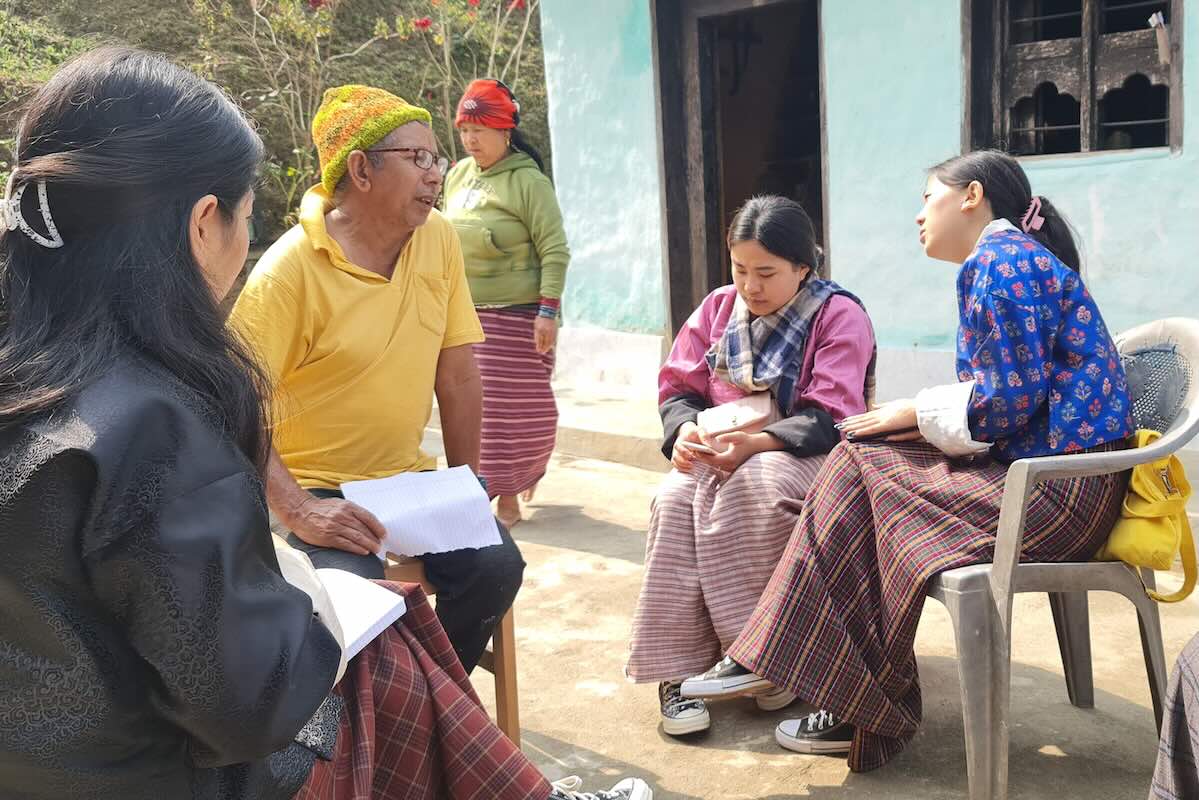
Challenge
Indigenous knowledge is vital for climate adaptation in the Hindu Kush Himalaya, yet it remains largely undocumented and absent from formal planning.
Solution
Regional partners documented local traditions and co-developed a framework to integrate indigenous knowledge into climate adaptation communication.
Overview
The Hindu Kush Himalaya (HKH) region, which spans mountainous areas of South Asia, faces worsening climate threats – from rising temperatures to erratic rainfall – that jeopardize rural livelihoods.
Indigenous and local knowledge (ILK) is often the first and only resource communities turn to for adapting crops, managing water, and weathering disasters. However, much of this knowledge is undocumented and underutilized in formal climate planning. As international frameworks like the Paris Agreement call for countries to communicate their adaptation efforts, there is no agreed method to include ILK in these reports.
The Asia-Pacific Network for Global Change Research (APN) launched a multi-country project to strengthen the capacity for adaptation communication on ILK in the HKH region. Led by Osamu Mizuno (Institute for Global Environmental Strategies, Japan) and national partners, the project united collaborators from Bangladesh, Bhutan, China, India, Japan, Nepal, Pakistan, Afghanistan, and Myanmar, with support from academic and community organizations. The partnership engaged stakeholders, ranging from rural villagers and local officials to researchers and government ministries, with a shared goal of formulating a framework for communicating ILK-based adaptation.
Documenting Bhutan’s climate-related rituals
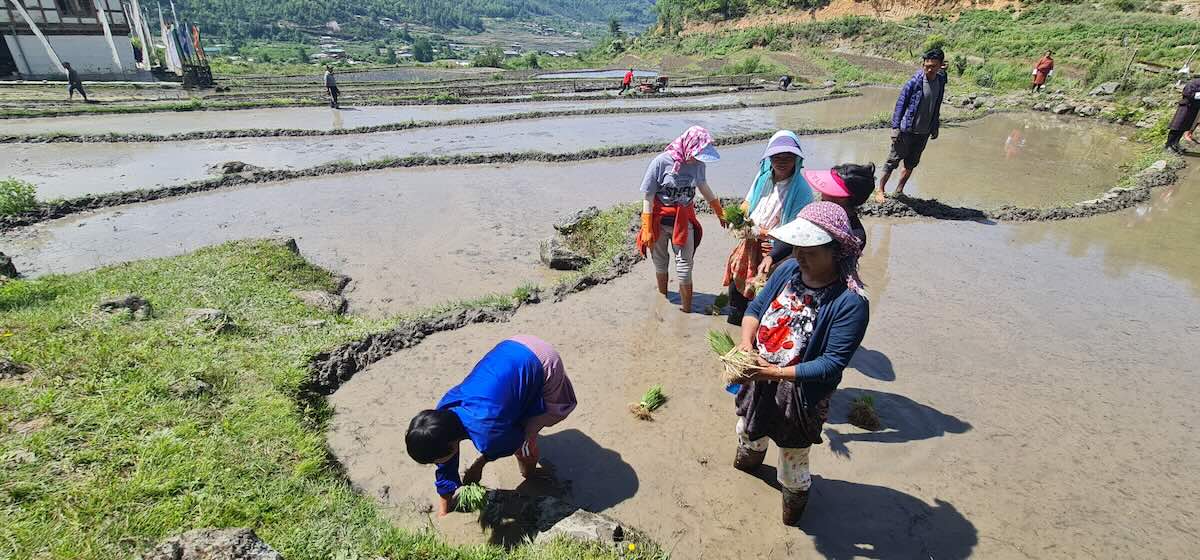
In Bhutan, an extensive survey of traditional rituals related to farming and weather across the country was conducted. The Bhutanese research team documented indigenous practices still observed in rural communities. Diverse and unique rituals persist across all ethnic groups in Bhutan, where people propitiate local deities for good harvests, timely rain, and protection from calamities.
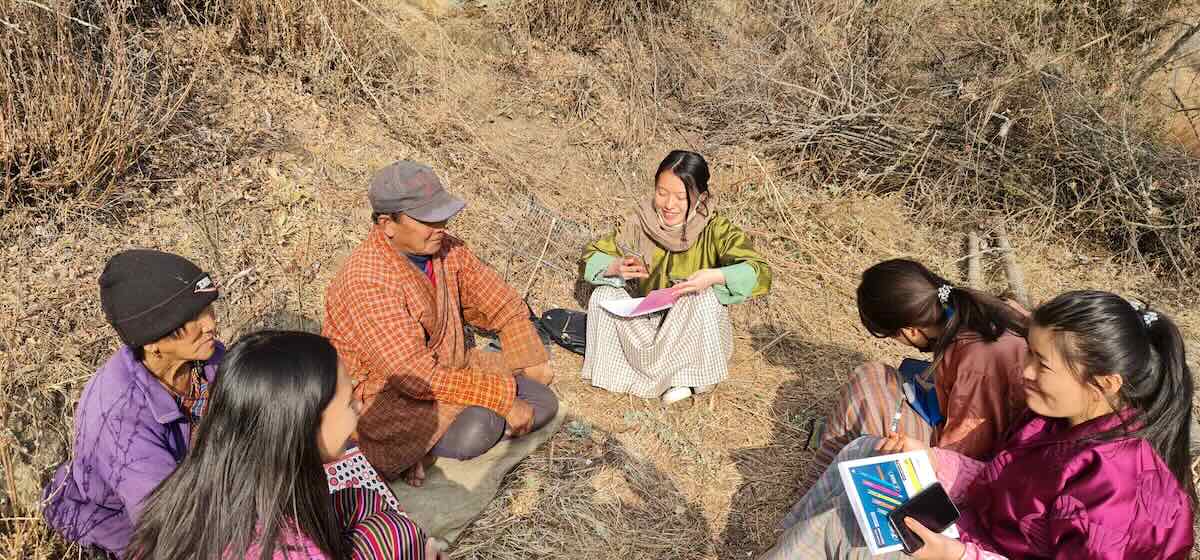
Through interviews with village elders and ritual practitioners, the Bhutan team recorded the significance and current status of these practices. They found that while such rituals are still widely practiced and cherished, modern influences are beginning to erode some traditions. Community elders expressed concern that younger generations show less interest, and there is a gradual disappearance of these customs as lifestyles change. Even so, the villagers voiced strong commitment to keep the rituals alive and pass them on to future generations. In many cases, the rituals continue to serve as a bonding force for community cohesion and a way to live in harmony with nature.
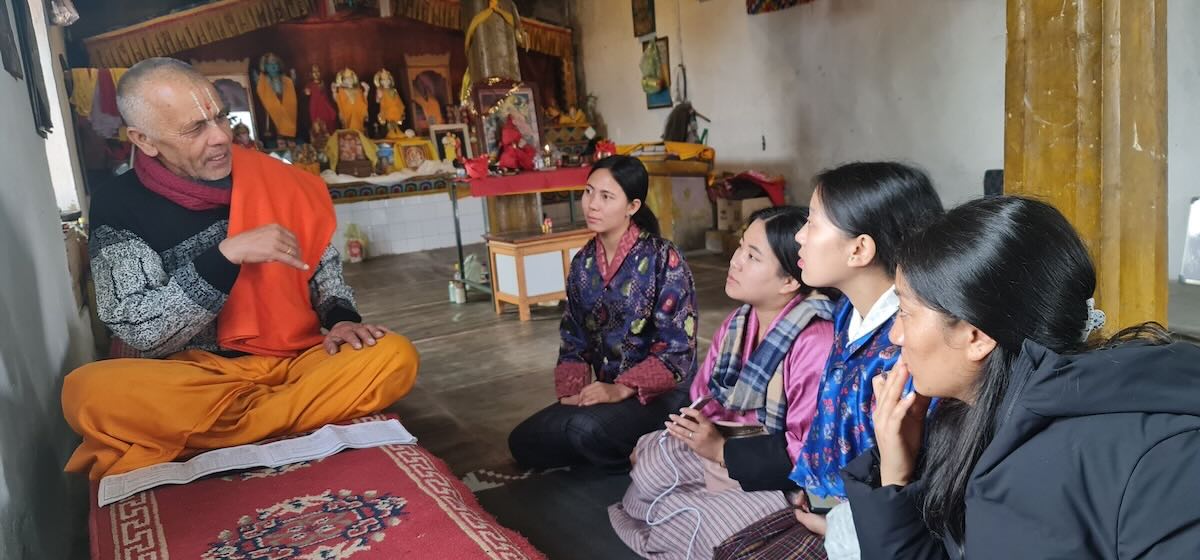
The project’s documentation of Bhutan’s rituals – from their folklore origins to the processes and songs involved – created a valuable record of ILK that was previously passed down only through oral tradition.
Knowledge exchange across the Himalayas
Beyond Bhutan, the project facilitated regional knowledge-sharing to mainstream ILK in climate adaptation. In India, a collaborative workshop was held in the Central Himalayan state of Uttarakhand to discuss traditional knowledge and climate change. This one-day forum brought together 90 participants, including postgraduate students, researchers, NGO practitioners, and local experts. They shared first-hand experiences of how ethnic communities in the Himalayan foothills are adapting to shifts in weather patterns using age-old practices. Discussions covered diverse rural sectors, such as agriculture, livestock, forests, and water resources, highlighting how traditional knowledge systems (TKS) have helped people cope with droughts, crop pests, and other climate stresses.
The Uttarakhand workshop provided a platform for cross-learning, where university students engaged with village elders and scientists to better understand ILK, while government officers and academics gained insight into community-driven adaptation strategies.
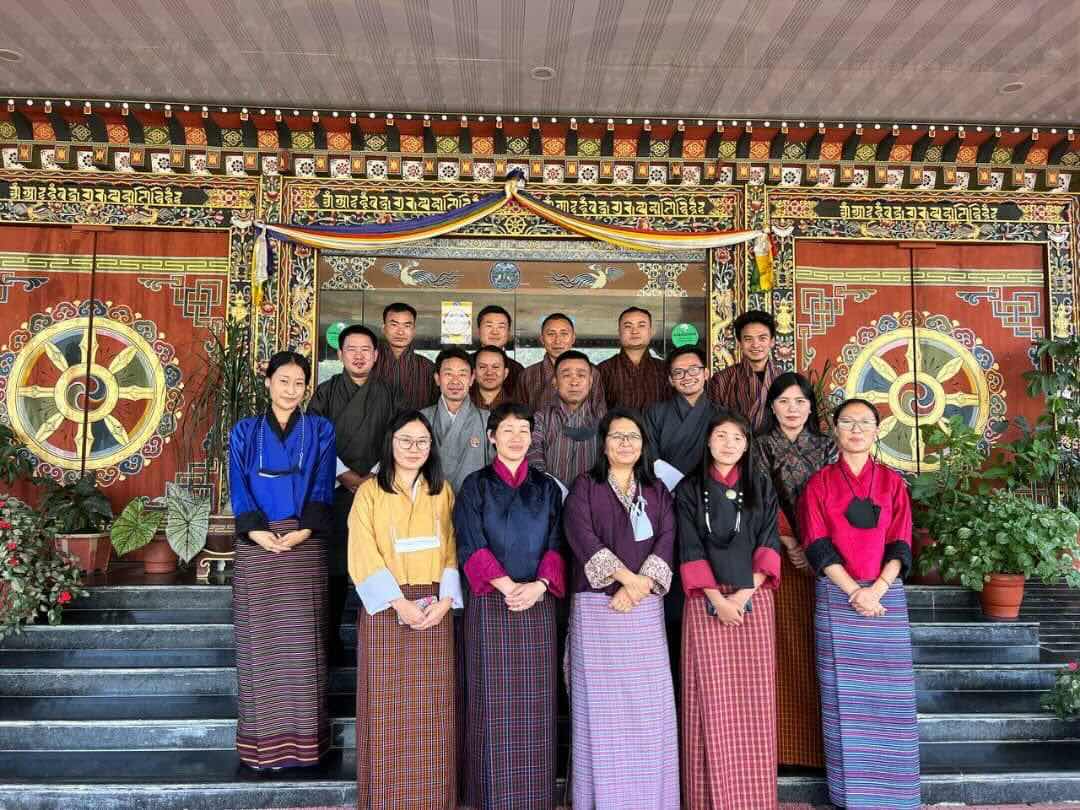
Similar exchanges were fostered with partners in Nepal and Pakistan, coordinated through the project network.
Toward a framework for adaptation communication
All insights and findings were fed into the project’s overarching goal of developing a regional Adaptation Communication Framework that mainstreams ILK. The collaborators produced numerous policy briefs documenting case studies of Himalayan indigenous practices and their role in enhancing community resilience. Through the outputs, the project built an evidence base demonstrating ILK’s contributions to climate adaptation outcomes.
The team formulated practical recommendations for governments and stakeholders, including steps to institutionalize ILK documentation (such as community-led surveys and archives), incorporate ILK indicators in adaptation planning, and create enabling policies that recognize traditional knowledge alongside scientific data.
The project aims to formulate a regional framework for adaptation communication of ILK and to test and evaluate it in diverse local contexts – helping to fill the current gap where national reports seldom mention indigenous practices. As climate impacts intensify in the Himalayas, the project laid important groundwork for elevating ILK in climate resilience efforts.
Outcomes and results
- Compilation of Indigenous and Local Knowledge (ILK) systems in the Hindu Kush Himalayan (HKH) region: Documented numerous climate-related rituals and traditions across HKH, showing the continued practice of diverse and unique rituals for farming and weather protection. Detailed policy briefs profiled different rituals and their roles in building community resilience.
- Community insights and awareness: Research findings highlighted the importance and the fragility of ILK, which bring people together and strengthen social bonds, helping villages face climate uncertainties with unity and hope. The urgent need for intergenerational knowledge transfer was underscored.
- Capacity building and networking: The project expanded regional capacity for integrating ILK into climate adaptation, by conducting over 15 training events (engaging at least 800 participants) in Pakistan, India, Bhutan and Nepal, and establishing a network of ILK and adaptation experts across the target countries and spanning academia, government agencies, and community organizations. Workshops and meetings held under the project enabled cross-learning among stakeholders.
- Policy and academic outputs: Multiple academic publications and communication materials were generated, disseminating the project’s lessons globally.
- Regional Framework of Adaptation Communication of ILK for HKH region: The project formulated a regional framework for establishing a robust communication system to share the outcomes of local climate actions involving ILK. The project delivered actionable recommendations to help governments include ILK in their national adaptation reporting under the Paris Agreement.
Project details
| Project title | Development of Adaptation Communication Framework Mainstreaming Indigenous and Local Knowledge for Hindu-Kush Himalayan Region |
|---|---|
| Year started | 2020 |
| Duration | 2 years |
| Countries involved | Bangladesh, Bhutan, China, India, Japan, Nepal, Pakistan, Afghanistan, Myanmar |
| Funding awarded | US$80,000 |
| Funded by | Asia‑Pacific Network for Global Change Research (APN) |
| Grant DOI | https://doi.org/10.30852/p.13085 |
| Program | Scientific Capacity Development Programme (CAPaBLE) |
| Project reference number | CBA2020-02MY-Mizuno |
| Project leader | Osamu Mizuno (Institute for Global Environmental Strategies, Japan) |
Acknowledgements
This project was supported by the Asia-Pacific Network for Global Change Research (APN) under its Scientific Capacity Development Programme (CAPaBLE). Coordination by the Institute for Global Environmental Strategies (Japan) was instrumental, and contributions from all collaborating institutions have been duly acknowledged. These include the Royal University of Bhutan, Hemvati Nandan Bahuguna Garhwal University (India), International Centre for Integrated Mountain Development (Nepal), World Association of Community Radio Broadcasters – AMARC Asia-Pacific, and Pakistan’s Ministry of Climate Change. The active participation of local communities and research assistants across the study sites is also gratefully acknowledged for sharing their knowledge and time.
Related information
- Project Permalink
- Shivakoti, B. R., Basnet, S., Shaw, R., Mizuno, O., & Choudhury, D. (2021). Adaptation Communication of Indigenous and Local Knowledge: Can Community Radios Be Mobilized in the Hindu Kush Himalaya Region? Media and Disaster Risk Reduction, 95–113. doi:10.1007/978-981-16-0285-6_6
- Shivakoti, B. R. (2021). Indigenous, traditional and local knowledge for bottom-up adaptation innovation. Asia-Pacific tech monitor, 38(3), 24-29. Retrieved from: https://repository.unescap.org/handle/20.500.12870/4222
- Shivakoti, B.R., Shiiba, N., King, P. (2022). Capacity-Building Around Indigenous and Local Knowledge (ILK) Systems for Effective Climate Adaptation in the Low-Lying Coasts and Small Islands. In: Dasgupta, R., Hashimoto, S., Saito, O. (eds) Assessing, Mapping and Modelling of Mangrove Ecosystem Services in the Asia-Pacific Region. Science for Sustainable Societies. Springer, Singapore. https://doi.org/10.1007/978-981-19-2738-6_14
- Gyeltshen, N., Wangdi, T. and Yangzom, K., 2022. Resilience of Traditional Ritual Practices in Bhutanese Mountain Farming Systems Amid Climate Change and Anthropogenic Activities. Mountain Research and Development, 42(4), pp.V11-V18. https://www.apn-gcr.org/publication/resilience-of-traditional-ritual-practices-in-bhutanese-mountain-farming-systems-amid-climate-change-and-anthropogenic-activities/
- Maikhuri, R. K., Gupta, V., Rawat, R., Semwal, C. P., Bhatt, G. C., & Rawat, H. (2023). Impact of climate change in the rural landscape of Central Himalaya. Current Science, 125(6), 597 – 598. Retrieved from https://www.currentscience.ac.in/Volumes/125/06/0597.pdf
- Subba, S., & Phanchung. (2024). A thriving Devi Puja ritual of Southern Communities in Bhutan. Policy Brief No.03. Bhutan Himalayan Research Initiatives & Institute for Global Environmental Strategies. Thimphu, Bhutan. https://www.apn-gcr.org/publication/policy-brief-a-thriving-devi-puja-ritual-of-southern-communities-in-bhutan/
- Wangmo, S., & Phanchung. (2024). Traditional Bongko ritual binding community harmony in Bhutan. Policy Brief No.02. Bhutan Himalayan Research Initiatives & Institute for Global Environmental Strategies. Thimphu, Bhutan. https://www.apn-gcr.org/publication/policy-brief-traditional-bongko-ritual-binding-community-harmony-in-bhutan/
- Wangmo, N., & Phanchung. (2024). Damkar ritual marks beginning of rice transplantation in western Bhutan. Policy Brief No.01. Bhutan Himalayan Research Initiatives & Institute for Global Environmental Strategies. Thimphu, Bhutan. https://www.apn-gcr.org/publication/policy-brief-damkar-ritual-marks-beginning-of-rice-transplantation-in-western-bhutan/
- Choden, Y., & Phanchung. (2024). An Annual Family Ritual Lochoe in Western Bhutan. Policy Brief No.06. Bhutan Himalayan Research Initiatives & Institute for Global Environmental Strategies. Thimphu, Bhutan. https://www.apn-gcr.org/publication/policy-brief-transformation-of-age-old-indigenous-gott-puja-practices-in-southern-bhutan/
- Lhamo, T., & Phanchung. (2024). An Annual Family Ritual Lochoe in Western Bhutan. Policy Brief No.05. Bhutan Himalayan Research Initiatives & Institute for Global Environmental Strategies. Thimphu, Bhutan. https://www.apn-gcr.org/publication/policy-brief-an-annual-family-ritual-lochoe-in-western-bhutan/
- Wangmo, T., & Phanchung. (2024). Mahadev-than Puja – A binding force behind community vitality among the Hindu communities in Bhutan. Policy Brief No.04. Bhutan Himalayan Research Initiatives & Institute for Global Environmental Strategies. Thimphu, Bhutan. https://www.apn-gcr.org/publication/policy-brief-mahadev-than-puja-a-binding-force-behind-community-vitality-among-the-hindu-communities-in-bhutan/
- APN Facebook
- APN LinkedIn
- APN X
 DISCOVER MORE

