 Asia - Japan, Nepal, Pakistan, Sri Lanka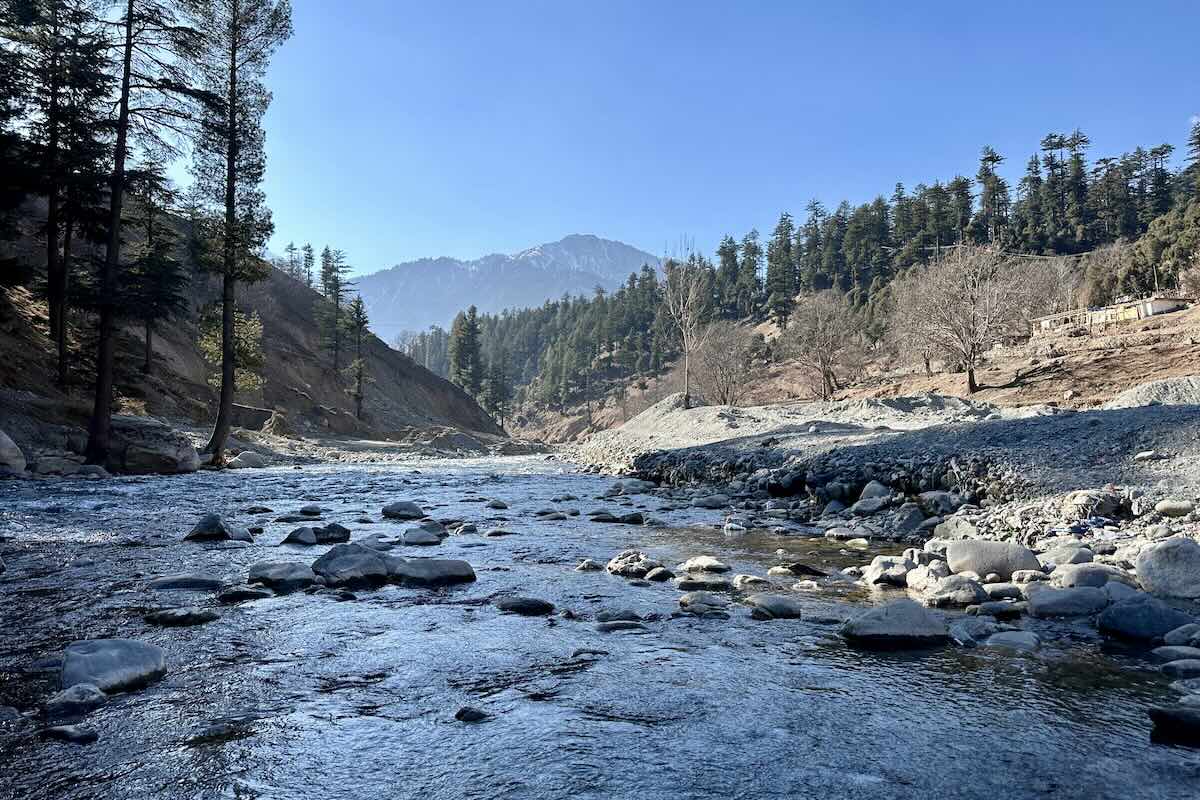
Challenge
Climate change impacts in South Asia’s watersheds threaten water, soil, and food security, while traditional practices are inadequate.
Solution
Workshops and training built skills and networks for professionals, farmers, and service providers to apply prioritized watershed practices.
Overview
Small watersheds in South Asia are under growing stress from climate change. Communities face frequent floods, droughts, soil erosion, and water scarcity, which directly affect food production and rural livelihoods. Traditional watershed practices are proving insufficient to cope with these risks.
With support from the Asia-Pacific Network for Global Change Research (APN), a project led by Ghani Akbar (Climate Change, Alternate Energy and Water Resources Institute; Pakistan), worked with partners in Nepal and Sri Lanka to strengthen local and regional capacity for sustainable watershed management.
The project set out to build skills among professionals, farmers, and service providers so they could implement site-specific, climate-resilient practices. It aimed to transfer technical knowledge and create networks that fostered cooperation across the three countries. A series of four international workshops, held in Islamabad, Pakistan (2017, 2019), Kathmandu, Nepal (2018), and Kandy, Sri Lanka (2018), formed the project’s backbone. These workshops combined training, field demonstrations, and collaborative exercises to prioritize the most effective watershed management practices under local climate conditions.
Training and capacity building
The project collaborators selected around 20-25 project partners/master trainers from government departments, research institutions, and NGOs. These master trainers were then responsible for cascading knowledge to at least five local farmers or service providers, reaching more than 100 people per country. Sessions covered climate change impacts, soil and water conservation, rainwater harvesting, efficient irrigation systems, and erosion control. Field visits in each country allowed participants to see technologies such as terracing, check dams, drip irrigation, and conservation ponds in practice.
Prioritizing best practices
Through participatory assessment, project partners identified 47 watershed management technologies relevant to the region. These ranged from buffer planting and crop rotation to composting, rainwater harvesting, and salinity management. Using group exercises and voting, participants shortlisted 10 promising interventions per country, and then selected the four most suitable technologies.
For example, Pakistan emphasized checking dams, forestation, rainwater harvesting, and efficient irrigation, while Nepal prioritized checking dams with bioengineering, grasses and legumes, conservation ponds, and irrigation management. In Sri Lanka, irrigation management, critical area planting, and waste management ranked highly.
Dissemination to communities
The project produced three brochures to share technical and graphical details of the prioritized technologies. These were distributed by trained professionals to farmers and service providers. Demonstration sites in Rawal Watershed (Pakistan), Godavari Knowledge Park (Nepal), and Gannoruwa Agriculture Technology Park (Sri Lanka) showcased the interventions. Farmers gained practical exposure to improved practices such as contour farming, mulching, and efficient irrigation.
Building regional networks
Beyond technical training, the project fostered regional collaboration. Networks of 20 professionals in each country were established, strengthening links among practitioners and institutions. This created a foundation for continued cooperation on watershed management and climate adaptation. The project also developed a vulnerability assessment proforma, enabling users to evaluate watershed risk levels and recommend suitable interventions.
Outcomes and recommendations
The initiative improved knowledge and capacity among both professionals and communities. Over 300 farmers and service providers were reached directly, and 60 professionals formed an ongoing network. Recommendations from the project end workshop included a call for Pakistan to create Watershed Management Authorities/Board, a call for Nepal to focus on equitable resource sharing, and a call for Sri Lanka to create a national-level coordination mechanism.
In Nepal, participants highlighted equitable resource sharing and payment mechanisms for upstream-downstream services, while Sri Lanka stressed national-level coordination and data-sharing platforms.
The project demonstrated that with targeted training, participatory methods, and regional cooperation, South Asian communities can adopt more resilient watershed management practices. The approach offers a model for expanding skills development and technology dissemination to safeguard water, soil, and livelihoods across vulnerable regions.
Project details
| Project title | Improving Skills for Promoting Sustainable Watershed Management Practices in South Asia |
|---|---|
| Year started | 2017 |
| Duration | 2 years |
| Countries involved | Japan, Nepal, Pakistan, Sri Lanka |
| Funding awarded | US$23,090 (year 1); US$26,910 (year 2); received: US$40,000 |
| Funded by | Asia‑Pacific Network for Global Change Research (APN) |
| Grant DOI | https://doi.org/10.30852/p.4565 |
| Program | Scientific Capacity Development Programme (CAPaBLE) |
| Project reference number | CBA2017-04MY-Akbar |
| Project leader | Ghani Akbar (Climate Change, Alternate Energy and Water Resources Institute; Pakistan) |
Acknowledgements
This project was supported by the Asia-Pacific Network for Global Change Research (APN) under its Scientific Capacity Development Programme (CAPaBLE). Acknowledgements are also given for the contributions of partners in Pakistan, Nepal, and Sri Lanka, and all workshop participants, farmers, and service providers for their cooperation.
 DISCOVER MORE

