 Asia - Vietnam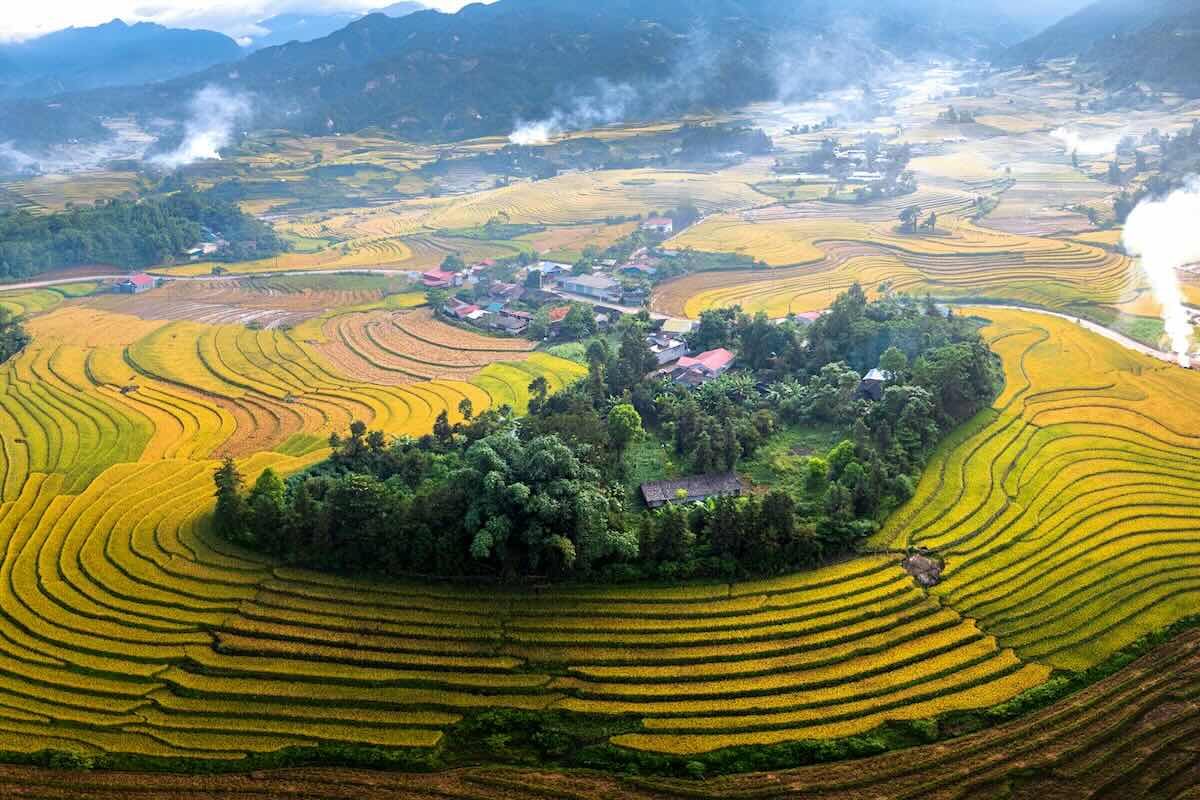
Challenge
Mountain communities in Vietnam face climate stresses that threaten food security and rural livelihoods.
Solution
Document and pilot indigenous knowledge, then train officials and farmers to apply climate‑resilient practices. Integrate the knowledge with science to empower communities.
Overview
Led by Ho Ngoc Son (Thai Nguyen University of Agriculture and Forestry, Vietnam) and supported by the Asia-Pacific Network for Global Change Research (APN), this two-year project documented and piloted indigenous knowledge for climate adaptation in Vietnam’s northern mountains.
Working with Dao, Tay, and H’Mong communities in Bac Kan Province, the team combined community‑led research with hands‑on pilots and trainings for local officials and farmers. The aim was practical: identify what already works, test it in the field, and equip people to use it.

Community co‑research in Bac Kan
The project team developed interview guides and questionnaires in October 2017, then trained 36 people (early career researchers, local NGO/CSO members, Bac Kan Province government officials, and other local members) in Thai Nguyen City on how to study and use indigenous knowledge in adaptation.
Co‑research followed in three communes. In Phuc Loc, Ba Be District, 80 people from four villages took part, including 68 household surveys, eight focus group discussions, seven in‑depth interviews, and interviews with agricultural extension staff. In Thanh Van, Cho Moi District, 60 people participated, including 32 surveys, eight focus groups, and five in‑depth interviews, plus district and commune extension staff.
In Mai Lap, also in Cho Moi, 60 people participated, including 33 surveys, eight focus groups, five in‑depth interviews, and additional interviews with extension officers. Findings documented local strategies such as adjusting planting dates, using local crop and animal breeds, drawing on traditional weather cues, and applying cultivation methods that protect soil and save water. Surveys also revealed low baseline awareness of climate change, with most respondents reporting little understanding.
Piloting indigenous knowledge‑based resilience models
A local workshop in March 2018 identified three practices for piloting. First, a drought‑tolerant local green mung bean was planted on about one hectare of arid land in Phuc Loc after training on soil preparation, composting, and intercropping. Second, black‑boned chicken, a local high‑value breed, was raised by 12 registered households in Thanh Van using bio‑safe methods. Eight households received 800 day‑old vaccinated chicks and veterinary supplies to start, with follow‑up training on disease prevention and supplemental feed sources. Third, in Mai Lap, farmers intercropped native bananas with Khoi Tia (Ardisia silvestris Pitard), a medicinal plant in demand, establishing roughly two hectares with 200 cuttings and receiving training on banana care and microbiological composting.
Capacity building across sectors
Beyond the initial methods workshop, the project delivered three technical trainings tied to the pilots: bio‑safe chicken raising in June 2018, integrated disease management for chickens in August 2018, and banana care with composting microbes in January 2019.
Bilingual guidelines, Using Indigenous Knowledge in Agroecological and Climate Change Resilience Practices, were published in July 2019.
Subsequent training in Thai Nguyen City introduced the guideline to 31 participants from government, academia, and civil society. A regional workshop in July 2019 drew more than 50 participants from more than eight provinces to exchange lessons on indigenous knowledge and agroecology. Two small research grants strengthened early‑career capacity and generated publications and manuscripts for peer‑reviewed journals.
Findings
- Communities employ a range of indigenous strategies that already help them manage climate variability, including flexible planting calendars, local breeds and varieties, and low‑input soil and water conservation practices.
- Baseline awareness is uneven. A majority of surveyed respondents reported limited understanding of climate change, indicating the value of focused training and co‑research to bridge knowledge gaps.
- Pilot models proved feasible under local conditions when technical support and inputs were provided. Green mung beans improved soil fertility and offered a short-cycle option for dryland plots. Black-boned chicken raising delivered high market value but required careful disease management. Banana–Khoi Tia intercropping diversified income, where demand for medicinal plants is strong.
- Cross-sector engagement increased confidence among researchers, officials, and farmers to apply indigenous knowledge, and created a base for policy dialogue at the provincial level.
Outputs and dissemination
Project outputs included a bilingual guideline book for practitioners and students, a policy brief, a leaflet, and five posters that synthesize successful models. The project also organized a 50plusparticipant workshop on indigenous knowledge and agroecology, and conducted an independent evaluation and financial audit. Three peer-reviewed publications resulted from the project: Son et al. (2019), Son et al. (2020), and Hoa et al. (2021).
A major recommendation for future action is that community-based initiatives should be institutionalized into provincial and national climate change adaptation strategies and policies.
Together, the outputs provide materials for teaching, extension, and local planning, and a practical pathway for scaling proven practices through provincial networks.
Project details
| Project title | Using Indigenous Knowledge to Enhance Community Resilience to Climate Change in the Mountainous Region of Vietnam |
|---|---|
| Year started | 2017 |
| Duration | 2 years |
| Countries involved | Vietnam |
| Funding awarded | US$62,203 |
| Funded by | Asia‑Pacific Network for Global Change Research (APN) |
| Grant DOI | https://doi.org/10.30852/p.4562 |
| Program | Scientific Capacity Development Programme (CAPaBLE) |
| Project reference number | CBA2017-01MY-HO |
| Project leader | Ho Ngoc Son Thai Nguyen (University of Agriculture and Forestry, Vietnam) |
Acknowledgements
This project was supported by the Asia-Pacific Network for Global Change Research (APN) under its Scientific Capacity Development Programme (CAPaBLE). Acknowledgements are also given to the contributions of the local government officials, communities and partner institutions in Bac Kan province.
Related information
- Project Permalink
- Son, H. N., Chi, D. T. L., & Kingsbury, A. (2019). Indigenous knowledge and climate change adaptation of ethnic minorities in the mountainous regions of Vietnam: A case study of the Yao people in Bac Kan Province. Agricultural Systems, 176, 102683. doi:10.1016/j.agsy.2019.102683
- Son, H. N., Hoa, H. T., Chi, D. T. L., Thanh, L. V., & Hung, V. D. (2019). Using indigenous knowledge in agroecological and climate change resilience practices. Hanoi, Viet Nam: Agriculture Publishing House. https://www.apn-gcr.org/publication/using-indigenous-knowledge-in-agroecological-and-climate-change-resilience-practices/
- Son, H. N., Kingsbury, A., & Hoa, H. T. (2020). Indigenous knowledge and the enhancement of community resilience to climate change in the Northern Mountainous Region of Vietnam. Agroecology and Sustainable Food Systems, 1–24. doi:10.1080/21683565.2020.1829777
- Hoa, H.T., Son, H.N., Kingsbury, A., Chi, D.T.L., Tam, N.V., & Phan, D.V. (2021). The role of Tay indigenous knowledge in climate change adaptation in the Northern Mountainous Region of Vietnam. Indian Journal of Traditional Knowledge, 20(2), 459-472. Retrieved from http://op.niscair.res.in/index.php/IJTK/article/view/26058
- APN Facebook
- APN LinkedIn
- APN X
 DISCOVER MORE

