 Asia - Australia, Bangladesh, Nepal, Sri Lanka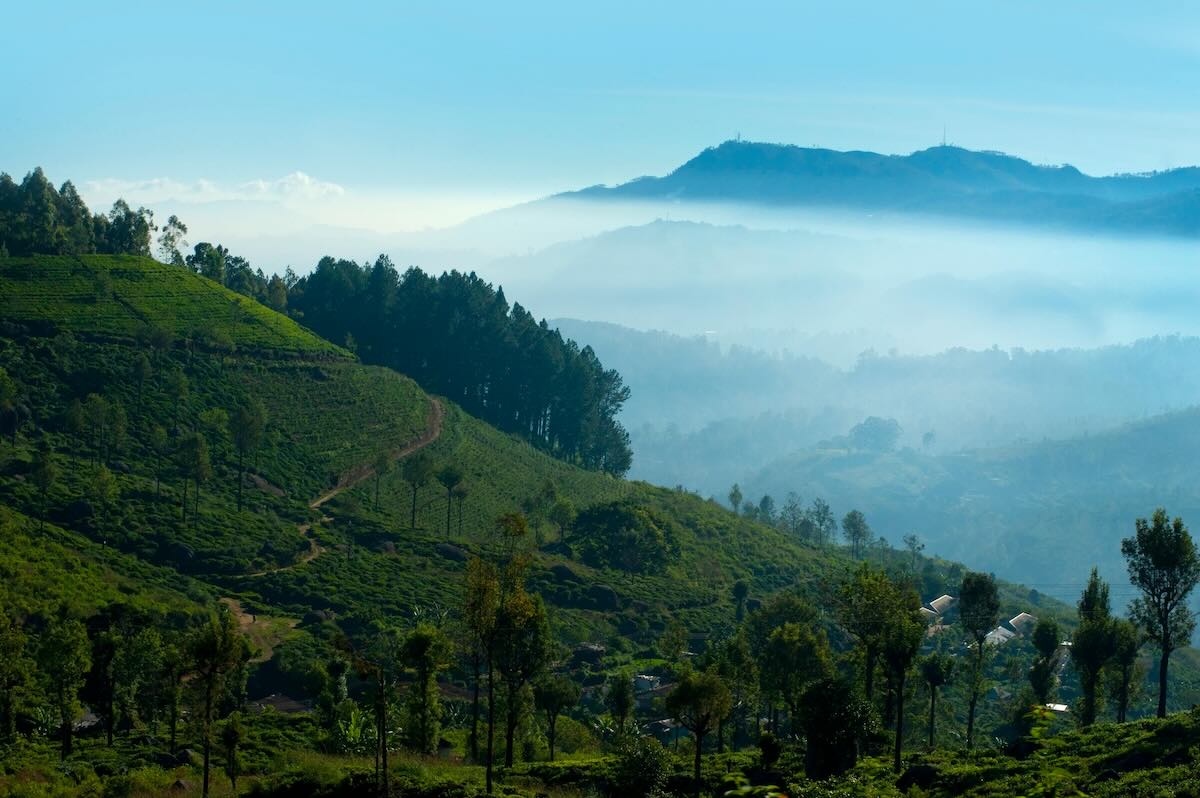
Challenge
Smallholder farmers in South Asia’s hilly regions face crop losses due to climate stress, erosion, and inadequate resilient agricultural practices.
Solution
Researchers collaborated with local communities to identify and assess climate-resilient crops and farming techniques to strengthen food security.
Overview
Hilly and sloping agricultural lands are critical for smallholder farming systems that support food production, household income, and livelihoods in many parts of South Asia, including Nepal, Bangladesh, and Sri Lanka. These areas support millions of people but are increasingly vulnerable to climate variability, soil erosion, declining crop productivity, and unpredictable rainfall. Farmers in such regions need localized, practical strategies to adapt to the changing climate while maintaining yields and protecting their land.
An Asia-Pacific Network for Global Change Research (APN)-supported project led by Buddhi Marambe (University of Peradeniya, Sri Lanka) collaborated with farming communities to identify and assess adaptive solutions suited to sloped agricultural landscapes, with a view to future scaling.
The project emphasized participatory research, engaging local farmers in the assessment and adoption of climate-resilient crops and agroecological practices. Through multi-country collaboration, the team assessed biophysical risks, climate sensitivity, and adaptive capacity in representative sites across Bangladesh, Nepal, and Sri Lanka.

The project identified both technical and social levers for adaptation, including improved crop varieties, crop diversification, intercropping, organic soil management, and stronger knowledge networks. These locally adapted strategies can help farming communities build resilience to climate shocks and ensure long-term sustainability in sloping environments.
Methodology
The research team used a participatory vulnerability assessment framework. This combined biophysical data, socio-economic surveys, and farmer consultations to identify vulnerabilities and potential entry points for adaptation. Key criteria included exposure to climate risks (temperature, rainfall variability), sensitivity of local crops, and the adaptive capacity of households.
Data was collected through surveys and assessments at multiple sloped sites in Bangladesh, Nepal, and Sri Lanka. The project assessed farmers’ adoption of climate-resilient practices, including the use of new crop varieties, and conservation methods. The project examined existing intercropping systems (growing two or more crops together to maximize land use, improve soil health, and reduce climate risk) and conservation practices, such as live bunds (small earth ridges constructed along slopes to slow water runoff and reduce soil erosion), mulching, and organic composting, which help maximize land use, improve soil health, reduce climate risk, and retain soil moisture.
Workshops and stakeholder dialogues in Sri Lanka and Nepal, conducted with local farmers, government officers, and agricultural researchers brought together researchers, extension officers, and farmers to evaluate the outcomes and co-develop best-fit solutions. Data were analyzed using statistical comparisons and geospatial tools to assess vulnerability and resilience across sites.
Key results and findings
- Identified that farmers adopted resilient crop varieties and agronomic practices to adapt to climate variability.
- Integrated farming methods, including intercropping, were observed as strategies to increase productivity and resource utilization.
- Farmers used conservation practices, such as mulching and live bunds, to reduce soil erosion and improve moisture retention.
- Farmer knowledge and experimentation were central to refining strategies and ensuring local relevance.
- Collaboration across countries allowed cross-learning and shared insights into common challenges.
Outputs
- Detailed assessments of farming systems conducted across sloping lands in Bangladesh, Nepal, and Sri Lanka.
- Developed indicators of farming systems’ resilience in hilly areas to climate variability, produced climate vulnerability maps (exposure, sensitivity, adaptive capacity), prepared an integrated inventory and status report on types, productivity, and food and nutrition security of farming systems, and drafted policy brief recommending climate-resilient systems for implementation and mainstreaming.
- Four workshops and three stakeholder consultation meetings held.
- Training and capacity-building initiatives conducted for various stakeholders, including young scientists.
- Technical briefs and climate adaptation strategies shared with local institutions.
- Multiple scientific publications and presentations resulted from the project, with some published after the project’s conclusion.
Future outlook
Building on this project, future work should focus on scaling up successful crop combinations and agroecological practices through farmer-to-farmer extension, demonstration plots, and integration into national climate adaptation plans. Strengthening institutional networks and farmer-to-farmer knowledge exchange will be vital for long-term impact.
Further research should explore gender-sensitive approaches, market access, and economic incentives for climate-smart farming on sloping lands. Ongoing participatory learning and multi-stakeholder collaboration will ensure that strategies remain responsive to evolving climate risks and farmer needs.
Project details
| Project title | Building Climate Resilience in Farming Systems in Sloping Lands of South Asia |
|---|---|
| Year started | 2015 |
| Duration | 2 years |
| Countries involved | Australia, Bangladesh, Nepal, Sri Lanka |
| Funding awarded | US$60,000 (Year 1); US$25,000 (Year 2); total: US$85,000 |
| Funded by | Asia‑Pacific Network for Global Change Research (APN) |
| Grant DOI | https://doi.org/10.30852/p.4542 |
| Program | Climate Adaptation Framework (CAF) |
| Project reference number | CAF2015-RR15-NMY-Marambe |
| Project leader | Buddhi Marambe (University of Peradeniya, Sri Lanka) |
Acknowledgements
This project was supported by the Asia-Pacific Network for Global Change Research (APN). The project team acknowledged the contributions of research assistants from Sri Lanka, Bangladesh, and Nepal, whose work was key in achieving project goals. The team also thanked the Department of Meteorology (Sri Lanka), Natural Resource Management Centre of the Department of Agriculture (Sri Lanka), Faculty of Agriculture and the Agriculture Education Unit of the University of Peradeniya (Sri Lanka), Bangabandhu Sheikh Mujibur Rahman Agricultural University (Bangladesh), Tribhuvan University (Nepal), SmallEarth-Nepal, and the farming communities in all study sites for their cooperation and information sharing.
Related information
- Bandara, T., Marambe, B., Pushpakumara, G., et al. (2024). Adapting mountain-farming systems to climate change by reducing food-nutrition-health vulnerability. Mitigation and Adaptation Strategies for Global Change, 29, 88. https://doi.org/10.1007/s11027-024-10181-x
- Bandara, T., Marambe, B., Pushpakumara, G., Silva, P., Punyawardena, R., Premalal, S., … Dahal, K. R. (2021). Climate resilience of farming systems in steep mountain terrain of selected regions in South Asia. APN Science Bulletin, 11(1). https://doi.org/10.30852/sb.2021.1598
- Marambe, B., Pushpakumara, G., Silva, G. L. L. P., Punyawardena, B. V. R., Manawadu, L., Premalal, S., Miah, M. G., Dahal, K. R., Howden, M., & Bandara, T. (2017).Final report: Building climate resilience in farming systems in sloping lands of South Asia. https://www.apn-gcr.org/publication/project-final-report-caf2015-rr15-nmy-marambe/
- Marambe, B., Weerahewa, J., Pushpakumara, G., Silva, P., Punyawardena, R., Premalal, S., … Jana, S. (2018). Climate variability and adaptation of homegardens in South Asia: Case studies from Sri Lanka, Bangladesh and India. Sri Lanka Journal of Food and Agriculture, 4(2), 7. https://doi.org/10.4038/sljfa.v4i2.61
- APN Facebook
- APN LinkedIn
- APN X
 DISCOVER MORE

