 Asia
Asia 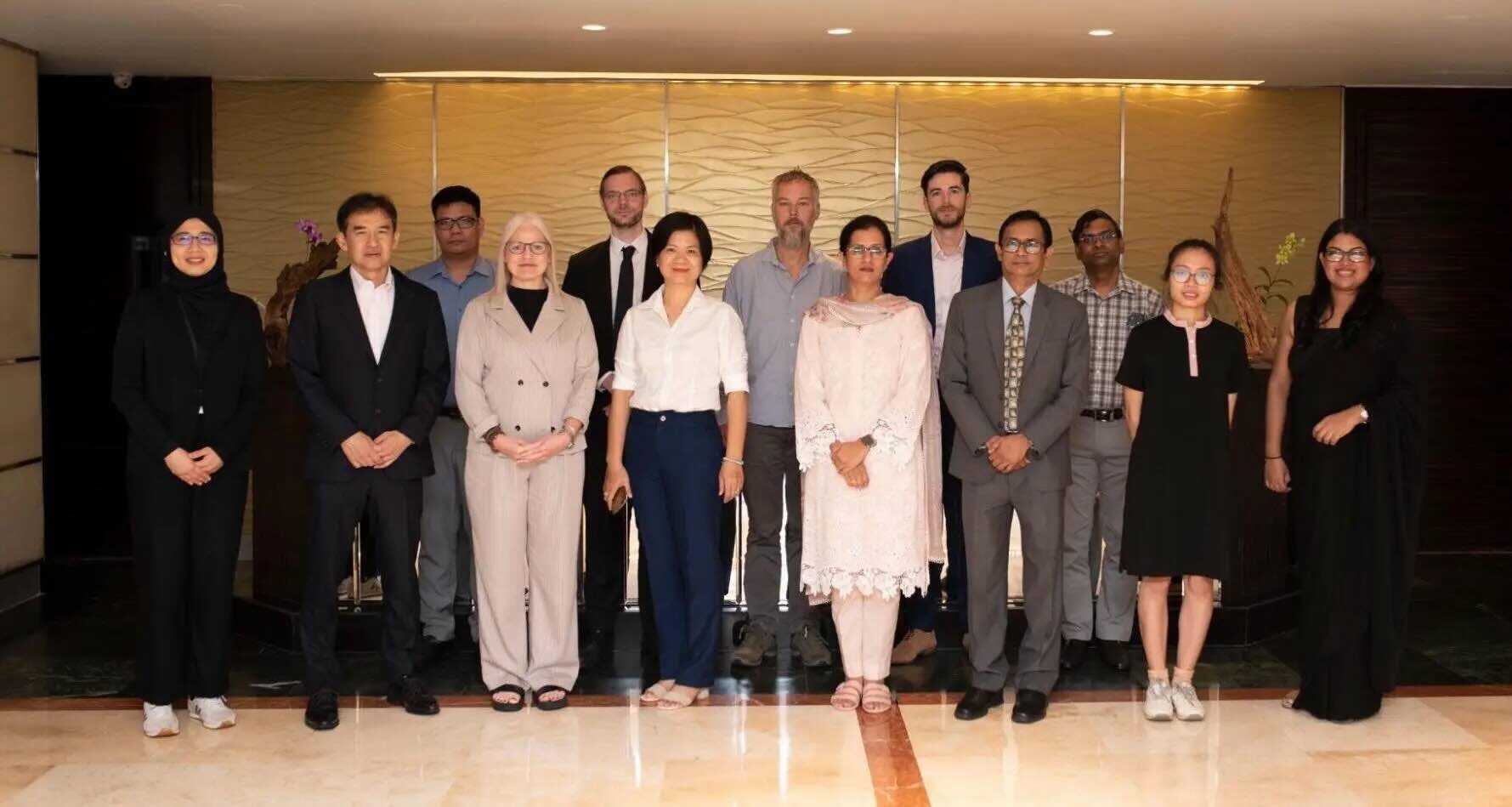
Challenge
Climate impacts in Asia span multiple sectors and timescales, yet policies for adaptation, disaster risk, and loss and damage remain fragmented.
Solution
An expert-authored peer-reviewed book brought together research and perspectives to better integrate responses across climate, disaster, and development policy.
Overview
The Asia-Pacific Network for Global Change Research (APN) supported the production of a special publication that addressed the growing gap among three core elements of climate response: climate change adaptation (CCA), disaster risk reduction (DRR), and loss and damage (L&D).
The result was the peer-reviewed book Linking Climate Change Adaptation, Disaster Risk Reduction, and Loss & Damage (Palgrave Macmillan, 2024). The project behind this book was implemented by SLYCAN Trust with support from APN. The publication emerged from a recognized need to improve understanding and cooperation across CCA, DRR, and L&D communities.
A virtual contributor workshop was held on August 30, 2022, to lay the groundwork for the publication. This was followed by an international writeshop in Colombo, Sri Lanka, on October 20–22, 2022, gathering experts and stakeholders from governments, research institutions, civil society organizations, and international bodies such as the UNFCCC, UNDRR, the International Centre for Climate Change and Development (ICCCAD), and SEI Asia.
The editorial board included representatives from various sectors and regions. The book brings together insights and case studies of APN projects from the South and Southeast. It aims to inform policymakers, researchers, and practitioners working at the intersections of climate science, humanitarian response, and sustainable development. It emphasizes vulnerable communities, including those in least developed countries (LDCs), which are disproportionately affected by climate-induced losses and displacement.
Why it was needed
Efforts to reduce climate risk often remain siloed across the CCA, DRR, and L&D communities. With increasing climate impacts from both slow- and sudden-onset events, there is growing recognition that integrated policy frameworks and coordinated action are essential. However, existing knowledge products rarely address all three domains together.
This book responds to that gap by compiling actionable research and practical reflections on integration. Contributors include academics, civil society organizations, and representatives of international institutions. The result is a cross-disciplinary volume that highlights emerging approaches to policy coherence, institutional alignment, and implementation at national and local levels.
How the book helps solve problems
This book provides integrated, evidence-based insights that practitioners and policymakers can use to align strategies for CCA, DRR, and L&D. It draws on contributions from researchers, civil society, and development actors, grounded in regionally relevant case studies.
The book builds on the results of the August 2022 virtual workshop and the October 2022 writeshop in Colombo, and incorporates findings from APN projects from its Climate Adaptation Framework. Several chapters address climate-induced migration, non-economic losses, mental health effects, and community-level responses to both slow-onset and sudden-onset hazards.
The publication supports efforts to reduce fragmentation across climate policy domains and serves as a practical resource for aligning national adaptation plans (NAPs), nationally determined contributions (NDCs), and L&D mechanisms with the Paris Agreement and Sendai Framework.
What was included
The publication consists of an Introduction and 13 other chapters, which explore topics such as conceptual and institutional frameworks, national policy and legal responses, community-led adaptation and DRR, climate risk financing, and regional cooperation.
The compilation offers a foundation for future collaborations among policymakers, researchers, and practitioners aiming to implement integrated, inclusive, and scalable strategies across CCA, DRR, and L&D.
A dedicated website gives more details on this publication.
Project details
| Project title | Special Publication on Linking Climate Change Adaptation (CCA), Disaster Risk Reduction (DRR) and Loss and Damage (L&D) |
|---|---|
| Year started | 2021 |
| Duration | 1 year |
| Countries involved | N/A |
| Funding awarded | US$30,000 |
| Funded by | Asia‑Pacific Network for Global Change Research (APN) |
| Grant DOI | https://doi.org/10.30852/p.16150 |
| Program | Any other activities (AOA) |
| Project reference number | AOA2020-01SY-Wijenayake |
| Project leader | Vositha Wijenayake (SLYCAN Trust, Sri Lanka) |
Acknowledgements
This project was supported by the Asia-Pacific Network for Global Change Research (APN). Special appreciation is extended to participants of the 2022 workshops.
Related information
- Wijenayake, V., Stevenson, L. A., Takemoto, A., Ranjan, A., Mombauer, D., & Ismail, N. (Eds.). (2024). Linking Climate Change Adaptation, Disaster Risk Reduction, and Loss & Damage. Palgrave Macmillan, Singapore. https://doi.org/10.1007/978-981-99-8055-0
- Wijenayake, V. (2024). Special issue on linking climate change adaptation (CCA), disaster risk reduction (DRR) and loss and damage (L&D). Project final report. Asia-Pacific Network for Global Change Research. https://www.apn-gcr.org/publication/project-final-report-special-issue-on-linking-climate-change-adaptation-cca-disaster-risk-reduction-drr-and-loss-and-damage-ld/
- Project website
- APN Facebook
- APN LinkedIn
- APN X
 DISCOVER MORE

